The Real Pros and Cons of Living in Lisbon (From Someone Who Lives Here)

I first came to Lisbon in 2012. I paid around €500 a month for a one-bedroom apartment and people thought I had two heads for spending that much – friends here were paying €250 and thought they were being fleeced. I remember reading about this thing called craft beer and wondering when it might reach Portugal.

Since then I’ve watched Lisbon go from a city nobody had really hard about, to a tourism and digital nomad hotspot, to somewhere people now complain is overpriced.

I tried the Algarve. I seriously considered Porto.

If I had to choose again, it would probably be Lisbon.

Why? Because even though it has its downsides, it has so many upsides — capital city, warm winters (theoretically, at least), great international scene, laid-back lifestyle. There are plenty of great cities in Europe, but Lisbon has this unique combination that it’s hard to find elsewhere.

What I Love About Living in Lisbon

The Look of the Place – But Treat This as a Test

A vibrant blue building with ornate balconies, typical of Portugal's charming architecture, stands in the background. In front, there are bare trees and a few wooden benches on a cobblestone square. Several parked cars and a few pedestrians occupy the street. The sky is partly cloudy.

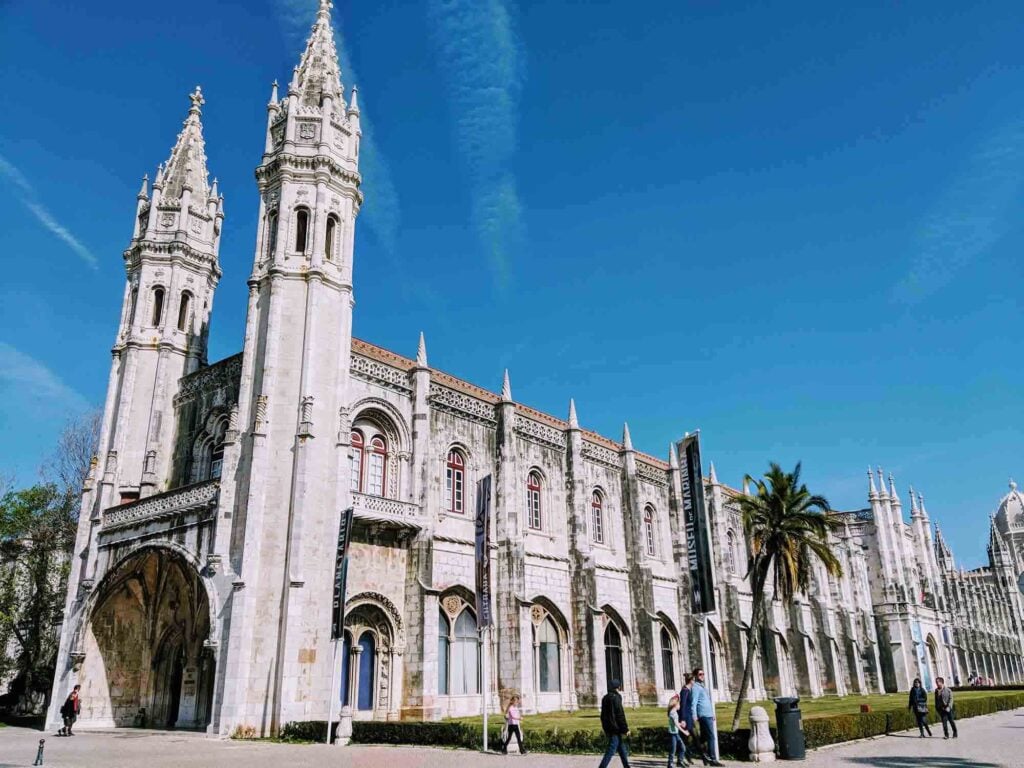
I love the feel of Lisbon. The tiled facades, half of them cracked, no two buildings on a street agreeing on a color. The calçada underfoot with stones missing, worn shiny by hundred years of feet passing over them. Buildings from four different centuries leaning on each other for support, none of them level. The abandoned building on the corner that has been abandoned the entire time I’ve lived here, with a tree growing out of the second floor. Washing strung across balconies in a neighborhood where one-bedroom apartments now sell for half a million euros.

But here’s the test, and I’d take it seriously before you commit to anything. Do you find that charming, or do you find it run down?

Both readings are correct. The same street is genuinely beautiful and genuinely a bit broken, and which one you see is a fact about you rather than about the street. If you look at peeling paint and think “character,” you’ll be happy here for years. If you look at it and think somebody should really do something, then nothing else on this page will save you. Not the sunshine, not the beach, not the coffee.

Plenty of people fail this test. They aren’t wrong and there’s nothing to fix. They just tend to leave within two years.

The International Layer (This Is What the Rent Buys)

Here’s my argument for anyone comparing Lisbon rents to Northern European rents and concluding they’re being had.

It’s the wrong comparison. You’re not paying London prices for a worse London. You’re paying for a Southern European capital – mild winters, a beach half an hour away, sunshine most of the year – that also has a full international life bolted onto it.

English-language stand-up comedy. Meetups for whatever obscure thing you’re into. One of the largest digital nomad communities in Europe.

Nowhere else in Portugal is selling this combination. In fact, I’d argue that very few other places in the world offer this.

The Food – All Four Scenes

A stone slab serves as a platter, displaying three copper pots of various foods reminiscent of Portugal. One pot contains fresh greens and a lemon wedge, the middle pot has a creamy mixture with seasoning, and the third has two breaded, fried items on a fork.

Some Portuguese people complain about the food in Lisbon. Coming from the UK and Ireland, it is a great deal better than what I grew up with, and I say that with love for both countries.

There are four separate food scenes here, and the last three are the ones you don’t get elsewhere in Portugal.

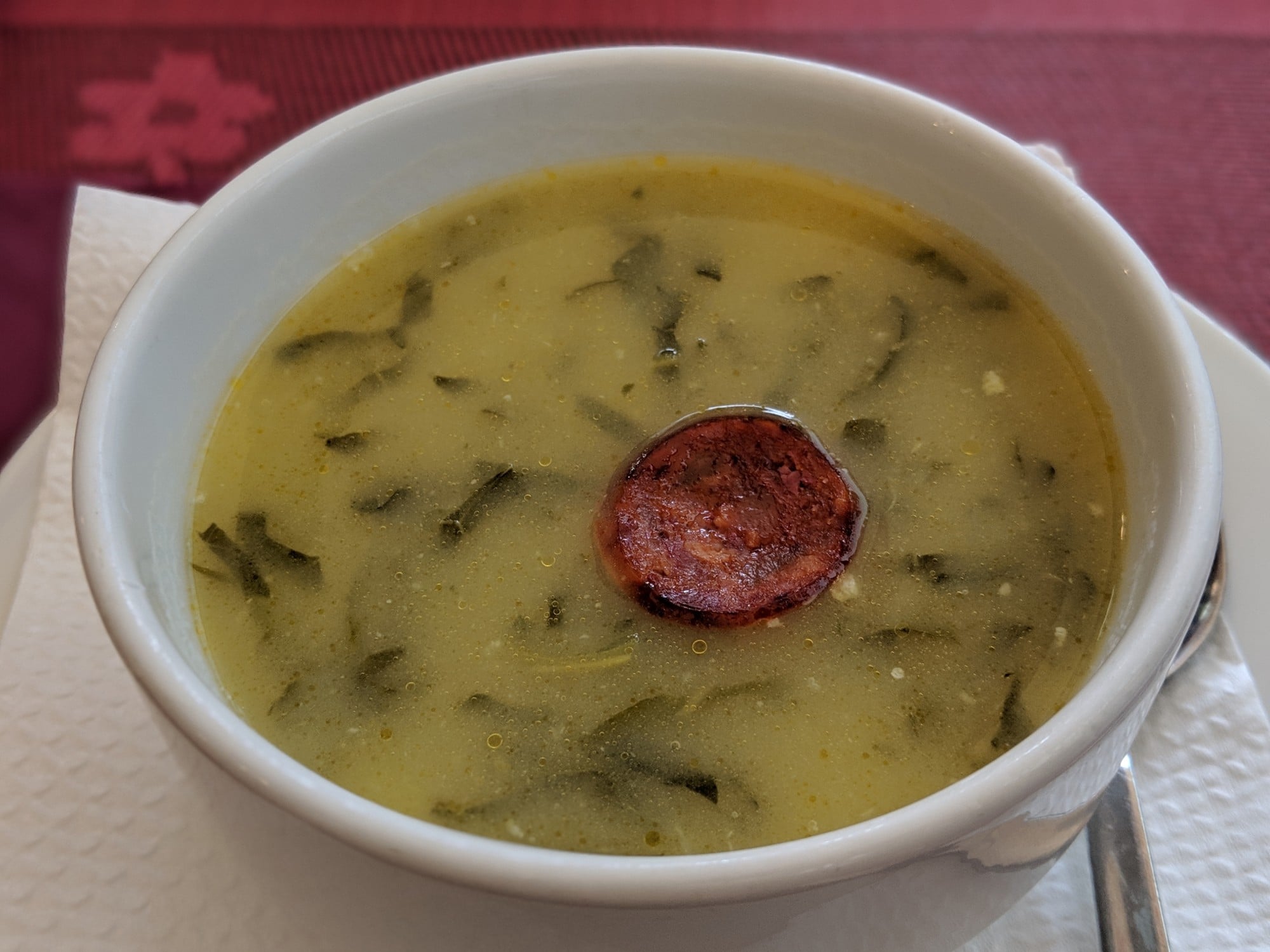
The Portuguese one. Tascas doing grandma cooking – fewer than there were, which I’ll come back to, but they exist. Seafood that’s fresh and still reasonable, which is not a sentence you can write about many European capitals. Try the percebes if you’re brave; they look like something that washed up after a disaster and they’re superb.

The colonial one. This is the part many visitors miss entirely. Mozambican, Angolan, Cape Verdean, Goan, Brazilian – food that arrived here through a long and complicated history and has been part of the city for generations.

The international one. Mercado Oriental in Martim Moniz for ingredients you can’t get anywhere else in the country. There was, for years, a well-known circuit of unlicensed Chinese restaurants – unmarked apartments where you’d ring a doorbell and eat someone’s home cooking in their living room. Mostly gone now, and I miss them.

The vegan one, which nobody believes until they’ve eaten here. Lisbon is a more vegan-friendly city than most Northern European capitals. In a country built on pork and salt cod. I know how it sounds. Kong and A Minha Avó are genuinely excellent, and what gets me isn’t that vegan food exists – it’s the creativity. The effort that’s gone into rebuilding Portuguese dishes without animal products, rather than serving the same three international vegan plates you’d get in Berlin or Bristol. There’s vegan pastel de nata worth eating on its own terms rather than as a substitute.

The catch is sharp: this only applies if you know where to go. Walk into a normal Portuguese restaurant as a vegan or vegetarian and you will struggle badly. There is no middle ground. It’s either outstanding or it’s a plate of chips and a lettuce leaf.

The markets deserve a mention too – there are a lot of them and the produce beats the supermarkets by a distance. And two honest caveats. The Mexican food isn’t amazing though that’s a Europe-wide failing rather than a Lisbon one. And for a city with this nightlife reputation, some things are genuinely hard to get hold of – finding food at 3am is oddly difficult, because licensing hours are restrictive.

Cheap in Portuguese, Expensive in English

A sunlit plaza in Portugal with bare trees casts intricate shadows on the cobblestone ground. A statue of a figure atop a pedestal is the central focus, surrounded by benches and trimmed shrubberies. Colorful facades of buildings line the background under a clear blue sky.

An espresso is well under a euro if you drink it standing at the counter of a pastelaria like everyone else. A pastel de nata is a little more. A couple of beers at a miradouro while the sun goes down over the river costs a couple of euros and buys you an entire evening.

That’s the thing I love most and it’s what I’d miss most. Not that Lisbon is cheap – it isn’t anymore – but that the city doesn’t demand that you spend. In a lot of capitals it’s genuinely hard to have an evening that doesn’t cost €50 or even €100.

But there’s a rule underneath it, and Lisbon is where it bites hardest. The moment you want something that isn’t Portuguese, the price triples. A flat white in a specialty coffee shop is four euros and change. A bagel costs roughly what a bagel costs in Brooklyn. Brunch, natural wine, anything imported, anything with a nice font on the menu – you’ll pay for all of it, because it’s priced for people earning abroad.

So Lisbon is cheap in Portuguese and expensive in English. Once you see that, you can’t unsee it – and a lot of people who insist Lisbon costs as much as London have simply been living here in English the whole time.

A Capital City That Forgot to Be Hectic

A plate holding a single pastel de nata, a beloved Portuguese custard tart, is sprinkled with powdered sugar. The tart is centered on a white plate with a blue rim and Portugal's name elegantly inscribed around the edge.

There are very few capital cities like this one. It doesn’t have London’s density or that permanent low-grade sense that you’re behind on something and everyone else has read the email. Walk through any neighborhood at three in the afternoon and people are sitting outside over coffee, in no hurry at all, apparently immune to the concept of getting back to the office.

You do have to adjust to Lisbon speed, and this defeats a lot of people. You cannot arrive with a London or New York mentality and expect the city to meet you halfway. It won’t. Things take the time they take, the person behind the counter will finish their conversation first, and the sooner you stop fighting that the sooner you’ll be alright. The people who can’t make that adjustment are miserable here, and usually miserable in a way they blame on the bureaucracy or the landlords rather than on themselves.

There’s also something about being on the far western edge of Europe. You feel away from it all here – from Europe, from the UK, from the US, from whatever everyone’s furious about this week. Mostly I like that a great deal. Occasionally I miss the buzz, and I notice it most when something big happens somewhere else and I’m reading about it three time zones behind.

Healthcare is good

Portugal’s healthcare system is a national topic and I’ve covered it elsewhere. What’s Lisbon’s is the concentration: as the capital, this is where the country’s best facilities and most experienced specialists are.

The private sector here is genuinely excellent. CUF is very well regarded. The Champalimaud Foundation, sitting out at Belém, has a serious international reputation – people fly here for cancer treatment. Hospital da Luz and Lusíadas are strong. English-speaking doctors are standard, and a useful quirk of the system is that many specialists work in both sectors, so you can pay privately for a fast diagnosis and then move into the public system for long-term treatment.

One honest caveat: it isn’t as good as it was. So many people – expats and Portuguese – now have private insurance that the private system has its own queues. It’s still very good. It’s just no longer the instant service it was five years ago.

And the public system deserves better press than it gets from foreigners. The SNS is genuinely good at serious things – if something major goes wrong, you’re in capable hands and you won’t be bankrupted. Where it struggles is the routine stuff, and that’s where Lisbon has a real problem: around 1.6 million people in Portugal have no family doctor, and roughly 70% of them are in the Lisbon region. Great for a crisis. Not great for a rash.

The Internet Actually Works

A group of four people sit around a table in an office setting, engaged in discussion. Laptops are open in front of them. One person has a bicycle next to them, and a clock can be seen on the wall in the background.

Small thing, big thing. 1 Gbps fiber is easy to get across the city and 10 Gbps exists if you genuinely need it, for somewhere around €30-40 a month.

This wasn’t always true, and I remember when it wasn’t. If your income depends on a video call not freezing, it’s one less thing to think about – which is not something you can say about a lot of places with this weather.

Getting Around, and Getting Out

A classic yellow tram with wooden window frames and a sign reading "M. MONIT" on top is shown. The tram has "entrada" marked on it, indicating the entrance. The surrounding area includes trees and some buildings in the background.

The public transport here is good, it’s cheap, and – remarkably – it’s stayed cheap.

The Navegante pass covering the entire metropolitan area is €40 a month and has been frozen at that price since 2019, through everything that’s happened to every other price in this city. Under-23s travel free. Over-65s pay €20. And there’s a €20 monthly pass for unlimited regional and urban trains across the whole country.

The metro is the star. The buses are decent but less dependable; if you’re planning your day around one, add a margin. Uber and Bolt are everywhere and genuinely cheap, which matters more at 2am than you’d think.

Two things nobody mentions.

The trams and trains have no air conditioning and no wifi, which is charming in April and considerably less charming in a packed carriage in August – you will arrive somewhere in a condition.

And more seriously: you need to live on the metro line, or you’ll feel it. People sensibly try to escape the rent by moving to Almada or Costa da Caparica or Setúbal, and then discover that the ferry stops earlier than they expected and the night buses are thin. It turns a money-saving decision into a lifestyle one. If you like being out late, the cheap side of the river is a trap.

The genuine win: you don’t need a car here. Given what cars cost in Portugal, that’s worth real money – and it isn’t true anywhere else in the country.

And it’s easy to get out. Train to Porto. Train to Setúbal. Down to the Algarve. Sintra in the morning and back for dinner.

The Beach, and What’s Within an Hour

A group of surfers in wetsuits carrying surfboards walks toward the ocean on a sandy beach in Portugal. People are scattered along the shore and in the water. The sky is clear and sunny, and waves are gently crashing in the background.

Not many European capitals let you finish a call and be in the Atlantic within the hour. This is the one that makes people move here and it deserves its reputation.

Carcavelos is twenty minutes on the train and does the job when you just need water. Costa da Caparica gets all the write-ups and I’m honestly not a big fan – in summer it’s busy and it’s grotty, and it feels like it. That said, if all you want is sand and surf and you don’t care about anything else, it works fine and there’s a lot of it. Guincho is wild and windy and better for looking at than swimming in, unless you surf.

Beyond the beaches: Arrábida for hiking, Ericeira and Nazaré for waves, Colares for wine. All of it doable in a day, all of it from a capital city.

Safety – The Lisbon Version

A multi-generational family, composed of two grandparents, two parents, and two young children, poses outdoors in a forested area. They are all smiling and appear happy. The children are being carried by the adults. Trees and sunlight are visible in the background.

Portugal’s safety is well documented and I’ve covered it elsewhere. What’s worth saying about Lisbon specifically: it’s the least safe place in the country, and it’s still safer than most capitals on earth.

It’s also not quite as safe as the statistics and the tourism marketing imply, and I’d rather say both than pick one. People will tell you Martim Moniz and Mouraria are no-go zones. Are there places I don’t especially enjoy and would pay more attention in at night? Yes. Is any of it comparable to genuinely dangerous cities? No. And I’m a man, so my read isn’t universal.

The strange thing about safety is that you stop noticing it. You only remember what it’s worth when you go somewhere that doesn’t have it. It’s also why Lisbon works for kids despite being a capital – a bit gritty in places, but the fundamentals are right.

What I Hate About Living in Lisbon

Housing. It’s Housing. It Was Always Going to Be Housing.

A pastel-colored building with multiple balconies adorned with iron railings. A "Vende" (For Sale) sign is displayed prominently on the second floor balcony, including contact information. The building is situated between similar buildings.

If you take one thing from this page, take this. Housing is the problem. Everything else here is an inconvenience.

A one-bedroom starts at around €1,200-€1,300 a month, and that’s the floor rather than the average. Buying puts you north of €6,000 per square meter, which makes Lisbon the most expensive market in Portugal by a distance – Porto, the next one along, is thousands less. Idealista called Lisbon the least affordable capital in Europe this year. Not the most expensive. The least affordable, which is the number that matters when the minimum wage is €920 a month.

Anywhere worth living is expensive. New York is expensive and you will live in a shoebox. London is expensive and you’ll live an hour from the middle of it and pretend that’s fine. There is no city on earth that is wonderful, in demand, and cheap – that combination has never existed, and the fact that Lisbon briefly resembled it in 2012 was an anomaly caused by a financial crisis, not a natural state we’ve fallen from. Wanting Lisbon to be as good as it is now and as cheap as it was then is wanting two incompatible things.

Then there’s actually finding a place, which is worse here than anywhere else in the country. Places go within hours. Viewings are cattle calls where you queue on the stairs with fifteen other people, several of whom will offer months of rent up front on the spot. You’ll be asked for a fiador you don’t have. And with no deposit protection scheme, whether you see your deposit again depends more or less entirely on whether your landlord feels like giving it back.

Houseshares are the fallback and they’ve got their own Lisbon distortion: almost everything is a five- or six-bedroom place. Finding a normal two- or three-bed to share with a couple of friends is close to impossible, because landlords worked out that more bedrooms means more rent and started carving up living rooms accordingly.

More detail in my Lisbon cost of living guide.

The Noise Is Worse Here Than Anywhere

A man and a woman, bundled up in winter clothing including hats, gloves, and scarves, sit next to a radiator. The man warms his hands by blowing on them, while the woman holds her hands close to the heat source, appearing cold.

Thin walls are a Portuguese speciality. Lisbon adds four things on top, and they’re why I’d tell anyone to choose an apartment here more carefully than they’d choose one anywhere else in the country.

The construction never stops. There is always a building being gutted near you, and when that one finishes another starts, because the entire city is being renovated one apartment at a time. Some neighborhoods are far worse than others.

The flight path. This is the big one, it’s uniquely Lisbon, and nobody warns you. The airport is inside the city – convenient, and the price is that planes come over Alvalade, Campo Grande and Avenidas Novas every few minutes from early morning until late at night. Without double glazing, that’s your sleep, your calls, your workday. The most avoidable mistake a new arrival makes and the most expensive to undo once you’ve signed.

The trams. Charming in photographs. Less charming rattling past single-pane windows at 6am.

The street drinking. This is a city where the nightlife happens outside, on the cobbles, under someone’s window. That someone can be you.

The Earthquake Thing

Nobody selling you an apartment will mention this, so I will.

Lisbon sits in a seismic zone. The 1755 earthquake essentially destroyed the city, and it’s been a long time since anything like it. You do feel tremors here from time to time – not often, not dramatically, but enough to remind you that the ground is a participant.

And here’s the thought I can’t quite shake. When you can hear your neighbor’s television through the wall, and their conversation, and the chair they just moved – you find yourself hoping somebody was paying close attention when they built the place.

Overtourism, and What It’s Hollowed Out

A large group of people wait in line outside a popular bakery on a sunny day in Portugal. The building is adorned with traditional blue tiles, and a blue awning with white text extends over the crowd. Some people are taking pictures while others are chatting in anticipation.

Let me be fair before I complain: overtourism is everywhere in Europe. Barcelona, Amsterdam, Venice, Dubrovnik – this isn’t a Lisbon failing, it’s a continental one, and pretending Lisbon is uniquely afflicted would be silly.

But you feel it more here, and the reason is geometry. Lisbon is small and the streets are narrow. A tour group of forty doesn’t pass through a street here, it takes the street, because the street is three meters wide and was laid out for donkeys. Cruise passengers arrive in a single block of two thousand. Everyone stops dead to photograph the same tiled wall. The pavements were not built for this and there is nowhere for anyone to go, so you spend August walking in the road. In a bigger city the same number of tourists would dissolve. Here they don’t.

I can’t remember the last time I went to Torre de Belém or Sintra. Not because I don’t like them – they’re two of the best things in the country. Because it’s a nightmare and I’ve stopped being willing. So I avoid the center. Baixa and Chiado are too crowded to be enjoyable and I plan around them without thinking about it. That’s not unusual – people in New York rarely go to Times Square, and I’d have crossed town to avoid the Royal Mile in Edinburgh. But it means writing off a chunk of your own city.

What genuinely bothers me is what’s replaced things. The shops in the center are tat shops now – every one selling identical cheap ceramics and terrible cork products made in China, the same fourteen items in the same arrangement, sold as Portuguese craft. Alfama barely has proper shops or services anymore; the grocer and the cobbler are gone and what’s left is tourism.

Although – and this is the part I love, and it’s why I still walk through there – some of the old ladies have held on. You’ll see them leaning out of their windows watching the street, exactly as they’ve done for fifty years, while an Airbnb key safe hangs on the wall beside them and a hen party rolls suitcases past below. There’s something magnificent about that. They were here first and they’re not going anywhere, and every one of them is a small argument against the idea that this is finished.

The tourist tax doubled to €4 a night. I can’t point to a single thing it’s fixed.

The Feeling That People Are Trying to Rip You Off

You’ll be walking through Baixa and someone falls into step beside you muttering “hashish, cocaine.” It comes and goes – months of nothing, then they’re back on every corner.

Here’s the bit visitors don’t know: they’re not selling drugs. It’s oregano. It’s a bit of soap. It’s whatever was lying around. A few have access to actual weed and most don’t and never did – the entire operation is a scam aimed at tourists who’ll be gone by Tuesday. And they don’t ask once and move on. They’re relentless, they follow you, and they’ll do it again fifty meters later. It’s noticeably worse if you’re a man, presumably because you look more like a customer. I’ve had one try to pickpocket me mid-pitch, which for some of them is the actual point of the conversation.

It’s more annoying than dangerous. But it feeds something bigger, and that’s the part I mind. It’s the feeling that people look at you and see a mark – that your presence here is an opportunity to be extracted from rather than a fact to be dealt with.

Which is exactly what people say about Lisbon landlords. The apartment that’s suddenly €200 more when they hear your accent. The deposit that never comes back. The listing that doesn’t exist. Once you’ve had both experiences in the same month it’s hard not to join the dots and conclude that a certain slice of this city has decided foreigners are a resource. Most people are nothing like that – Portuguese kindness is real and I’d defend it anywhere. But Lisbon has more of the other kind than the rest of the country does, and pretending otherwise doesn’t help anyone.

Driving and Parking

Portuguese driving is its own national event and I’ve written about it elsewhere. Lisbon’s contribution is geometry.

Parking is close to impossible. Picture parallel parking on a 45% slope, in a space six inches longer than your car, while a tram driver rings the bell behind you and a delivery van waits behind him.

Tourists step into the road without looking because they’re reading a map. Getting in and out of the city is my least favorite part of any trip – the bridges back up and the tolls surprise you. And when people park on the pavement, which they do everywhere in Portugal, it’s worse here because the pavement was already too narrow, so the car takes all of it and you step into traffic.

It’s also not a good cycling city. The hills don’t help. The hills themselves I quite like – though they make a real difference in August, when a ten-minute walk delivers you somewhere in a state that requires an apology.

The Airport

People list this as a plus and it is and it isn’t.

Yes, it’s in the city and you can take the metro to it, which is genuinely convenient. That’s where my enthusiasm ends. It’s no better than any other European airport, flights aren’t as cheap as everyone assumes – Lisbon is not the budget-airline paradise people imagine – and the backlogs and delays over the last few years have been horrendous.

That’s a real cost and it sneaks up on you. The whole promise of Lisbon is that you’re an hour from everywhere. If the airport eats three hours at each end, that promise quietly stops being true.

Things are improving. Let’s see what happens.

You Never Get to Speak Portuguese

Portuguese is hard and I’ve covered why elsewhere. The Lisbon problem is different: this is the one city in Portugal where you barely get to try.

You attempt your Portuguese. They hear the accent – one vowel will do it. They switch to English. Every single time. And they’re being helpful and efficient and it’s an entirely reasonable thing for a busy person to do, which is what makes it impossible to be annoyed at anyone in particular.

The result is that you can live here for years and barely practice. My Portuguese should be far better than it is after fourteen years. I could blame myself, and partly I should, but this city does not help. Go inland and people simply cannot switch, so you learn. Here you never have to, so you don’t.

The Same Conversation, Forever

A large group of people socializing at a lively indoor event in Portugal. Individuals are conversing, holding drinks, and mingling in a warmly lit room with white walls and curtains. Some appear to be smiling and engaged in animated discussions.

Where are you from. Why did you move to Lisbon. How long have you been here.

I could do it in my sleep. I have done it in my sleep. There’s a version of me that runs on autopilot at these things and I can feel him take over about four minutes in.

Making Portuguese friends is hard everywhere in this country and I’ve written about why. Lisbon flips it in a way worth understanding, because it cuts both directions.

The good news: it’s easier here than inland. Lisbon is full of Portuguese people who’ve recently moved back from abroad or moved in from somewhere else, and who therefore also need friends. Inland, everyone grew up together and settled their circle at school – you’re not getting in, and it’s nothing personal.

The bad news is the churn. This city is transient in a way nowhere else in Portugal is. People arrive full of energy and leave eighteen months later, so you’re permanently in the early stages of friendship with somebody new. At some point you notice you’re doing the introductions over and over and rarely getting to the part where someone knows you well enough to be useful when things go wrong.

And there’s a trap underneath: adults make friends through work, and if you work from home you have no colleagues. An entire mechanism is missing, which is precisely why the meetups and the padel and the comedy nights matter more here than they’d sound like they should.

The Wages Trap

This is the thing I’d most want a prospective mover to absorb, because it’s where people actually get hurt.

Lisbon is a great place to live if you have a reasonable income from abroad. You can have the good life here – warm weather, cafés, good food, a slower pace, the whole thing people picture when they picture moving to Portugal. That deal is real and I’m living it.

I would not move here for a job unless the offer was extraordinary. Rent and taxes will eat most of a Portuguese salary and there’s little left for the life you came for. Worse: if your remote job or your business stops working, you’re suddenly in a city where the local wage doesn’t cover the local rent, and finding something that does is hard. I’ve watched it happen. People don’t decide to leave Lisbon. They run out of options and then leave.

Low wages are a national story. What makes it specifically a Lisbon story is the gap: this is the one place in Portugal where the cost of living has gone fully international while the salaries haven’t moved. You end up with a two-tier city and you can feel it. People earning abroad live well. People earning here don’t, and they’re serving coffee to the first group.

One myth worth killing: the stereotype that people in Southern Europe don’t really work. Nonsense. People here work long hours – longer than most of my friends back home – for considerably worse money. Which is a large part of why Lisboetas are more stressed and less friendly than the rest of the country, and it’s got worse over the decade I’ve been here. Go three hours in any direction and people are visibly warmer. That’s not coincidence, it’s economics.

The Small Stuff That Adds Up

  • I miss big supermarkets. Genuinely, unglamorously, I miss them. Most in the city are tiny – I do too much shopping in a cramped Mini Preço that never has what I want – and I try to live near a Lidl because it’s the closest thing to a normal shop. It’s a density problem, so it’s Lisbon’s own: everywhere else in Portugal, you drive to a big one.
  • Green space. There is some – Jardim da Estrela is lovely – but no great ones, and I miss the enormous park you can walk into and disappear. The exception, and it’s a good one: the river stretch between Alcântara and Belém, which you can run all the way to Cais do Sodré with the water beside you the whole way.
  • Theater. In a Portuguese-speaking country this was always going to be hard, and I still miss it. The English comedy scene is great – better than nearly anywhere in Europe – and it’s also small next to London or Dublin. Both things are true.
  • Dating. Hard across Portugal for reasons I’ve covered. Lisbon’s twist is that your pool is mostly other foreigners, and other foreigners leave. You can meet someone brilliant in March and be waving them off at the airport by Christmas.
  • It can be grotty. Dog mess is a national sport; broken glass, people smoking crack, and the smell of certain corners in August are more of a Lisbon thing. Anjos and Intendente felt like they were on the way up a few years ago and some of it feels like it’s slid back.

The Things I Still Haven’t Worked Out

Some of this doesn’t sort into a column, and pretending otherwise would be dishonest.

Everything New Is Also Everything Everywhere

I miss the tascas. I miss how many pastelarias there used to be. I miss walking into a room with a paper tablecloth and eating whatever the woman in the back had decided to cook that day for eight euros, dessert included.

A lot of that is gone, and what replaced it is – genuinely – good. I’ve spent this whole page praising it. But a lot of it is also stuff you can find anywhere. Avocado on toast. Flat whites. Mexican food. Burgers. Places that would sit unremarked in Shoreditch or Brooklyn or Prenzlauer Berg, and which increasingly make a Lisbon street look like a street in any of them.

This is happening everywhere in the world, and I know that. What’s specific to Lisbon is the speed. It took London thirty years to homogenise its centre. Lisbon did it in about eight. And the mechanism wasn’t taste – it was rent. Those tascas didn’t close because nobody wanted them. They closed because a tasca with paper tablecloths can’t pay €4,000 a month, and the brunch place can.

So the thing I love about the new Lisbon and the thing I mourn about the old one have the same cause. I don’t know what to do with that.

The Graffiti

When I arrived, I liked it. It felt edgy. It felt like the city had an underground and something to say, and it was part of what made Lisbon feel alive rather than preserved.

Now I mostly think it looks run down.

I honestly don’t know how much of that is the city changing and how much is me changing. Probably both, and I suspect mostly me. But it’s worth knowing before you come: the thing you find charming in year one isn’t guaranteed to stay charming in year ten, and nobody tells you which of your enthusiasms are going to expire.

The Bubble

The expat bubble is fun. I want to be fair about that, because it’s fashionable to sneer at it and the sneering misses something true.

Everyone’s having a good time. Nobody’s talking about their mortgage. You forget, for a while, that most people on earth are raising kids and doing regular life and not weighing up whether to escape winter in Bali or Thailand this year. It’s a holiday from real life, and there’s something genuinely lovely about being twenty-eight – or forty-two – in a city where the only agenda is what you’re doing this weekend.

It’s also disconnected from real life in a way that gets quietly lonely, and you meet a lot of the same type of person having a lot of the same year. There’s a hollowness that arrives around year three and that nobody warns you about, because the people who could warn you have already gone home.

Both true at once. I’ve never resolved it and I’m not sure it resolves.

Being Part of the Problem

The politics are national and I’ve written about Chega elsewhere. What’s specifically Lisbon is that the housing argument is about here. When someone says foreigners have made Portugal unaffordable, the city they have in mind is this one, and the rents they’re describing are the rents on my street.

Day to day it doesn’t touch me. I don’t get grief in the street, nobody’s been rude to my face. It’s mostly online. But you come across the comments, and I’d guess my experience would be different if I weren’t white and European. Worth saying plainly rather than leaving out.

And here’s the uncomfortable part: you can’t entirely argue with it. Rents are high, and plenty of the expensive ones are aimed squarely at foreigners – I’ve seen listings priced in a way that only makes sense if you’re expecting someone earning dollars. I am someone earning from abroad, living in an apartment a Portuguese person on a Portuguese salary couldn’t afford. That’s just true.

At the same time, there are empty homes all over this city and apartments sitting on Airbnb, so it’s not as though the alternative was available. You can’t rent the place that isn’t on the market. Me leaving wouldn’t lower anyone’s rent by a euro.

So you end up feeling implicated in something you don’t have a solution to. I don’t have a neat ending for that one and I distrust anyone who does.

The Downsides That Aren’t Lisbon’s Fault

A lot of what people blame on Lisbon is really Portugal, and I’ve covered all of it in my pros and cons of living in Portugal guide: the bureaucracy, the taxes, the customer service, the driving, the customs charges, the cold houses, the smoking, the dog poop.

Three have a Lisbon twist worth knowing:

  • Bureaucracy is worse here for a boring reason: more people, same offices. Finanças and AIMA queues in Lisbon are the longest in the country simply because everyone lives here.
  • Tax. NHR is closed and IFICI, its replacement, is much narrower – research, tech and qualifying startups only. Worth flagging here rather than there because so many people moving to Lisbon specifically are digital nomads, and most won’t qualify. If you’re building something here it can work. If you’re working remotely for a company abroad, it probably won’t.
  • Deliveries. A national annoyance with a local flourish: the eight-story building with no lift, where the driver rings once from the street, waits nine seconds, and marks it as attempted.

So Is Lisbon Hyped?

Yes and no.

It isn’t the budget-friendly place it was when I paid €500 a month and thought I was being extravagant. But nowhere is. That’s not a Lisbon story, it’s a decade story, and every city worth living in has done the same thing.

It comes back to the test at the top. Do you look at a cobbled street with half the stones missing and think it’s beautiful?

If yes – come. Bring an income from abroad, live on the metro line and off the flight path, buy a dehumidifier, and learn to drink your coffee standing at the counter.

If no – there’s no fixing it, and I’d look at where else in Portugal might suit you better.

Thinking about Moving to Portugal?

Portugalist has been running since 2016 (10 years now!) and during that time we've helped countless people move to Portugal. Whether you're weighing up the D7 against the Golden Visa, wondering whether to rent or to buy, or just trying to figure out which part of Portugal is right for you, we'd be happy to help.

Get In Touch

Step 1 of 2

Name(Required)