

Since 2016, Portugalist has helped thousands of people navigate the move to Portugal — and one of the biggest decisions non-EU citizens face today is choosing between the D7 Visa and the Digital Nomad Visa. On the surface, both seem to offer the same thing: a legal path to live in Portugal long-term, and eventually citizenship. But in reality, they’re built for very different kinds of people.
This guide breaks down the key differences, advantages, and pitfalls of both visas — drawing on years of Portugalist’s experience and reader feedback. Whether you’re a retiree dreaming of the Algarve or a remote worker eyeing Lisbon’s coworking scene, we’ll help you decide which route truly fits your lifestyle, income, and long-term plans in Portugal.
TL;DR
- Both the D7 Visa (sometimes called the Passive Income Visa or Retirement Visa) and the Digital Nomad Visa allow non-EU/EEA/Swiss citizens to live in Portugal long-term.
- The D7 suits retirees and anyone with stable passive income (like pensions, US Social Security, dividends, royalties, or rental income). 2026, an individual needs just €920 per month as well as sufficient savings.
- The Digital Nomad Visa is aimed at remote workers and freelancers earning active income from abroad — but its income requirements are much higher. As of 2026, an individual needs €3,680 per month as well as sufficient savings.
- If you qualify for both, the D7 is usually the easier and more flexible option, but speak with an immigration expert to be sure.
Understanding Portugal’s Two Main Long-Stay Visas
Portugal offers two popular residency routes for non-EU/EEA/Swiss citizens:
Target Audience |
Retirees, pensioners, investors, landlords |
Remote workers, freelancers, digital nomads |
Income Type |
Passive (e.g., pensions, rentals, dividends) |
Active (e.g., remote work, freelancing) |
Minimum Income (2026) |
€920/month (single applicant) |
€3,680/month (single applicant) |
Savings Requirement |
€11,040 for a single applicant |
€11,040 for a single applicant |
Stay Requirement |
No more than 6 consecutive months (or 8 non-consecutive months) within a visa permit period |
No more than 6 consecutive months (or 8 non-consecutive months) within a visa permit period |
Visa Duration |
2 years initial, renewable for 3 years |
2 years initial, renewable for 3 years* |
Income thresholds are tied to the Portuguese minimum wage and increase slightly each year. The D7 is 1x the Portuguese minimum wage whereas the Digital Nomad Visa is 4x the Portuguese minimum wage. Both figures are gross income rather than net.
The minimum wage typically increases by €50 per month each year: e.g., in 2024 it was €820 and increased to €870 in 2025.
*The Digital Nomad Visa also allows for a 12-month temporary stay visa. This is aimed at those that want to stay in Portugal for longer than the typical 90 days allowed by the Schengen Visa, but aren’t looking to live in Portugal full-time (although it can be renewed, if you wish).
D7 Visa: The “Passive Income” Route

The D7 Visa is one of Portugal’s most popular and accessible residency options. It is designed for retirees and financially independent people who could support themselves without needing to work locally. Over time, it’s also become a favourite among investors, landlords, and those with stable passive income from abroad.
As of 2026, a single applicant needs €920 per month in passive income and at least €11,040 in savings (some lawyers recommend as much as double this amount in savings just to be safe).
For couples or those with children, this increases. See the tables below for up-to-date figures and examples.
Who It’s For
The D7 is aimed at those with regular and stable passive income. Popular income types include:
- Pensions (private or state)
- US Social Security
- Dividends
- Royalties
- Annuities
- Rental Income
You will normally need to show at least 3 months of receipts or bank account statements that show you receiving this income.
- What about savings as passive income? Savings aren’t considered passive income as they’re a lump sum (unless they generate interest or some other form of passive income). You can either convert your savings into something that generates passive income e.g., an annuity or rental property, or you could apply for the Golden Visa instead. This typically requires a donation of €250k or investment of €500k.
- Income from a remote job or freelancing is also no longer accepted. You will need to apply for the Digital Nomad Visa instead.
Example Income Requirements
Applicant Type |
Income Requirement (D7 Visa) |
Notes |
|---|---|---|
Single applicant |
€920/month |
Minimum monthly passive income required |
Couple |
€1,380/month |
+50% of the main applicant’s income requirement for a spouse or long-term partner
(€920 for the main applicant + €460 for the spouse or long-term partner) |
Couple with 1 child |
€1,656/month |
+30% of the main applicant’s income requirement for each dependent child
(€920 for the main applicant + €460 for the spouse or long-term partner + €276 for the dependent child) |
Example Income Requirements (with Savings)
As well as the passive income requirement, you will also need to show savings or a safety net. There is no fixed amount for this, but most lawyers recommend you show 12x the monthly income requirement. An increasing number recommend 24X since this is a 2 year residency permit and, in theory, it would strengthen your application.
These savings normally need to be transferred to a Portuguese bank account, which you will open as part of the application, with up-to-date bank statements show at both the consular and AIMA appointment.
Applicant Type |
Income Requirement (D7 Visa) |
Savings (x12) |
|---|---|---|
Single applicant |
€920/month |
€11,040 |
Couple |
€1,380/month |
€16,560 |
Couple with 1 child |
€1,656/month |
€19,872 |
Key Advantages
- Lower income requirement than the Digital Nomad Visa — equivalent to the national minimum wage in Portugal
- You can work in Portugal (unlike the equivalent NLV visa in Spain)
Other Notes
Although it primarily attracts retirees with pensions or US Social Security, it’s suitable for anyone with passive income, regardless of their age. If you are in your 20s and receive rental income from a property outside Portugal, for example, you could qualify.
Digital Nomad Visa: For Remote Workers and Freelancers

Portugal introduced the Digital Nomad Visa in late 2022, responding to the rapid rise of remote work and the growing number of people moving to Portugal during and after the pandemic. For years, digital nomads and freelancers had been using the D7 Visa — even though it was designed for retirees and passive income earners. The new visa was created to fix that mismatch and to set clearer criteria for those earning active income from remote jobs or freelancing.
As of 2026, an individual needs €3,680 per month in actively earned income through freelancing or a remote job to qualify. It’s also recommended that they have at least €11,040 in savings, although some lawyers recommend as much as double this just to be safe.
For couples or those with children, this increases. See the tables below for up-to-date figures and examples.
Who It’s For
- Remote employees of companies based outside Portugal
- Freelancers with international clients
- Entrepreneurs running online or location-independent businesses
You will normally need to show at least 3 months of receipts or bank account statements that show you receiving this income.
Example Income Requirements
Applicant Type |
Income Requirement (Digital Nomad Visa) |
Notes |
|---|---|---|
Single applicant |
€3,680/month |
Minimum monthly active income required |
Couple |
+€1,840/month |
50% of the main applicant’s income requirement
(€3,680 for the main applicant + €1,840 for the spouse or long-term partner) |
Each dependent child |
+€1,104/month |
30% of the main applicant’s income requirement
(€3,680 for the main applicant + €1,840 for the spouse or long-term partner) + €1,104 for the dependent child |
Example Income Requirements (with Savings)
As well as the passive income requirement, you will also need to show savings or a safety net. There is no fixed amount for this, but most lawyers recommend you show 12x the monthly income requirement. An increasing number recommend 24X since this is a 2 year residency permit and, in theory, it would strengthen your application.
These savings normally need to be transferred to a Portuguese bank account, which you will open as part of the application, with up-to-date bank statements show at both the consular and AIMA appointment.
Thankfully, the savings requirement is typically the same as the D7 and not 4 times as much.
While there is no official distinction between living in Lisbon and, for example, Bragança, note that digital nomad hotspots (like Lisbon, Lagos, and Ericeira) have a higher cost of living than the rest of the country. There’s no official requirement to have more savings, but it’s a good idea to factor this in.
Key Advantages
- Option for a 12-month temporary stay visa (for shorter stays)
- Remote work expressly allowed
Other Notes
Although the Digital Nomad Visa typically attracts a younger audience in their 20s-40s, it is suitable for anyone who can work remotely. For example, it could be a suitable option for those close to retirement age but not in a position to begin claiming a pension or social security.
The term “Digital Nomad Visa” can create a lot of confusion as many other countries offer digital nomad visas that are temporary, and do not offer a path to permanent residency or citizenship. Some also don’t require you to pay taxes. Portugal’s Digital Nomad Visa is aimed at those that want to live in Portugal more or less full-time and make Portugal their home. In return for downsides like physical stay requirements and being taxed on your worldwide income, you do get access to the public healthcare system and you can later qualify for permanent residency and Portuguese citizenship.
Portugalist Take: If you work remotely or freelance, this is the visa for you (applying via the D7 is no longer an option). It’s ideal for those that want a base in Europe rather than those that want to travel full-time, and often appeals to those who have been working remotely and traveling for a while, and are ready to settle down.
The income requirements are definitely restrictive, particularly when family members are involved. If you don’t meet these requirements, it’s worth looking at Spain’s Digital Nomad Visa, which has income requirements that are around 30% less.
Benefits of Both Visas
Benefit |
What It Means for You |
|---|---|
Access to Public Healthcare |
Both visas make you eligible to register for Portugal’s national healthcare system (SNS), offering affordable, high-quality medical care. |
Education System Access |
Your children can attend Portuguese public schools or private international schools across the country. |
Visa-Free Travel in the Schengen Area |
Live in Portugal and travel freely throughout the Schengen Zone (26 European countries) without border checks (however you still need to meet the physical stay requirements in Portugal). |
Work allowances |
Both the D7 and Digital Nomad Visa allow you to work locally and remotely (unless explicitly stated otherwise). |
Permanent Residency After 5 Years |
After five years of legal residency, you can apply for permanent residency, allowing you to stay indefinitely. |
Citizenship Eligibility After 5 Years |
Both visas count toward the five-year requirement for Portuguese citizenship — provided you meet language and integration criteria. |
Ability to Work Remotely or Locally |
You can legally work for foreign clients or Portuguese employers under either visa, giving you complete flexibility. |
Ability to Start a Business |
Both visa types allow you to set up your own business or register as self-employed in Portugal. |
High Quality of Life |
Enjoy Portugal’s relaxed lifestyle, mild climate, strong expat community, and one of the lowest costs of living in Western Europe. |
Downsides of both visas
Downside |
What to Expect |
|---|---|
Physical Stay Requirements |
Both visas require you to spend the majority of the year in Portugal — no more than six consecutive months (or eight non-consecutive) away. Some countries, like Spain, have slightly shorter physical stay rules. |
Tax Residency |
Both visas make you tax resident in Portugal. Unlike the Golden Visa, you can’t simply live abroad and avoid Portuguese taxation. This means worldwide income may become taxable here. |
Bureaucracy and Delays |
Expect long waits, shifting requirements, and inconsistent instructions between consulates and AIMA offices. It’s common for application rules to change without notice. |
Savings Requirement |
In addition to income, both visas require proof of savings — a financial cushion that can take time to build, even for those with steady earnings. |
Upfront Housing |
You’ll usually need a 12-month rental contract (some consulates accept six) or a property purchase. Securing housing from abroad can be difficult and expensive, often requiring temporary accommodation first. |
Bank Account and NIF |
Opening a Portuguese bank account has become increasingly strict due to anti–money laundering rules. Most applicants now work with a relocation company or lawyer to handle this step. |
Legal and Professional Fees |
Although the visa fees themselves are modest, professional assistance isn’t. Most applicants use a lawyer or relocation specialist, typically costing €1,000–€3,000. |
Tax Considerations

Both the D7 and Digital Nomad Visa make you tax resident in Portugal.
- The Non-Habitual Resident (NHR) scheme ended in 2023, replaced by NHR 2.0, which is more restrictive and less advantageous for retirees and nomads.
- Remote workers and freelancers may qualify for the Simplified Regime, which can reduce taxable income. You do not need to be on the Digital Nomad Visa to qualify for this. D7 holders working remotely or freelancing can qualify for this.
- Social security payments may also apply, on top of taxes, particularly for those working.
It is impossible to fully address everyone’s tax burden in one article as everyone’s situation will be slightly different. For this reason, it’s always a good idea to speak with an accountant or tax professional before making any major decisions.
Tax residency can potentially be avoided on the Golden Visa as it only requires you to spend an average of 7 days per year in Portugal. By spending less than 183 days in Portugal and not making Portugal your home, you could potentially avoid tax residency on this visa.
Physical Stay Requirements
Both the D7 and Digital Nomad Visa expect you to spend the majority of the year in Portugal.
Maximum Absence: You cannot live outside Portugal for more than six consecutive months or eight non-consecutive months during the card’s validity (2 years in the case of the first card).
If you want to spend time in two countries (e.g. 6 months in the US and 6 months in Portugal each year), this isn’t doable. However, in the first 2 year period, for example, you could spend 8 months in the US (split across 2 years – so 4 each year) and the remaining 6 months in Portugal.
Both visas allow you to live anywhere in Portugal (including Madeira and the Azores). You will need to rent somewhere (typically for 12 months) or buy somewhere, but aside from that, there’s nothing to stop you from spending a few months in the Algarve, a few in Lisbon, and a few in Madeira, for example.
Digital Nomads and remote workers may be disappointed by the physical stay requirements, but will be pleased to note that Portugal has several digital nomad hotspots, including: Lisbon, Madeira, the Algarve, and Ericeira.
If you would like a visa with more flexibility, consider the Golden Visa. However, this does require an investment (typically €500k) or donations (typically €250k).
Paths to Citizenship
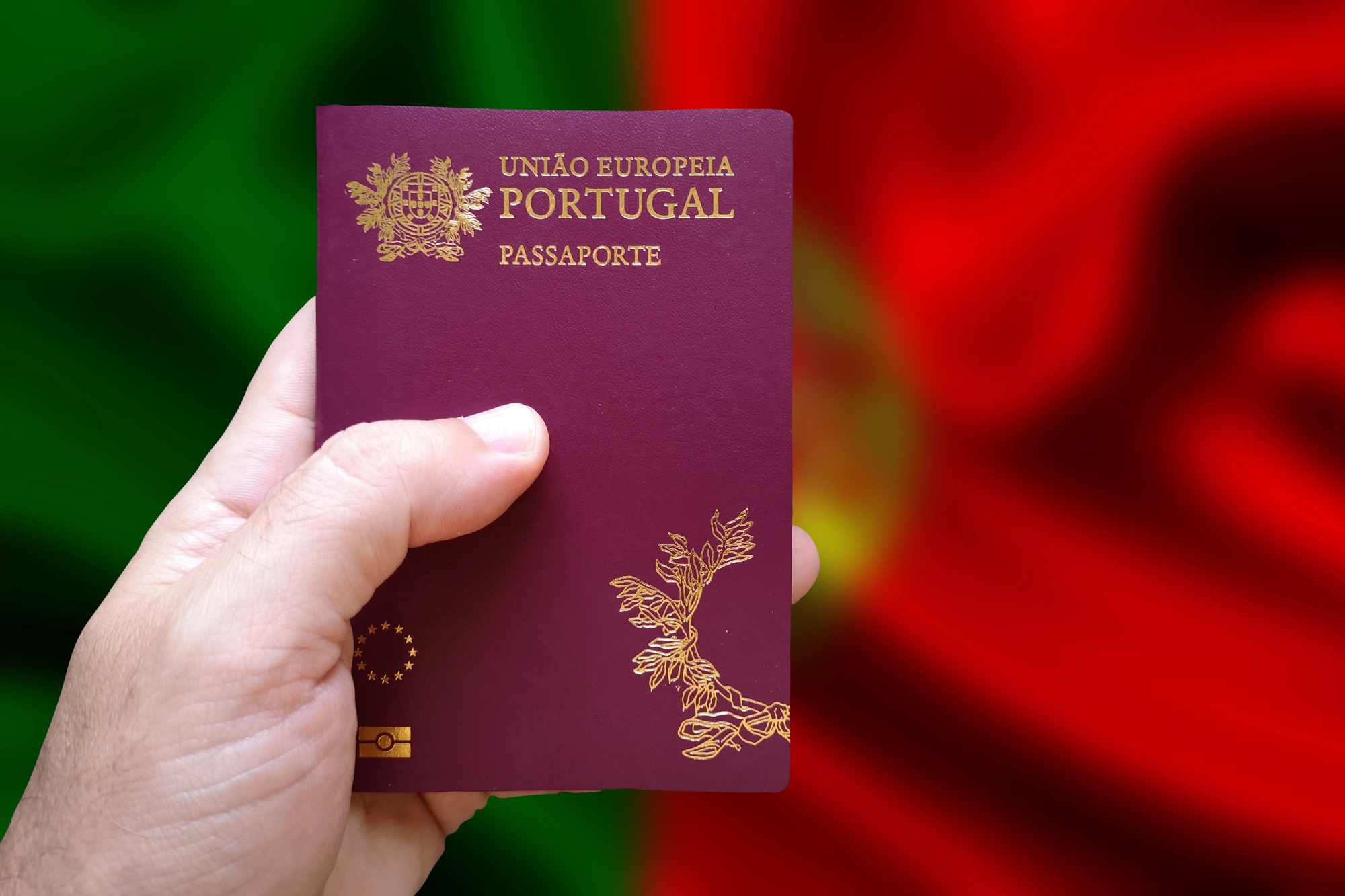
Both the D7 and Digital Nomad Visa allow you to apply for citizenship after 5 years if you:
- Maintain continuous legal residence
- Pass a Portuguese language test (A2 level)
- Have a clean criminal record
- Can demonstrate integration into Portuguese life
Application Process (Both Visas)
- Gather required documents (proof of income, accommodation, insurance, etc.)
- Apply through your local Portuguese consulate or VFS office
- Receive a 4-month entry visa
- Move to Portugal
- Attend your AIMA appointment and collect a residence permit (valid 2 years)
- Renew after 2 years (new permit valid 3 years)
- After 5 years, apply for citizenship or permanent residence
Which Visa Should You Choose?

The D7 and Digital Nomad Visa look almost identical — and in many ways, they are. Both grant residency in Portugal, access to public healthcare, freedom to travel within the Schengen Area, and a clear path to permanent residency and citizenship after five years. Both also require you to become tax resident in Portugal and to spend most of the year living there.
The biggest differences come down to income type and income level. The D7 is designed for those with passive income (such as pensions, rentals, or investments), while the Digital Nomad Visa is for people earning active income through remote work or freelancing.
Family Considerations
Things get more complicated when applying as a family. Typically, only one person’s income counts toward the requirement — for example, John’s income must cover his spouse and any children. This may not be too bad if it’s a D7 application, but could be difficult if it’s a Digital Nomad Visa application.
Visa Type |
Main Applicant |
Partner (+50%) |
Child (+30%) |
Total Monthly Income Required |
|---|---|---|---|---|
D7 Visa |
€920/month |
+€460/month |
+€276/month |
€920 + €460 + €276 per month |
Digital Nomad Visa |
€3,680/month |
+€1,840/month |
+€1,104/month |
€3,680 + €1,840 + €1,104 per month |
However, it is possible to apply separately: each partner could apply for a visa, each adding different dependent children. It’s even possible for each partner to apply for a different visa.
This kind of split strategy can be complex, so it’s often worth consulting a relocation expert or immigration lawyer to determine the best approach.
If You Qualify for Both
If you meet the requirements for both visas, (e.g., you have a pension but you also work remotely), the D7 is usually the easier option. Passive income — like a pension or rental income — is more reliable than freelance or remote work, which can fluctuate or require employer permission. The D7 also has a significantly lower income threshold, making it far more attainable for most applicants.
Legal expert Sandra Gomes Pinto states: “I would apply for the D7 because the D7 when it’s time for the renewal if you get like a pension if you have interest it’s probably easier to prove that you maintain this income as of having a job it can fluctuate your income might fluctuate if you lose this job.”
Those nearing retirement should think about what income they’ll have in 5 years time. It is possible to switch visas later on, but it’s often better to think this through when applying.
While the D7 isn’t specifically marketed toward remote workers, you are still allowed to work remotely under it. The Digital Nomad Visa makes that allowance more explicit, but in practice, the D7 offers much the same flexibility — just without the higher financial bar. So, there’s no need to apply for the Digital Nomad Visa just because you might keep on working remotely.
Practical Differences
In the past, the Digital Nomad Visa was sometimes slightly easier to apply for because certain consulates accepted Airbnb bookings or shorter rental contracts. It was also possible to apply for the Digital Nomad Visa in Portugal. Today, both visas generally require the same challenging documentation: a 12-month lease, Portuguese bank account, and NIF (tax number), as well as of course criminal background checks, passport scans, and everything else. Both should be applied for from your country of residence or citizenship.
The Digital Nomad Visa does offer a one-year temporary stay option, which can be useful if you want to “test the waters” before committing long-term. However, this short-stay version can’t be used for family reunification and must be renewed after the first year, which can be inconvenient. You could always apply for the 2-year permit, but then cancel your stay after a year.
Processing times can also vary. Some consulates see heavier demand for D7s, others for Digital Nomad Visas — so one category might move faster at a given consulate. In the UK, US, and Canada, however, both tend to face similar backlogs. That said, it’s still worth speaking to an immigration professional in case one is faster than the other.
Legal and Professional Costs
Legal and professional fees are generally the same for both visa types.
Portugalist takeaway
If you have a reliable pension or passive income and qualify for the D7, it’s almost always the more straightforward route. The Digital Nomad Visa is better suited to those with strong, consistent active income and a clear remote work setup — but it comes with higher thresholds and fewer allowances for families.
 Thinking about Moving to Portugal?
Comments are closed.