

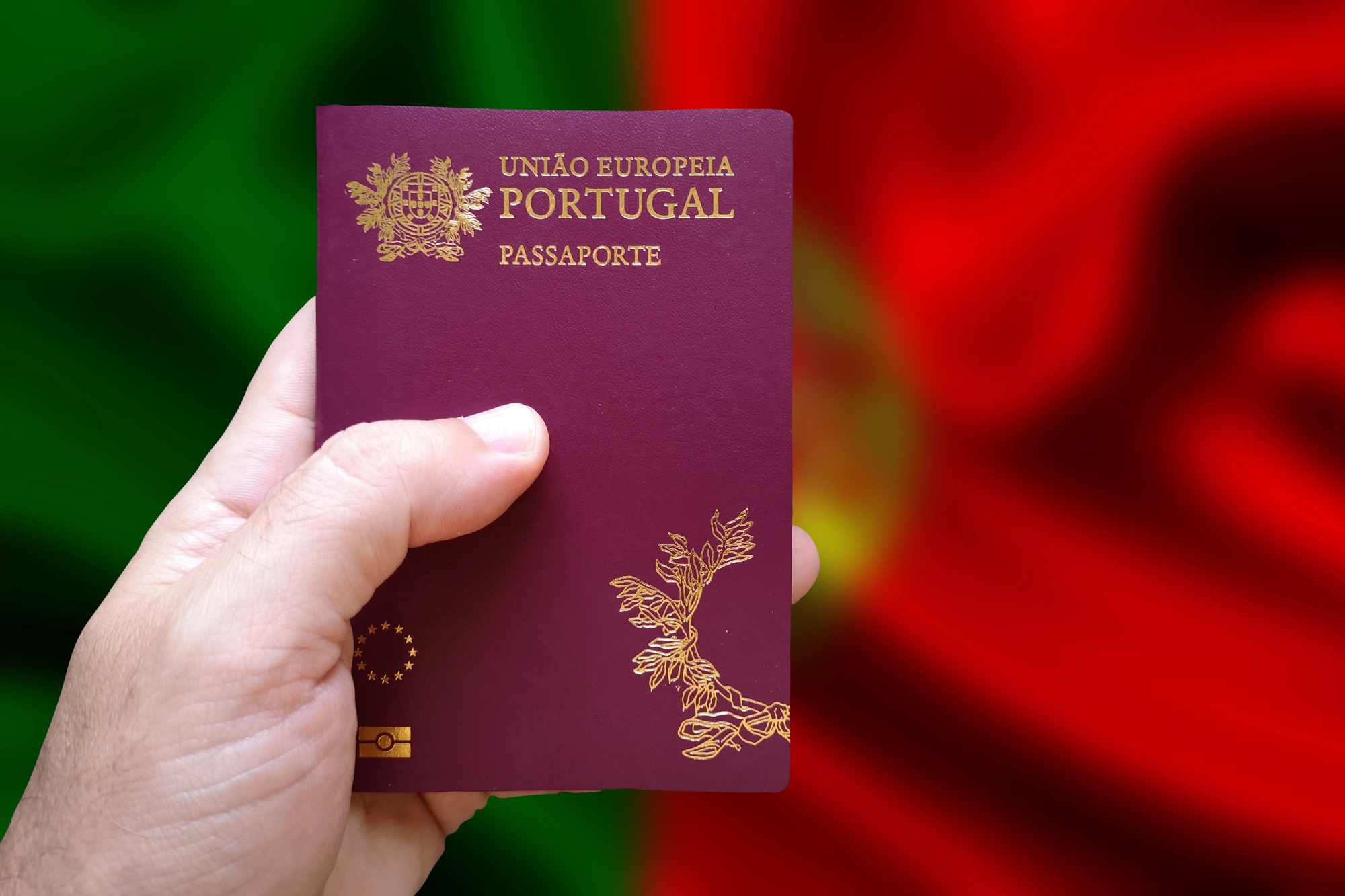

Most weeks, someone emails me a version of the same question: my great-grandmother was born in Porto—can I get a Portuguese passport? It comes from all over—Canada, the UK, Australia—but far and away the most often from the United States. People who never used to think about a second passport suddenly want the option, and a great-grandparent from the Azores or mainland Portugal looks like a route in.
So here’s the direct answer. You cannot claim Portuguese citizenship by descent through a great-grandparent the way you can through a parent or grandparent. But since 19 May 2026 there are now two real routes to get there anyway, and one of them is brand new:
- The two-step route—get a living parent or grandparent to become Portuguese first, then apply through them.
- The new great-grandchild naturalization route—if you live legally in Portugal for five years and your great-grandparent was Portuguese by origin, the government may naturalize you.
What I’d do depends entirely on one thing: are you open to actually moving to Portugal, or do you just want the passport from your sofa? If you’d never leave home, the two-step route is your only option, and you should get your relatives started now—more on why below. If you’re open to moving anyway, the new route is genuinely good—five years, when most other people are looking at ten. But you have to live here to get it.
Request Assistance Obtaining Portuguese Citizenship
The single most important thing to know first
This is slow, and the new route has not been tested yet. The law passed in May 2026, and as of writing, the government still hasn’t published the regulation that spells out exactly how you apply, what documents you need, and how the language and culture requirements work in practice.
That means you’d be one of the first people down a path nobody has walked yet. Other routes—a parent application, a grandparent application, a D7—are well-worn and predictable. That’s not a reason to rule it out, but it’s a real risk to weigh, and I’d want a lawyer involved from day one rather than trying it solo.
The other thing: whichever route you pick, budget years, not months. I’ll put concrete numbers on that below.
Why a great-grandparent doesn’t count on its own
Portuguese citizenship by descent—the kind that’s backdated to your birth, normally goes back two generations max:
- Through a parent, it’s straightforward. You don’t need to show language skills or ties to Portugal. Proof of the bloodline is usually enough.
- Through a grandparent, it’s still possible, but the bar is higher: you have to pass an A2 Portuguese exam and prove a genuine connection to the Portuguese community (more on both below). Technically, you could also sit a 150-hour approved government course, but these normally aren’t open to non-residents so, in practice, the only route is the A2 exam (CIPLE).
- Through a great-grandparent, there’s no direct descent route at all.
Route 1: The two-step (or three-step) family chain
This is the most common route and the one that people have been doing for years. The idea is to get someone else to apply and create a link between you and your Portuguese ancestor.
If your grandparent is the child of your Portuguese great-grandparent, they can be recognized as Portuguese first—as the child of a Portuguese citizen, which is the easy version with no language exam and no ties requirement. Once your grandparent is Portuguese, your parent becomes the child of a Portuguese citizen. They can apply as the child of a Portuguese parent and you can apply as the grandchild of a Portuguese grandparent.
You can get your grandparent to apply first, then your parent, and then you. That way, nobody would need to do the language exam or show proof of ties to Portugal, but this would significantly lengthen the process by at least a few years.
Whichever route you go, know that there can be a few challenges in getting parents or grandparents to apply for Portuguese citizenship. These are the most common ones that I’ve seen over the years I’ve been running Portugalist.
- Someone has to be willing to do the paperwork. Gathering Portuguese birth and marriage records for a relative who emigrated three generations ago is a genuine project—realistically the better part of a year of chasing documents. I’ve noticed that the Azores, in particular, often had poor records, and getting a hold of these documents can be challenging. Asking an 80-year-old to care about that when they’ve got no interest in a Portuguese passport themselves is hard.
- If the chain has to pass through a grandchild application, someone has to pass the A2 exam. That’s three to six months of study minimum, probably a year to be comfortable, for a person who’s only doing it as a favor to you. Keeping them motivated through that is a lot to ask.
- Then you wait. Once an application is actually submitted, expect anywhere from one to four years for approval, depending on the backlog and which type it is. A child-of-Portuguese application tends to move faster than a grandchild one, but even the fast version is measured in years, and you’re doing this twice in sequence.
- You may need a lawyer. Generally speaking, I recommend that anyone involved in any legal process in Portugal uses a lawyer. However, some people do apply for citizenship or residency themselves. When it comes to gathering documents, particularly from remote locations like the Azores or rural Portugal, sometimes these documents aren’t easily available. Birth certificates and marriage certificates may not even exist at all, or people’s names may have changed once they arrived in the U.S. or somewhere else. Often, you not only need a lawyer to gather the paperwork, as you may be unable to do this yourself, but also to put in a case for your citizenship application if the correct paperwork does not exist.
Now remember, you don’t need to have your Portuguese passport in hand to move to Portugal, necessarily. There are a lot of different attainable residency visas, like the D7 and the D8. Potentially, you can move to Portugal and, at the same time, apply for Portuguese citizenship. Once you have Portuguese citizenship, you can then update your residency documents to reflect that.
Route 2: The new great-grandchild naturalization route
Under the nationality law that came into force on 19 May 2026 (Lei Orgânica 1/2026), the Portuguese government may grant citizenship to a third-degree descendant—that’s a great-grandchild—of someone who was Portuguese by origin, provided that great-grandchild has legally lived in Portugal for at least five years.
Read that carefully, because it’s easy to misread as good news it isn’t:
- It is naturalization, not descent. It doesn’t backdate to your birth, and—this is the big one—it does not let you claim from abroad. You have to move to Portugal, get legal residency some other way, and live here for five years first. Having a Portuguese great-grandparent gives you no visa and no right to move. It only changes what happens after you’ve already moved and settled.
- The great-grandparent must have been Portuguese “by origin.” If they became Portuguese through naturalization themselves, this doesn’t apply. Born Portuguese is the test.
- It’s discretionary. The law says the government may grant it—not shall. Five years of residence gets you to the door; it doesn’t guarantee you’re let through.
- You still meet all the normal naturalization conditions: knowledge of Portuguese language and culture, a clean criminal record, a declaration supporting Portugal’s democratic principles, and the ability to support yourself.
Some law firms are reporting that the EU would need a B1 rather than an A2 level of Portuguese to qualify for this route. If that’s the case, it would be a little bit harder, although realistically, after living in Portugal for 5 years, you should easily be able to reach a B1 level of Portuguese. That’s not to say that B1 won’t be difficult, but it should be very doable.
So why is this genuinely worth having? Because five years beats what everyone else gets. Since the 2026 law, ordinary naturalization takes seven years for citizens of EU and Portuguese-speaking (CPLP) countries and ten years for everyone else—up from a flat five years before. A great-grandparent born in Portugal knocks that back down to five. If you were going to move to Portugal anyway, that Portuguese blood saves you two to five years of waiting.
Who this actually suits: someone who wants to live in Portugal—or is genuinely open to it—and has a great-grandparent born there. For that person, this is a quietly excellent deal.
Who it doesn’t suit: anyone whose plan was to get a passport without leaving home. For them, this route does nothing, and Route 1 is still the answer.
The two routes side by side
| Two-step family chain | New great-grandchild route | |
|---|---|---|
| Do you have to move to Portugal? | No | Yes—5 years’ legal residence |
| Does it backdate to birth? | Yes (it’s descent) | No (it’s naturalization) |
| Depends on living relatives? | Yes—they must apply first | No |
| Language exam? | Only if a grandchild step is needed | Yes |
| Ties to Portugal? | Only on a grandchild step | Covered by living here, but more recommended |
| Great-grandparent must be Portuguese by origin? | Effectively yes, up the chain | Yes, explicitly |
| Roughly how long? | Several years, twice over | 5 years’ residence + processing, after you move |
| Tested and predictable? | Yes | No—brand new in 2026 |
How to Move to Portugal As A Non-EU Citizen
Regardless of whether you’re going route one (as a means to move to Portugal) or you’re going route two and you have to move to Portugal, you will need a way of moving to Portugal as a non-EU/EEA/Swiss citizen.
The following are the most common forms of residency visas for moving to Portugal. If you have a partner or spouse that is an EU, EEA, or Swiss citizen, you can potentially come as their dependent as well.
| Visa | Best for | Minimum monthly income | Physical stay |
|---|---|---|---|
| D7 | Retirees, landlords, passive income | €920 (~$1,035) in passive income | ~8 months/year |
| D8 — Digital Nomad | Remote workers and freelancers | €3,680 (~$4,140) in remote income | ~8 months/year |
| Golden Visa | Investors (€500k+) or arts donors (€200k+) | Investment, not income | ~7 days/year |
| D2 | Entrepreneurs and self-employed | €920 (~$1,035) in business income | ~8 months/year |
| D1 | Anyone with a Portuguese job offer | €920 (~$1,035) salary | ~8 months/year |
| D3 | Highly qualified professionals | €1,611.39 (~$1,813) salary | ~8 months/year |
| D4 | Students at Portuguese universities | Proof of funds | While enrolled |
| D5 | Already studying elsewhere in the EU | Proof of funds | While enrolled |
| D6 | Family of someone with Portuguese residency | Sponsor’s income | ~8 months/year |
So what should you do?
- You just want the passport and won’t move: the two-step family chain is your only route. If you have a living, willing parent or grandparent, start them gathering documents now.
- You’d genuinely consider living in Portugal: the new great-grandchild route is a real advantage—five years instead of ten. Start by choosing a residency visa. Hint: most Portugalis readers go for the D7 or digital nomad visa.
You don’t have to choose just one, either. You can pursue residency and a descent application at the same time—and if you’re leaning toward moving, there’s a real argument for getting here first, because living in Portugal is itself the strongest proof of ties for a grandparent application later.
Whatever you decide: start gathering documents early, start the language sooner than you think you need to, and don’t wait for the perfect route to reveal itself. The people who get there are the ones who started.
Sources
The rules on this page come from the primary legislation, not third-party guides. The full current text of the Nationality Law is republished as an annex to the 2026 amendment, so the first two links between them contain everything the law currently says.
- Lei Orgânica n.º 1/2026, de 18 de maio — the 2026 amendment. Source for the new great-grandchild route (Article 6(8): five years’ residence, descendant of a Portuguese citizen by origin, discretionary) and the general change to 7 years (EU/CPLP) / 10 years (others). Its annex republishes the whole law.
- The official published text — Diário da República, N.º 95, 1.ª série, 18 May 2026 (in force 19 May 2026).
- Declaração de Retificação n.º 17/2026 — the same-day correction (criminal-record wording; doesn’t change eligibility).
- Regulamento da Nacionalidade (Decreto-Lei n.º 237-A/2006), consolidated — the “how you apply” regulation. Its last amendment predates the 2026 law, which is the evidence that the new route’s procedure isn’t published yet.
- Instituto dos Registos e do Notariado (IRN) — the authority that processes applications; where the official procedure will appear once updated.
 Thinking about Moving to Portugal?