


Reality check before we dive in: Portuguese food is generally simple, fresh, and comforting rather than spicy or sauce-heavy. If you’re expecting Thai/Mexican “boom-pow” flavours every meal, you’ll think it’s plain. If you lean into great ingredients, grills, stews, soups, and the right regional spots, you’ll eat very well. This guide sets expectations honestly and shows you how to order for maximum flavour.
There are hundreds of Portuguese dishes (and more than 365 ways to cook bacalhau alone), but most everyday meals centre on good produce + minimal seasoning (salt, garlic, olive oil, lemon). Here’s how to enjoy it—without the hype—and what to skip.
What Portuguese Food Is (and Isn’t)
- Ingredient-led: fresh fish, quality pork, olive oil, bread, seasonal fruit and vegetables. Sauces are rare; grilling & roasting are common.
- Not spicy: piri-piri exists, but “spicy” is mild by global standards. Bring your chilli oil if you love heat.
- Vegetables show up as soup: a lot of veg is eaten as sopa do dia (veg soup) or a simple salad; mains can feel meat/fish + starch-heavy.
- Lunch is ‘fuel’ unless you choose otherwise: the menu/prato do dia is cheap and plain by design—great value, not fireworks.
17 Of the Best Things You Should Eat in Portugal
Here’s what you’ve got to look forward to. When you land in Portugal, the big question is: what are the can’t-miss bites? Which dishes should you hunt down first? Below are the heavy hitters—some are regional gems you’ll only find in their home turf, but plenty appear on menus across the country.
Pastel de nata

Pastel de nata
Portugal’s superstar. You’ll find pastéis de nata in virtually every café, from perfectly fine “everyday” versions to knock-out tarts at Lisbon institutions like Aloma, Manteigaria, and (of course) Pastéis de Belém. They were born in Lisbon and, while great examples now pop up all over the country, the capital still sets the bar.
- Price & portions: usually €1–€2 each. Grabbing a box (caixa) of 4, 6, or 8 is common if you’re sharing.
- Dietary notes: vegan versions now exist (especially in Lisbon, increasingly in Porto and the Algarve). Gluten-free is rarer, but some bakeries experiment—ask at the counter.
- Pairings: a short espresso (bica) if you like it strong, or a milky galão/meia de leite. Ice-cold milk also works ridiculously well.
Where to aim high in Lisbon: Pastéis de Belém (the original crowd-pleaser), Manteigaria (multiple shops, consistently excellent), and Pastelaria Aloma (award-winning). Expect queues at peak times, but they move fast.
Bacalhau
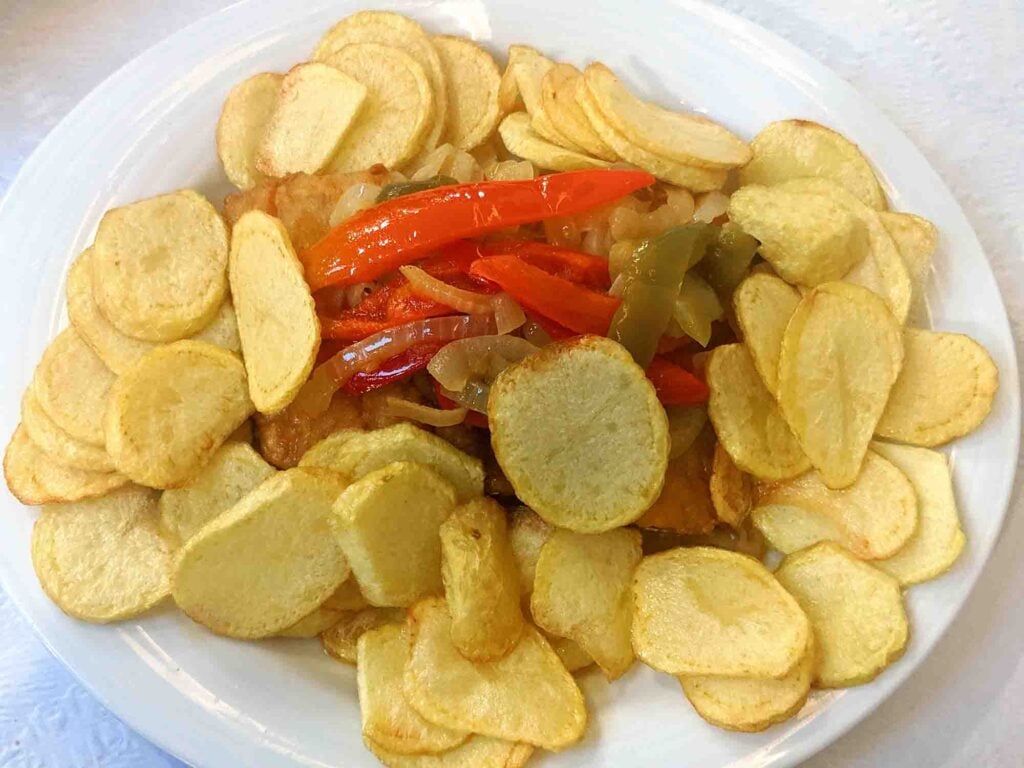
Bacalhau is often described as Portugal’s “national dish,” but that’s a bit misleading — not because it isn’t beloved (it is), but because there isn’t just one dish. There are hundreds. People like to say there’s a bacalhau recipe for every day of the year — 365 — but many cooks will tell you the real number is well into the thousands.
You won’t have time to try all 1,000, but a few favourites to look out for are:
- Bacalhau com natas (bacalhau with cream and potatoes)
- Bacalhau à lagareiro (bacalhau with lots of olive oil)
- Bacalhau com broa (bacalhau with a type of cornbread)
In cafés and snack bars, you’ll spot pastéis de bacalhau (also called bolinhos de bacalhau in the north) — small, deep-fried cod-and-potato croquettes. They’re salty, savoury, and extremely snackable. If you’re grabbing a coffee mid-morning or need something quick with a beer, this is the simplest entry point into the bacalhau universe.
Queijadas Dona Amélia

If pastéis de nata are the celebrity of Portuguese sweets, Queijadas Dona Amélia are the cult favourite — the one locals light up about when you mention them, the one that travelers only discover if someone tells them.
They come from Terceira, one of the islands in the Azores, and they’re named after Queen Amélia, who visited the island in the late 1800s and, according to the story, fell in love with these little cakes on the spot.
So what are they like?
Imagine:
- Soft, moist little cakes
- Spiced with cinnamon and clove
- Made with molasses/honey and sometimes a touch of cornmeal
- Slightly dark, rich, aromatic
- Almost like a Portuguese cousin of pain d’épice or gingerbread
The real challenge? Finding them.
If you’re not going to Terceira, the trick is to:
- Look for Azorean specialty shops (usually in Lisbon or Porto)
- Ask if they have Dona Amélia cakes from Forno or O Forno — a bakery in Terceira that ships to the mainland
- Buy a small box, because they’re rich — but also maybe a big box, because they vanish quickly
They’re sweet-but-not-too-sweet, deeply aromatic, and full of personality. The kind of pastry you eat slowly. The kind of pastry that feels old, in a good way — like something that has always existed.
Piri-piri chicken
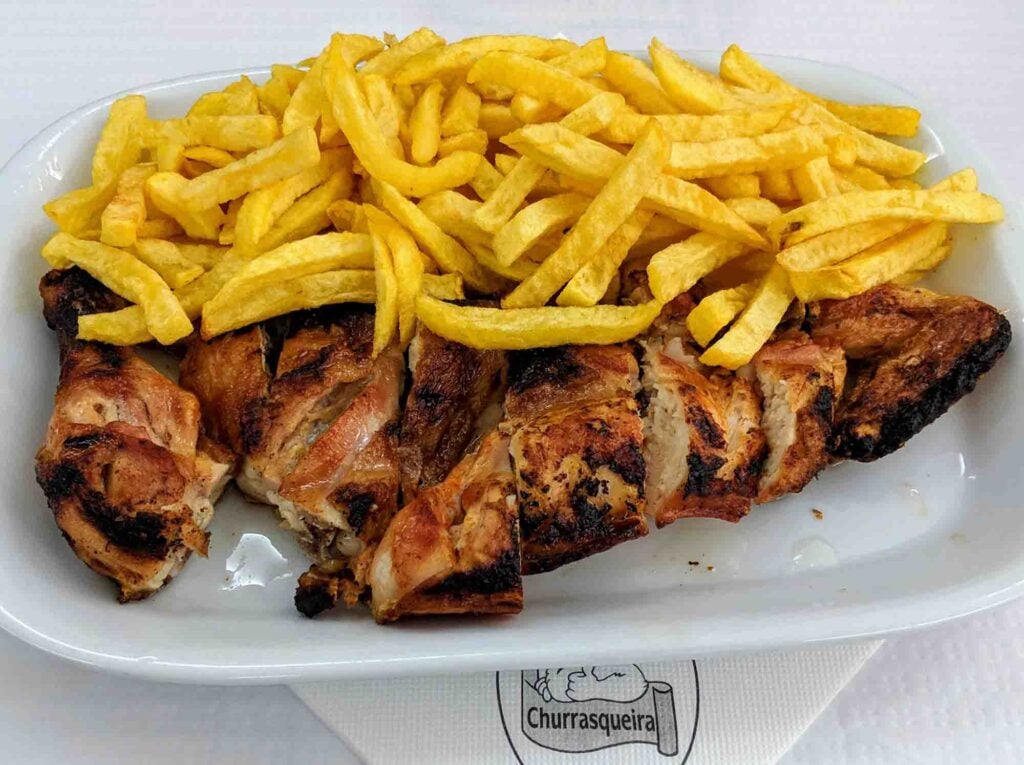
If you think you’ve had piri-piri chicken before because you’ve been to Nando’s, you’re in for a surprise. This is not that.
In Portugal, frango piri-piri (or frango no churrasco com piri-piri) is simpler, smokier, and generally much better. No bottled marinades, no sugary glazes — just chicken grilled over charcoal and brushed with a hot oil-based piri-piri sauce that varies from family to family, town to town.
The dish has roots in Portugal’s former African colonies, where piri-piri chillies grow, but it’s the Algarve that truly embraced it. The town of Guia, in particular, is often credited as the “home” of piri-piri chicken, and you’ll still find some excellent restaurants there — but the whole region does it well.
You’ll see piri-piri chicken on menus all over the country, and you can get solid takeaway from local churrasqueiras (Portuguese grill houses) almost anywhere. But if you really want that perfect version — salty, smoky, spicy-but-not-too-spicy, dripping just enough sauce to make the fries on the side interesting — then try it in the Algarve. The difference is noticeable.
Caldo Verde

Caldo Verde is about as comforting and everyday-Portuguese as food gets. It’s a simple, homey soup made from potatoes blended into a silky base, with shredded collard greens, garlic, and a slice or two of chouriço on top. Nothing flashy, nothing complicated — but deeply familiar to anyone who grew up here.
It comes from the North of Portugal, though you’ll find it in cafés, tascas, and family kitchens all over the country. It’s one of those dishes that shows up everywhere: weekday lunches, late-night snacks, village festivals, weddings, New Year’s Eve — and yes, it’s officially considered one of the Seven Wonders of Portuguese Gastronomy.
If you’re vegetarian or vegan, just ask for it without the chouriço — and check whether the broth is vegetable or meat-based (it varies by restaurant). In some places, you can get a truly veggie version; in others, it’s more “symbolically vegetarian, but quietly cooked with pork.”
Bolinhos de bacalhau
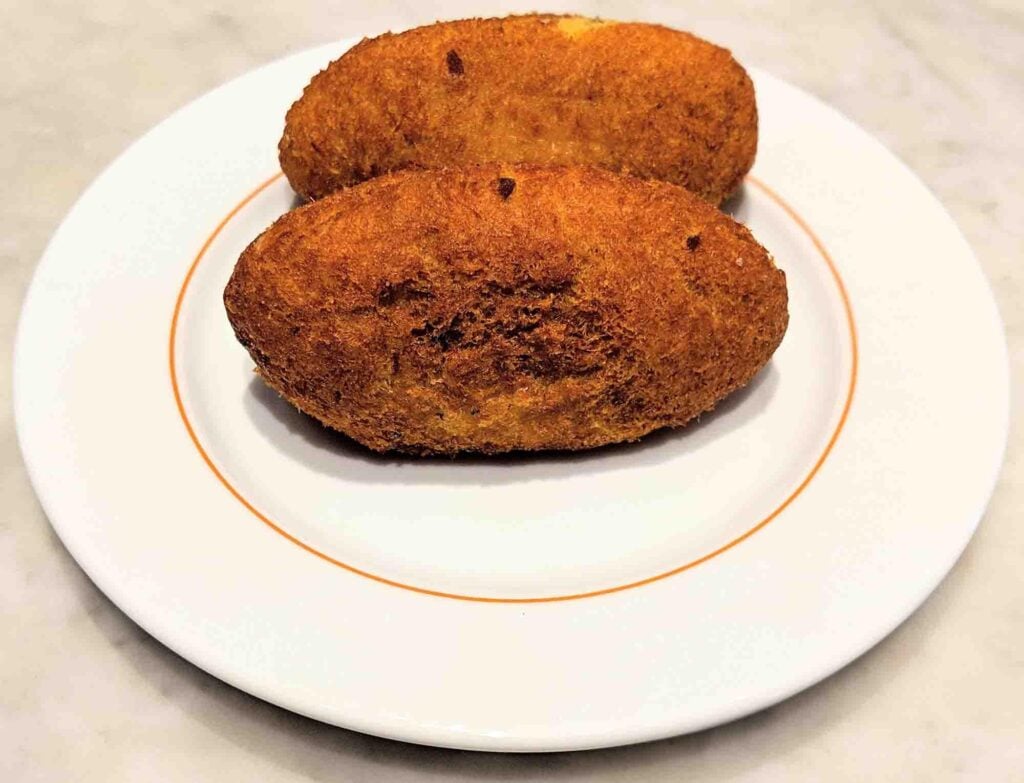
Yes — another bacalhau dish. But this one is everywhere, and it’s one of the easiest, most snackable introductions to Portuguese food.
Bolinhos de bacalhau, also known as pastéis de bacalhau, are deep-fried cod and potato croquettes: crispy on the outside, soft and savoury on the inside. They’re small, handheld, and usually served warm — and you’ll see them lined up in the glass counters of cafés, bakeries, and snack bars all over the country.
They’re the kind of thing people order with:
- A bica (espresso) mid-morning
- A cold beer in the afternoon
- Or just when they feel like a quick bite that isn’t sweet
They’re salty, comforting, and easy to love — even if you’re not sure you’re on board with bacalhau yet. And unlike some of the bigger cod dishes, there’s no ceremony here: grab one, eat it standing up, move on with your day.
You’ll also see a more elevated version in some restaurants — served warm with a bit of broth, herbs, or olive oil — and in Lisbon, there’s even a tourist-famous version stuffed with Serra da Estrela cheese that’s incredibly rich and gooey.
But honestly? The everyday café version is its own kind of perfect.
Arroz de Marisco
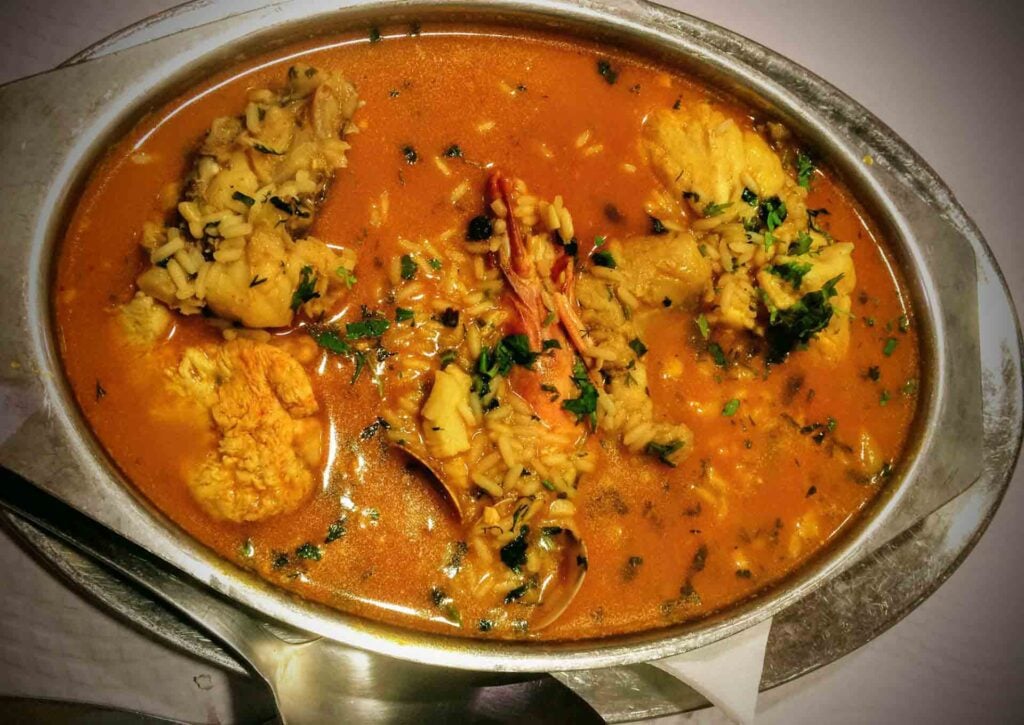
Arroz de Marisco is one of those dishes people dream about after they leave Portugal. It’s a rich, brothy seafood rice, somewhere between a stew and a risotto — not like Spanish paella (even though people love to compare them). The key difference is the sauce: arroz de marisco is meant to be soupy, almost luxurious, with the rice sitting in a fragrant seafood broth rather than standing dry on a plate.
It’s comforting, indulgent, and messy in the best way. And yes — it’s officially one of the Seven Wonders of Portuguese Gastronomy.
Expect:
- Rice that’s soft and absorbs flavour
- A tomato-based broth enriched with shellfish stock
- Clams, mussels, prawns, sometimes bits of crab or fish
- A little fresh coriander on top (this is one of the few dishes where coriander shows up)
It’s the kind of dish you linger over — usually shared, usually paired with wine, ideally eaten slowly somewhere with a view of the sea.
Cataplana

A cataplana refers both to the dish and the way it’s cooked. The name comes from the clam-shaped copper pot it’s prepared in — a pot that seals tightly, trapping steam and flavour inside. When it arrives at the table, the server opens it like a treasure chest, and a wave of garlic, herbs, and seafood aroma comes pouring out. It’s a moment.
The cataplana style comes from the Algarve, and while you can sometimes find it elsewhere, it’s still very much a regional specialty. If you see it on a menu while you’re in the Algarve, that’s your cue.
There are several types of cataplana, and you’ll usually see them labelled by their key ingredient:
- Cataplana de peixe – mixed fish, often with prawns or clams
- Cataplana de bacalhau – dried cod cooked with vegetables and aromatics
- Cataplana à alentejana – typically pork and clams, rich and savoury
- Cataplana de marisco – a seafood feast (often the most popular version)
The flavour is bold but not spicy — think white wine, garlic, tomatoes, peppers, olive oil, and the natural juices from the seafood or meat melding together. Because everything cooks sealed inside the cataplana, you get deep, concentrated flavour without heaviness.
This is one of the standout dishes of the Algarve, and one of the ones people go home talking about. If you’re visiting the region, especially anywhere along the coast, make time to try one — ideally with good bread for mopping up the broth and a chilled white or green wine on the side.
It’s not a dish to rush. It’s a dish to settle into.
Leitão

Leitão is roast suckling pig, cooked until the skin turns glassy and crackling, while the meat stays unbelievably tender. It’s one of the least vegetarian-friendly dishes in Portugal — and that’s really saying something — but among meat-eaters, it’s considered a showstopper.
You’ll see leitão on menus all over the country, but the heartland of this dish is the area around Coimbra, especially the town of Mealhada, which is famous for it. Restaurants there specialise in nothing else — rows of piglets roast slowly in wood-fired ovens, basted with garlic, pepper, and fat, until the flavour concentrates and the texture becomes almost unreal.
What to expect:
- Very crispy skin (like the Portuguese answer to crackling, but finer)
- Soft, silky meat that pulls apart easily
- Usually served with chips (fries) and orange slices to cut the richness
- Often paired with sparkling wine — yes, really (and it works)
This is celebration food for many Portuguese families — the kind of thing ordered for baptisms, birthdays, and Sunday lunch. But you don’t need an occasion. If you’re passing anywhere between Porto and Coimbra, keep an eye out for roadside restaurants with “Leitão” in huge letters outside. Those are usually the real deal.
Polvo à lagareiro
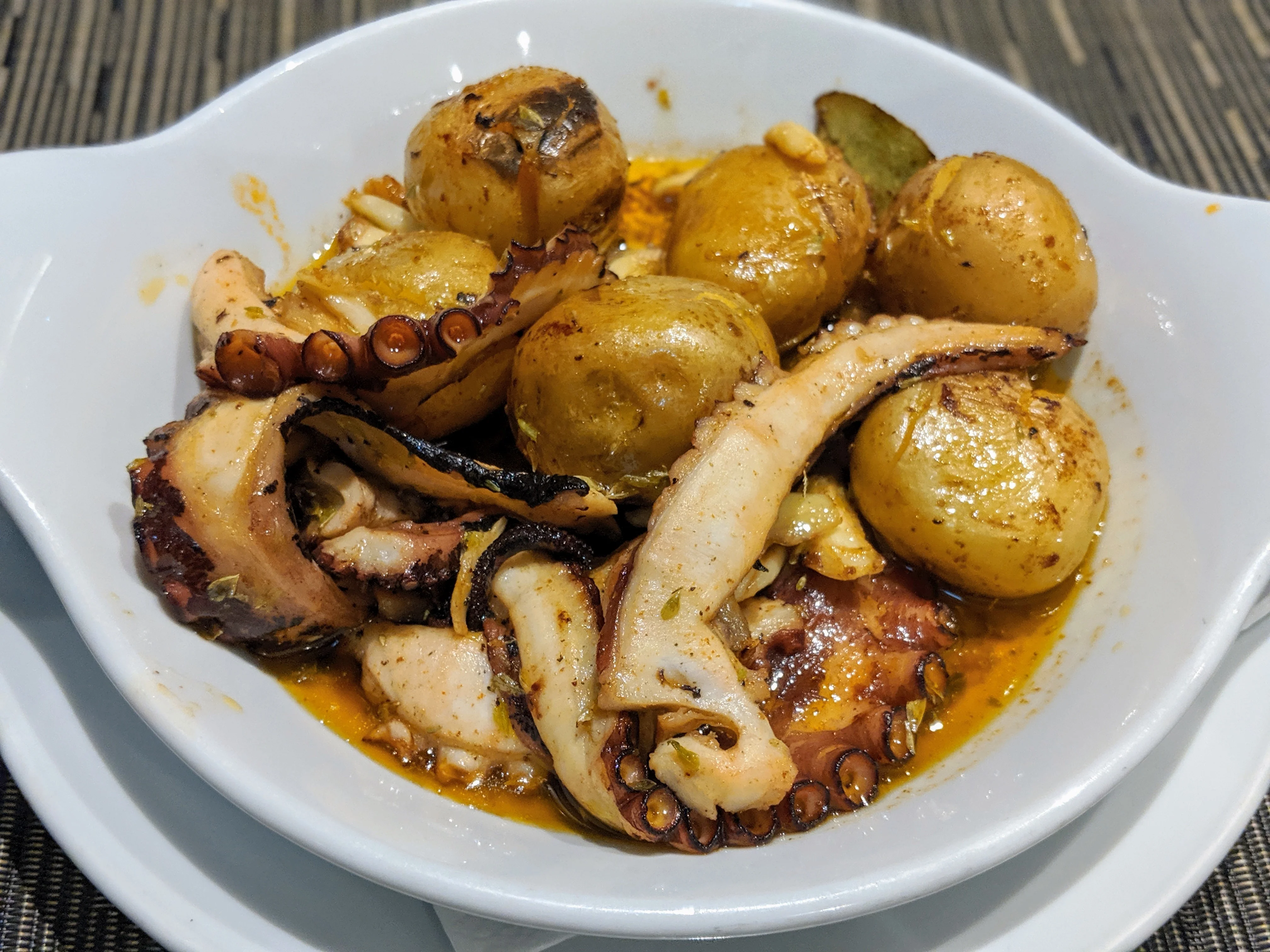
Octopus is surprisingly beloved in Portugal — not in a novelty, try-it-once way, but in a grown up with it, Sunday lunch, grandma’s recipe kind of way. It shows up in salads, stews, rice dishes, and even grilled. But if you’re going to try just one octopus dish in Portugal, make it polvo à lagareiro.
This dish is beautifully simple: tender, slow-cooked octopus, placed in the oven with roasted potatoes (usually the small, wrinkly kind boiled first in salty water), and bathed — generously — in good Portuguese olive oil. We’re talking a lot of olive oil. Enough that your plate will glisten.
The result?
- Octopus that’s soft enough to cut with a fork (well, almost)
- Potatoes that soak up all the garlicky olive oil
- A dish that’s rich, comforting, and deeply Portuguese
It’s widely available, especially in traditional restaurants and seafood-focused places, but it’s a particular standout in coastal regions and the North, where octopus traditions run deep.
Porco Preto
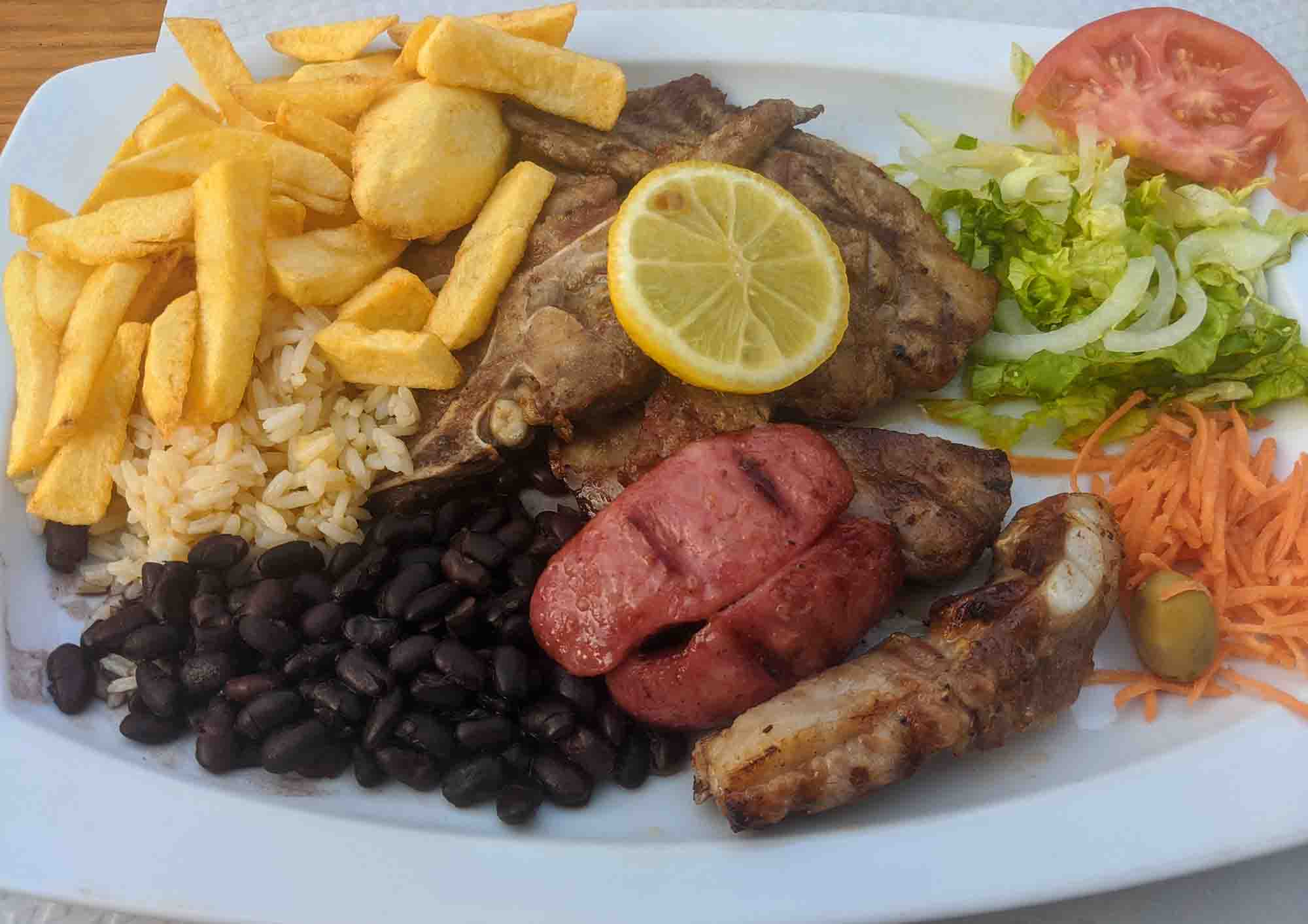
If you eat meat, Porco Preto is one of the great joys of Portuguese cuisine. This isn’t just pork — it’s from a special breed of free-range black pig found in Portugal and Spain, especially in the Alentejo region. You’ll sometimes see it written as Porco Preto Alentejano, and that’s where it shines.
These pigs are raised outdoors and fed on acorns, which gives the meat a deep, rich flavour and a tenderness you don’t normally associate with pork. Think of it as Portugal’s answer to jamón ibérico, with the same buttery, melt-in-your-mouth quality — just more rustic, grilled, and ready to eat.
If you’ve ever tried jamón ibérico in Spain or prosciutto in Italy, this is Portugal’s version of that same slow-crafted tradition — just less famous globally, and arguably, more rustic and soulful.
You’ll see Porco Preto show up on menus in different forms, but two cuts are especially worth knowing:
- Secretos de Porco Preto — thin, marbled strips of pork grilled over high heat. Juicy, flavour-packed, slightly smoky. Often served with chips or migas (a rustic bread-based side).
- Plumas de Porco Preto — a tender, elongated cut that’s even softer, almost steak-like.
Both are the kind of dishes that make you close your eyes after the first bite.
Sardines

If there’s one smell that is Portuguese summer, it’s grilled sardines sizzling over charcoal. You’ll see (and smell) them being cooked on street corners, at backyard barbecues, and outside tiny family-run restaurants — especially in June, when sardine season is at its peak.
This is one of the most iconic things you can eat in Portugal. It’s not fancy — it’s not meant to be. It’s just fresh sardines, coarse sea salt, a hot grill, and maybe a squeeze of lemon. The magic comes from the smoke, the simplicity, and the fact that they’re usually eaten outdoors, with loud conversation and cold beer.
The best time to eat them is during Santos Populares, the huge street festivals that happen every June:
- Santo António in Lisbon
- São João in Porto
- São Pedro in towns across the country
During these celebrations, whole neighbourhoods set up makeshift grills in the streets. There’s music, dancing, paper garlands, plastic cups of wine, and plates of sardines served on slices of bread that soak up the smoky oils. It’s messy, joyful, and deeply Portuguese.
A few things to know:
- Sardines have a strong, fish-forward flavour — if you love bold seafood, you’ll be in heaven.
- They’re served whole, head and all — it’s part of the tradition.
- Don’t be shy about using your hands. Everyone does.
If you try them at any time of year, they’ll be good. But in June, grilled in the street, surrounded by music and laughter?
They’re unforgettable.
Alheira

Alheira might look like just another Portuguese sausage, but it comes with one of the most fascinating backstories in the country’s culinary tradition.
During the Inquisition, Jews in Portugal were forced to publicly convert to Christianity or face persecution. One of the ways neighbours would “check” whether someone was a real convert was by whether they ate pork — especially sausages, which were a staple of everyday meals.
So Jewish communities came up with a clever workaround: They made a sausage that looked and tasted like pork… but contained no pork at all.
Instead, they used:
- Chicken
- Game meats
- Bread
- Garlic
- Olive oil
The result was alheira, a golden-brown sausage with a soft, almost crumbly texture — smoky, garlicky, comforting, and deeply satisfying. It fooled the neighbours, preserved tradition, and became so beloved that the recipe spread well beyond the communities that created it.
Today, alheira is everywhere — from simple workers’ cafés to polished restaurants — and it’s recognized as one of the Seven Wonders of Portuguese Gastronomy.
How to eat it:
- Traditionally, fried or grilled
- Served with fried eggs, rice, and chips, or sometimes simple greens
Some versions today do now include pork — especially in the North — so if you’re vegetarian or avoiding pork, double-check before ordering.
Queijo da Serra da Estrela

Queijo da Serra da Estrela comes from Portugal’s highest mountain range — the Serra da Estrela — where sheep graze on wild herbs and mountain grasses. The milk they produce is rich and fragrant, and the cheese made from it is unlike anything you’ve likely had before.
When it’s ripe, this cheese turns so soft and creamy that you don’t slice it — you scoop it. Think of it as somewhere between a pudding, a custard, and a cheese you spread on warm bread. It’s buttery, slightly tangy, and deeply savoury, with a complexity that lingers.
You’ll often find it:
- Served as a starter, usually with bread or toast
- On petiscos (Portuguese tapas) menus
- On display in traditional food shops, half cut open, ready to ooze
And like several other dishes we’ve mentioned, Queijo da Serra da Estrela isn’t just popular — it’s officially celebrated. It’s recognised as one of the Seven Wonders of Portuguese Gastronomy.
A few tips:
- If you see it listed as “Queijo da Serra amanteigado”, that’s the super-soft, spoonable version.
- It pairs beautifully with honey, fig jam, or a glass of Dão or Douro red wine.
- It’s seasonal — the winter version is especially rich and flavourful.
If you try only one cheese in Portugal, make it this one. It’s pure comfort and tradition in a rind — and eating it with a spoon feels like the luxury it absolutely is.
Francesinha
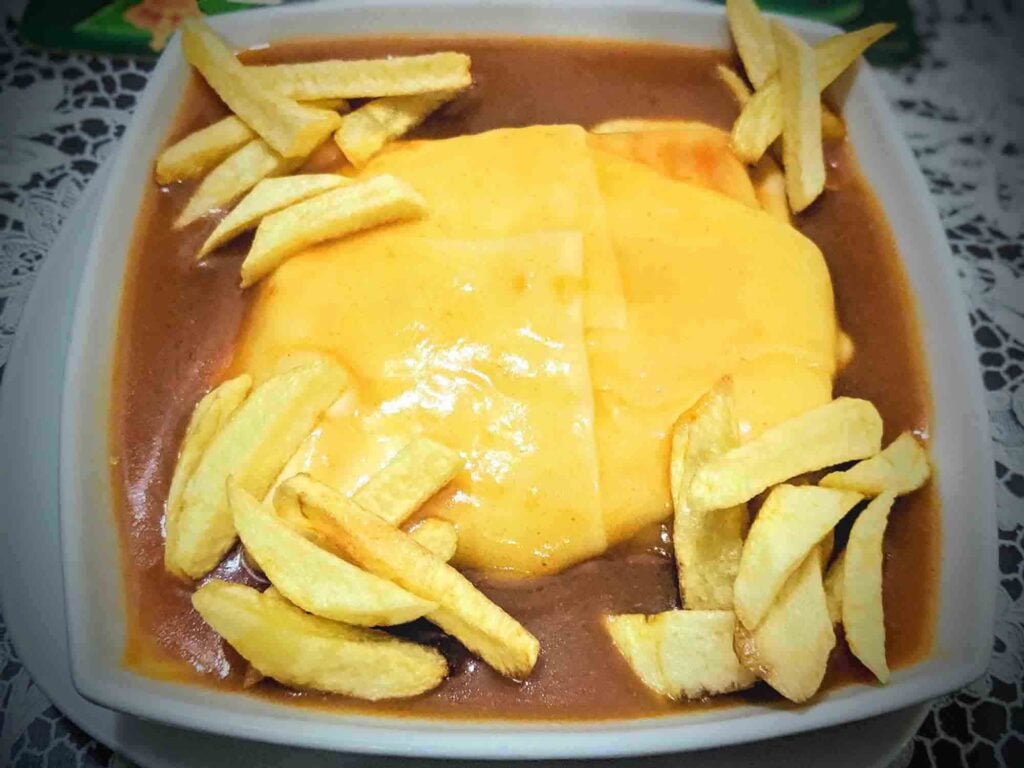
Picture this:
- A thick sandwich layered with ham, steak, and sausage
- Covered in melted cheese
- Then drowned — fully, unapologetically drenched — in a rich beer-and-tomato sauce
- Served with a side of fries to mop up whatever’s left
It’s heavy. It’s messy. And it’s absolutely beloved.
The francesinha was born in Porto, and Porto residents take it very seriously. If you ask someone where to find the best one, they won’t just give you a recommendation — they’ll defend their favourite café like it’s a personal honour. Head to Braga, and they’ll insist their francesinhas are superior — and they’ll fight you on it.
And yes — there’s a bit of novelty factor here. It’s huge, it’s dramatic, and it often shows up in travel videos. But it’s not a gimmick.
The sauce, especially, is what defines it — every restaurant has its own secret recipe, usually guarded like treasure.
You can find francesinhas in other parts of Portugal now — Lisbon, the Algarve, even Madeira — but Porto is the home turf, and trying one there just hits differently.
Pro tip:
- Order a cold beer with it — it helps.
- Go hungry. Very hungry.
- Don’t plan anything afterwards. Seriously.
Bifana (Portugal’s Go-To Snack Sandwich)
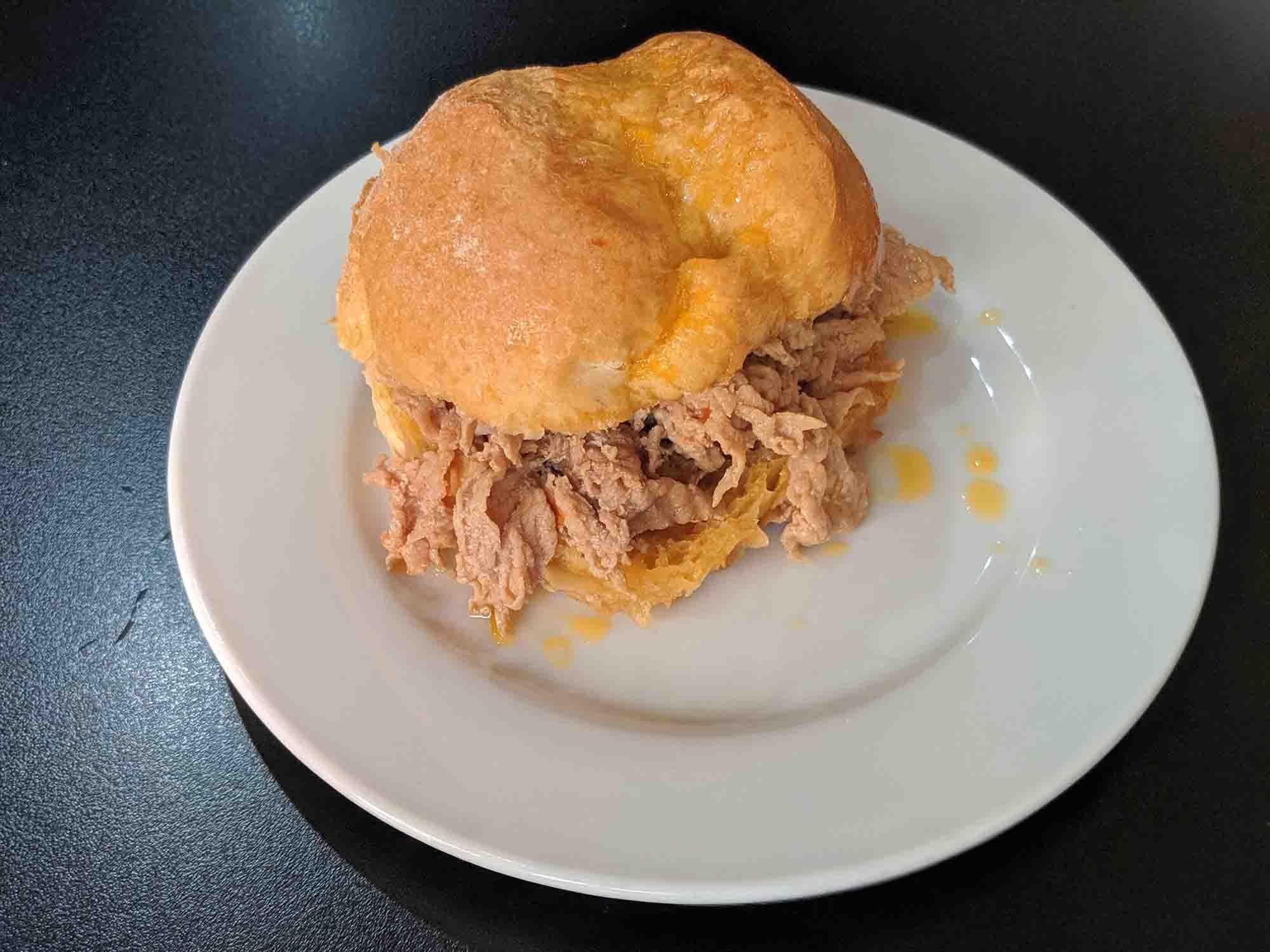
The bifana is one of Portugal’s great everyday foods — simple, fast, cheap, and deeply satisfying. It’s basically thin slices of marinated pork, cooked until tender and packed into a soft bread roll that soaks up all the juices. No lettuce, no sauce tower, no nonsense. Just pork, bread, and flavour.
You’ll find bifanas everywhere — cafés, snack bars, motorway service stops — but there’s one version people get passionate about: Bifana à moda do Porto.
In Porto, the pork is simmered for ages in a rich, spicy-ish, garlicky sauce that seeps into the bread and makes the whole sandwich juicy and bold. It’s drippy, messy, absolutely delicious, and often eaten standing at the counter with a beer. This is the bifana at its best — simple food treated with real care.
Elsewhere in Portugal — especially around Lisbon — bifanas tend to be grilled rather than braised. Still good, still worth ordering, just less saucy and less intense than the Porto version.
A few notes:
- Best pairing: a small beer (fino/imperial) or an espresso
- When to eat it: mid-morning, mid-afternoon, midnight… there’s no wrong time
Conserveiras

If you hear “canned fish” and think of emergency cupboard food or sad student meals — Portugal is about to completely change your mind.
Here, tinned seafood (conservas) is considered an art form. It’s not cheap filler; it’s carefully sourced, beautifully preserved fish packed in high-quality olive oil, spices, herbs, citrus, or even smoke. And the flavour is often so good that you just open the tin, put it straight on a plate, and call it dinner.
Expect surprising combinations like:
- Smoked octopus
- Tuna with preserved lemon
- Sardines in spicy piri-piri oil
- Mackerel with pickled vegetables
- Sardine mousse (yes — and it’s incredibly good)
The tins themselves are often works of design, too — colourful, retro, gift-worthy. Many shops display them like jewellery.
Conservas are so loved in Portugal that you’ll even find petiscos bars (Portuguese tapas-style restaurants) that specialise entirely in tinned seafood. You order a few tins, some bread, vinho verde or a cold beer, and that’s your meal — simple, salty, delicious.
Arroz de Pato

Arroz de pato is pure Portuguese comfort food — the kind of dish that feels like a hug from someone’s grandmother, even if you’ve never met her.
It’s a simple dish at heart: Shredded duck, mixed through savory rice, often topped with thin slices of chouriço, and baked until the top gets just a little crispy. It can be a touch greasy (in a good, warming way), and it’s incredibly satisfying — especially on cooler days or when you want something filling without being fancy.
You’ll see arroz de pato everywhere in Portugal:
- As a menu do dia (daily special) at neighborhood restaurants
- On takeaway counters beside roast chicken and soups
- At family lunches on Sundays
- And yes — it’s easy enough that Portuguese families make it at home all the time
It has that “I didn’t know I needed this, but wow, I did” quality. Arroz de pato is exactly it. It’s not trying to impress — it’s just really, really good.
Final Thoughts: How to Eat Well in Portugal
Portuguese food isn’t about theatrics. It’s not meant to shock you, overwhelm you, or hit you with spice and intensity at every bite. It’s about comfort, seasonality, history, and simplicity done well — the kind of food that makes sense when you slow down long enough to taste it properly.
If you come in expecting bold sauces and constant flavour fireworks, you might miss what makes it special. But if you lean into what Portugal does best — grilled fish caught that morning, soups your table neighbour has been eating since childhood, bread and olive oil that actually taste of grain and grass, rice dishes cooked low and slow — you’ll understand why food here feels honest, nostalgic, and deeply local.
A few guiding principles as you eat your way through Portugal:
- Go regional. The Algarve does cataplana better. Porto does francesinha better. The Alentejo does porco preto better. Follow the map.
- Let go of “spicy = flavor.” Here, flavour comes from olive oil, smoke, salt, garlic, and patience.
- Eat the soups. They’re where the vegetables hide.
- Don’t chase Instagram lists. Chase the places where construction workers and grandparents are eating.
Most importantly: take your time. Portuguese meals aren’t meant to be rushed — they’re meant to be lived in.
If you do that — if you eat slowly, order what’s local, and say yes to the dish everyone else in the room seems to be having — you’ll discover what Portuguese people already know: Food doesn’t have to be complicated to be memorable. It just has to be real.
 Thinking about Moving to Portugal?
Comments are closed.