


Can you learn European Portuguese with an app?
Not really, at least not by itself. But language learning apps can still be incredibly useful when you’re on public transport, want to revise some vocabulary, or just have 5-10 minutes to spare.
And, if you choose the right combination of apps, they can make a big difference.
The following are some of the best apps for learning Portuguese as it’s spoken in Portugal rather than Brazilian Portuguese (which Duolingo teaches). Some are full courses, some are mainly useful for vocabulary or verb practice, and some are really more of a fun extra than a serious study tool.
Practice Portuguese
€12.75 per month
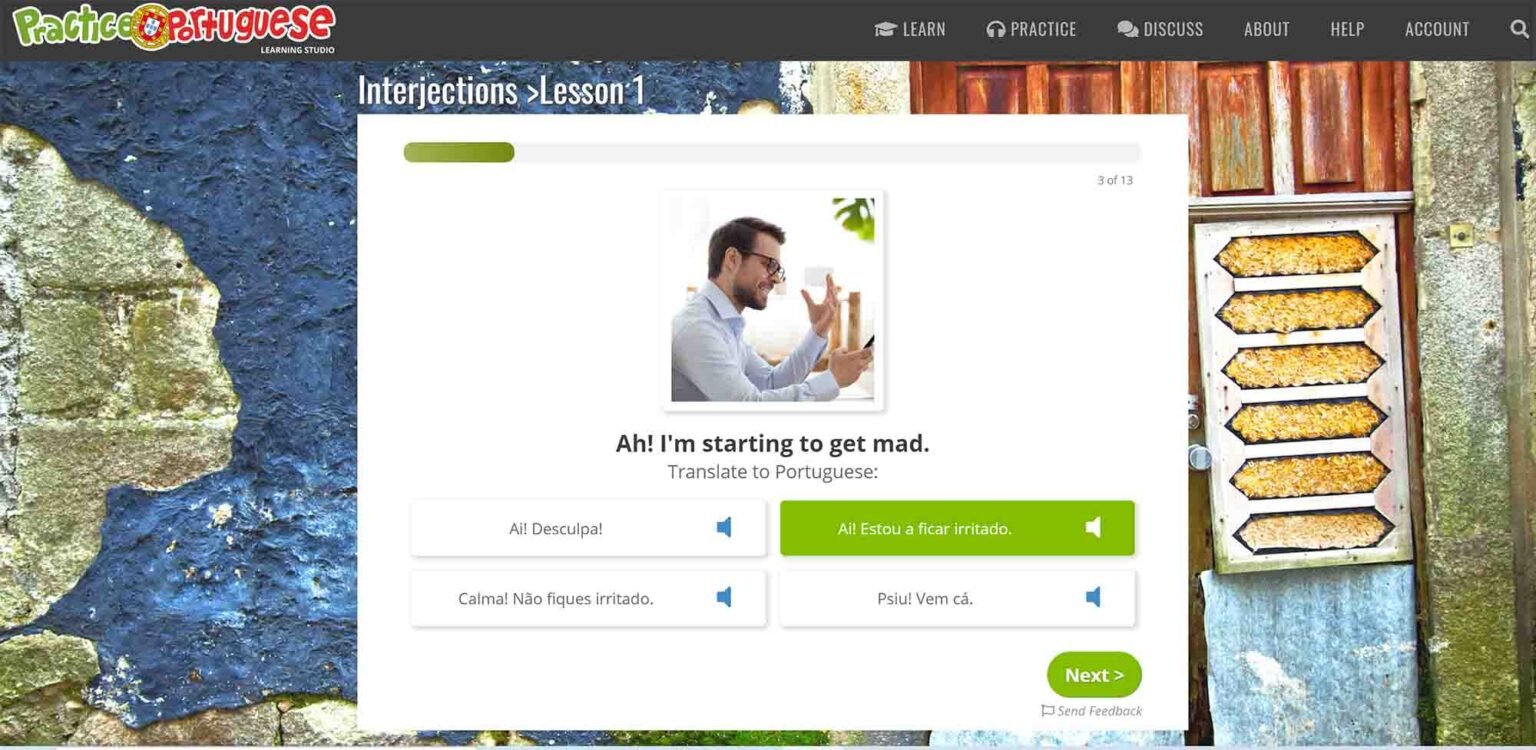
Joel and Rui, the guys behind Practice Portuguese, have created an app to compliment their language learning platform at PracticePortuguese.com. If you have a Practice Portuguese membership (and remember: Portugalist readers pay less), you can sign in to the app and take full advantage of all its features.
The app is especially useful for listening, vocabulary, and grammar. There’s a verb section with common verbs and conjugations, complete with audio pronunciation, and you can listen to audio clips from the shorties and other lessons just as you would on the website. You can also see translations of the vocabulary and expressions used.
One of the most useful features is Smart Review, which lets you build a playlist of the words and phrases you don’t know. You can then listen back to those while driving, on the bus, at the gym, or wherever else you want to squeeze in some Portuguese.
If you’re looking for one app that covers the most ground, this is probably it. It’s affordable, clearly focused on Portuguese from Portugal, and one of the few apps that really feels built for people learning European Portuguese rather than Portuguese in general.
The Practice Portuguese app is available for Android and iOS devices, and you can also access the site through the website as well. For full access you’ll need a Practice Portuguese membership.
Pimsleur
$20.95 per month
Pimsleur is a very good place to start, especially if speaking Portuguese feels intimidating.
Not that long ago, the Pimsleur course was taught over MP3s and CDs (and cassette tapes before that). These days, the audio lessons are delivered through the Pimsleur app, which is available for Android, iOS, and the web.
The audio lessons are still the main focus, but the app now includes extra features like quizzes, flashcards, and games as well. These all reinforce the vocabulary and structures you’ve covered in the lessons.
What Pimsleur does very well is build initial confidence. It gets you used to hearing European Portuguese and, more importantly, producing it out loud. If you’re a complete beginner, that’s often half the battle. It’s approachable, well-structured, and designed to be done in your car or when out walking the dog.
That said, Pimsleur is very basic and probably only takes you to somewhere between an A1 and an A2 (tourist Portuguese, basically). There are only two levels for European Portuguese versus five for Brazilian Portuguese.
It’s excellent for getting going, but if you really want to advance your speaking, you’ll probably want to move on to something like Michel Thomas or combine it with another resource such as Practice Portuguese.
Sign up for a free trial of Pimsleur on Pimsleur.com. As well as European Portuguese, Pimsleur also teaches Brazilian Portuguese (and more than 50 other languages).
Michel Thomas Portuguese
$152
The Michel Thomas app isn’t a complicated app. Really, all you can do is listen to the audio content that you’ve purchased, so there isn’t a huge difference between listening through the app and listening through your phone’s normal audio player. Unlike Pimsleur, there are no flashcards, games, or other interactive features.
But that isn’t really the point.
The real value is the Michel Thomas method itself, which is very popular with language learners and particularly useful if you want to become more confident forming sentences and speaking. It’s a low-stress way of getting to grips with how the language works, and many learners find it much more helpful than simply memorising vocabulary lists.
If Pimsleur helps you get started, Michel Thomas can help take you further. It’s especially useful for beginners and false beginners who want to feel more confident actually saying things in Portuguese rather than just recognising them.
The content is suitable for beginners and, although it doesn’t mention the CEFR scale, it probably covers A1 and A2 European Portuguese and may dip into B1 as well.
The app is available on both the Google Play and Apple stores but to actually purchase Michel Thomas Portuguese, you’ll need to visit MichelThomas.com. Be sure to take a look at our guide to all the different courses covering European Portuguese.
Memrise
Free (paid membership available)
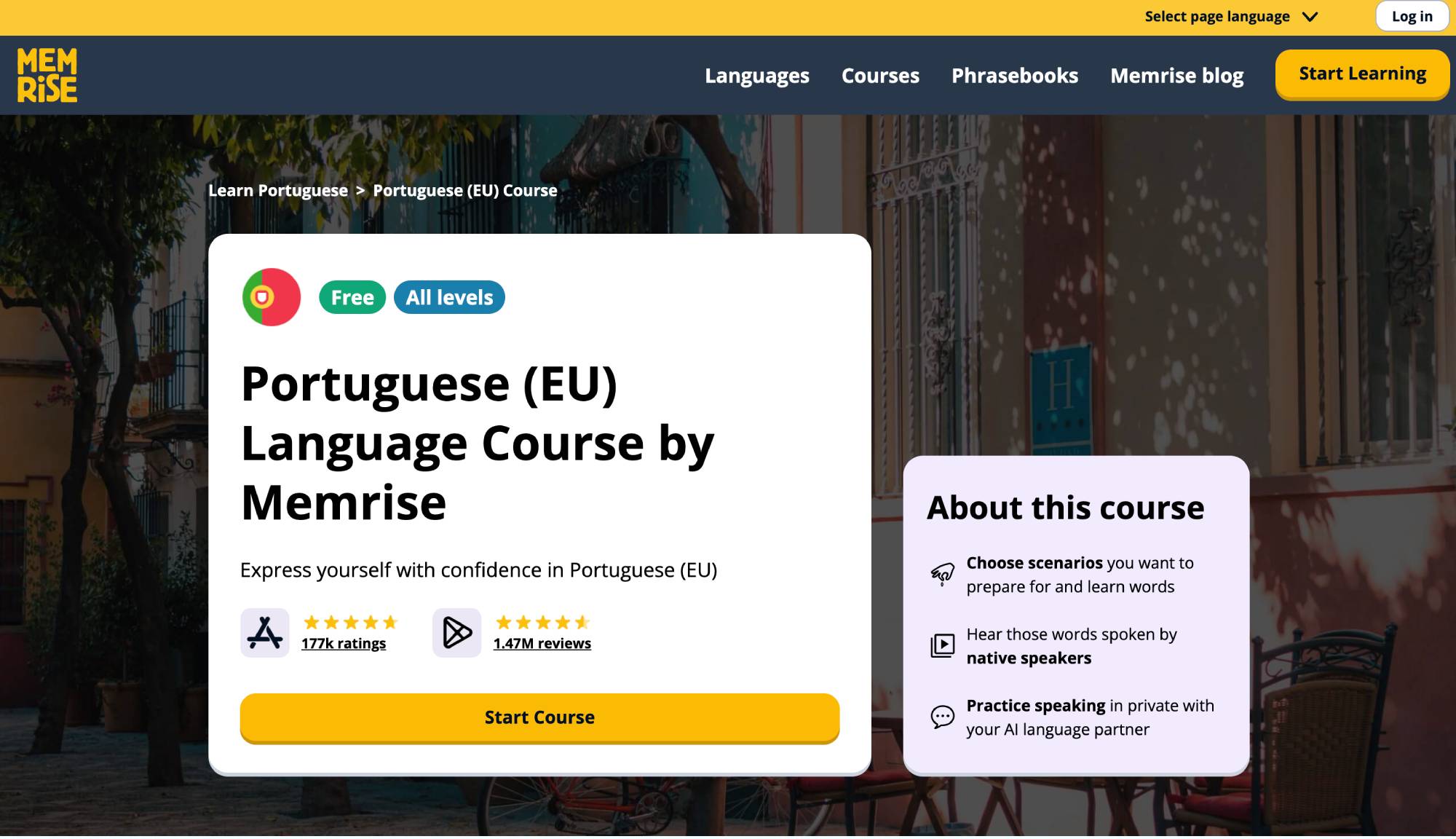
Memrise is a spaced-repetition flashcard app that’s similar to other language learning apps like Duolingo, Drops, and Anki.
You can create your own flashcards or you can search for some of the flashcards that other people have made, and you’ll find both European and Brazilian Portuguese flashcards. As these are created by other users, the quality of each course can vary, but there’s definitely some great content on there – particularly the content created by the Memrise team.
And, because it’s so useful for creating flashcards, you’ll find the cards for many language courses on there.
It’s a useful app for learning phrases and vocabulary but, rather than learning words at random, its biggest use is in creating flashcards of new words and phrases that you want to commit to memory.
Serial language learners will argue that Anki is better, but Memrise is definitely more user-friendly and, when you’re just starting out, that’s definitely a big plus point for Memrise.
Available for Android, iOS, and web.
Linguno
Free
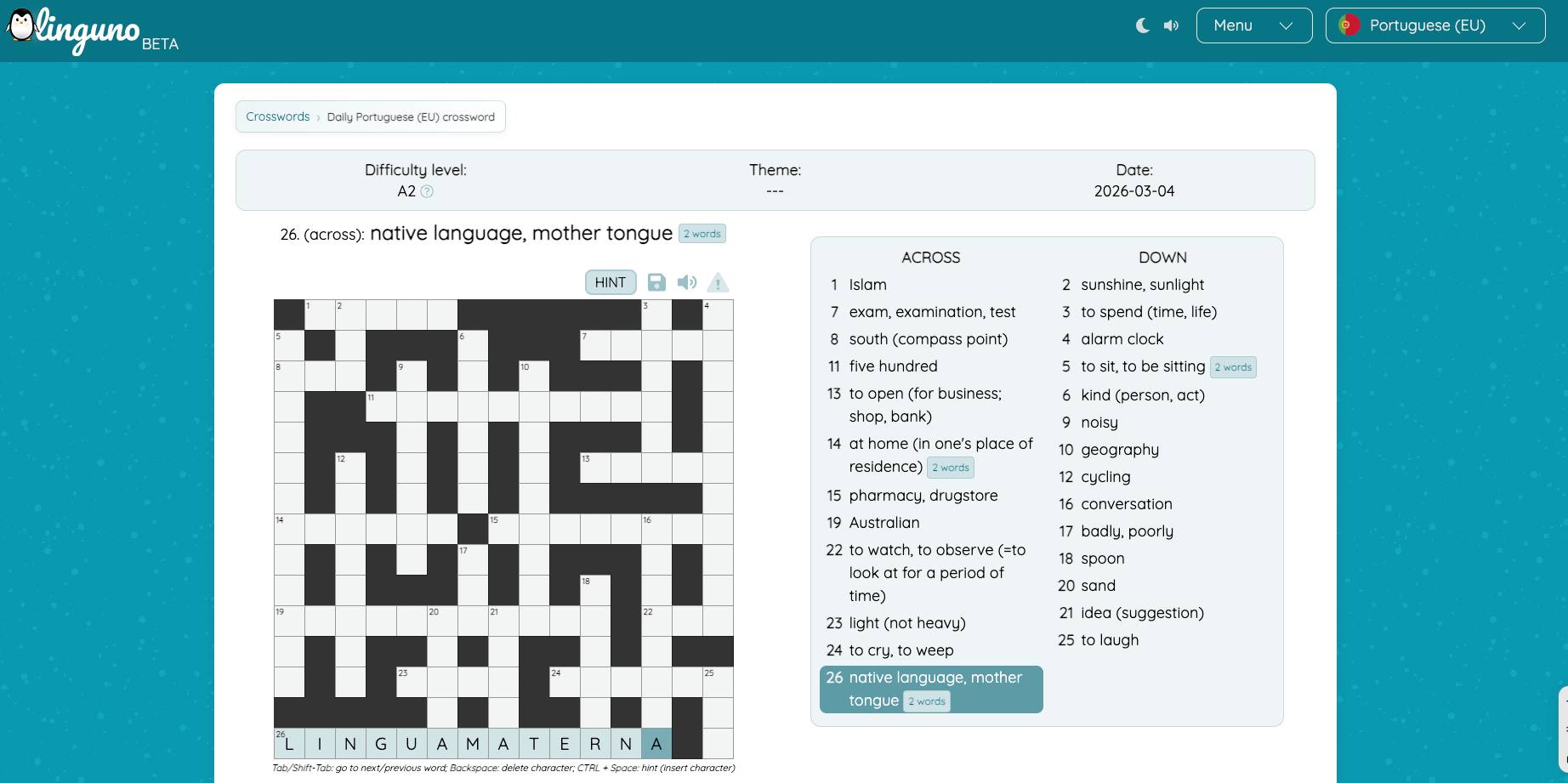
Linguno is a very comprehensive web app that covers Portuguese from Portugal and Brazil, and you can select which you’re studying when you create your profile.
While many apps only cover one area of language learning (for example: vocab), Linguno covers several. You can use it to learn new words, practice conjugating verbs, or practice listening.
Another benefit of Linguno is that it doesn’t overly differentiate between European and Brazilian Portuguese. If a section has audio, you can listen to the word said by both European and Brazilian speakers and play games to test your abilities in understanding both.
There are lots of benefits to Linguno, but the areas that people will probably find most useful are the listening games and the verb conjugation games as its hard to find other apps that offer listening and grammar exercises.
Linguno is available at Linguno.com.
Anki
Anki is a spaced repetition system app that’s popular among serious language learners and most polyglots favour it above similar apps like Memrise and Quizlet. However, even though it does come recommended from those that really enjoy learning languages, it’s fair to say that it’s nowhere near as user-friendly as Memrise or other similar apps. This is particularly the case when it comes to creating flashcards.
You can download flashcards that other people have made (e.g. this phrasebook), but many people end up making the flashcards themselves. If you want more control, something that’s open source, and you’re willing to put up with a small learning curve, it is a very helpful app but most people will probably be more comfortable with a different app.
Available for Windows and Mac computers as well as Android and iOS devices. Anki is free on every platform except for iOS devices.
Drops
Free or Paid
Drops is a popular language learning app that teaches multiple world languages, including European Portuguese. It’s popular with those looking for a Duolingo replacement, as Duolingo teaches Brazilian Portuguese rather than European Portuguese.
While the app is very easy to use, the content is often incredibly basic and most people will learn more using most of the other apps. If you’re looking for an app to teach you basic Portuguese vocabulary, Memrise is probably a better option.
Conjuguemos
Free

Conjuguemos is a web which gamifies verb learning. Simply decide which tense you wish to work on, and Conjuguemos will test you on your ability to conjugate verbs in that tense.
It’s much more fun than learning verb tables and, like any of the other flashcard apps, it’s something you can easily do when you have a few minutes spare.
Unfortunately this app is only available as a web app, which means you have to play it in your browser. It’s still possible to do this on your phone as well as your computer.
Lyrics Training (Also Called LingoClip)
Free
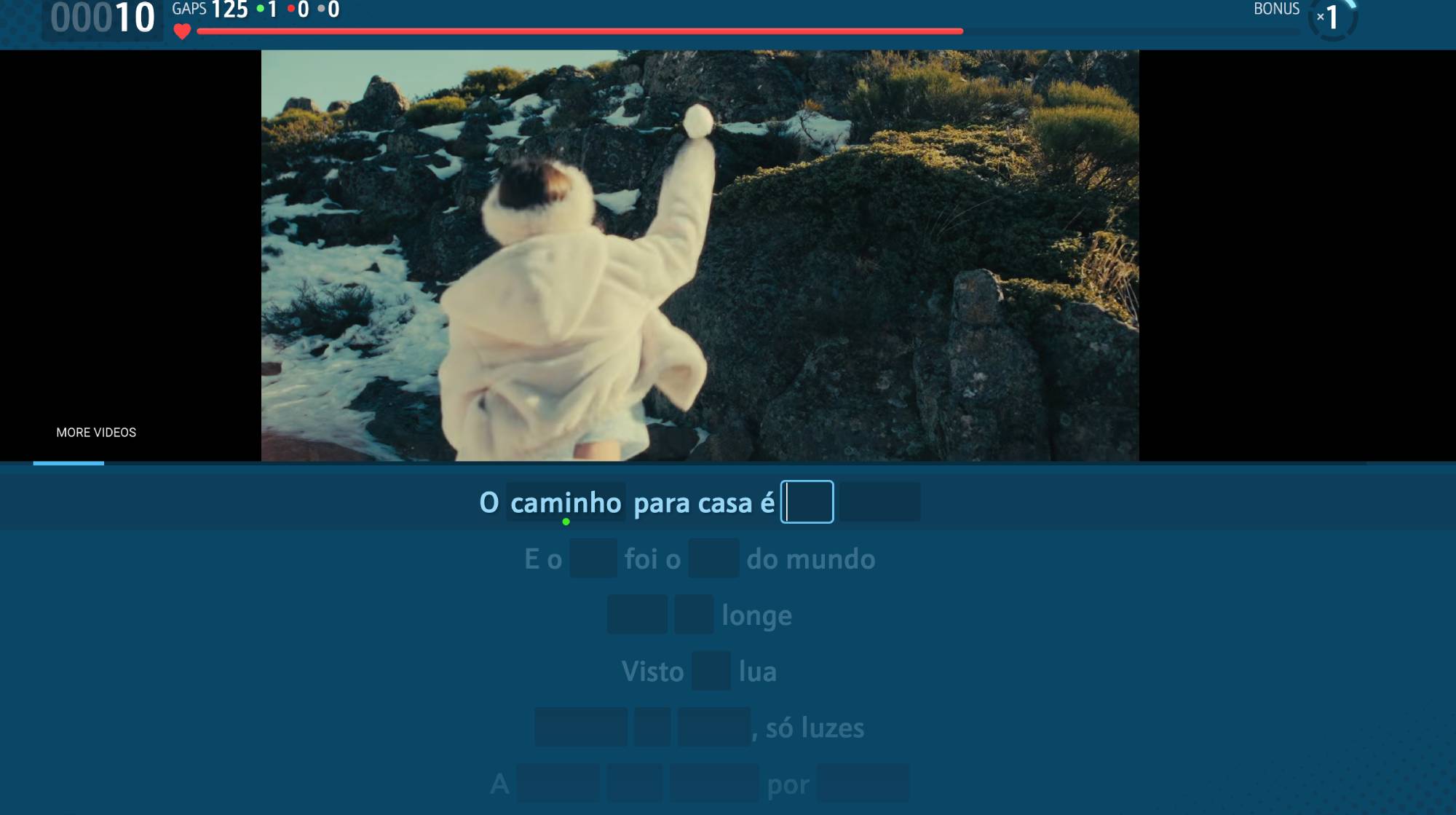
LyricsTraining is an app where you listen to music and then try to guess the missing lyrics. It’s a fun way to practise your listening skills, and also a nice way to discover Portuguese music and some of the artists and bands that are popular.
You can listen to both Portuguese and Brazilian artists, and you’ll probably stumble across quite a few songs you already know as well.
This is definitely more of a fun extra than a core learning tool, but that doesn’t mean it isn’t useful. Anything that gets you listening more is a good thing, particularly in European Portuguese where fast, connected speech can take a while to get used to.
Available for iOS, Android, and Web.
(LyricsTraining and LingoClip are essentially the same language-learning platform, with LingoClip serving as the mobile app version of the LyricsTraining website.)
Frazely
Free or paid
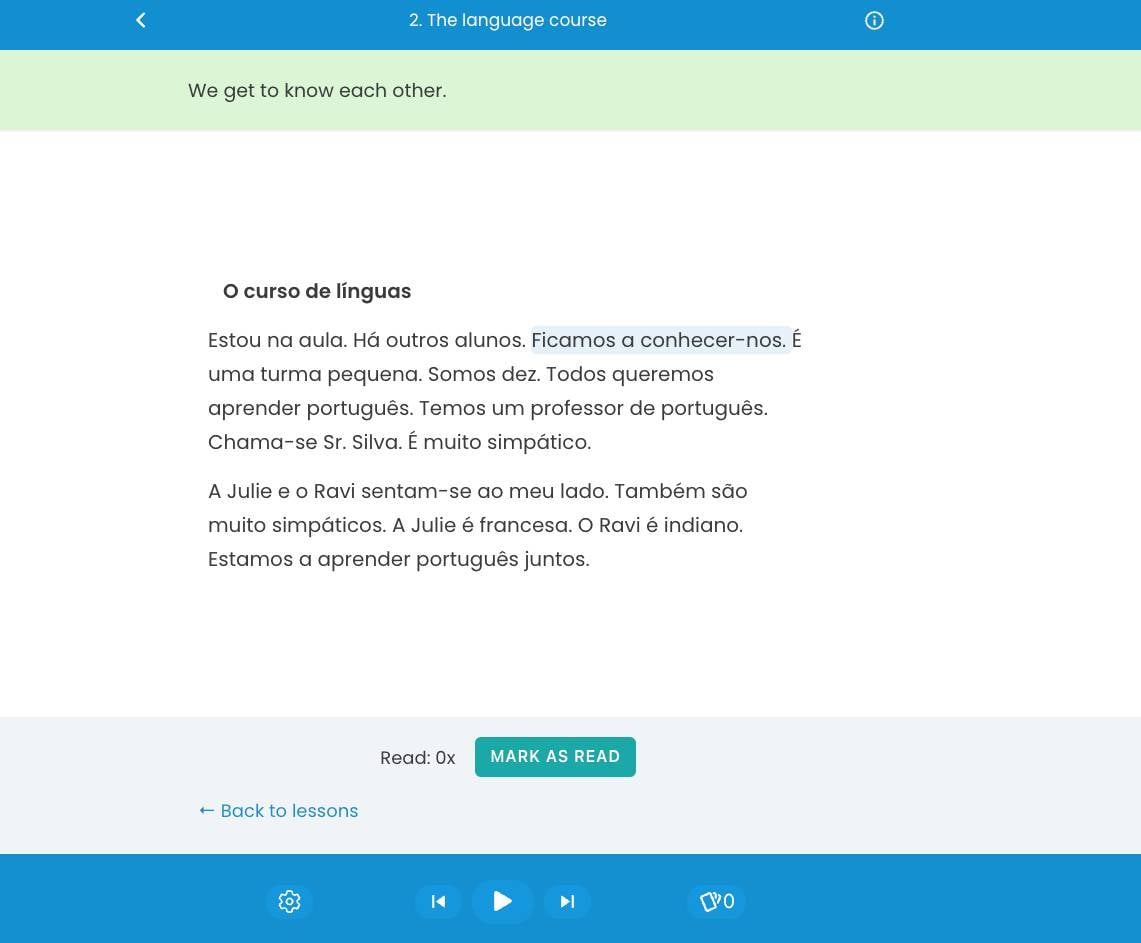
Frazely is worth a mention because it fills a gap that a lot of apps don’t really cover: reading.
The app focuses on graded reading and beginner-friendly content, which makes it useful if you want more exposure to written European Portuguese without diving straight into native books, newspapers, or websites. Some learners find that reading is one of the hardest things to practise consistently, and an app like this can make it a lot easier.
It’s not likely to be the first app most people download, but it can be a helpful extra once you’ve got the basics down and want more exposure to real Portuguese in manageable chunks.
Frazely is available as a web app or for Android or iOS devices.
Final Thoughts
Learning European Portuguese through apps alone is difficult.
Apps are most useful when they help you practice and reinforce what you’re learning elsewhere. That’s where tools like Practice Portuguese, Memrise, and, for more advanced learners, Anki, really come into their own. They’re good for revising vocabulary, reviewing grammar, and making use of those spare 5 or 10 minutes throughout the day.
Pimsleur and Michel Thomas deserve a place on this list, but they’re really audio courses that now happen to live inside an app. Whether you use them on your phone, listen through an old set of CDs, or borrow them from the library, the experience is still largely the same: you press play and follow along.
That’s why apps work best as part of a wider approach rather than as the whole system. They can help you memorise vocabulary, practise grammar, and keep Portuguese ticking over between study sessions, but most people will still need some kind of structured european Portuguese course, textbook, or learning plan to make steady progress.
And then there’s speaking, which is where most apps still fall short. At some point, you need to actually use the language with another person. For that, a tutor on italki or Preply, regular conversation classes, or even a tandem partner will usually do far more for your progress than yet another app download.
So download the apps. Just don’t rely on them entirely!
 Thinking about Moving to Portugal?
Comments are closed.