
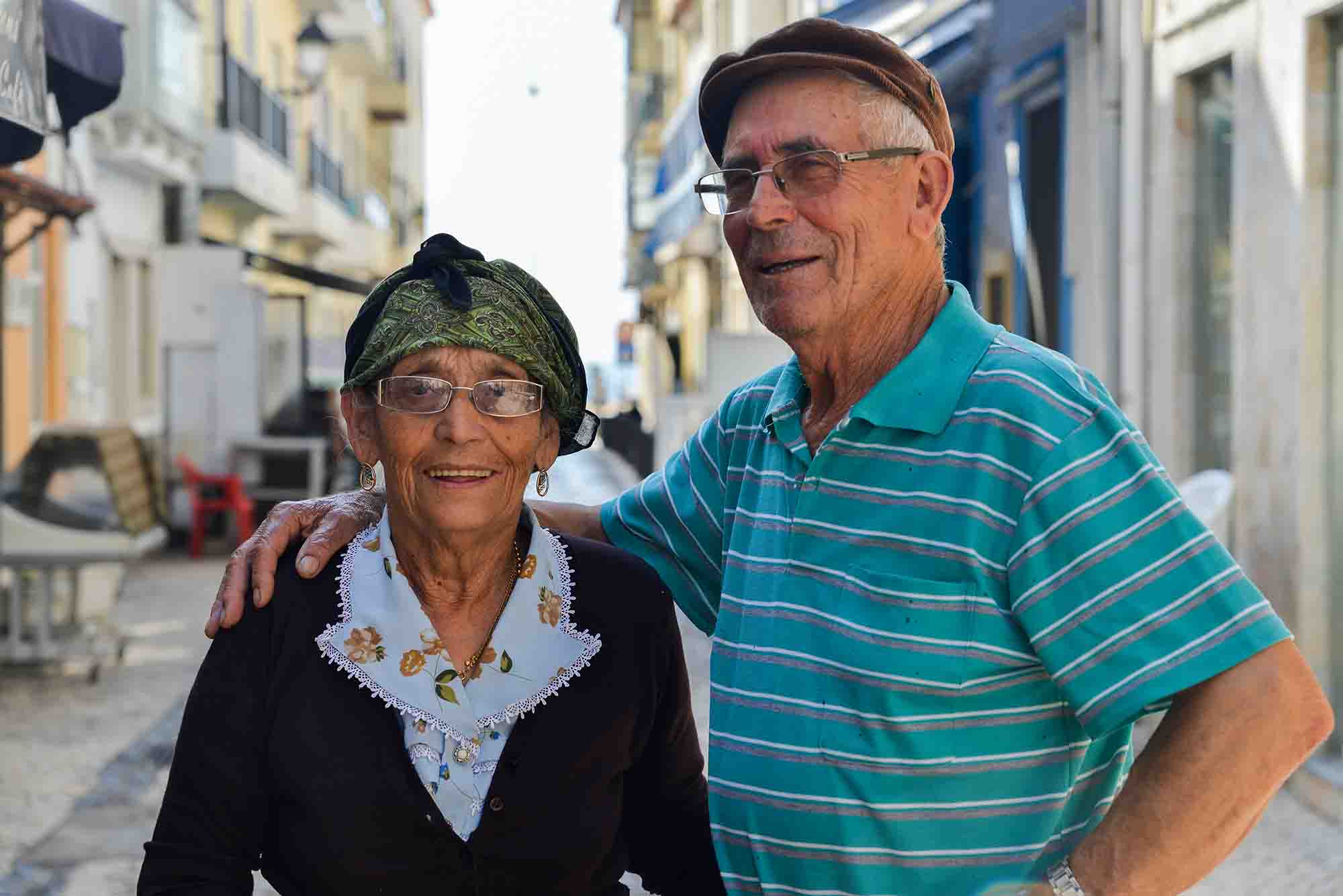
Millions of Americans and Canadians have Portuguese grandparents — particularly from the Azores (Açores), Madeira, and mainland Portugal — and may have a valid claim to Portuguese citizenship without fully realizing it. This route is more involved than applying through a parent, but it is a well-established legal pathway and many people successfully complete it every year.
The formal name for this application is a nationality registration by descent (registo de nacionalidade por descendência), and it requires you to document the unbroken line from your Portuguese grandparent, through your parent, to you.
If one of your parents is already a Portuguese citizen, the process is simpler.
Do You Qualify?
To apply through a grandparent, you generally need to be able to show:
- Your grandparent was a Portuguese citizen by birth (nacional português)
- The chain of descent — grandparent to parent to you — can be documented with civil records
- You meet the Portuguese language requirement (A2 level)
- You have a demonstrable connection to the Portuguese community
Each of these has its own practicalities, which are worth understanding before you start.
One important distinction: Portuguese citizenship acquired through naturalization cannot be passed down. Your grandparent must have held Portuguese citizenship by birth, not through naturalization.
Request Assistance Obtaining Portuguese Citizenship
The “One Generation at a Time” Question
If your parent is alive but has not yet obtained Portuguese citizenship, there are two ways to approach this:
Option 1: Your parent applies first, then you apply through them If your parent obtains Portuguese citizenship first, you can then apply through a Portuguese parent rather than directly through a grandparent. This skips the language requirement entirely. The trade-off is time — your parent’s application will itself take one to four years, and then you apply after that. This route makes sense if you are not in a hurry and want to avoid the language exam.
Option 2: You apply directly through the grandparent line If you want your passport sooner, or your parent is deceased or unwilling to apply, you can apply directly. This requires meeting the language requirement, but the A2 level is achievable — some people reach it in a few months of focused study, others take around a year at a more relaxed pace. If getting your passport sooner matters to you, this route is worth pursuing.
The Document Challenge
This is where most grandparent applications require the most work. If your grandparents emigrated from the Azores or Madeira — as a very large proportion of Portuguese Americans and Portuguese Canadians did — their records may be held in regional archives (arquivos distritais) or parish records (registos paroquiais) that are less straightforward to access than mainland Portuguese civil registries.
Older records, particularly from smaller islands or rural parishes, sometimes exist only as baptismal certificates (assentos de batismo) rather than modern civil birth records.
You will typically need to gather:
- Your grandparent’s Portuguese birth or baptism record
- Your parent’s full birth certificate
- Your own full birth certificate
- Marriage certificates at each link in the chain, particularly where surnames differ between documents
- Apostilles (apostilhas) on documents issued outside Portugal
- Certified translations into Portuguese where required
A practical way to think about it: the strongest applications are the ones where every link in the chain — grandparent to parent to you — is documented clearly and consistently. Any gap or mismatch in names, dates, or records is something that will need to be resolved before the application can proceed.
Note that some Portuguese emigrants changed their surnames after moving to North America, which can create additional complexity when matching records across documents.
The Language Requirement: A2 Portuguese
Applying directly through a grandparent requires you to demonstrate Portuguese language ability at A2 level on the Common European Framework of Reference (Quadro Europeu Comum de Referência, or CEFR). This is an upper-beginner level — basic conversational ability, not fluency.
The standard qualification accepted is the CIPLE (Certificado Inicial de Português Língua Estrangeira), a formal exam administered by the University of Lisbon. You need to score 55% or above to pass. Test centers exist across North America.
How long does it take to reach A2? With consistent daily study, most people can reach A2 level within a few months. A more relaxed pace typically takes around a year. If getting your citizenship sooner is a priority, starting language preparation early — ideally while you are gathering documents — means both tracks run in parallel.
A note on Brazilian Portuguese: Many language schools in the US and Canada teach Portuguese, but check that any course covers European Portuguese (português europeu) rather than Brazilian Portuguese (português brasileiro). The two varieties differ significantly in pronunciation, and preparing with Brazilian Portuguese can create problems when sitting the CIPLE, which is assessed on European Portuguese standards. There are good online courses specifically for European Portuguese at A2 level, and this is often the most practical option.
Ties to the Portuguese Community (Ligação à Comunidade Portuguesa)
This requirement is becoming increasingly important and should not be treated as a formality. The application asks you to demonstrate a genuine connection to Portugal and Portuguese culture beyond simply having ancestry. Evidence that applicants have used includes:
- Membership of Portuguese cultural clubs or community organizations (associações portuguesas)
- Participation in Portuguese community events
- Other documented involvement with Portuguese heritage organizations
If you do not already have this kind of involvement, it is worth building it now rather than trying to address it at the last moment before submitting.
Common Questions
Does my grandparent need to be alive? No. You can apply based on a deceased grandparent’s citizenship.
Does my parent need to be alive? If you are applying directly through the grandparent line, no. If you are pursuing the route where your parent obtains citizenship first and then passes it to you, then yes, your parent needs to be alive and willing to apply.
What if my grandparent or parent changed their surname? This is a common issue, particularly for families that emigrated to North America. It is not a barrier, but it does require additional documentation to establish the links between records.
Can citizenship through a naturalized grandparent be passed down? No. Only citizenship held by birth can be inherited. Your grandparent must have been Portuguese by birth.
How Long Does It Take?
Processing times are currently running at one to four years from submission to receiving your citizenship certificate and passport (passaporte português). The document-gathering and preparation phase — tracking down Portuguese archives, obtaining apostilles, meeting the language requirement — adds additional time before you even submit.
What If You Want to Move to Portugal or Europe Sooner?
A citizenship application running in the background does not stop you from moving. Portugal offers several residency visa routes that can be approved in as little as three to twelve months, including:
- The D7 Visa — for those with regular passive income such as a pension, rental income, or Social Security
- The Digital Nomad Visa — for remote workers and freelancers
- The Golden Visa (Visto Gold) — for those with qualifying investments
Many people run a residency application and a citizenship application simultaneously. Living in Portugal also has a practical advantage for this route specifically: it makes it easier to demonstrate ties to the Portuguese community, and easier to reach A2 language level through immersion.
Getting It Right Matters
The grandparent route involves more moving parts than almost any other citizenship pathway — tracing documents across Portuguese and regional archives, navigating apostille and translation requirements, meeting the language standard, demonstrating community ties, and managing consulate correspondence that can be slow and difficult to get responses from.
Most people who attempt this without assistance encounter delays that are entirely avoidable with the right guidance. Working with legal assistance means having someone who knows exactly what documents are needed, where to find them, and how to present the application correctly from the start.
Get in touch to arrange a consultation and find out whether you qualify — and what your application would involve.
 Thinking about Moving to Portugal?