

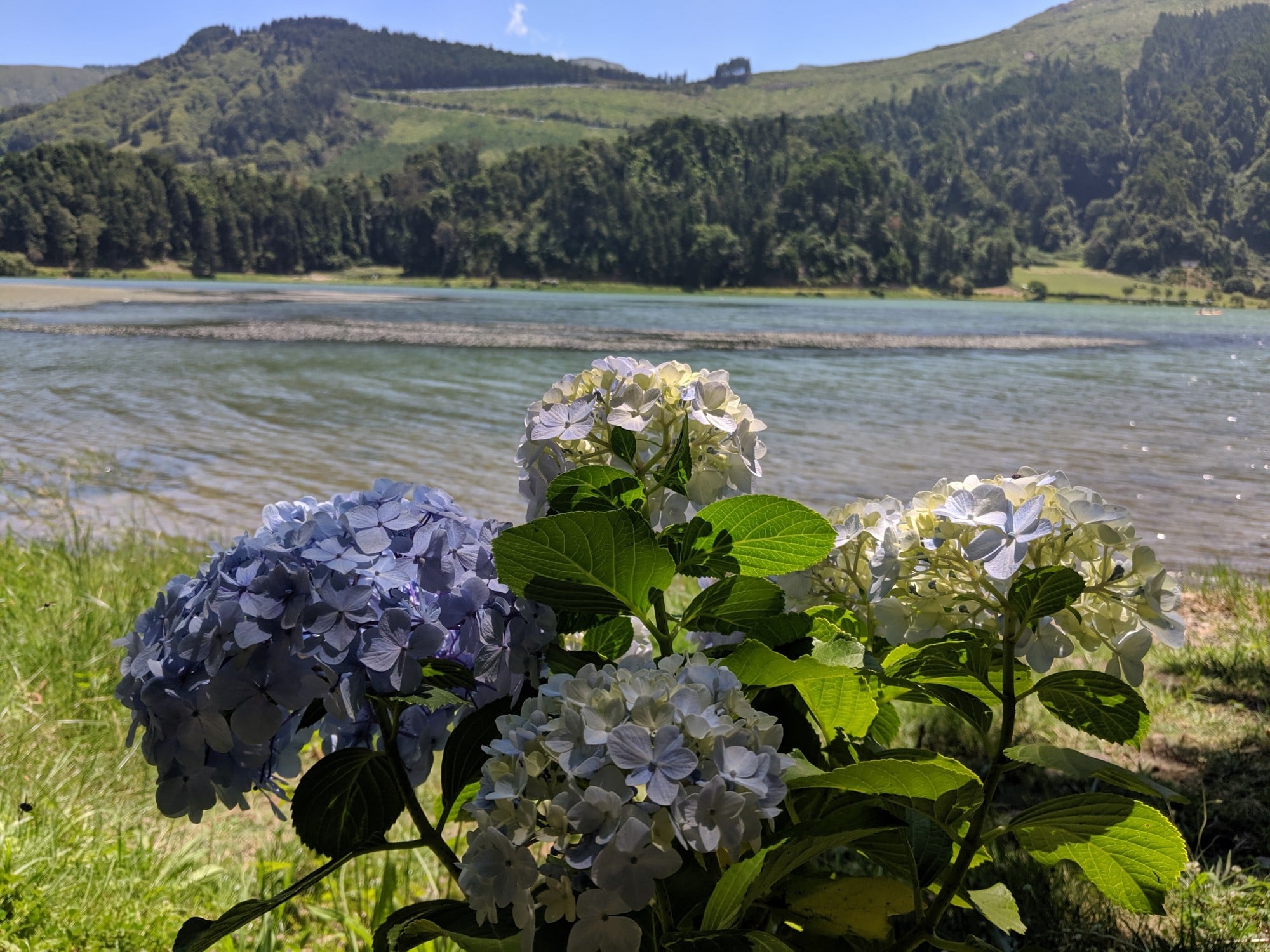
There are places in the world that are genuinely, almost unreasonably beautiful — and then there’s the Azores, which manages to be both of those things while also sitting in the middle of the Atlantic Ocean, three and a half hours from anywhere, in a region that gets more rainfall than Seattle and where the inside of your house can feel colder than the outside in January.
That’s not a warning. It’s the beginning of an honest conversation.
The Azores rewards people who move there knowing exactly what they’re getting into. It punishes — gently, but consistently — the people who show up expecting a Portuguese Hawaii and discover instead a volcanic archipelago with nine islands, three hospitals, and a peculiar accent that even fluent Portuguese speakers struggle to follow. The difference between those two groups almost always comes down to how much research they did beforehand.
This article is meant to help you be the first kind of person.
A Quick Orientation
The Azores (Açores in Portuguese) is an autonomous region of Portugal — nine islands divided into three groups, strung across roughly 400 miles of the North Atlantic about 900 miles west of Lisbon. The largest and most visited is São Miguel, home to the regional capital Ponta Delgada. The others range from the well-connected (Terceira, Faial) to the genuinely remote (Flores, Corvo).
For Americans and Canadians, especially those with family roots in Massachusetts, Rhode Island, or Ontario, the islands carry a particular pull. The Azorean diaspora in North America is enormous — over a million people of Azorean descent live in the US alone — and for those families, thinking about moving here isn’t just a lifestyle calculation. It’s something more like a homecoming.
For everyone else, it’s a question of trade-offs. And those trade-offs are significant enough that it’s worth going through them carefully.
The Pros of Living in the Azores
The Nature Is Genuinely World-Class
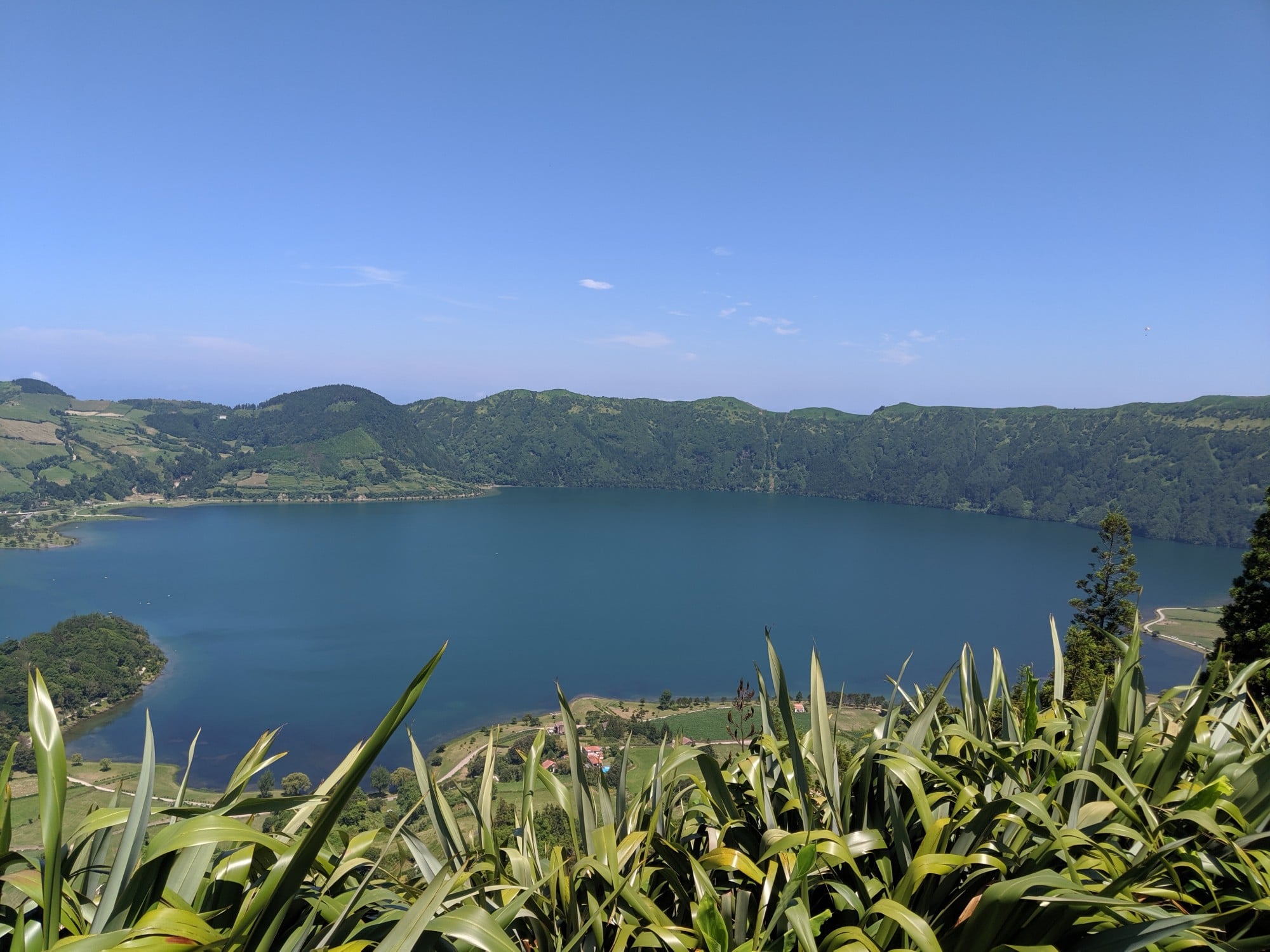
The Azores is routinely compared to Iceland and Hawaii — two places that attract millions of visitors every year specifically for their landscapes — and the comparison holds up. Volcanic craters filled with impossibly green lakes, hot springs that cook food underground, waterfalls dropping into the ocean, whale watching that puts almost anywhere else in the world to shame, black-sand beaches, and an ocean so clear you can see the bottom at depths that would be murky anywhere else.
You don’t just visit these things on weekends. You live next to them. Residents hike the Sete Cidades caldera after work. They swim year-round in natural lava pools. They book whale-watching trips the way people in other places book Sunday brunch.
If access to extraordinary natural beauty is a serious priority for you — not just a nice-to-have but an actual core value — the Azores delivers something that’s very hard to find at this price point anywhere else in the world.
The catch: island variation matters enormously here. São Miguel has the greatest concentration of dramatic landscapes. The outer islands have their own extraordinary beauty but with much less infrastructure around it.
Safety That’s Almost Hard to Believe
The Azores consistently ranks among the safest places in the world to live, and the day-to-day reality backs that up. Locals leave their homes and cars unlocked. Children walk to school alone. People report feeling completely comfortable walking around alone at night, including women, including strangers.
Crime is genuinely rare — not “low for its size” rare, but rare in absolute terms. If you’re coming from a major American city, the psychological relief of not calculating risk every time you go somewhere is hard to overstate. It becomes part of the background texture of life in a way that makes you realize how much mental energy urban safety vigilance consumes.
For families, this is often the single most compelling argument for the move.
The Pace of Life (and What It Actually Means)
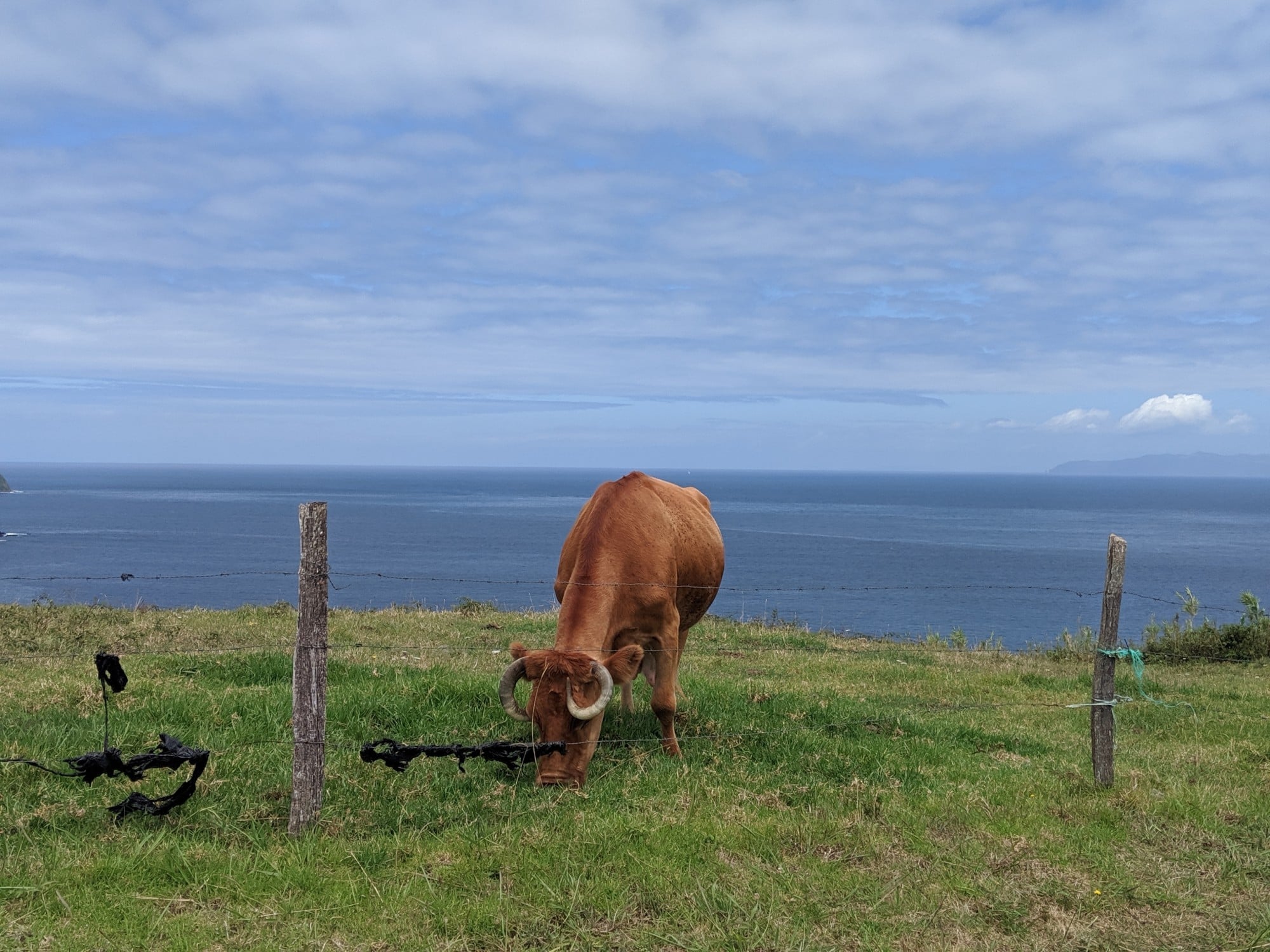
People say “slower pace of life” about a lot of places. In the Azores, it means something specific: the culture genuinely does not reward urgency. Life is organized around meals, community, religious festivals, and relationships. Status isn’t performed. Nobody is impressed by how busy you are.
For people burning out of high-pressure careers or the relentless optimization culture of American cities, this is restorative in ways that are hard to explain until you’ve experienced it. The Azorean concept of simply being — sitting with neighbors, sharing food from a garden, attending a local festa — is not a tourist experience. It’s how people actually live.
The Espirito Santo festivals (Holy Spirit celebrations) that happen across the islands between Easter and Pentecost are the most visible expression of this. Communal meals, neighborhood processions, livestock auctions, brass bands. Participating in these is the fastest way to earn genuine acceptance in a local community.
One caveat worth flagging here: the warmth of the Azoreans is real, but it is not universal and not instantaneous. Some expats, particularly those on smaller islands or in more rural communities, report encountering what gets described as an “island mentality” — insularity, occasional unfriendliness toward outsiders, rough-around-the-edges interactions. This is not the dominant experience, but it’s real enough that you should know it exists. The general rule is that the larger the island, the more cosmopolitan the culture.
Cost of Living: The Honest Version
The Azores is affordable — but the story is more nuanced than most articles let on.
What’s cheap: housing (dramatically cheaper than Lisbon, the Algarve, or any equivalent in the US or UK), local food, services, eating out at local restaurants, and utilities. The VAT rate is 18% versus 23% on the mainland, which compounds across all purchases. A one-bedroom apartment in Ponta Delgada runs roughly $650–900/month; outside the capital, it’s less. Buying property is still affordable by comparison with most of Western Europe, though prices have risen significantly in the last decade.
What’s not cheap: anything imported. Electronics, international brands, certain foods that aren’t locally produced — all carry a shipping premium. This isn’t dramatic, but it means the cost savings are concentrated in the categories where you consume locally. If you live like a local (local food, local services, local habits), the Azores is extremely affordable. If you need to replicate a mainland lifestyle, the savings narrow.
There’s also a supply chain reality that catches newcomers off guard. On smaller islands especially, a cargo ship delay means supermarket shelves go empty. Eggs, flour, fresh milk — the basics can simply not be available for several days during winter storms. Residents learn to stockpile. It’s part of the rhythm of island life, but it’s an adjustment.
For retirees, the D7 visa provides a straightforward residency pathway. Remote workers can apply for the D8 visa, though its income threshold is considerably higher. Both could potentially benefit from the regional tax advantages the Azores offers as an autonomous region. Of course, there are other visas as well, including the Golden Visa and employment visas like the D1 and D3.
The Climate: Mild, But Not What You Think
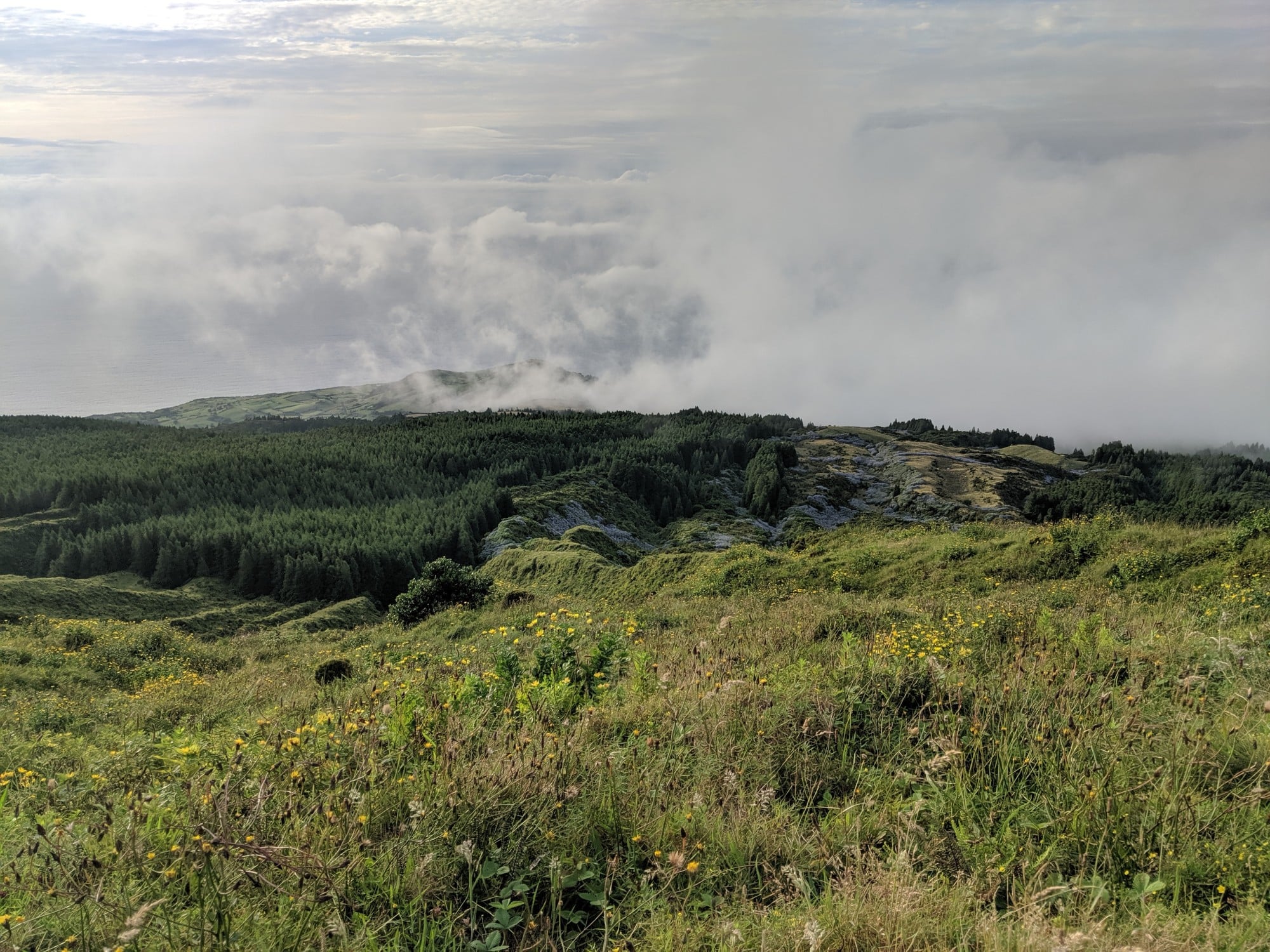
The temperature range is genuinely pleasant: roughly 55°F in winter, 75°F at the peak of summer. You don’t need a heavy coat, and you will almost certainly never need air conditioning. There’s no frost, no snow at sea level, no brutal heat.
What you do need: layers, a waterproof jacket at all times, and a philosophical attitude toward rain.
The Azorean climate is maritime subtropical, which means humidity stays high year-round — above 75% consistently, and much higher in winter. The local saying that you can experience “four seasons in one day” is not hyperbole. Sunny morning, cloud cover by noon, rain by 2pm, sun again at 5pm. Planning outdoor activities requires flexibility and low attachment to forecasts.
More significantly for anyone thinking about living there: the winters are gray, damp, and can feel relentless. From November through March, the islands frequently sit under low cloud cover for days at a time. The Western Group (Flores, Corvo) experiences actual tropical storm conditions regularly, with flights and ferries cancelled for days. Even on São Miguel, winter storms hit the coast hard.
If you’re someone who’s powerfully affected by lack of sunlight — if northern European winters already drag you down — this is worth thinking about carefully. The Azores is not the Mediterranean.
The Food Culture

The volcanic soil and mild climate produce food of remarkable quality. You can grow vegetables and fruit year-round with minimal effort. The local beef and dairy are exceptional — the Azores produces about 30% of Portugal’s milk, and the cheese (particularly São Jorge’s aged queijo) is genuinely world-class.
The seafood is outstanding and fresh. The local pineapples, grown in heated greenhouses, taste nothing like the imported pineapples most Americans are familiar with. There are traditional foods here — cozido das Furnas, slow-cooked underground by volcanic heat in Sete Cidades — that you genuinely cannot experience anywhere else.
For people who care about food provenance, local agriculture, and eating seasonally, the Azores is an almost ideal environment. Farmers’ markets are common, neighbors share garden produce, and the connection between land and table is immediate in a way that’s been largely abstracted out of modern life elsewhere.
Real Estate
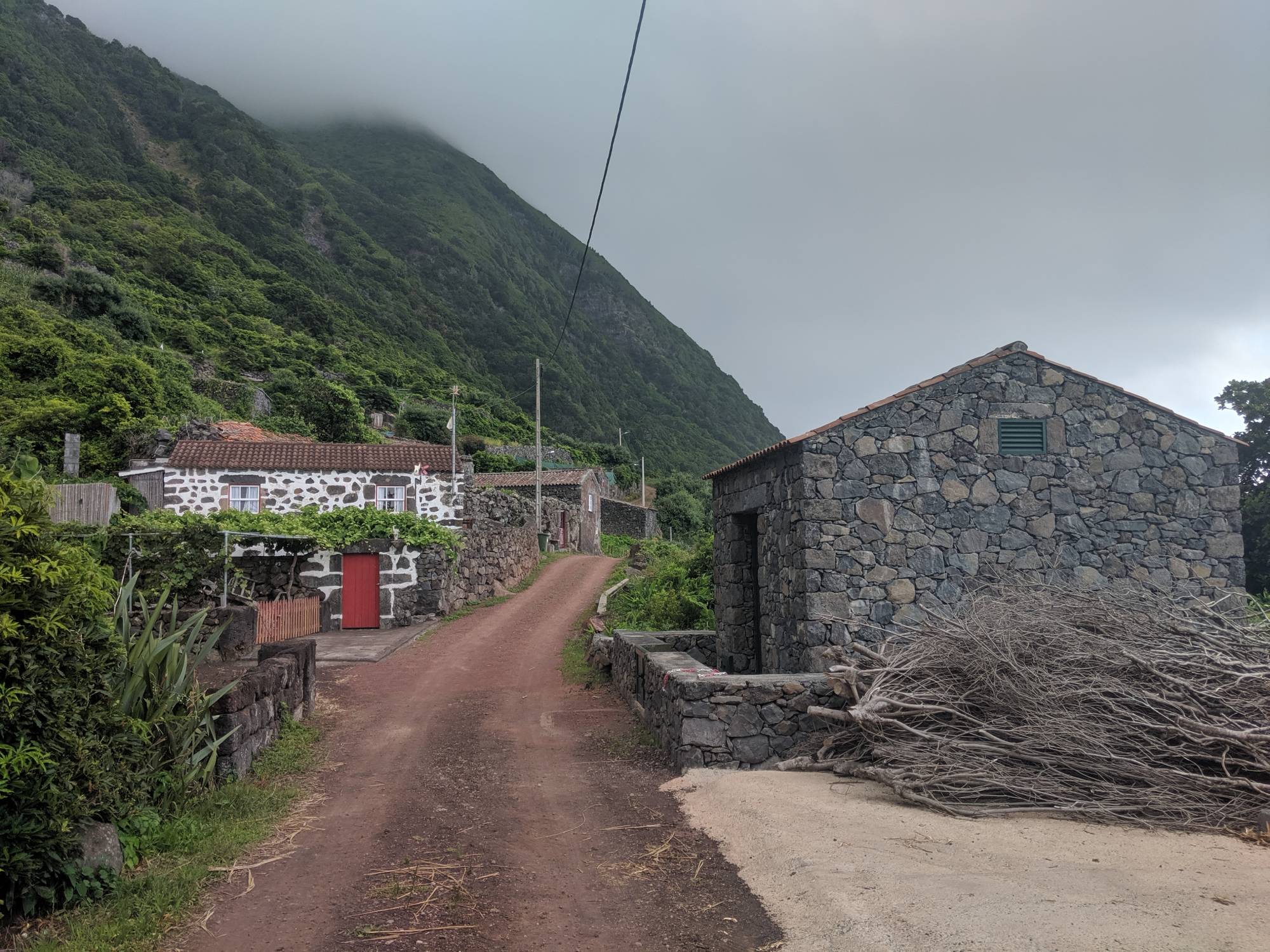
Property is still affordable by European and North American standards, though “still” is doing some work in that sentence — prices have risen sharply since 2015 as expat interest has grown.
The most interesting opportunity is in renovation. Old Azorean stone houses — basalt construction, thick walls, beautiful proportions — can still be purchased at prices that seem remarkable to anyone used to US or UK markets. The trade-off is substantial, however: the shortage of skilled tradespeople (more on this in the cons) means renovations run slow and over budget almost without exception. This is not a project for someone who wants to be in and settled by a specific date.
If you’re buying to live rather than renovate, the market on São Miguel is the most liquid and the most expensive. Terceira offers better value with only slightly less convenience.
Internet and Remote Work
This surprises almost everyone: the Azores has fiber-optic internet infrastructure that puts most rural areas of the United States to shame. Fiber-to-the-home coverage exceeds 95% on the main islands. Multiple submarine cables connect the archipelago to Lisbon and North America. Speeds are fast and reliable enough for video conferencing, cloud work, and streaming without issue.
There’s one piece of the connectivity picture that’s genuinely favorable for UK and American east coast workers and almost nobody writes about: the Azores runs on UTC year-round — the same time zone as the UK in winter and one hour behind in summer. For Americans on the east coast, that’s five hours ahead of EST. You’re not on an outlier time zone that makes collaboration difficult. For UK remote workers especially, the Azores time zone is essentially identical to home.
The caveat: reliability varies by island. On the outer islands, electricity and connectivity are more vulnerable to storm damage. If you’re a remote worker, São Miguel and Terceira are the sensible choices; anything more remote is a considered risk.
The Cons of Living in the Azores
The Isolation Is Real — and It’s Both Geographic and Psychological
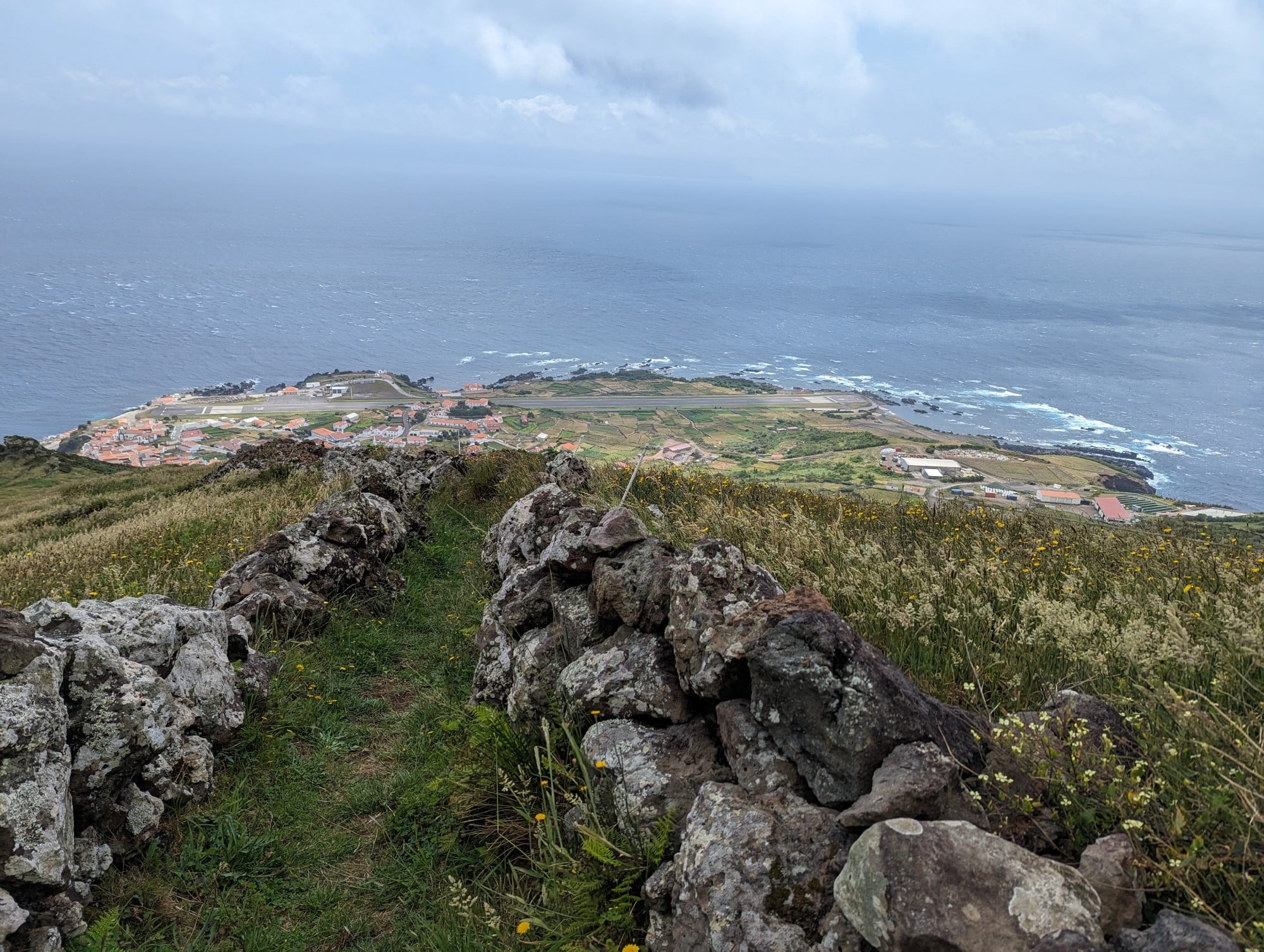
The geographic isolation is a fact: you are on islands in the middle of the Atlantic. Getting anywhere requires a flight. Getting to the US or UK means either a long flight or a connection through Lisbon.
There are direct flights from Ponta Delgada to Boston, New York, and London, but they’re not cheap and the London route is one flight a week. Visiting family, attending a wedding, going to a specialist doctor — all of it requires planning and money that mainland residents don’t have to think about.
The psychological isolation is the part people underestimate. The islands are beautiful. They are also small. There is limited variety in what you can do, where you can eat, who you’ll run into. For some people, this eventually becomes liberating. For others, it becomes claustrophobic. The honest answer is that you won’t know which camp you’re in until you’ve lived it through at least one full winter — and many people who don’t make it cite this as the reason.
Social life contracts on an island. You can’t nip to a neighboring city for a concert, a restaurant, or a new scene. The people you meet in the first few months are largely the people you’ll know for as long as you live there. This can be deeply meaningful. It can also, for the wrong person, feel like a trap.
Healthcare: The Three-Hospital Reality
This is the most important practical consideration, and it’s significantly undersold in most expat articles.
The entire Azorean archipelago has three public hospitals: one on São Miguel (Ponta Delgada), one on Terceira (Angra do Heroísmo), and one on Faial (Horta). There is also now one private hospital, the CUF Hospital dos Açores in Lagoa on São Miguel, which opened in 2021 and has made a real difference to expat access — it offers shorter wait times and English-speaking staff.
The other six islands — Pico, São Jorge, Santa Maria, Graciosa, Flores, Corvo — have health clinics but no hospital. Residents needing emergency or specialist care are evacuated by Portuguese Air Force helicopter to one of the three main islands. This evacuation is weather-dependent. During winter storms, a helicopter evacuation may not be possible for 24 to 48 hours.
Let that sink in for a moment, particularly if you’re a retiree with any chronic conditions, any cardiac history, or any health situation that could escalate quickly.
On São Miguel, day-to-day care is genuinely decent, and the private hospital has improved the picture considerably for those who can afford private health insurance (which most financially independent expats carry regardless). On the outer islands, the risk calculation is fundamentally different.
The practical advice from virtually every expat medical professional operating in the region: if you have a health condition that could require specialist care, or if you are over 70, the smaller islands are probably not where you should be living.
Even on the big islands, SNS (the universal healthcare system) wait times for non-emergency specialist consultations can stretch into years. Private insurance is not a luxury here — it’s a necessity for anyone who wants access to reasonable care on a realistic timeline.
Humidity, Mold, and the Cold That Gets Inside
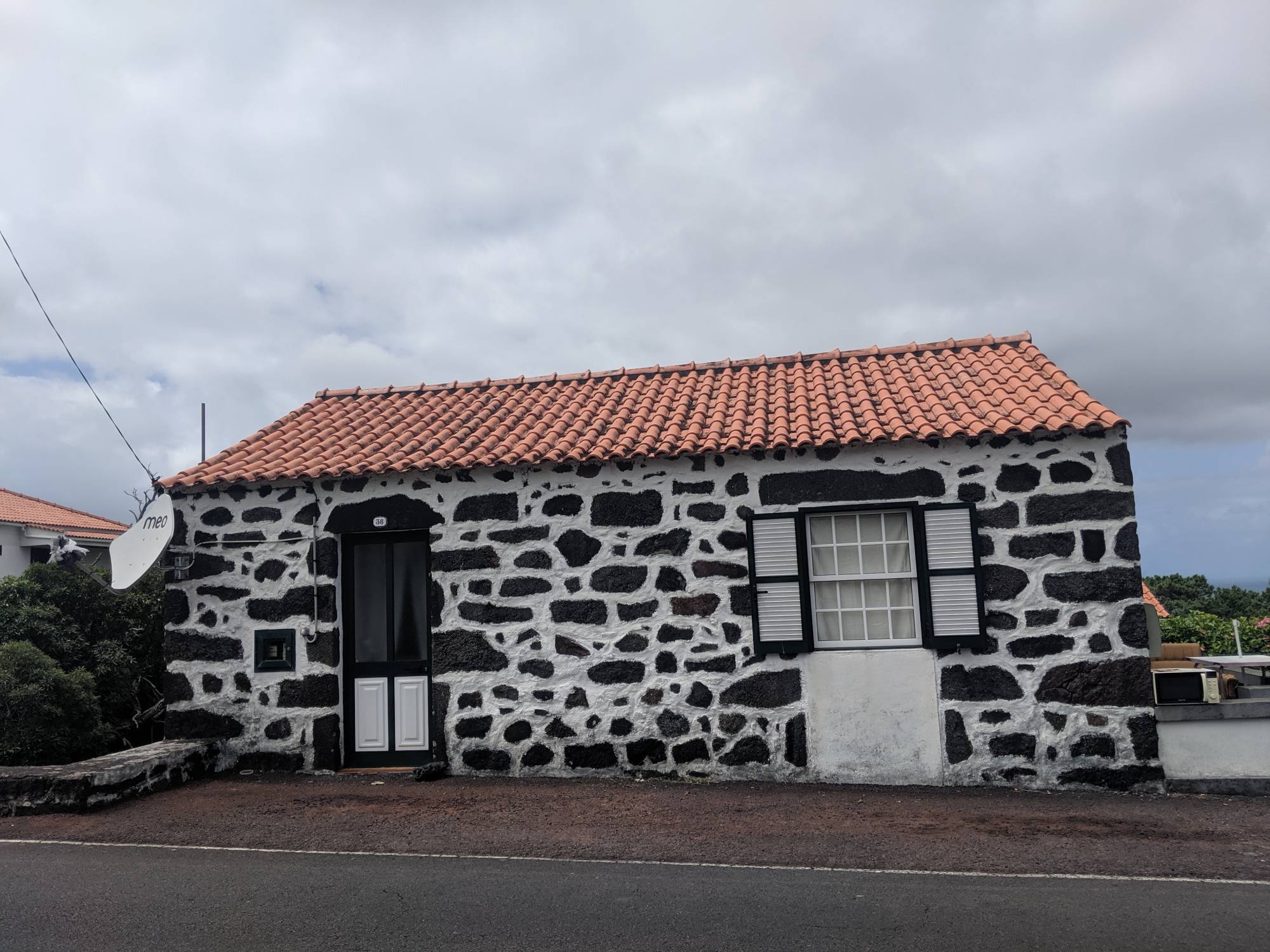
This con deserves its own section because it affects daily life in a way that’s very hard to visualize until you’re in it.
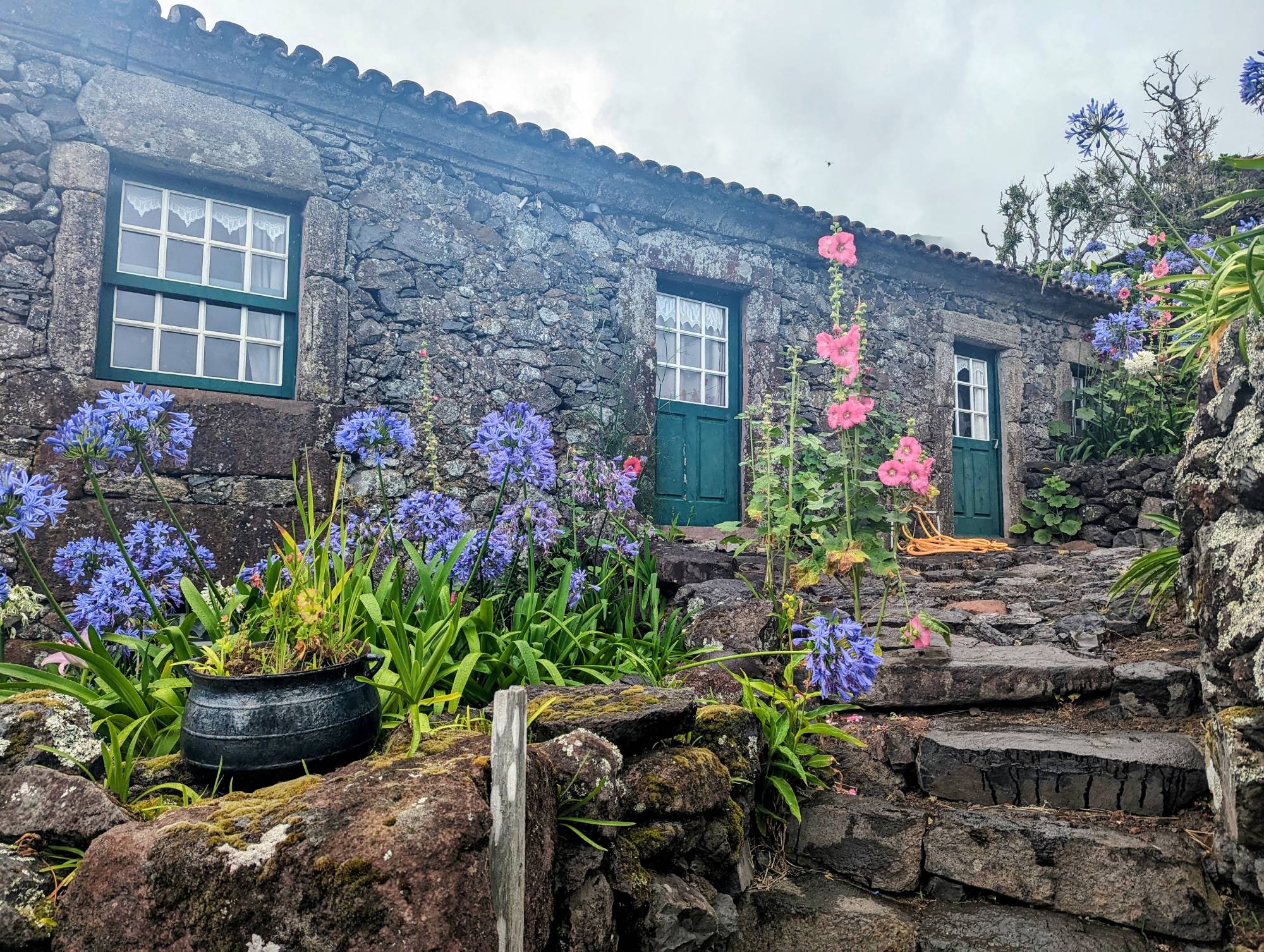
Traditional Azorean homes are built from basalt stone. Beautiful, resilient, and essentially moisture-neutral — meaning they absorb atmospheric humidity and ground moisture through their walls via capillary action. Most traditional homes have no moisture barriers and no central heating.
The result: in winter, the inside of an Azorean stone house can feel colder than the outside. When outside temperatures are a perfectly reasonable 55°F, the inside of a poorly heated home can feel genuinely bone-chilling, especially at night. British and Irish expats — accustomed to perpetual damp — still get caught off guard by this. Americans and Canadians, used to sealed, centrally heated homes, often describe it as the hardest physical adjustment of the move.
Then there’s the mold. Black mold grows on walls, clothes, wooden furniture, books, shoes — anything that doesn’t get enough airflow or warmth. It is not, as some sources gently suggest, a manageable inconvenience. Expats who live in Azorean homes describe it as a relentless battle: high-capacity dehumidifiers running constantly, lime-based plasters rather than cement sealants, mechanical ventilation systems, heat pumps rather than fireplaces. Do it right and it’s manageable. Ignore it and it becomes a health problem (respiratory issues are common in poorly ventilated homes) as well as a financial one.
The cultural context that confuses newcomers: many locals view some degree of damp and cold as simply part of winter. Azoreans are habituated to it. The expat arriving from a centrally-heated North American home is starting from a completely different baseline.
Modern builds and renovated properties with proper vapor barriers and heat pumps are a different story. If you’re renting or buying, the type and age of the construction matters enormously.
Getting Deliveries, Getting Stuff Done
You are on an island. Amazon does not operate normally here. Many international retailers don’t ship to the Azores at all. Those that do ship to Portugal proper may not ship to the Azores, or may charge significantly more. Deliveries from mainland Portugal can take weeks.
This requires a mental reorientation. The “I’ll just order it” reflex that most modern consumers have doesn’t function the same way. You plan further ahead, you improvise more, you source locally first, and you learn to stockpile things you use regularly.
For most things, this is a mild adjustment. For people running businesses that depend on specific equipment or supplies, or for anyone who relies heavily on a particular product not available locally, it can be genuinely problematic.
The Job Market (If You Need One)
The local economy runs on dairy farming, fishing, and tourism. Average wages are low. Young Azoreans, as a matter of generational pattern, leave the islands to find work.
If you are retired, living on passive income, or have a fully remote job that comes with you, this doesn’t affect you much beyond limiting who you can hire locally and at what rate. If you need to find local employment, options outside those three sectors are very limited.
The one local exception: skilled tradespeople. Plumbers, electricians, and carpenters are in genuinely short supply across the islands, and anyone with those skills can find consistent work. The construction sector is currently running hot, with demand far outstripping supply.
The Skilled Trades Shortage (Especially for Renovators)
This point is particularly important for anyone buying a property to renovate — which is a common expat plan given the relative affordability of older Azorean homes.
The shortage of skilled tradespeople is severe and structural. Local masons, electricians, and plumbers are booked months in advance, frequently prefer government or large tourism contracts, and operate at a pace calibrated to the Azorean rhythm of life rather than an anxious new homeowner’s. Renovation projects routinely take two to three times longer than estimated and cost more than budgeted because materials have to be imported and labor is scarce.
If you are planning a renovation, the honest advice is: double your budget estimate, double your timeline estimate, and plan to be physically present on the island to manage the work. Remote renovation management in the Azores is a recipe for frustration.
You Need a Car. Full Stop.

Public transportation exists on the larger islands but is designed primarily to move students to school, not to serve residents with regular professional or recreational needs. Bus routes are infrequent, coverage is incomplete, and schedules don’t reflect how people actually need to move around.
A car is not optional. It is an operating expense of island life. Budget for purchase, insurance, maintenance, and gas as a fixed cost, regardless of what you were used to at home.
The Language (And Why Azorean Portuguese Is Harder)
Learning Portuguese is an expected part of moving to Portugal. What’s less commonly explained is that Azorean Portuguese — particularly on São Miguel — is considerably harder to understand than mainland Portuguese, even for people who’ve studied the language or lived in Lisbon.
The São Miguel accent (Micalense) features distinctive vowel shifts with French-influenced sounds and a compressed, rapid delivery that trips up even confident Portuguese speakers. Other islands have their own variations. Terceira has a more standard accent with some American English influence, a legacy of the US Air Force presence at Lajes. The outer islands range from standard rural Portuguese to near-unintelligible local dialects.
For practical purposes: English is widely spoken in tourism areas of São Miguel and among younger people. Outside those contexts, and especially on smaller islands, you will genuinely need Portuguese to manage daily life. Not “polite effort” Portuguese — functional, day-to-day Portuguese.
Bureaucracy
Portugal’s bureaucracy is notoriously slow and paper-heavy, and the Azores operates within that system. Obtaining a residency permit, converting a foreign driver’s license, getting a building permit, opening a bank account — all of these take significantly longer than residents from the US or UK expect. Months, sometimes longer.
It’s worth noting that this isn’t unique to the Azores — mainland Portugal has the same bureaucratic culture, and expats there report identical frustrations. But on the mainland you at least have access to more lawyers, relocation specialists, and SEF/AIMA offices. On the islands, the same slowness exists with fewer people to help you navigate it.
Plan for bureaucratic processes to take longer than stated, require more documentation than listed, and occasionally require a return visit for something that could have been sorted in the first one.
Seismic and Volcanic Risk
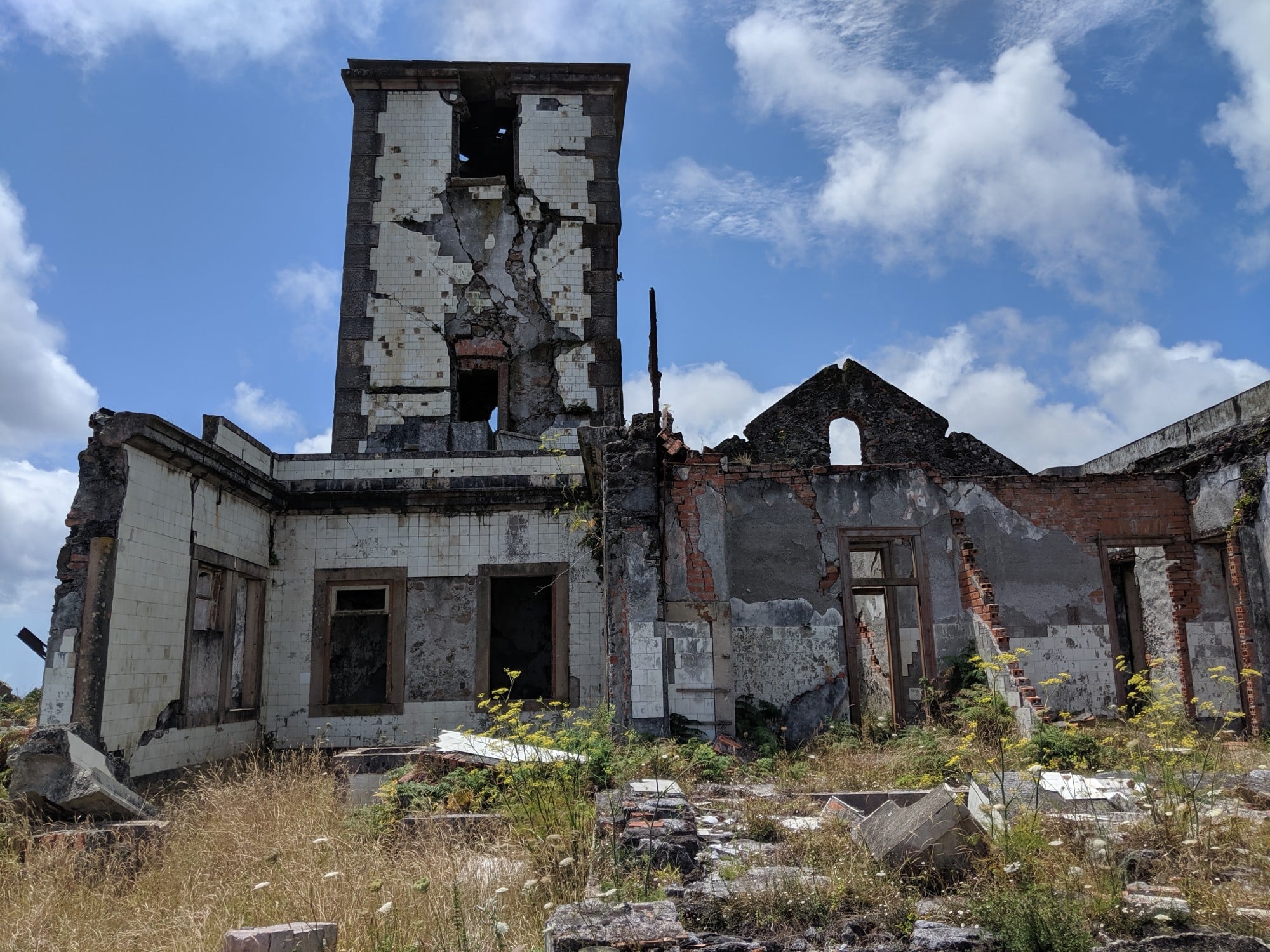
This is worth a brief, honest mention. The Azores sits at the intersection of three tectonic plates. Tremors are a regular feature of island life, particularly on São Miguel and Faial. The last significant volcanic eruption was Capelinhos on Faial in 1957–58, which destroyed part of the island and triggered a major emigration wave.
Modern monitoring systems are good, and the risk of catastrophic events is low. But low is not zero, and this is a permanent feature of the geographic reality of the islands. Most residents adapt to it and treat it as background noise. It’s worth knowing about before you move.
The Animal Welfare and Environmental Gap
This is mentioned because it genuinely matters to a significant portion of expats, and because ignoring it would be dishonest.
The traditional Azorean relationship with animals differs from what most Northern European or North American expats expect. Dogs kept on short chains, strays on roads, livestock with minimal shelter — these are common sights, particularly in rural areas. It’s not cruelty in the local cultural frame; it’s agriculture. But for expats who are used to different norms, it can be an ongoing source of distress that’s worth factoring in.
Again, this can be common in mainland rural Portugal as well. Attitudes to animals are changing, but it is still something to be award of.
Similarly, herbicide use in agriculture is widespread and largely unremarked upon, and waste management in some rural areas is inconsistent. The islands are beautiful, but they are working agricultural islands, not a nature preserve.
Which Island? A Practical Guide for Expats
São Miguel is the default choice for most expats and for good reason. It has the most infrastructure, the only private hospital, the most flights, the largest expat community, the most coworking options, and the most varied day-to-day life. If you’re uncertain about island life and want to give it a real test, start here. It’s not as “authentic” as the smaller islands, but it gives you the best foundation to build a sustainable life.
Terceira is the choice for people who want a balance of genuine Azorean character and practical livability. Angra do Heroísmo — a UNESCO World Heritage city — is one of the most beautiful towns in Portugal. The American Air Force legacy at Lajes means there’s a relatively cosmopolitan population and decent English proficiency. The accent is closer to standard Portuguese. Housing is cheaper than São Miguel. It’s a slightly slower pace and a slightly more local feel, but you don’t give up much in terms of services.
Faial suits sailors, outdoor enthusiasts, and people who want a genuinely maritime life. The Horta marina is famous across the Atlantic — boats on transatlantic crossings stop here, which gives the island an unexpectedly cosmopolitan social scene for its size. Views across to Mount Pico on a clear day are extraordinary. The trade-off is fewer services and more exposure to Atlantic weather systems.
Pico is for people who genuinely want the landscape as the dominant feature of their life. Portugal’s highest mountain, UNESCO-recognized vineyard landscapes, extraordinary whale watching. But services are limited, the population is small, and it is genuinely remote in ways that matter for daily life.
Santa Maria is the Azores’ sunniest island and one of the most underrated options for expats. It’s the oldest island geologically, which gives it a drier, more settled landscape — and the only natural golden-sand beaches in the archipelago. It gets meaningfully more sunshine than the rest of the islands, which matters more than it sounds after a few gray winters elsewhere. It also has more direct flight connections than most people assume, including regular links to Lisbon that take some of the sting out of the isolation. The honest warning: services are limited, the expat community is very small, and getting there from outside Portugal usually means a connection through São Miguel. But for retirees who prioritize warmth and quiet over infrastructure, it’s worth serious consideration.
São Jorge is a hiker’s island — long, narrow, and clifftop-dramatic, with the famous fajãs at its base: small coastal plains formed by ancient lava flows, each with its own microclimate. It’s also the source of the Azores’ most celebrated cheese. The warning is simple: services are sparse, the island has a genuinely rugged feel, and it is a more demanding place to live than the larger islands in almost every practical respect.
Graciosa is the island people discover when they’ve already fallen in love with the Azores and want somewhere quieter. Rolling limestone hills, whitewashed villages, and UNESCO Biosphere Reserve status for the entire island. What it lacks in dramatic scenery it makes up for in genuine peace. The warning: it’s the most northerly island, which shows in the winters — less sunshine, more wind, and a sense of isolation that can feel oppressive if you’re not fully prepared for it. The expat presence is minimal, integration happens on Azorean terms and in Portuguese, and there is very little in the way of amenity or infrastructure. It’s a considered choice, not a default one.
Flores has a legitimate claim to being the most beautiful island in the Azores. Waterfalls cascading off cliffs into the ocean, crater lakes ringed with hydrangeas, a landscape so green and lush it looks like something invented rather than geological. Many people who visit describe it as the most beautiful place they’ve ever been. The warning is equally clear: Flores sits in the full path of North Atlantic storms, gets rain on the majority of days in winter, and sees flights and ferry connections cancelled for days at a stretch. Supply chains depend on cargo ships; when they can’t dock, supermarket shelves go empty. Healthcare beyond basics means evacuation to Faial or São Miguel, weather permitting. Flores is for people who have genuinely thought through what that life involves — not those who’ve fallen for the photographs.
Corvo, with around 400 residents, is the smallest and most remote inhabited place in the EU. One village, one road, one caldera. It is extraordinary and it is for very few people — those who’ve thought seriously about what true isolation involves and still want it, ideally with a pre-existing connection to the community or a skill that makes them genuinely useful there.
Final Thoughts
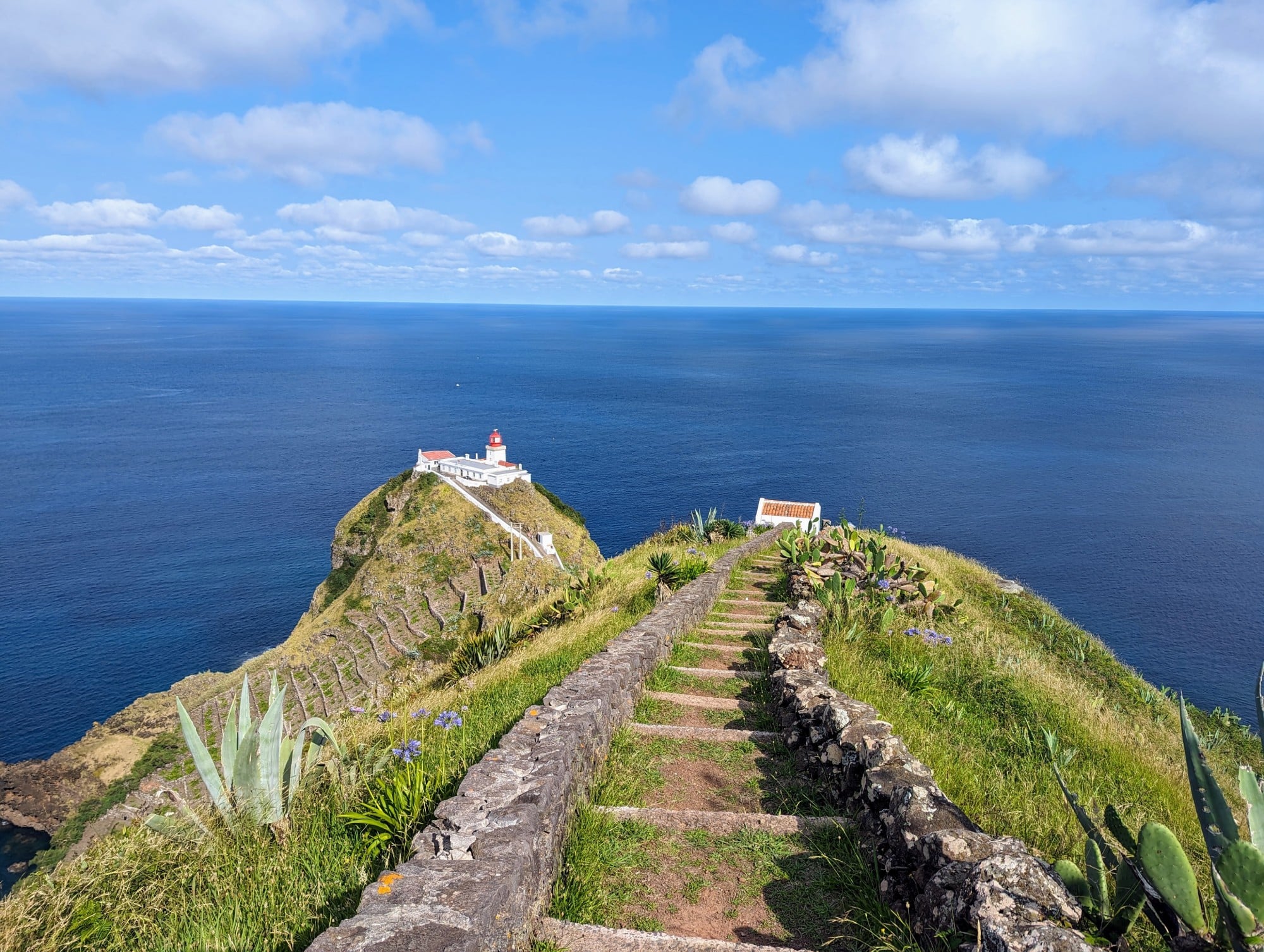
The Azores is one of the most genuinely extraordinary places to live in the world. It is also one that demands a particular kind of person — patient, adaptable, nature-oriented, and honest with themselves about what they actually need from daily life.
The people who thrive there long-term are almost always the ones who went in with clear eyes: who knew about the mold and prepared for it, who understood the healthcare map and made their island choice accordingly, who visited in winter before committing, and who came because of what the Azores actually is rather than what they wished it to be.
If that’s you, there may genuinely be nowhere better.
 Thinking about Moving to Portugal?