
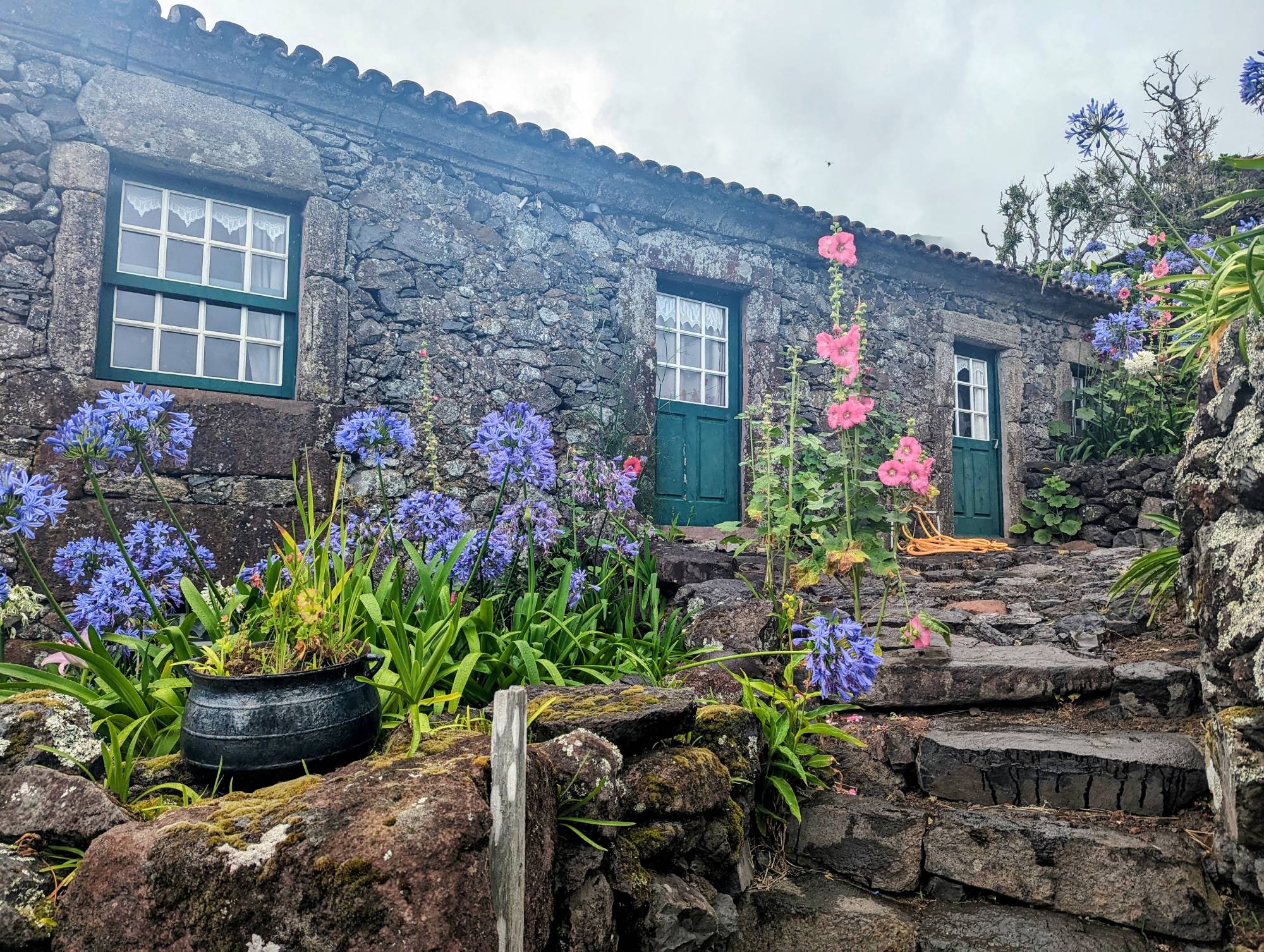
Living in the Azores
Living in the Azores: The Short Version
If I were moving to the Azores with no family ties pulling me to a particular island, I’d rent on Terceira or São Miguel, arrive in November rather than June, and not buy anything until I’d lived through a January.
The Azores works well for a fairly specific person: healthy, self-sufficient, bringing income from outside, happy with rain, and more interested in hiking and neighbors than in restaurants and shopping. It works badly for anyone who needs a specialist within an hour’s drive, needs sunshine to stay sane, or is coming because they heard it was cheap. It isn’t anymore.
There’s no separate Azores visa: it’s an autonomous region of Portugal, with its own government, health service and tax rates, but Portuguese law and immigration rules. If you qualify to live in Lisbon, you qualify to live in Ponta Delgada. The question is whether you’d want to, and on which of the nine islands.
The Azores at a glance
🏝️ Nine islands, about 236,000 people, over half on São Miguel
✈️ About 900 miles west of Lisbon, roughly five hours from Boston
🕐 One hour behind London and Lisbon, four ahead of New York
🏥 Three public hospitals (São Miguel, Terceira, Faial) and one private one (São Miguel)
🧾 Standard VAT 16% (23% on the mainland)
🏫 No international schools
Where Do You Want to Start?
⚖️
The pros and cons
What people love about living here, what they find hard, and who it suits.
💶
Just show me the cost of living
Sample budgets, rents and house prices by island.
Pros and Cons of Living in the Azores
The verdict
Seven big reasons to live here and eight that make it hard. For the right person, the seven win easily. For everyone else, the eight show up by the first February.
✓ Pros
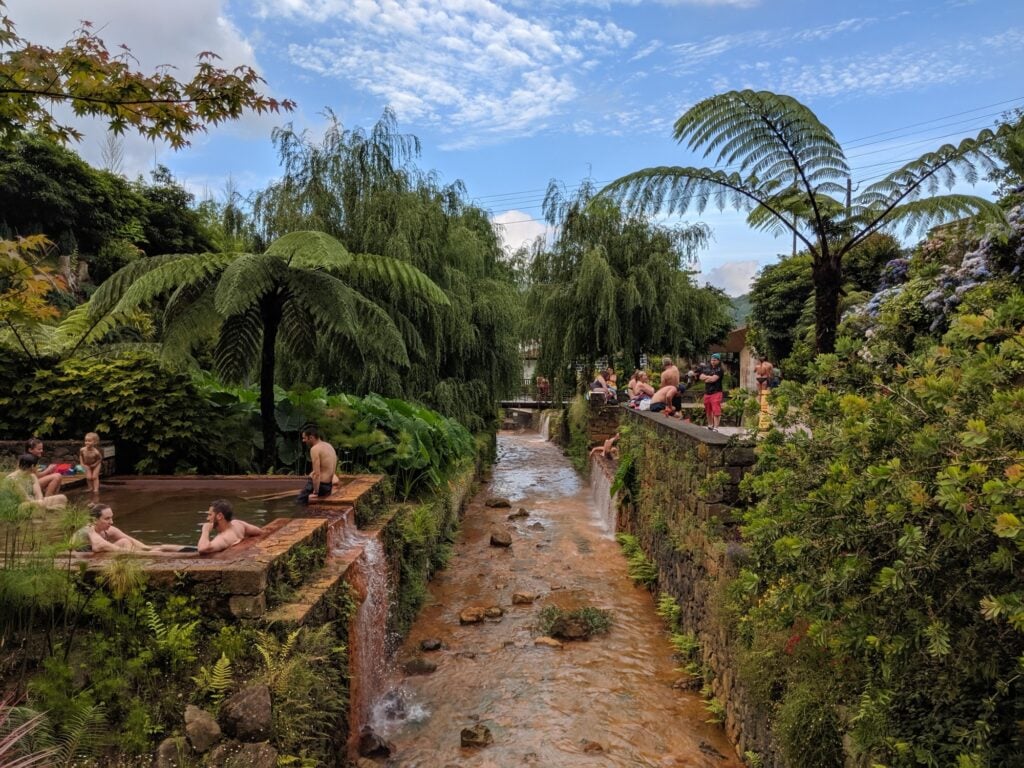
- Nature on your doorstep. A crater rim on a Tuesday, a lava pool after work, whales from the ferry.
- Safety. People leave cars unlocked, and kids walk to school.
- The pace. Nobody is impressed by how busy you are.
- Community. Festas, especially the Holy Spirit (Espírito Santo) festivals from spring into summer. Turning up and helping out is the fastest way to stop being “the foreigner.”
- Food. Local beef, dairy, fish and cheese, often bought from the people who made them.
- Close to North America. Direct flights to Boston, New York and Toronto, and a time zone only four hours ahead of the East Coast.
- Lower taxes. VAT is 16%, and regional income tax rates are lower than the mainland’s.
✗ Cons
- Damp and mold. Mild winters, cold stone houses. See below.
- Gray winters. Days under low cloud, and a lot of rain.
- Healthcare geography. Three public hospitals for nine islands.
- Isolation. Everywhere is a flight away, and flights get canceled.
- Choice. A few supermarkets, a few restaurants, little indoor culture, and no anonymity. Many retailers won’t ship here either; Amazon in Portugal covers the workarounds.
- Housing. Prices are rising fast, and year-round rentals are hard to find.
- Language. English goes far in tourist Ponta Delgada, not with builders, doctors or village neighbors, and the São Miguel accent is hard even for people from Lisbon. See Azorean Portuguese.
- Local jobs. Scarce, low-paid and mostly in Portuguese.
Who the Azores Suits
Tends to work well for…
- Healthy retirees with steady income on São Miguel or Terceira.
- Remote workers with a secure job who’ve seen the islands in winter.
- Families with young children happy with Portuguese schooling.
- People with Azorean roots.
- Hikers, sailors, divers and gardeners.
Think twice if you…
- Need regular specialist care, or might soon.
- Struggle with gray winters, or have asthma or a mold allergy.
- Are moving because you heard it was cheap, or need a local job.
- Want a short, cheap flight to family in the UK or mainland Europe.
- Have teenagers who don’t speak Portuguese.
💡
Choose for the person you’ll be at 75, not 60
A lot of retirees pick an island for the hikes. Ask the harder question too: could you still live here if you couldn’t drive? Where’s the pharmacy, is there a taxi, who would help at home, and how long would it take your children to reach you? That’s easier on São Miguel or Terceira, and harder on Flores or Graciosa.
Azores vs. Madeira vs. Mainland Portugal
Almost nobody considering the Azores is only considering the Azores.

Choose the Azores
If you want green, quiet, small communities and nature on your doorstep, and you’ll trade convenience for it.

Choose Madeira
If you want island life with better weather, more services, international schools and a bigger foreign community. It’s the easier island to move to.
Madeira →

Choose the mainland
If hospitals, flights, schools and choice matter more than island character.
| Azores | Madeira | Mainland Portugal | |
|---|---|---|---|
| Weather | Mild, wet, gray in winter, very changeable | Warmer, sunnier, more stable | Rainy north to hot, dry south |
| Isolation | High, and higher on the small islands | Moderate: one island with most services | Low |
| Hospitals | Three public, one private, for nine islands | Main public hospital and private hospitals in Funchal | Many, including large teaching hospitals |
| International schools | None | A few around Funchal | Many around Lisbon, Porto and the Algarve |
| Flights to North America | Good from São Miguel | Limited | Best, from Lisbon and Porto |
| Housing | Rising fast, still below Madeira | More expensive | From cheap inland to very expensive in Lisbon |
| Foreign community | Small, mostly São Miguel | Larger, more international | Large |
| Weather disruption to travel | Regular in winter | Occasional (Madeira’s airport is windy) | Rare |
The nine islands
Which Island Should You Live On?
This is the decision that changes every other one. A retiree on São Miguel and a retiree on Flores are living in different countries as far as healthcare, shopping and getting home are concerned.
| Island | Population | Hospital | Flights beyond Portugal | Asking price per m² (Aug. 2026) | Long-term rentals | Best for |
|---|---|---|---|---|---|---|
 São Miguel São Miguel | ~133,000 | ✔ Plus the only private hospital | ✔ Including North America | €2,388 | The only real market | The most services |
 Terceira Terceira | ~53,000 | ✔ | ✔ Some, seasonal | €1,791 | Hard to find | Most newcomers |
 Faial Faial | ~14,000 | ✔ | — | €1,674 | Very hard to find | Small town with a hospital |
 Pico Pico | ~14,000 | — (Faial, 30 min by ferry) | — | €1,778 | Very hard to find | Nature, wine, the mountain |
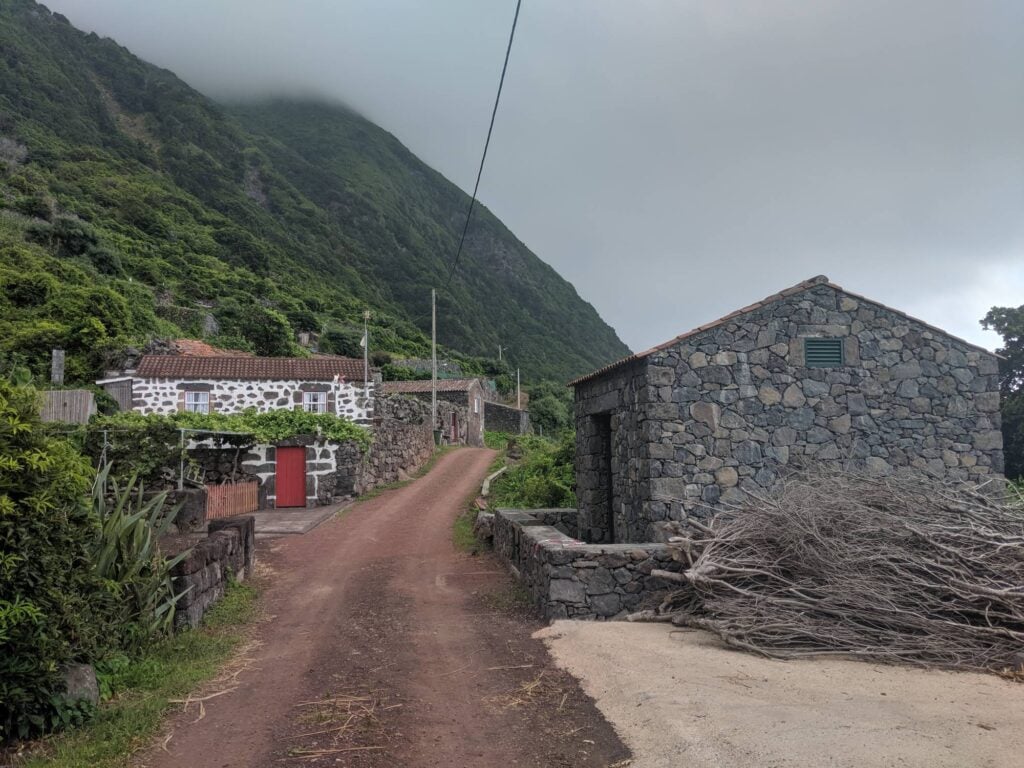 São Jorge São Jorge | ~8,400 | — | — | €1,510 | Very hard to find | Hikers, quiet |
 Santa Maria Santa Maria | ~5,400 | — | — | €1,736 | Very hard to find | Sun, beaches |
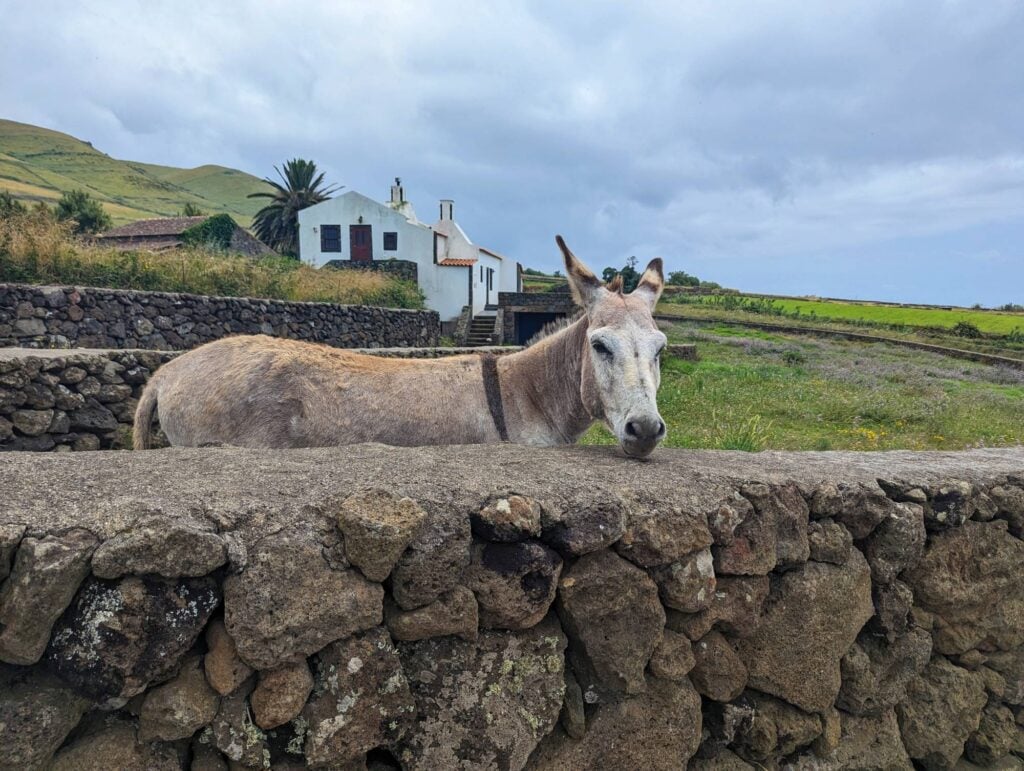 Graciosa Graciosa | ~4,100 | — | — | Too few listings | Word of mouth | Deep quiet |
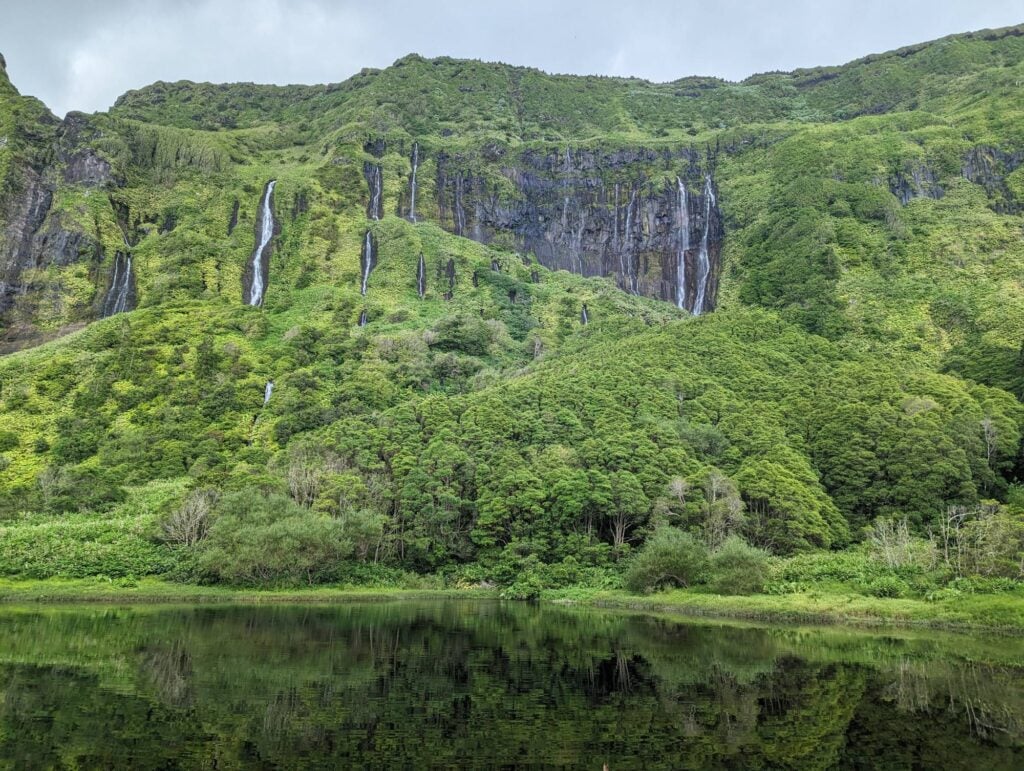 Flores Flores | ~3,400 | — | — | Too few listings | Almost none | Extreme natural beauty |
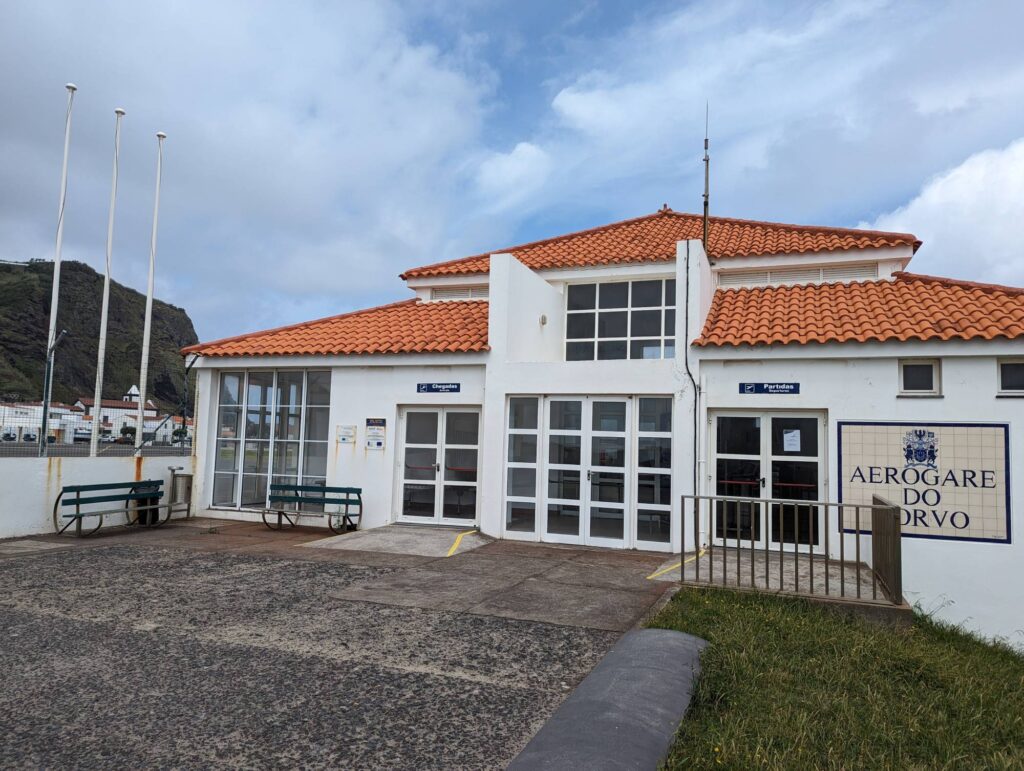
 Corvo Corvo | ~400 | — | — | No open market | None | Total remoteness |
Populations are rounded from the 2021 census. Prices are asking prices from Idealista’s August 2026 report, not sale prices.
Start Here
🏥
Want the most services?
São Miguel: the private hospital, the most flights and the most schools.
☀️
Want better weather?
Santa Maria, as long as you’re healthy and happy without much infrastructure.
The Nine Islands

São Miguel
Population: ~133,000 · Main city: Ponta Delgada
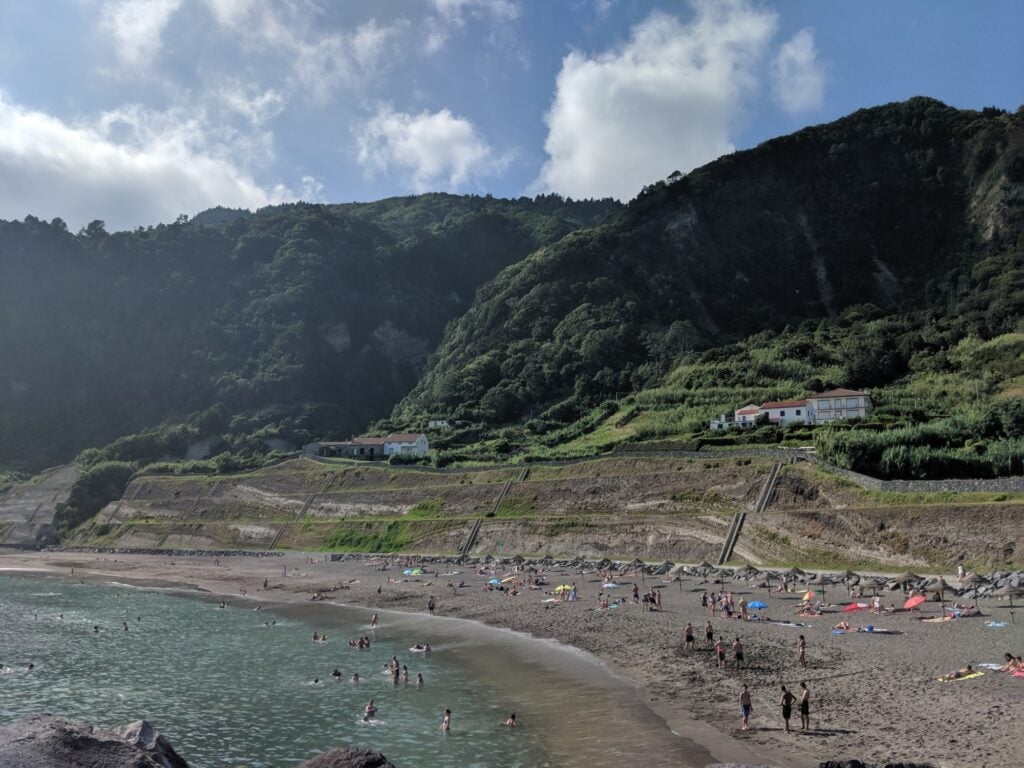
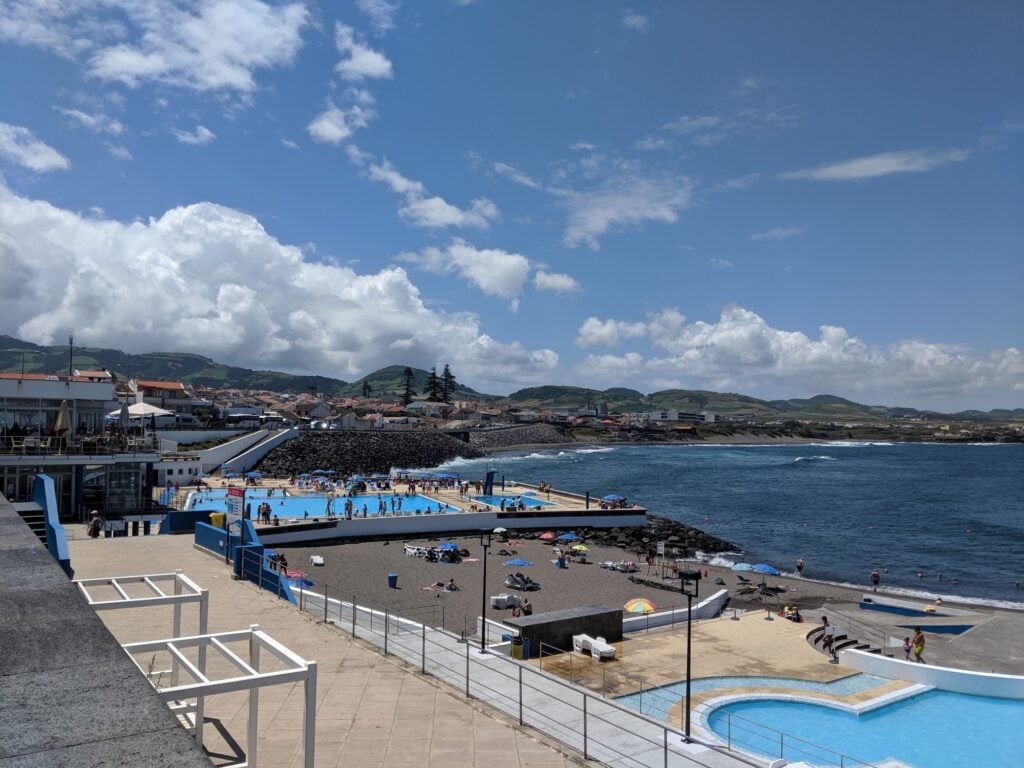
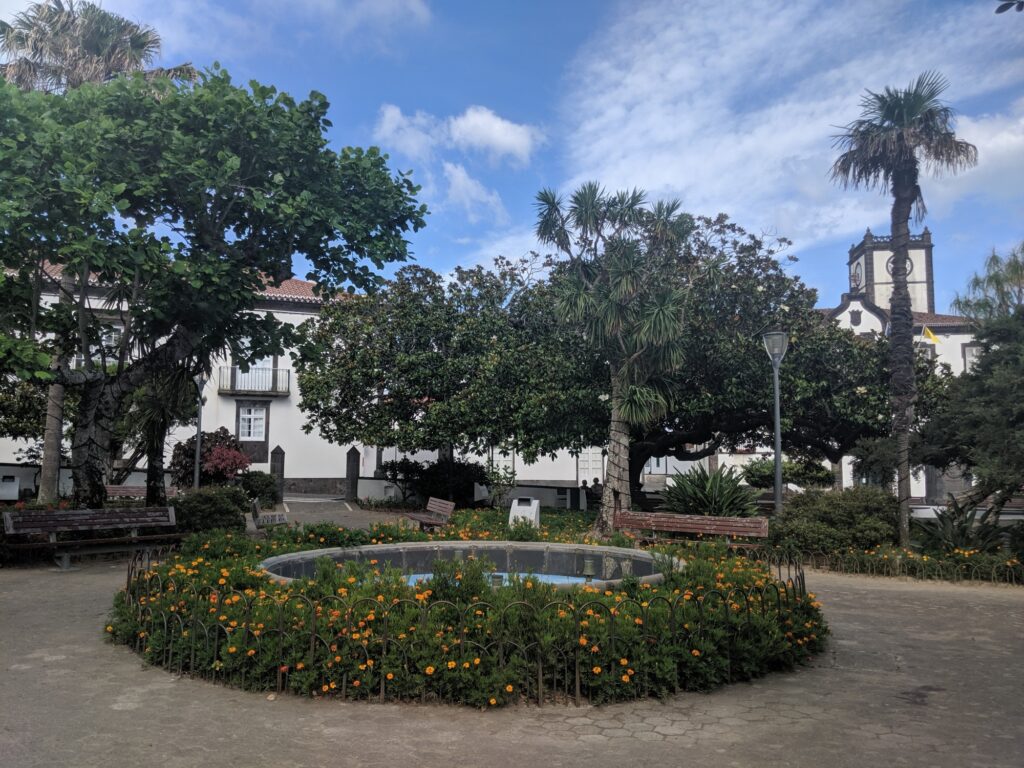
The island with the most of everything: the biggest airport, the main public hospital and the only private one, proper supermarkets, the largest foreign community, private schools, and a small city that still has something going on in February.
It’s also the most expensive island, the most touristy in summer, and home to the Micaelense accent, which even people from Lisbon struggle with.
Best for: people who want the most services, the shortest distance to a hospital, and the most reliable setup for remote work.
Think twice if: you’re moving to escape crowds. Sete Cidades on an August afternoon isn’t the Sete Cidades on the postcard.
Where on the island:
- Ponta Delgada: walkable, with the hospital, airport, shops and restaurants. The most expensive, and the only place you might manage for a while without a car.
- Lagoa: next door to Ponta Delgada and home to the private hospital. More suburban and practical than pretty.
- Ribeira Grande: a proper town on the north coast, with surf beaches and wetter weather than the south.
- Vila Franca do Campo: a smaller south-coast town, further from city services.
- Furnas, Nordeste and the rural east: beautiful and quiet, but damper and a long drive from everything.
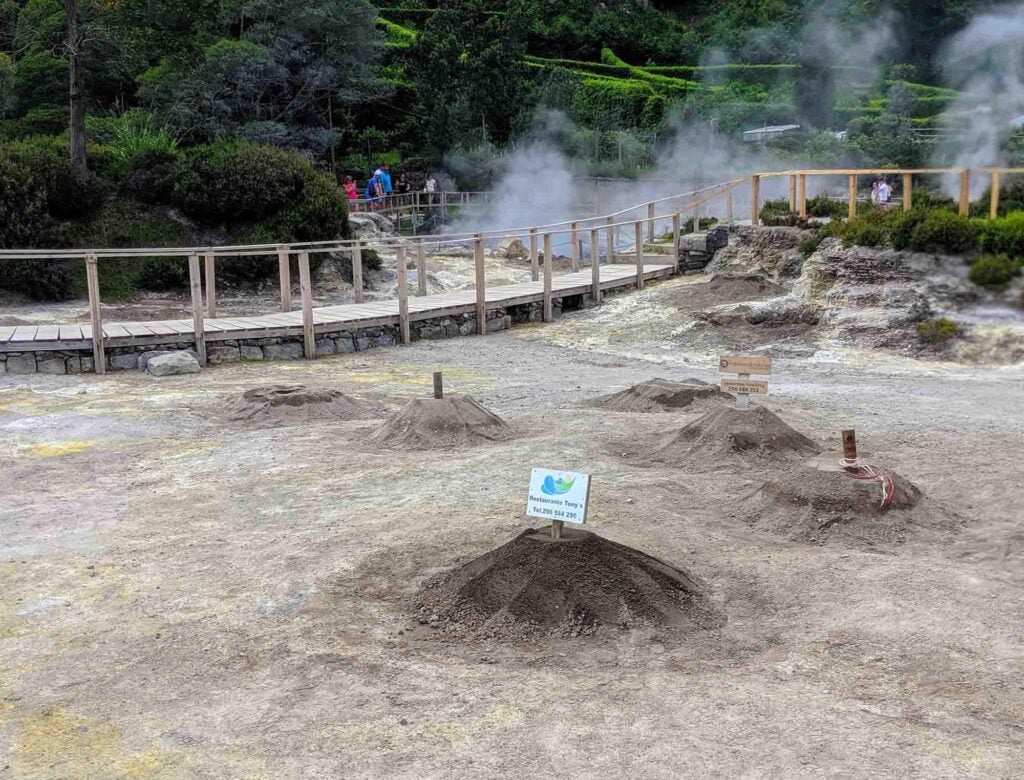

Terceira
Population: ~53,000 · Main towns: Angra do Heroísmo, Praia da Vitória
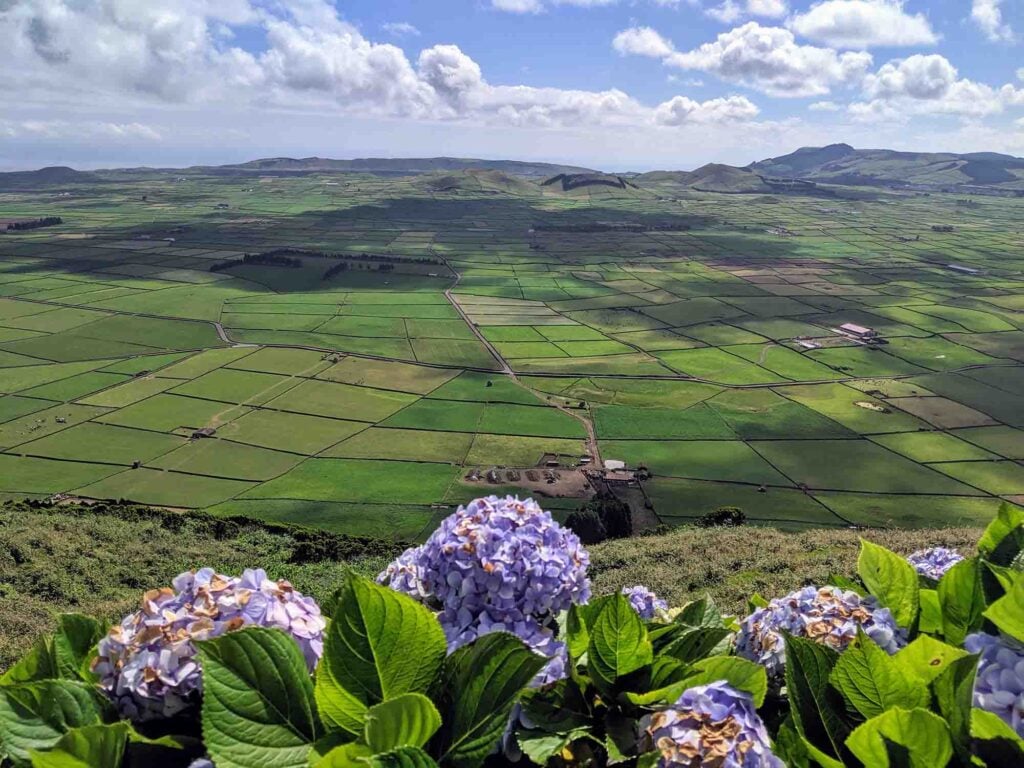
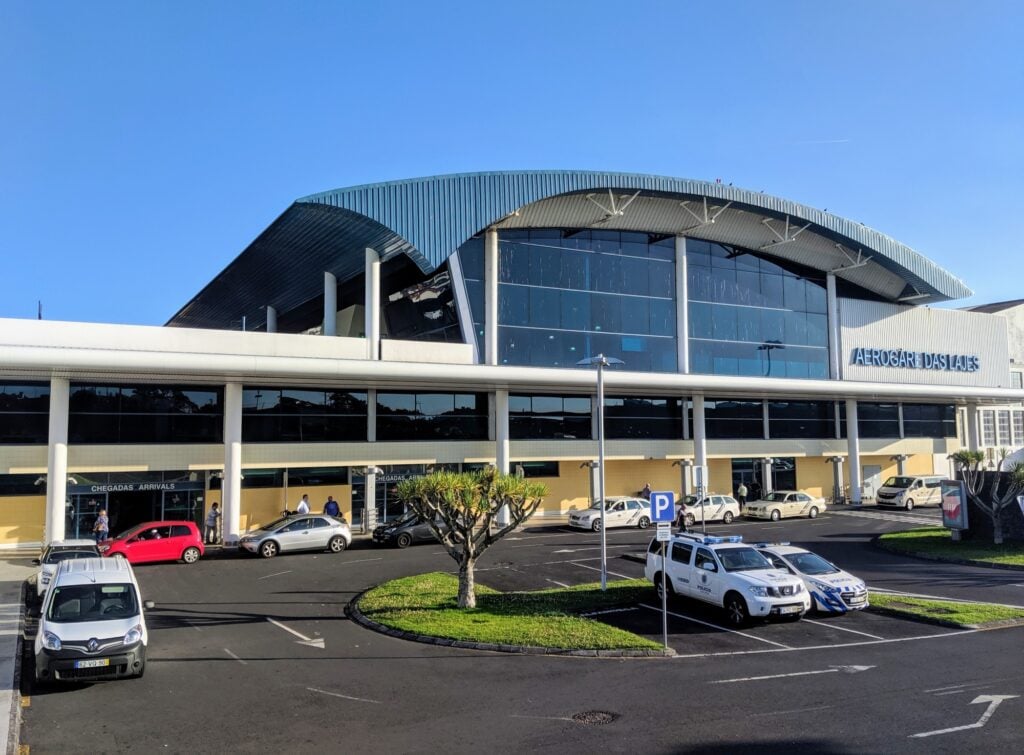
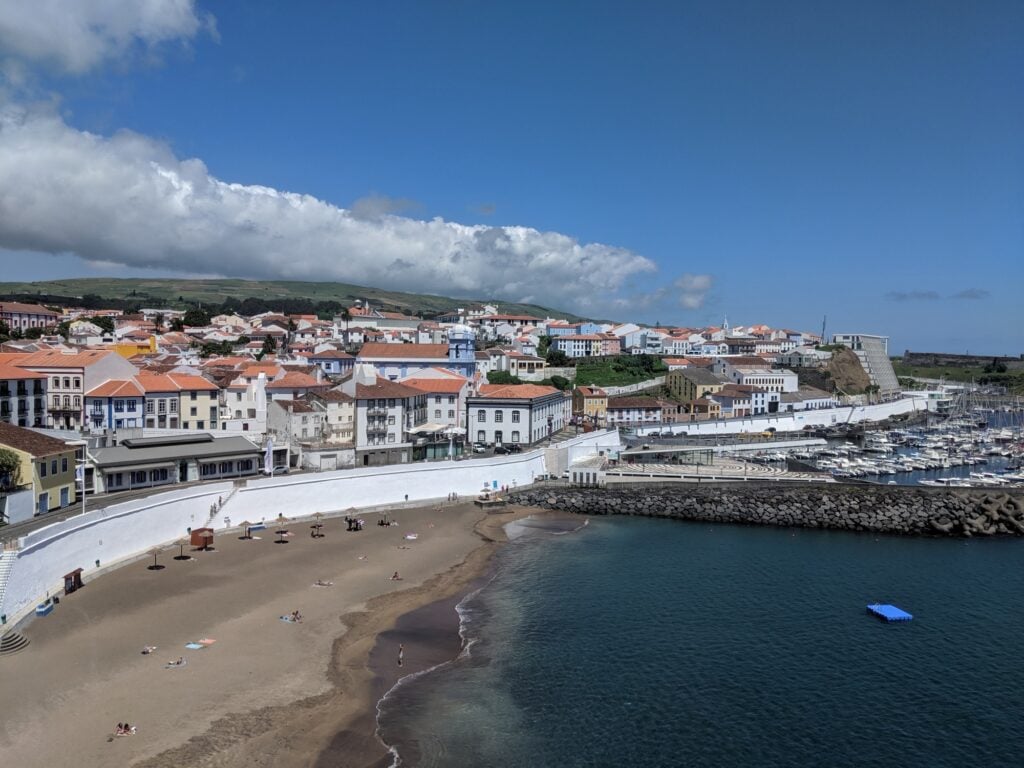
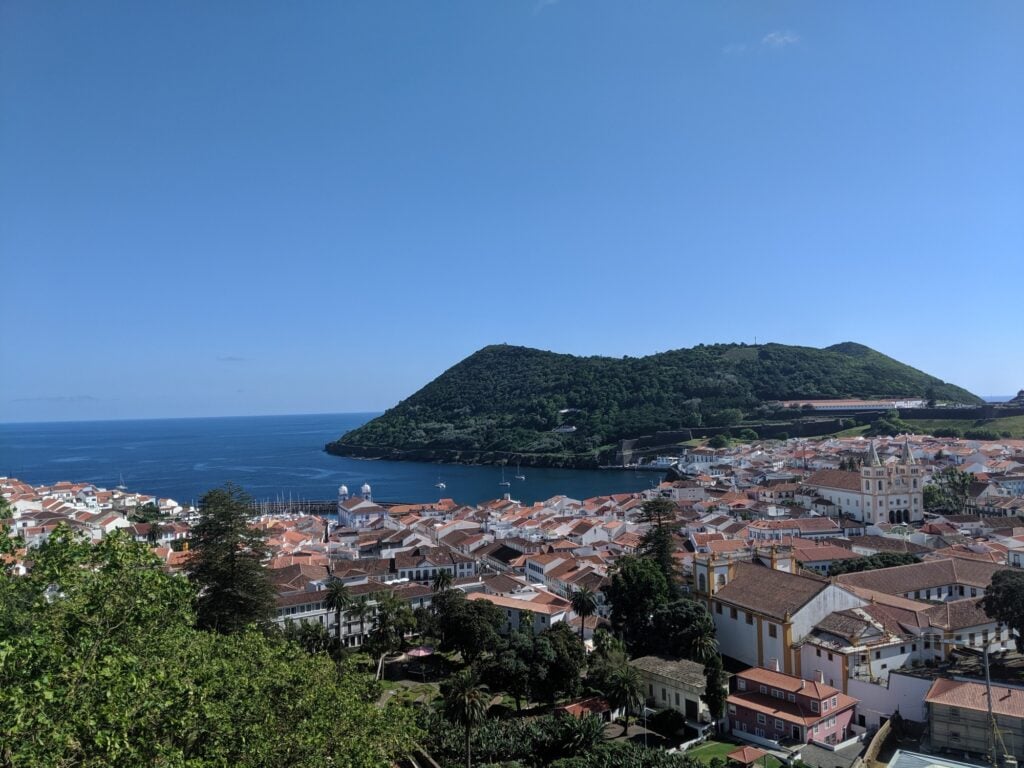
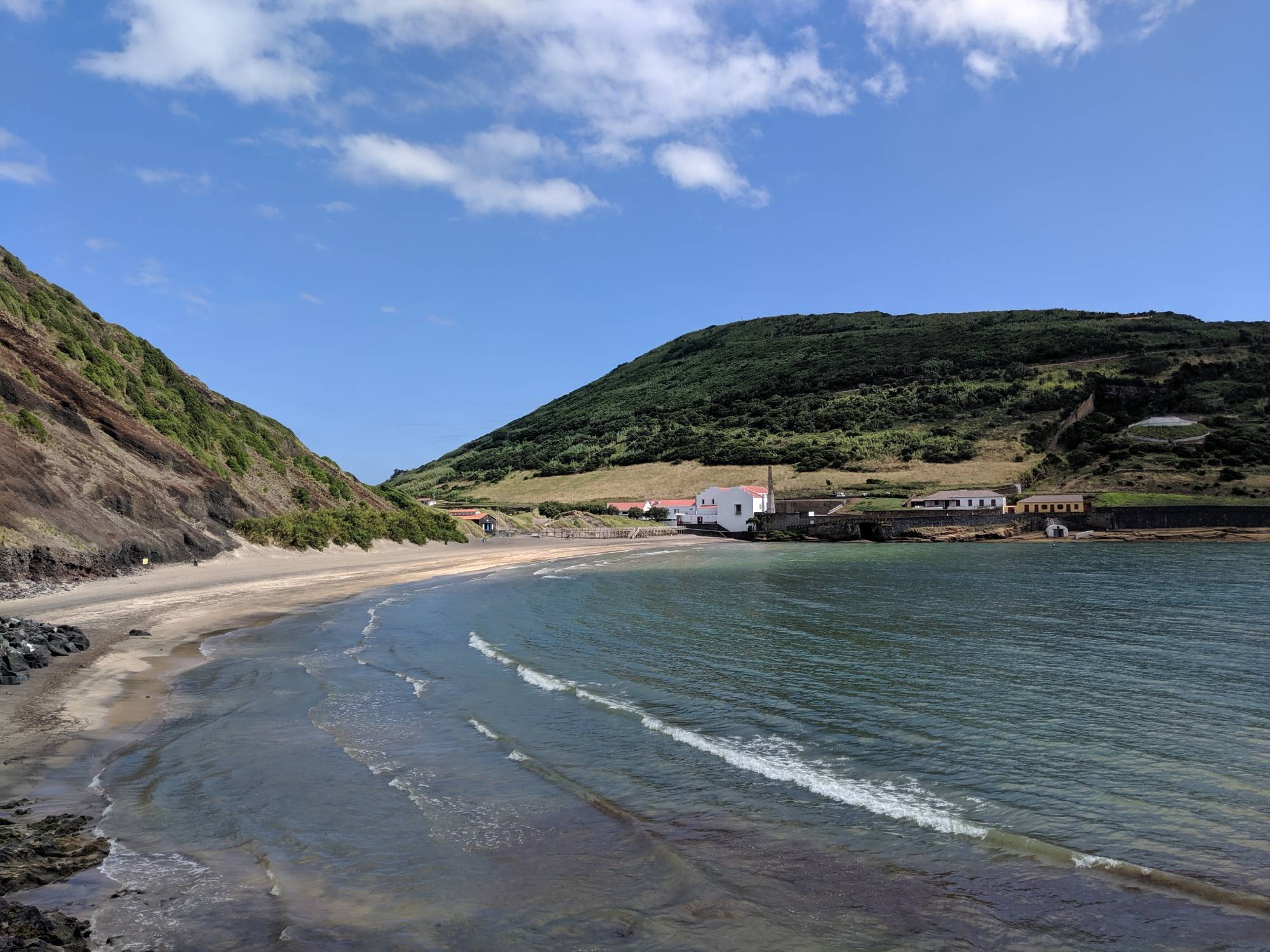
For most newcomers, this is where I’d look first. It’s a little smaller than São Miguel and far less touristy, but it still has a public hospital, an international airport at Lajes, two real towns and a strong festival calendar. The scenery is less dramatic: greener and gentler, with fields divided by stone walls. It reminds me of Ireland.
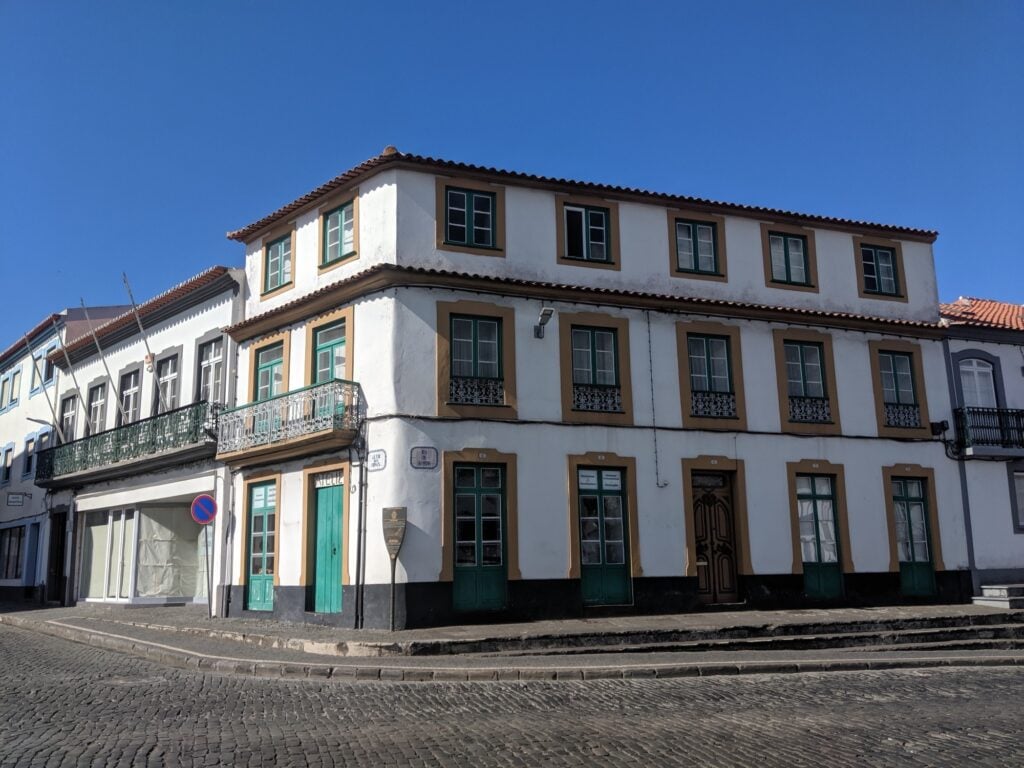
Angra is a UNESCO World Heritage city, the accent is easier than São Miguel’s, and the long US Air Force presence means more English and more familiarity with Americans. The catch: “cheaper than São Miguel” is shrinking. Asking prices rose almost 20% in the year to August 2026.
Best for: most newcomers: Azorean character without giving up a hospital and a decent airport.
Think twice if: you want lots of international flights or a big foreign community.
Where on the island: Angra for the old town, the hospital and most services; Praia da Vitória for the beach, the airport and one of the Azores’ two bilingual pilot schools; the rural interior if you want quieter and cheaper.

Faial
Population: ~14,000 · Main town: Horta
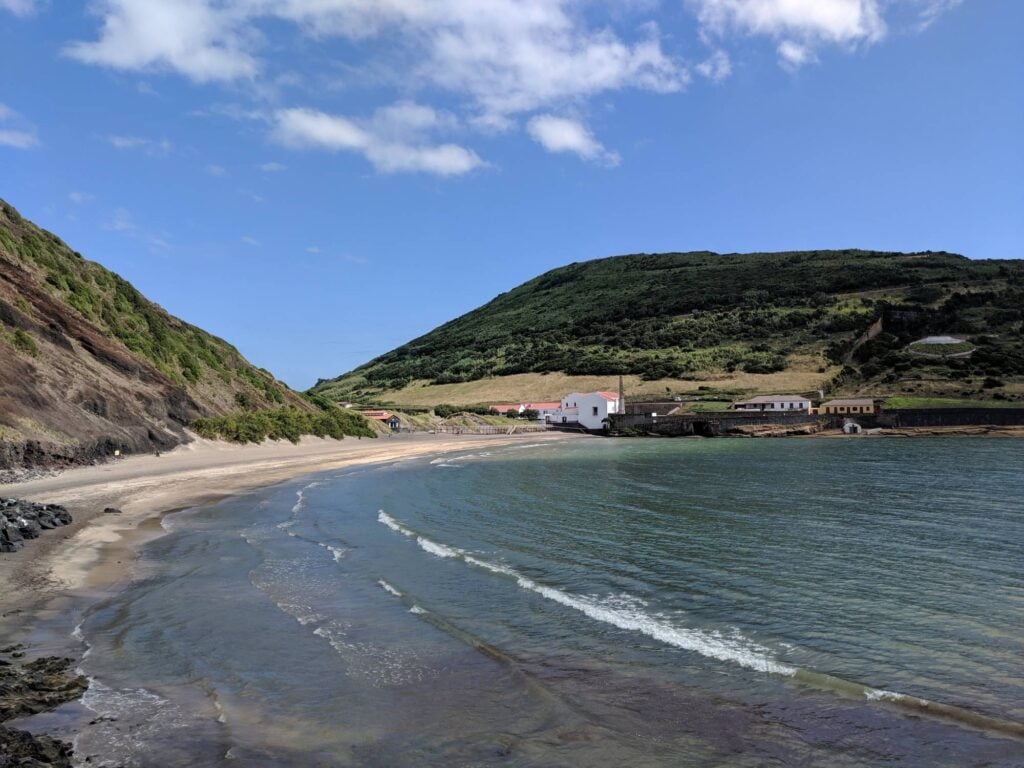
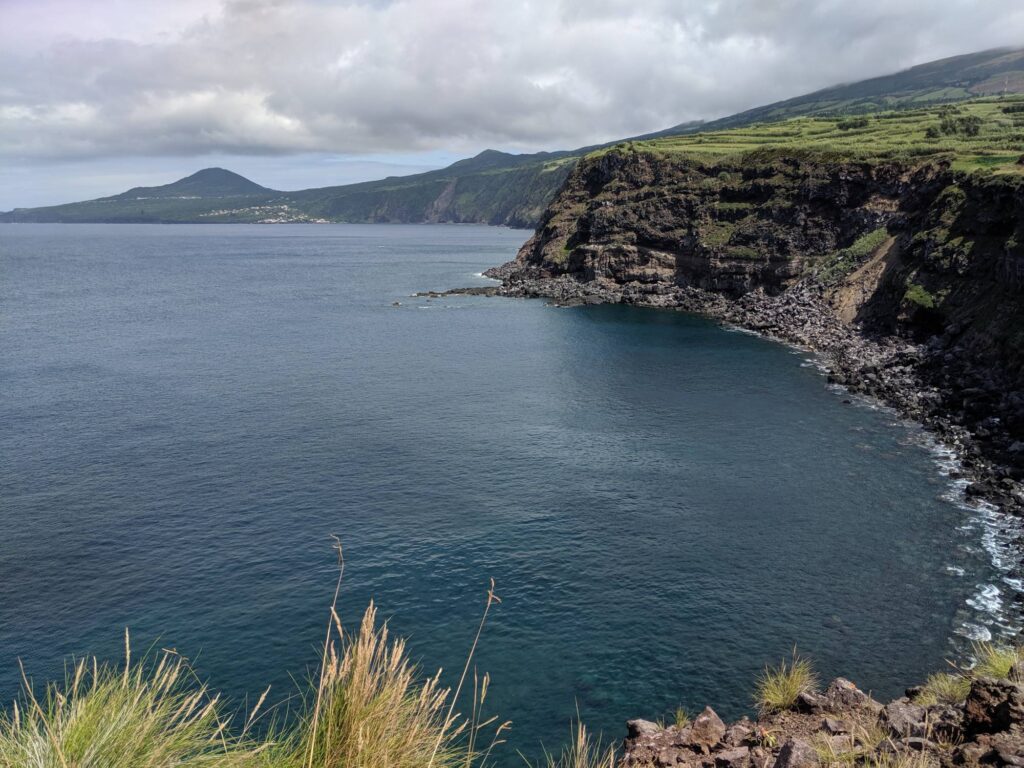
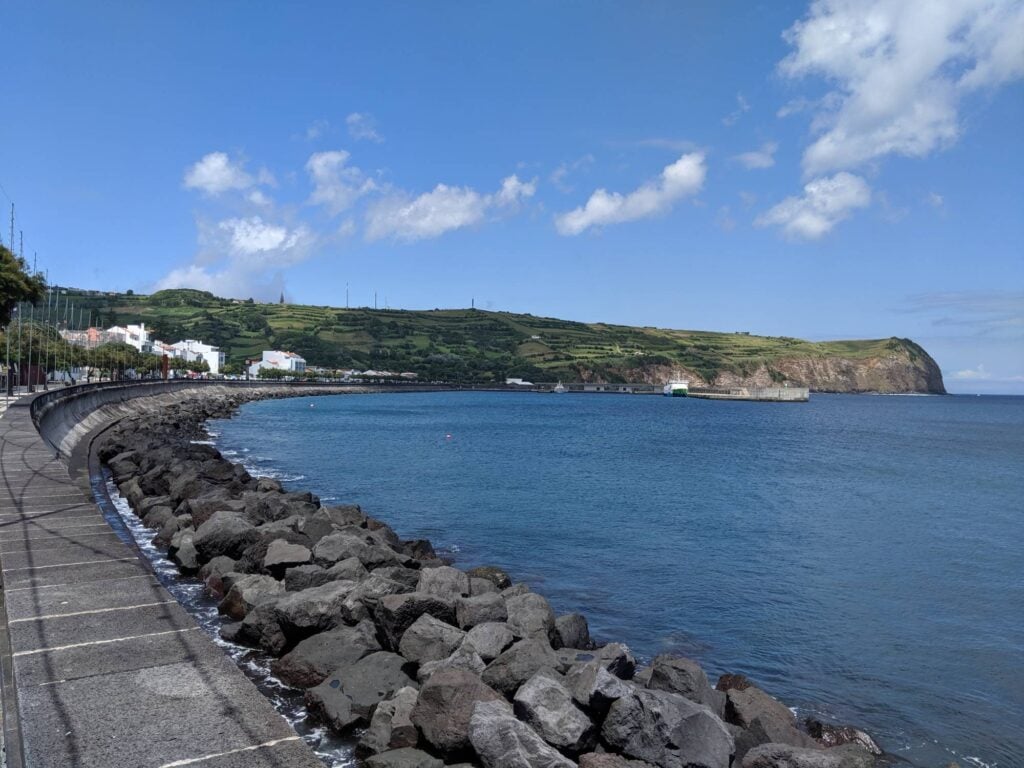
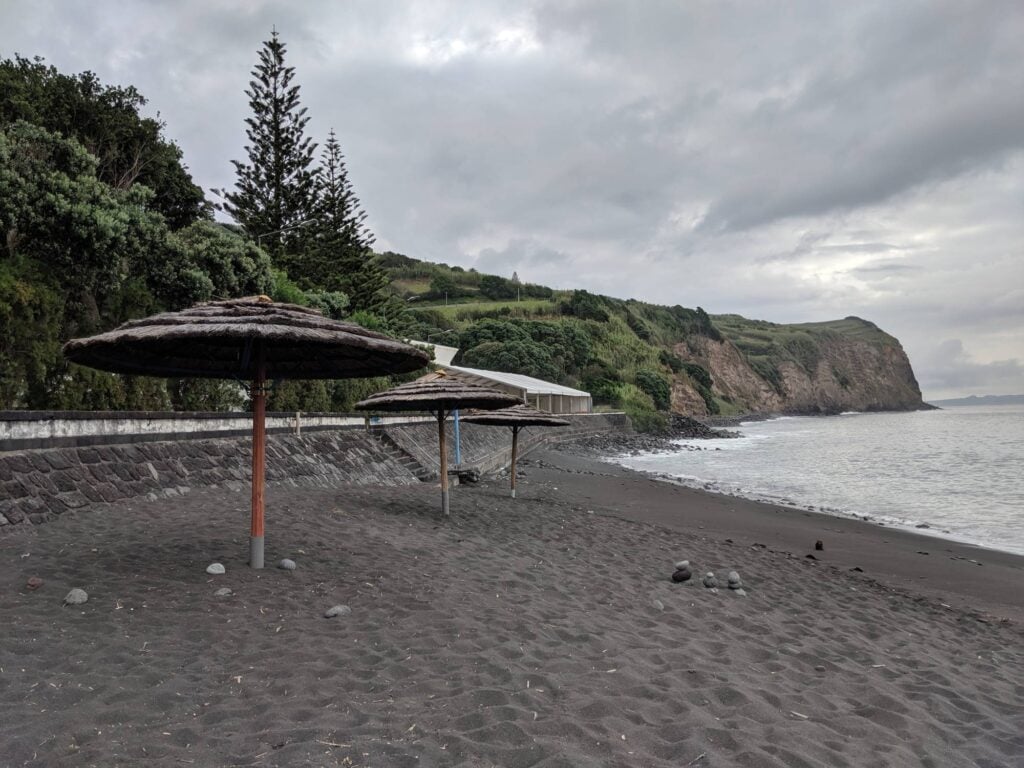
The sailors’ island. Horta’s marina is one of the best-known stops on the Atlantic crossing, and boats have been painting murals on its harbor walls for decades. It has one of the three public hospitals, and the ferry to Pico takes about 30 minutes.
The downside is scale: the sailing crowd leaves in autumn and rentals are very hard to find.
Best for: sailors, and anyone who wants small-town life with a hospital close by.


Pico
Population: ~14,000 · Main town: Madalena
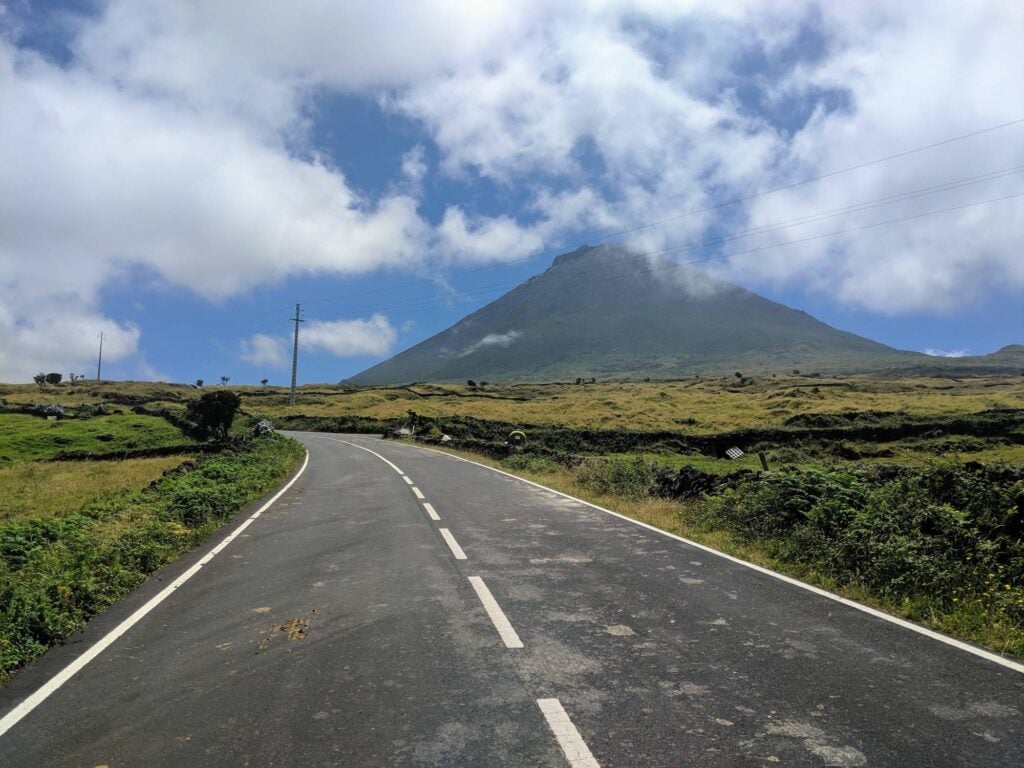
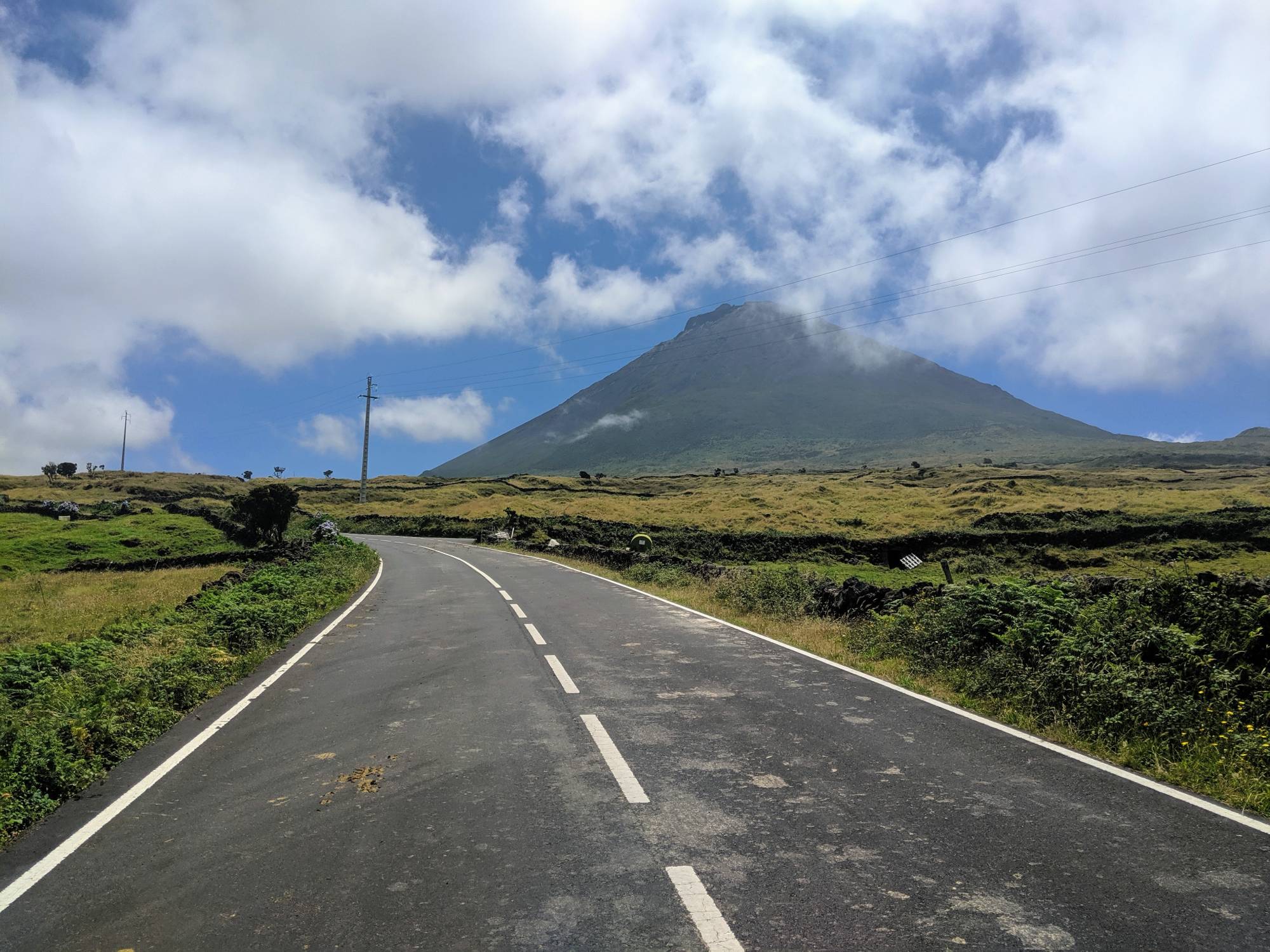
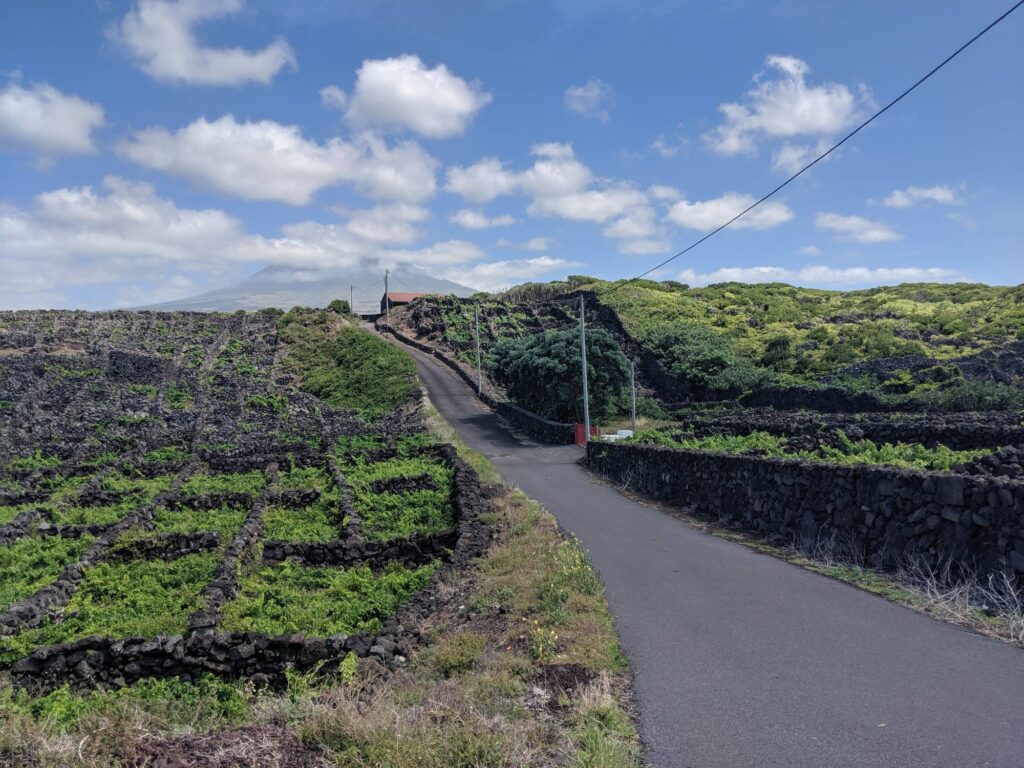
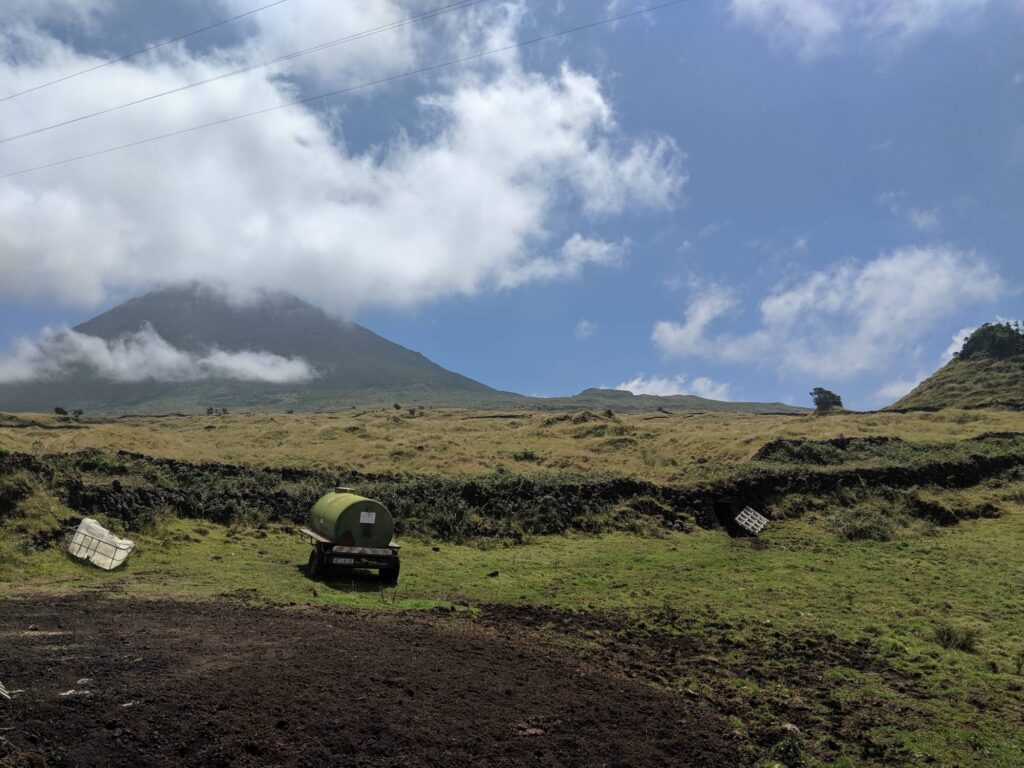
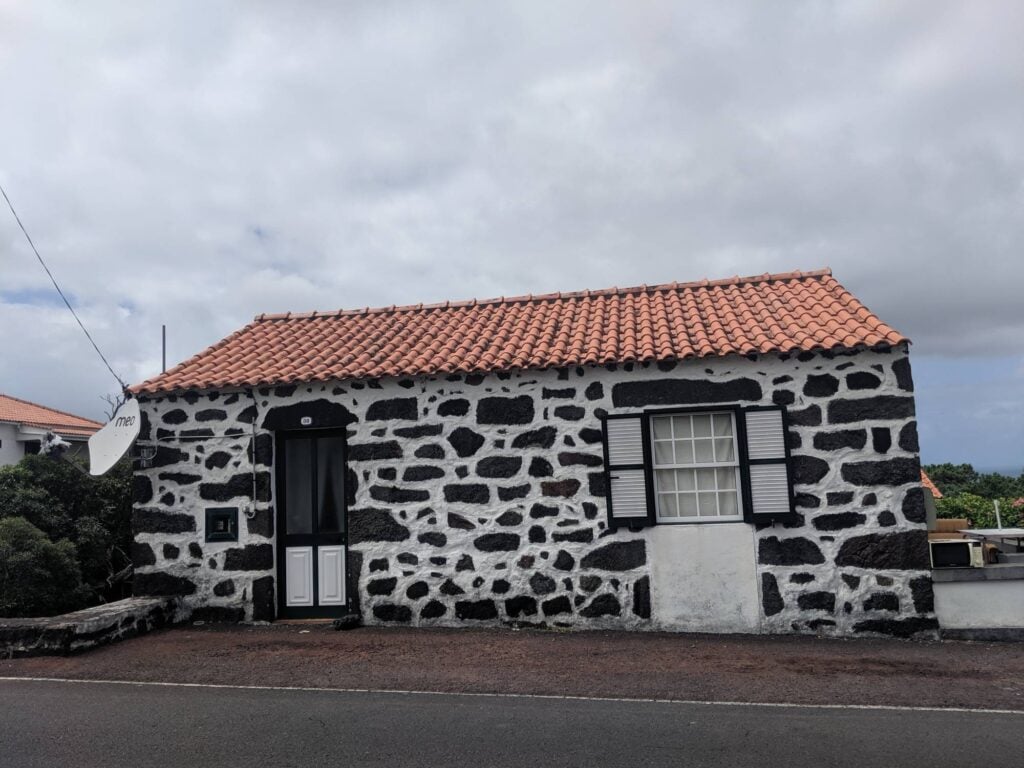
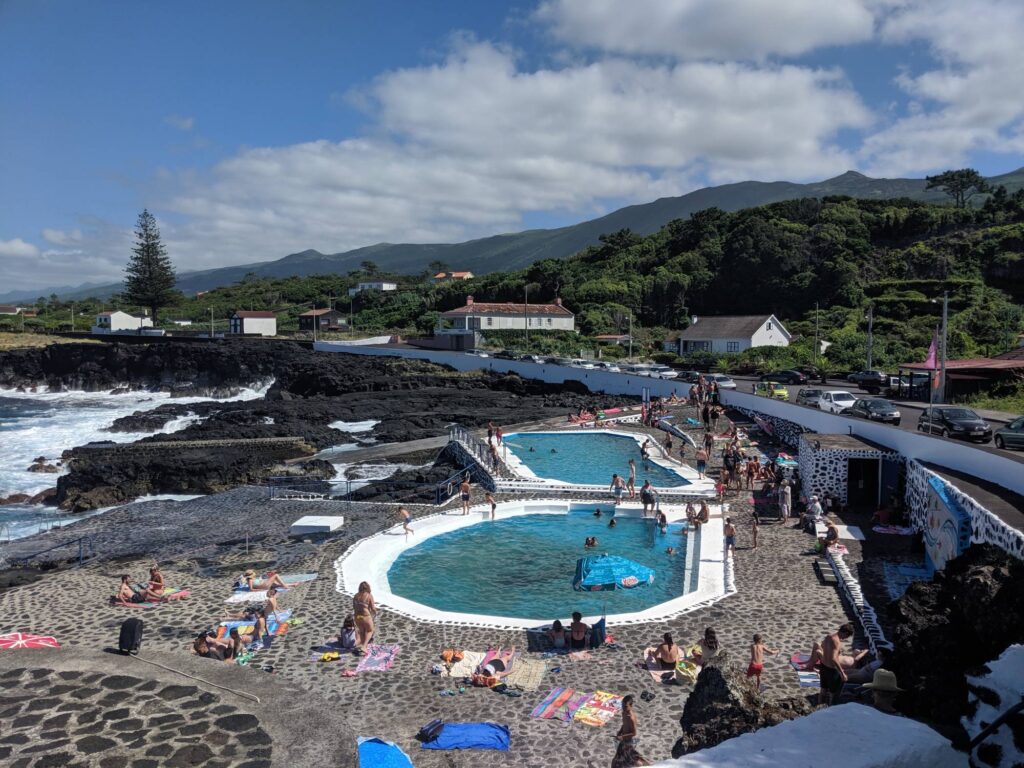
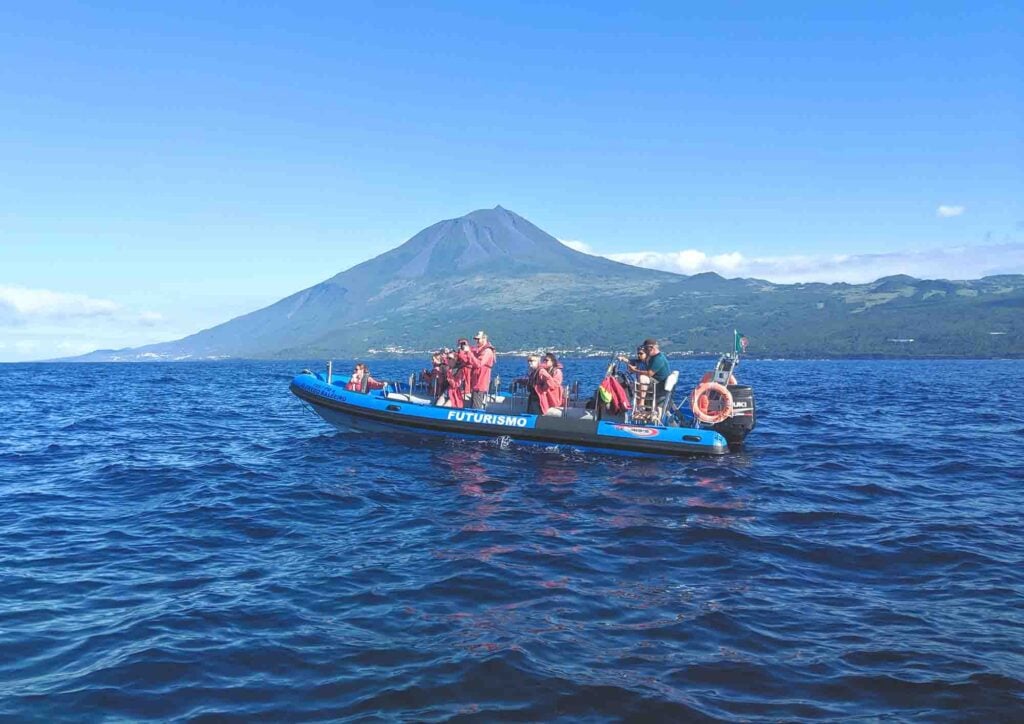
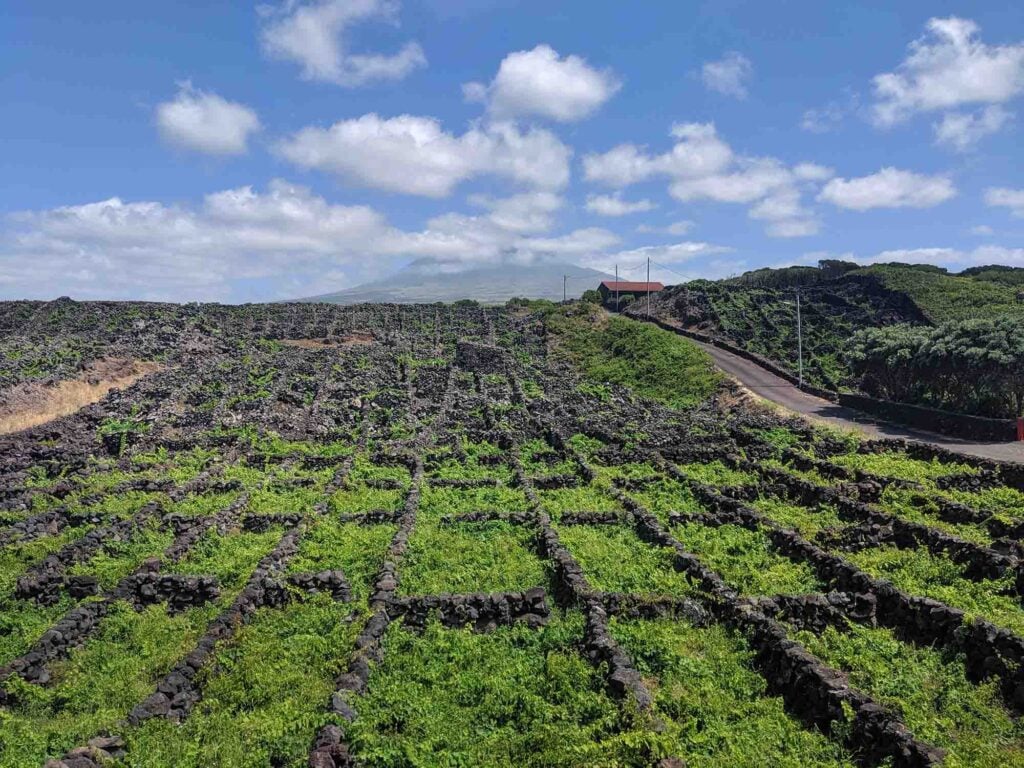
Portugal’s highest mountain, UNESCO-listed vineyards walled with black lava stone, and some of the best whale watching in the world. It’s the island people fall hardest for.
What it doesn’t have is much else. The hospital is on Faial, a ferry ride away when the sea allows. Rentals are scarce, and asking prices rose faster than almost anywhere in the Azores in the year to August 2026.
Best for: nature and wine lovers happy with a very quiet life, ideally after a spell on a bigger island.


São Jorge
Population: ~8,400 · Main town: Velas
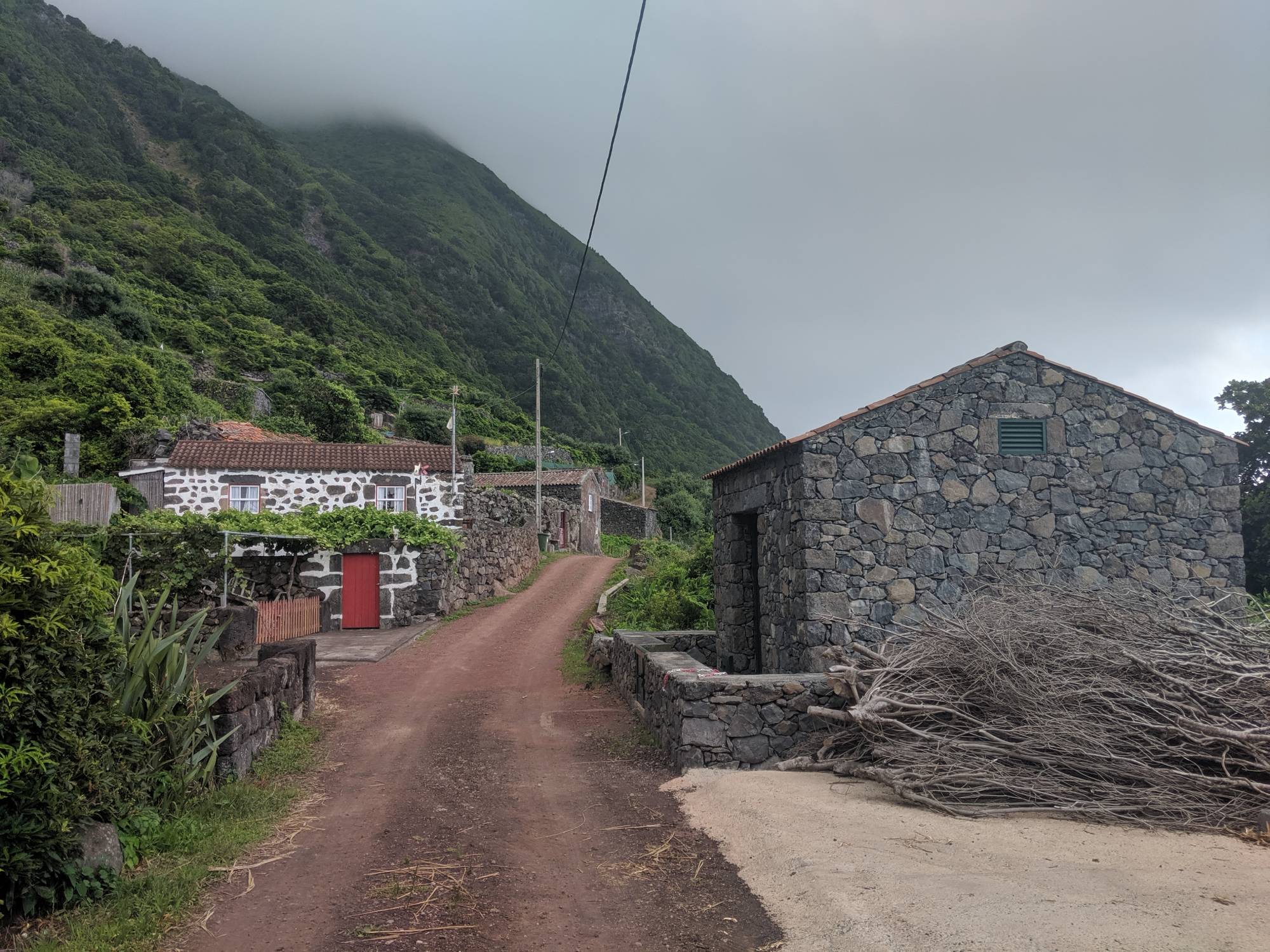
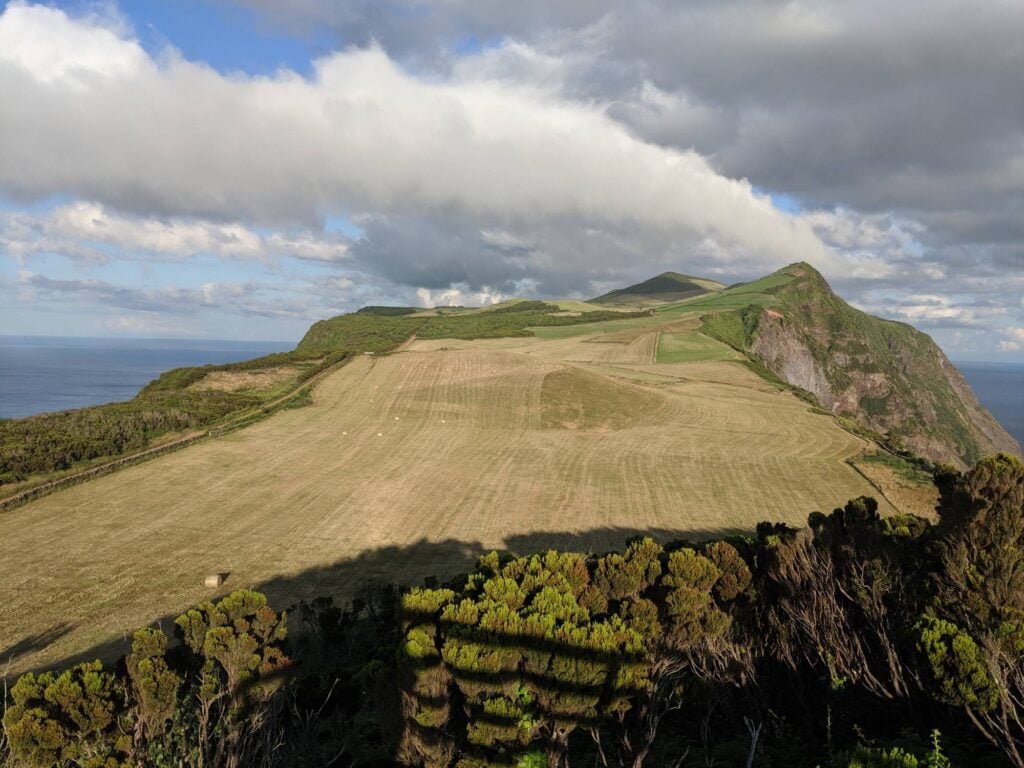
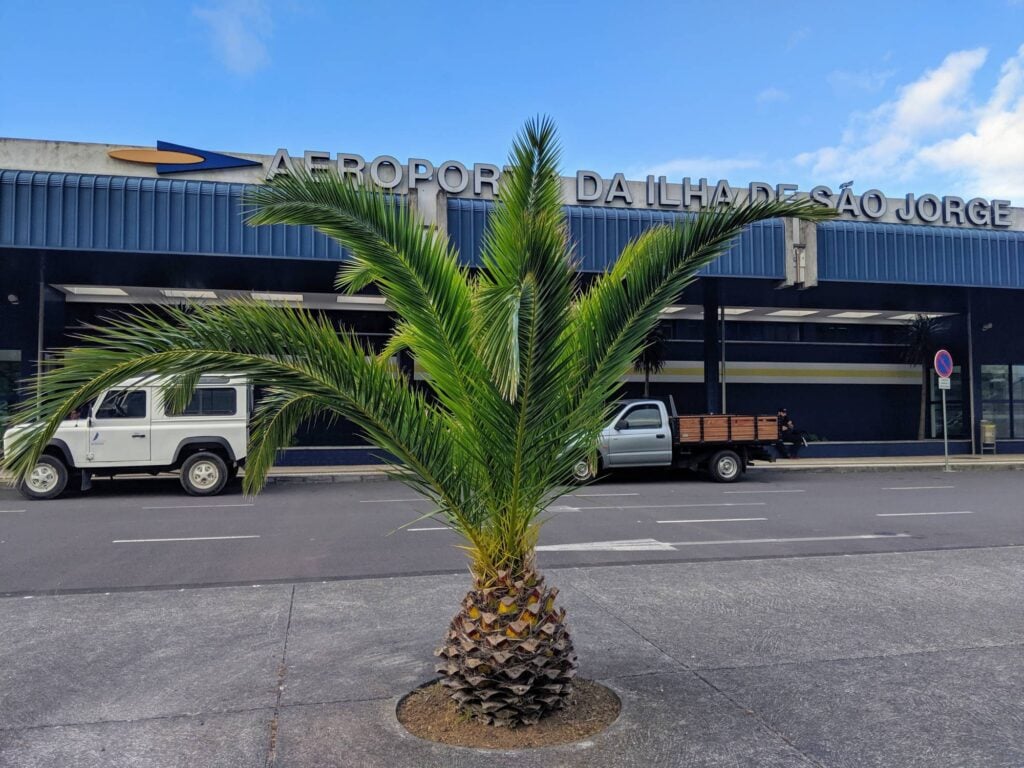
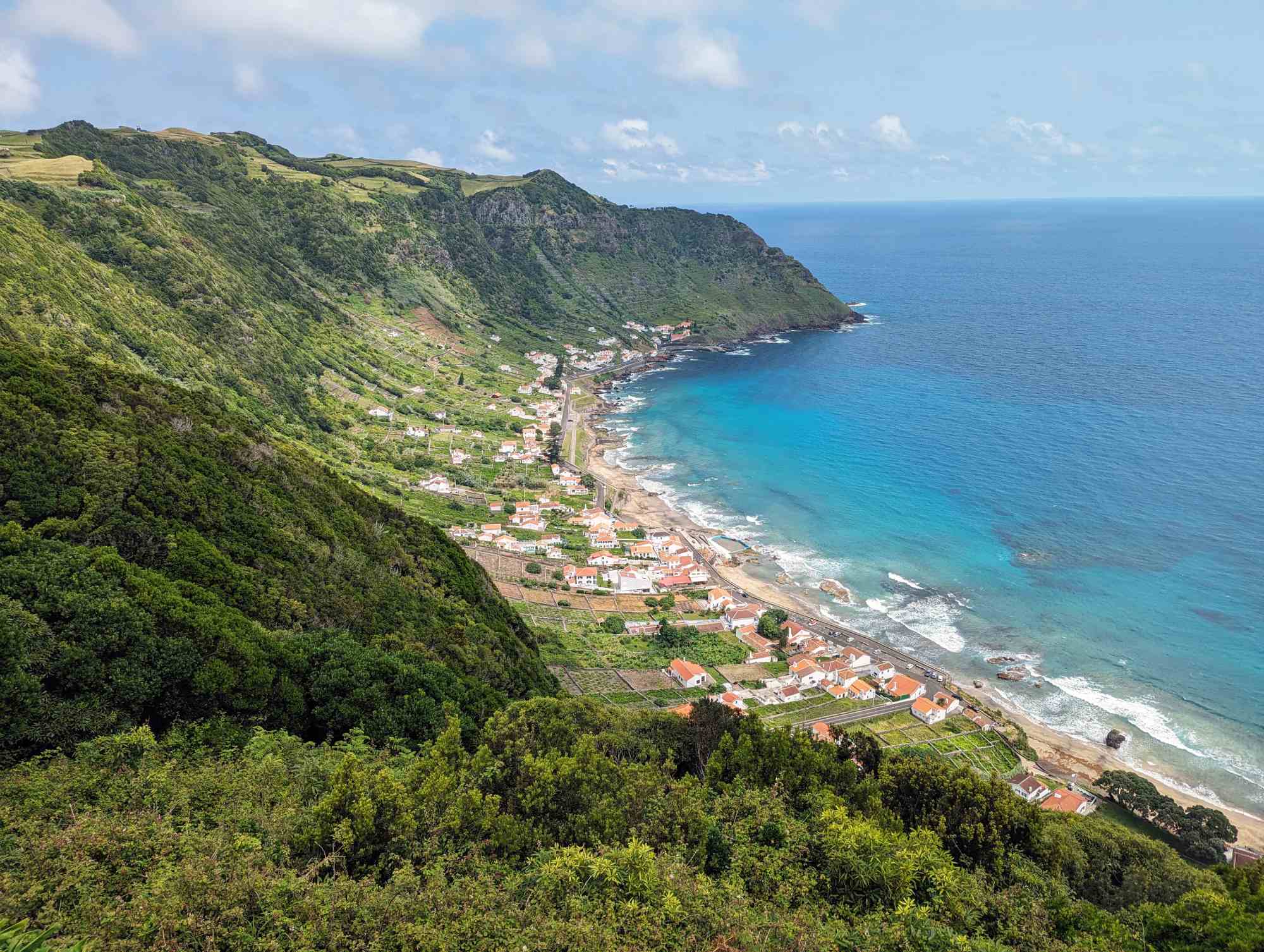
Long, narrow and mostly cliff, with the fajãs at the bottom: small flat coastal plains, some of which you can only reach on foot or by ATV. It’s the home of the Azores’ most famous cheese and, surprisingly, of its best-scoring high school.
It’s a demanding place to live. There’s no hospital, and in 2022 an earthquake swarm led to evacuations.
Best for: hikers, and people for whom remote is the point rather than the price.
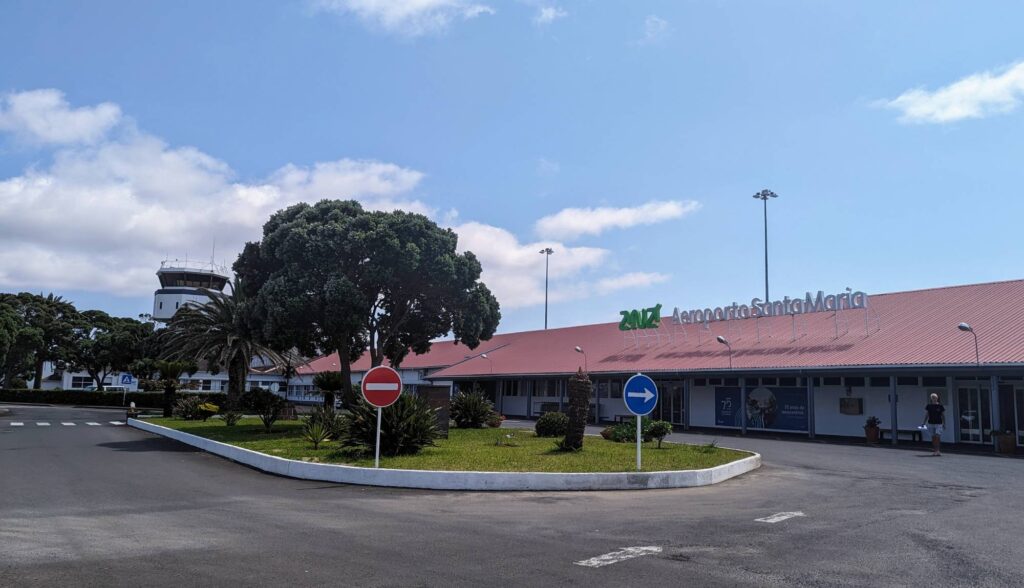
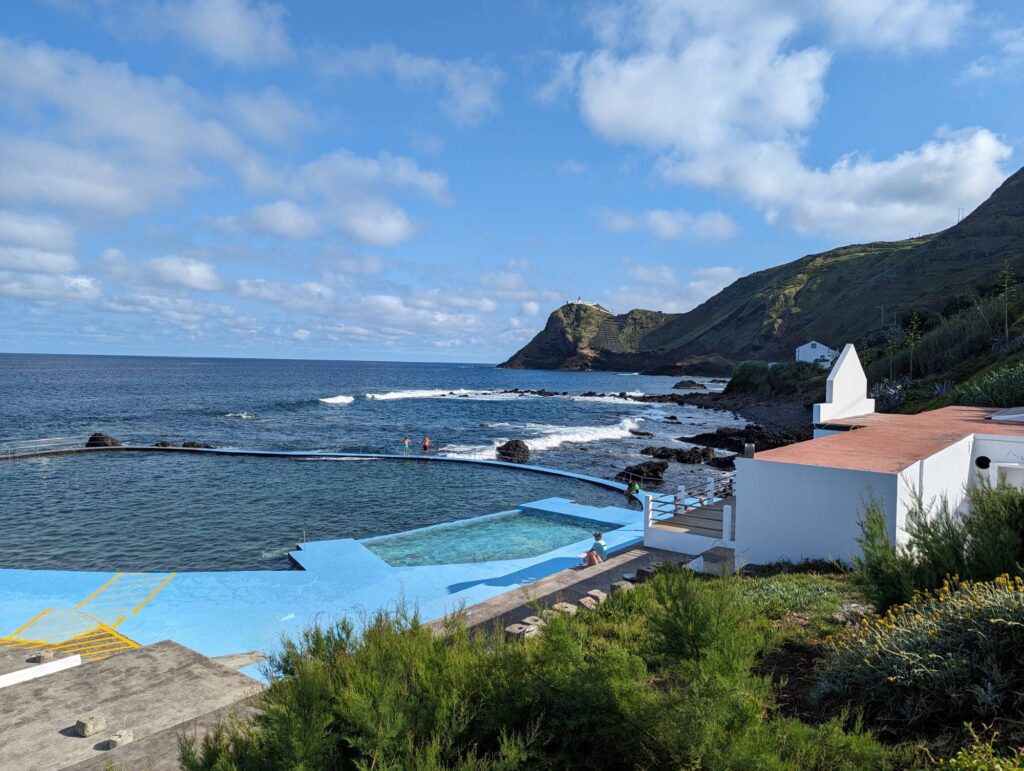
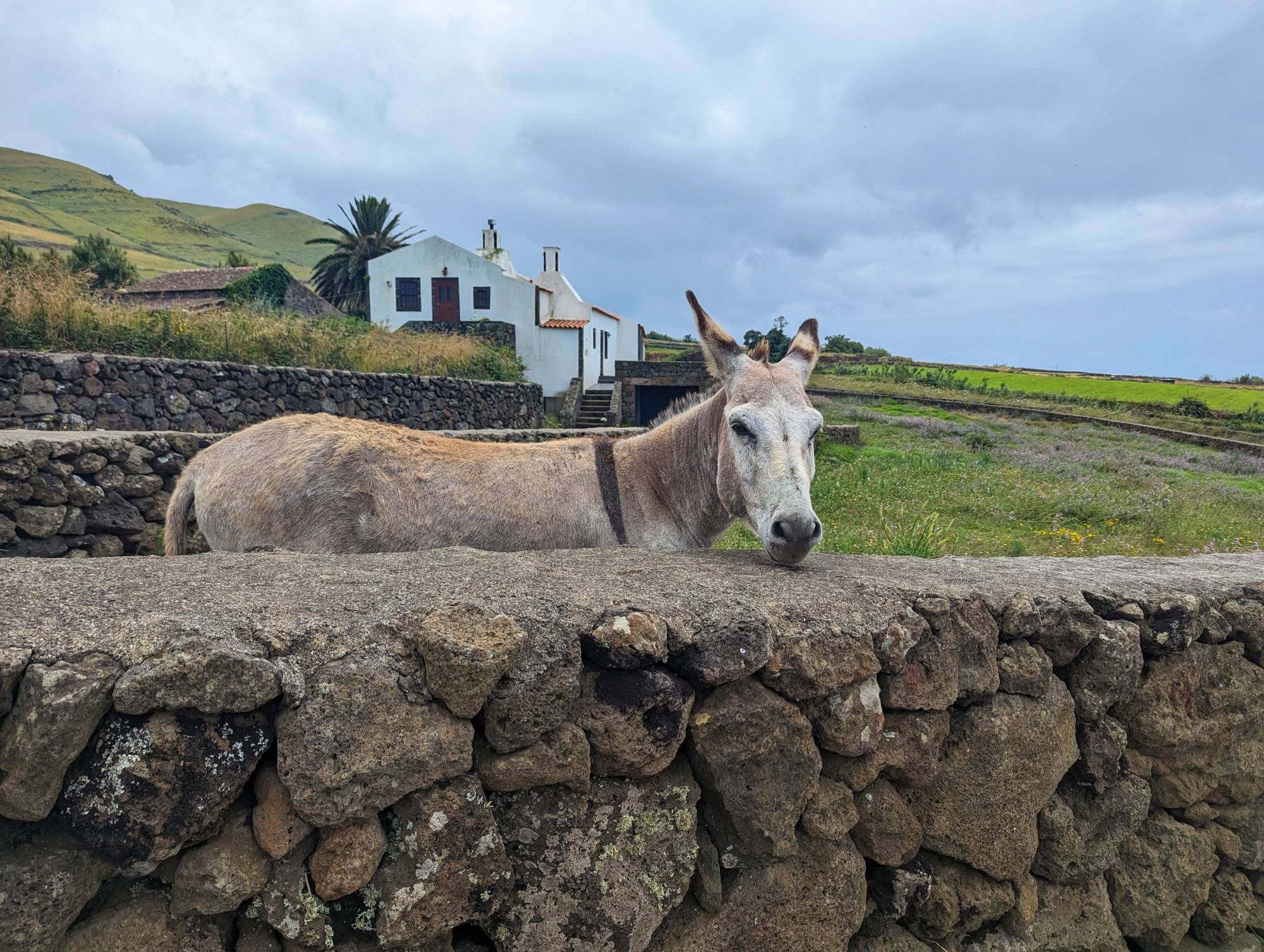
Santa Maria
Population: ~5,400 · Main town: Vila do Porto
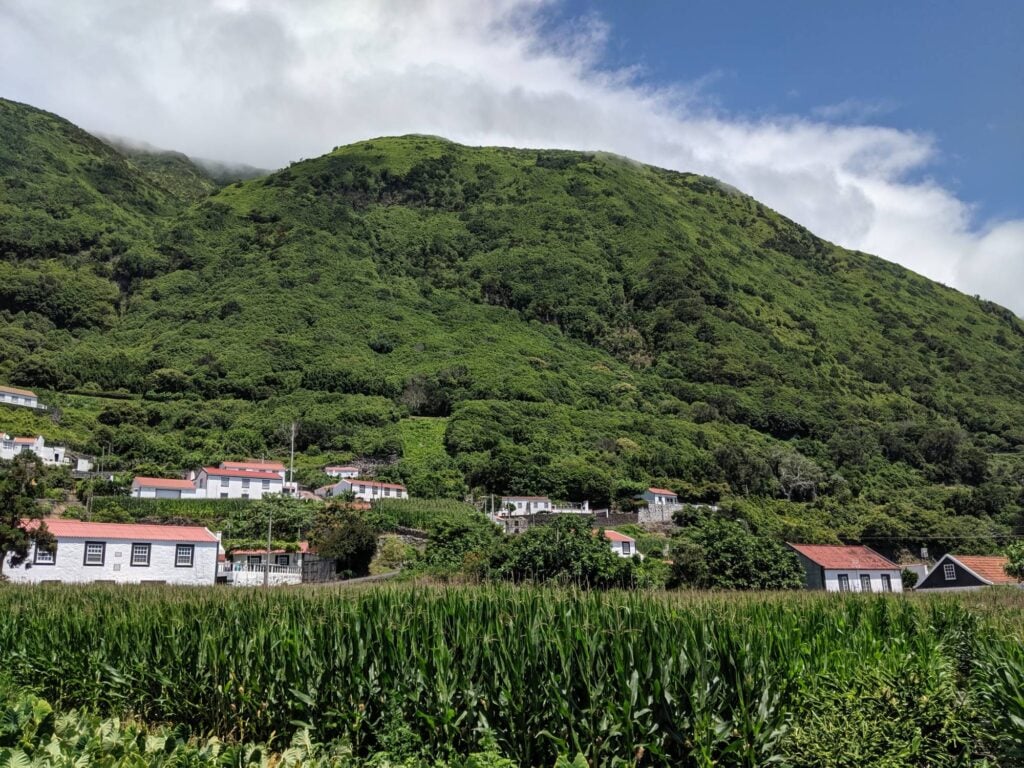
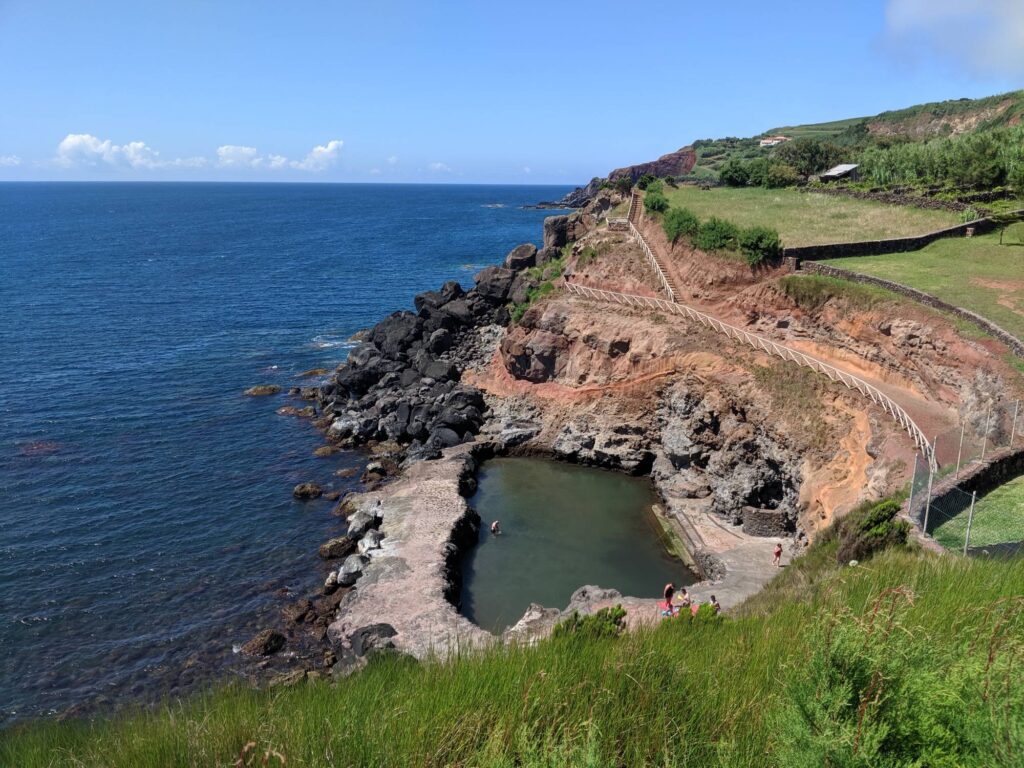
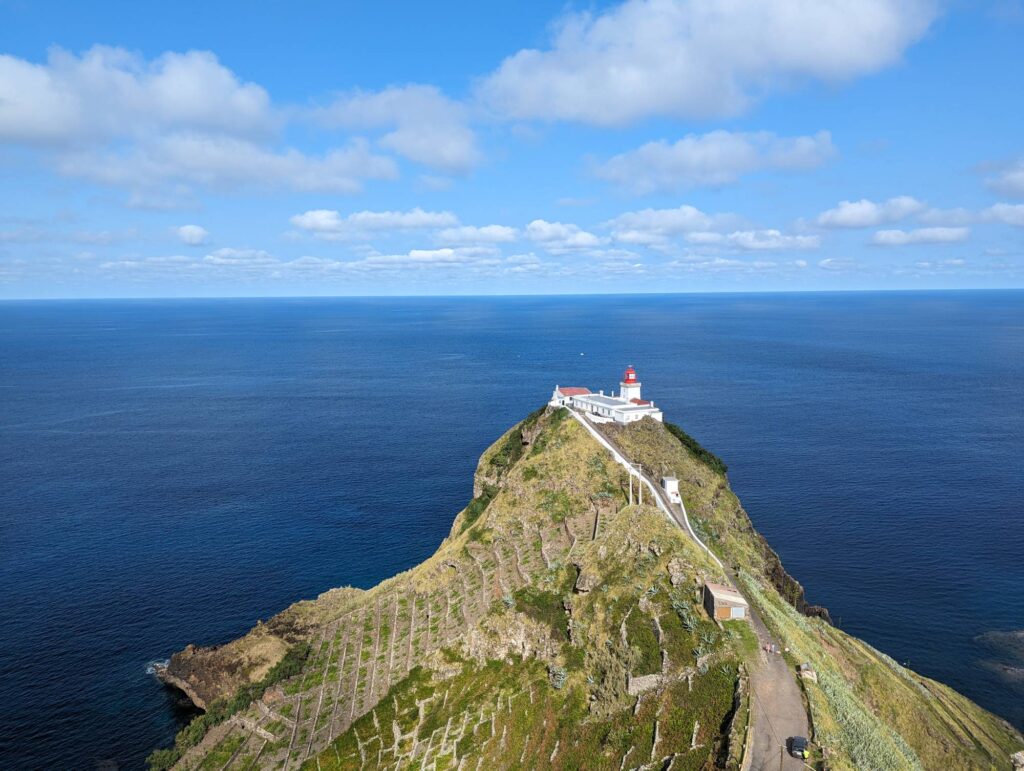
The oldest island and the odd one out: drier, sunnier, and the only one with proper pale-sand beaches. If gray winters are what worry you, look here.
It’s small, services are limited, there’s no hospital, and most trips start with a flight to São Miguel.
Best for: retirees who put sunshine and quiet ahead of infrastructure.
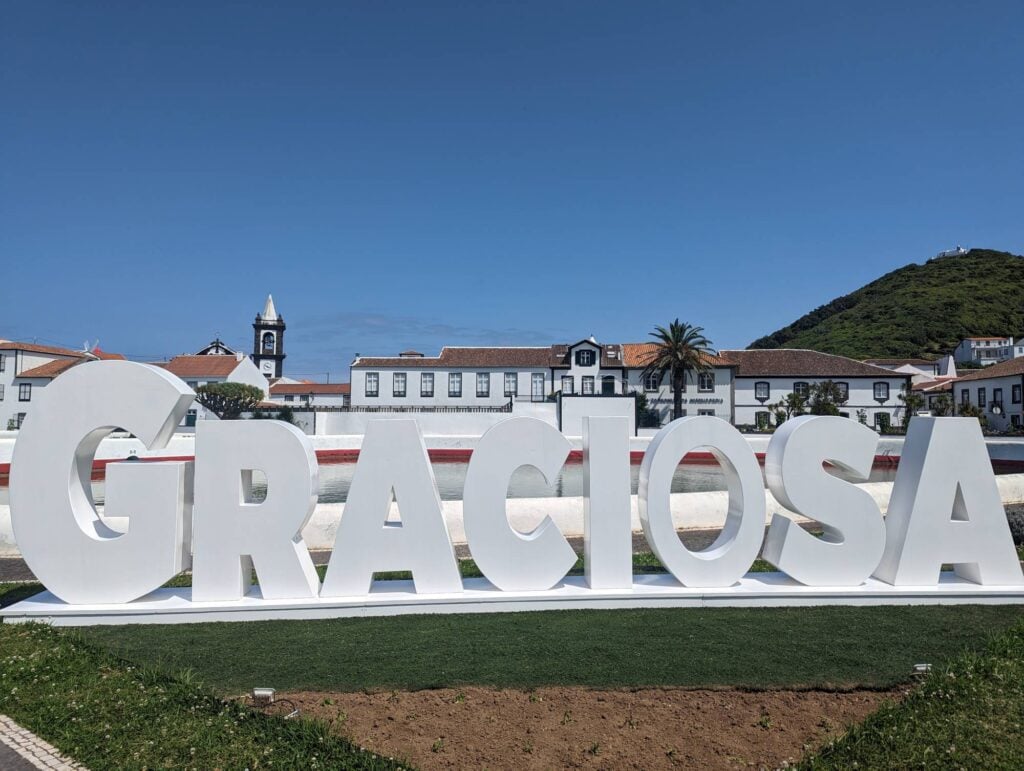
Graciosa
Population: ~4,100 · Main village: Santa Cruz da Graciosa
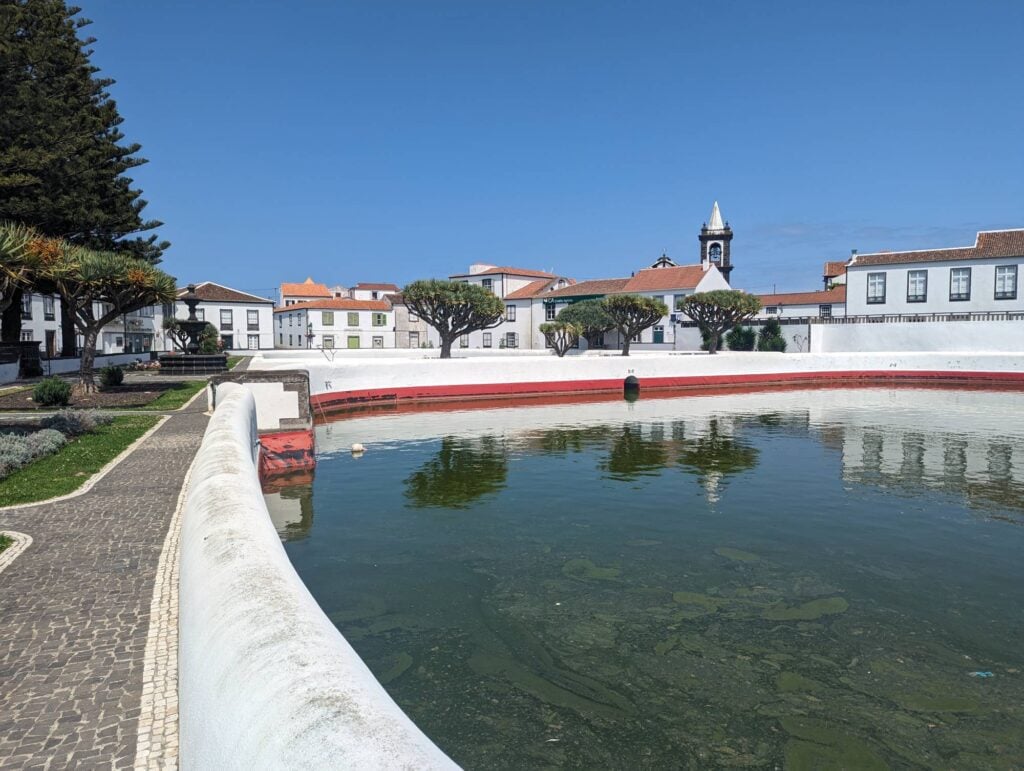
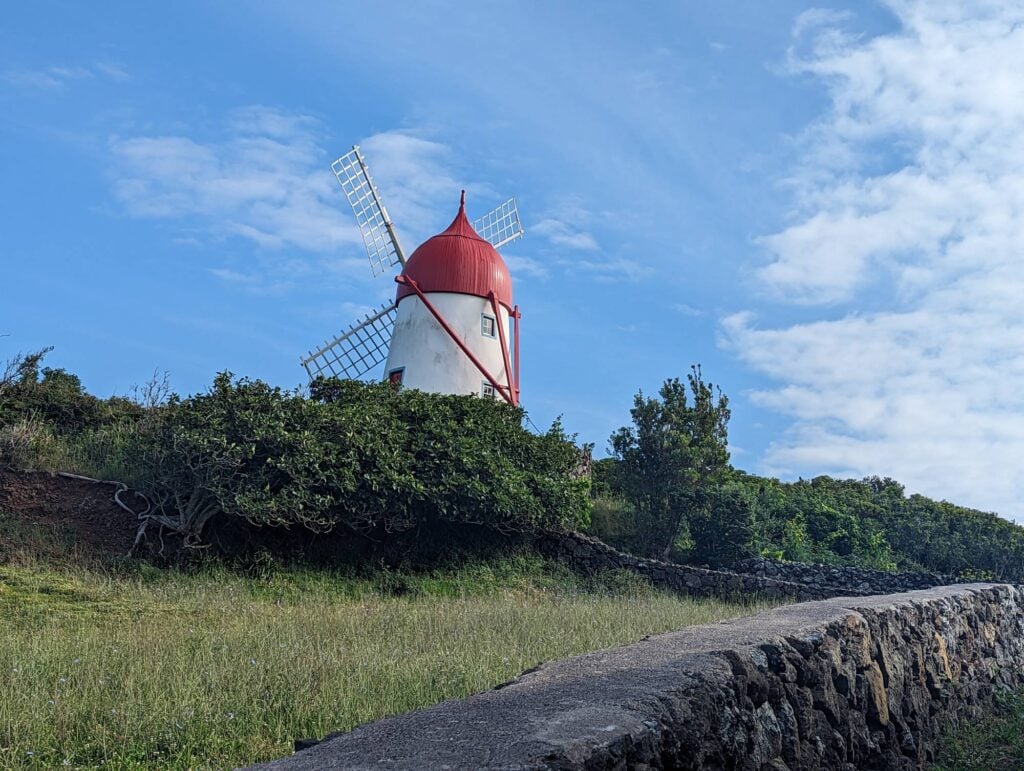
The second-smallest island: gentler and flatter than the others, with vineyards, windmills, whitewashed villages and thermal baths at Carapacho. The whole island is a UNESCO Biosphere Reserve.
There’s very little else, the housing market works by word of mouth, and life happens in Portuguese.
Best for: people who’ve already lived in the Azores and want to go further.
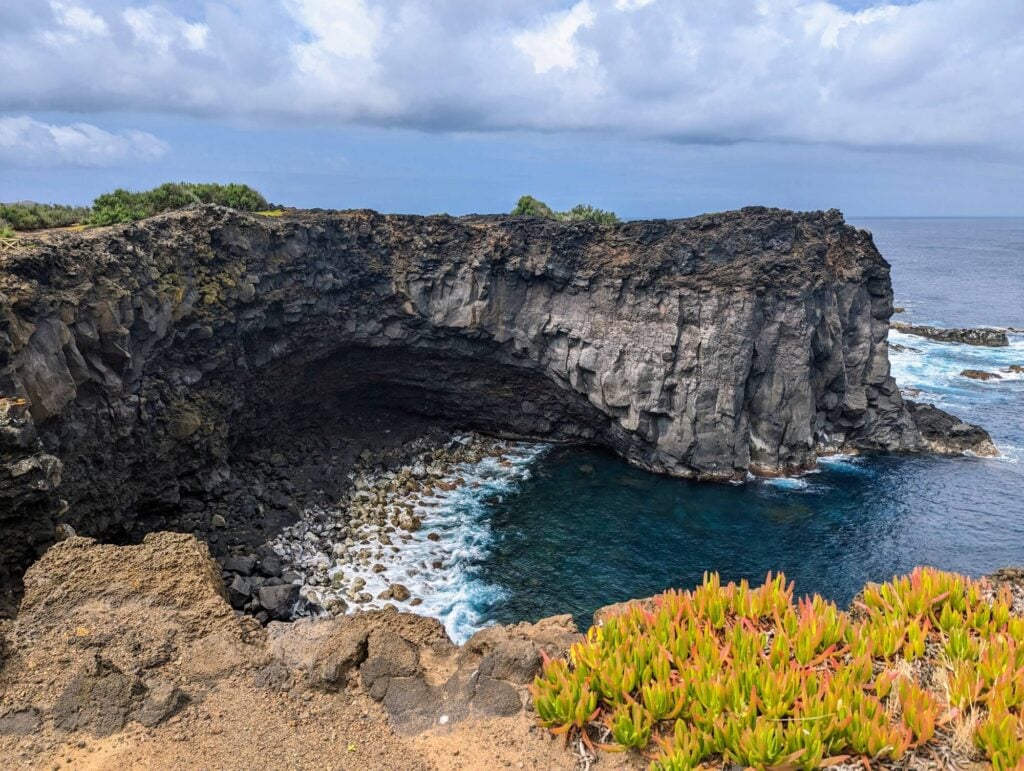
Flores
Population: ~3,400 · Main village: Santa Cruz das Flores
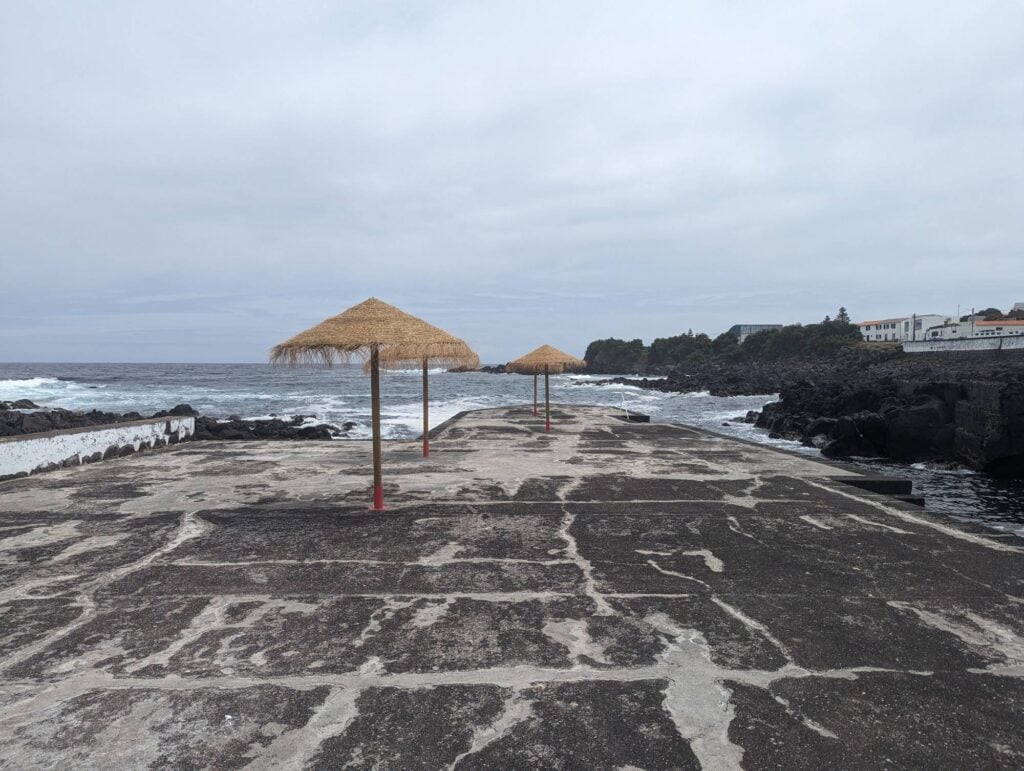
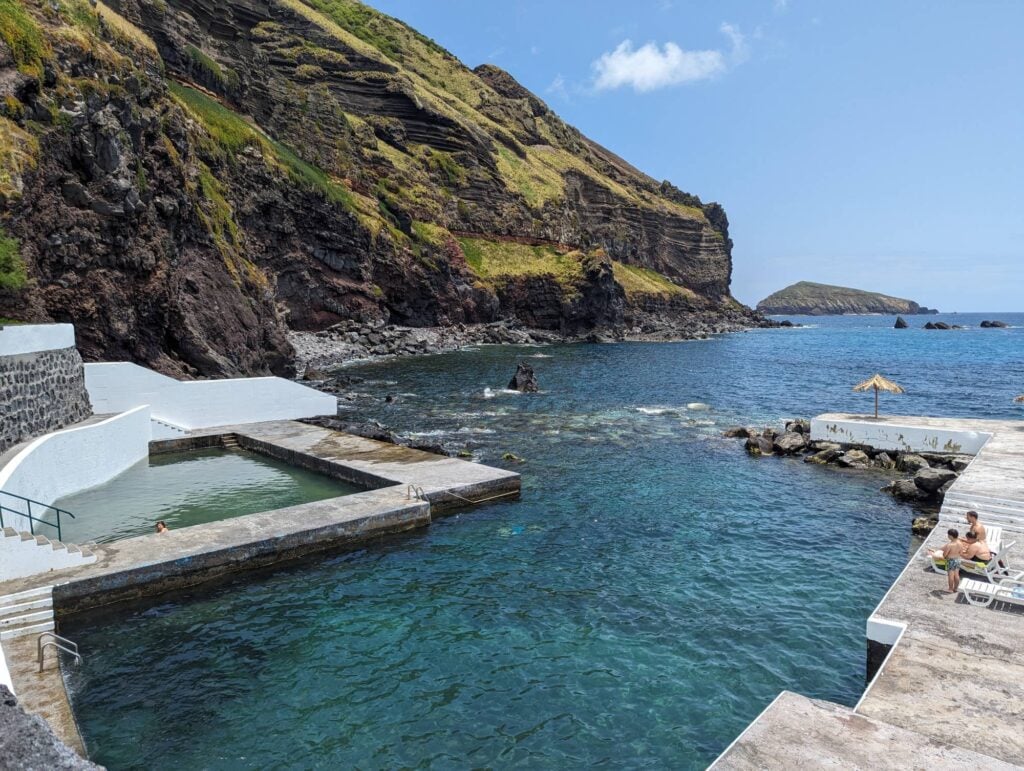
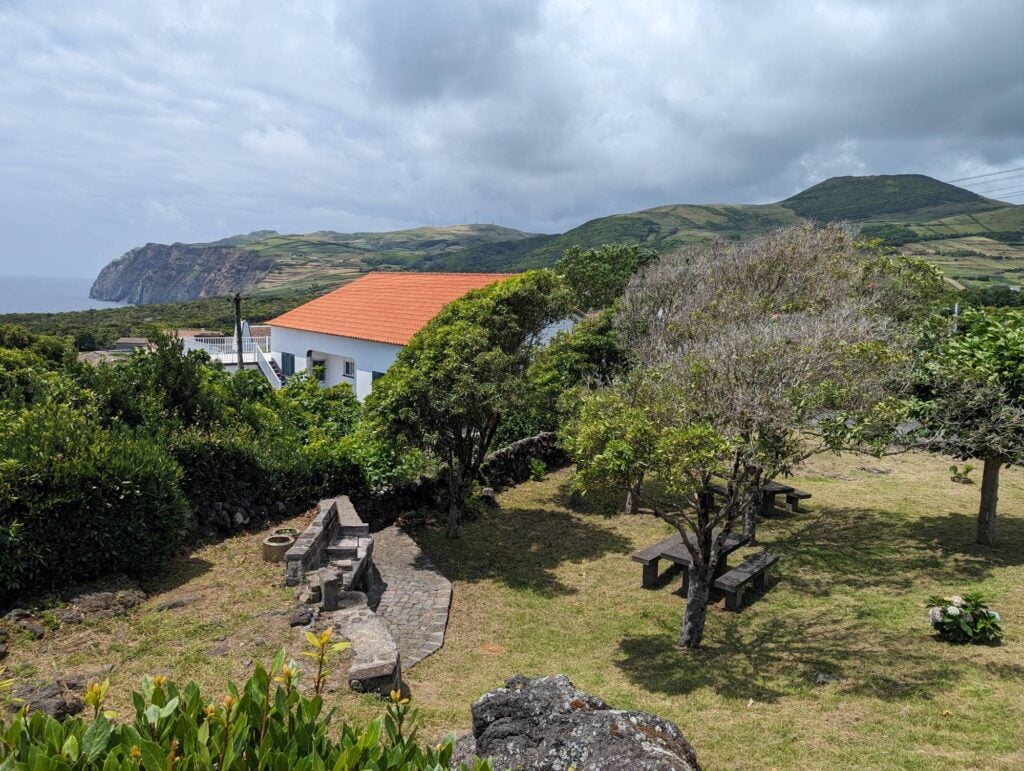
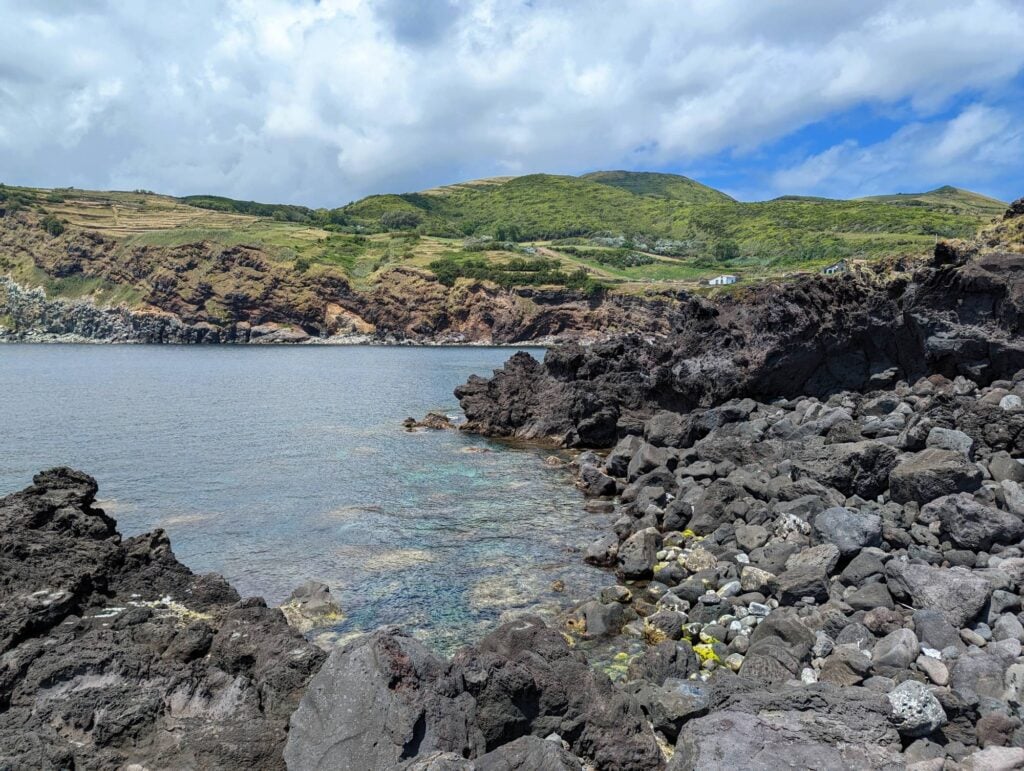
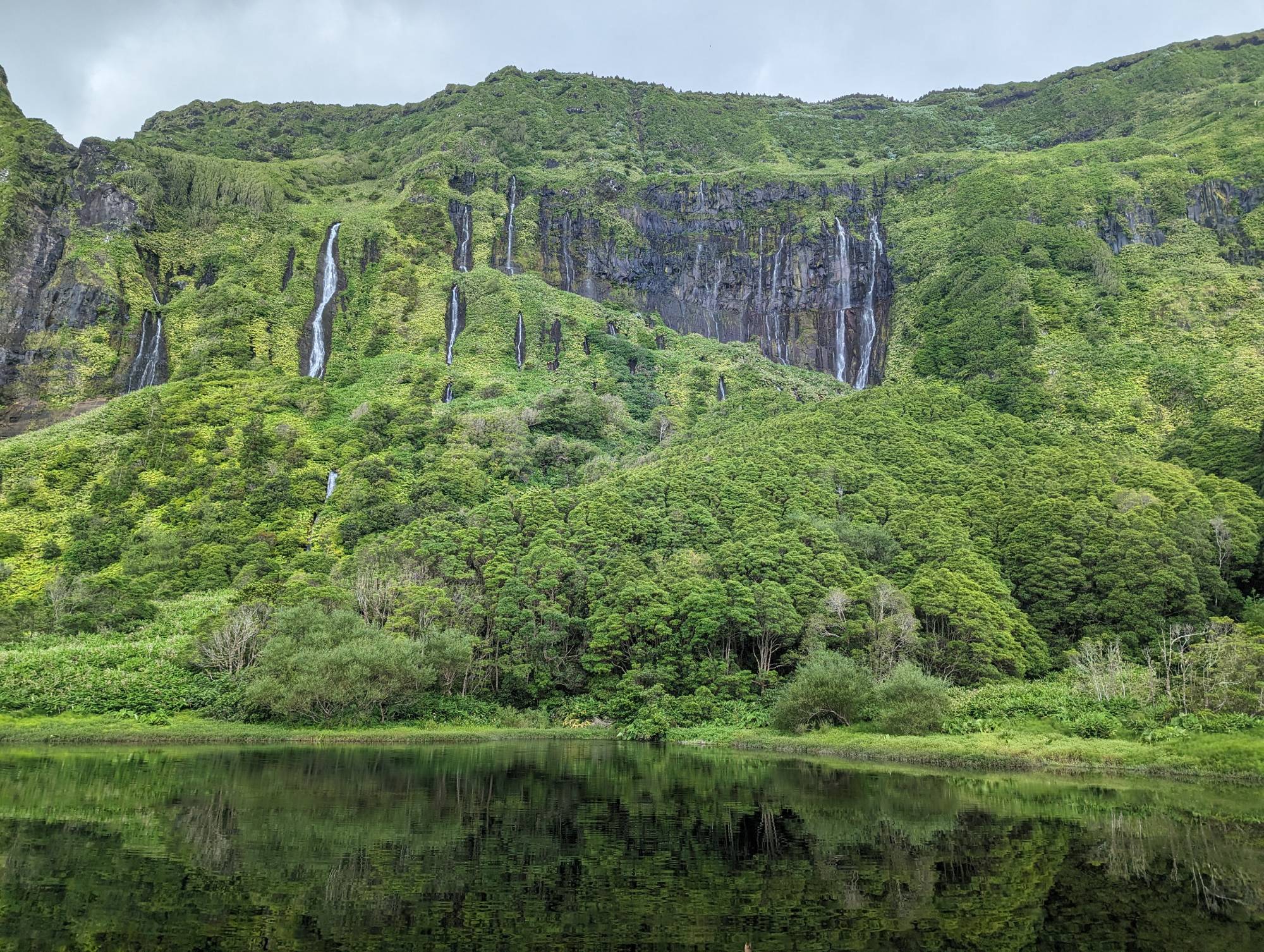
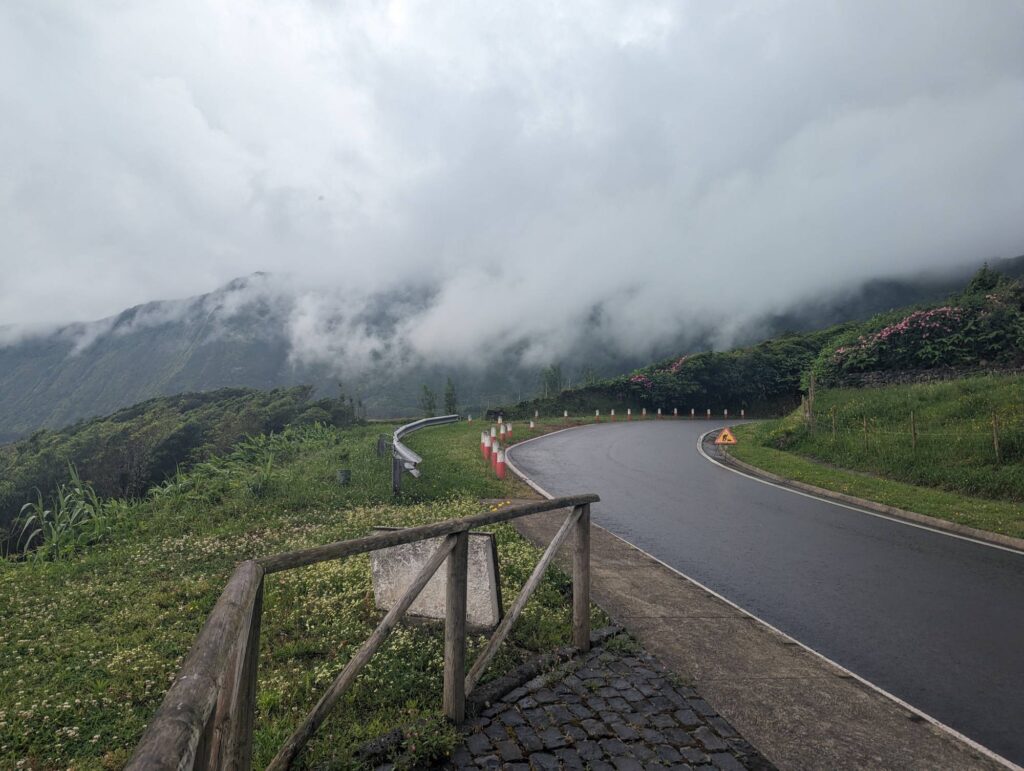
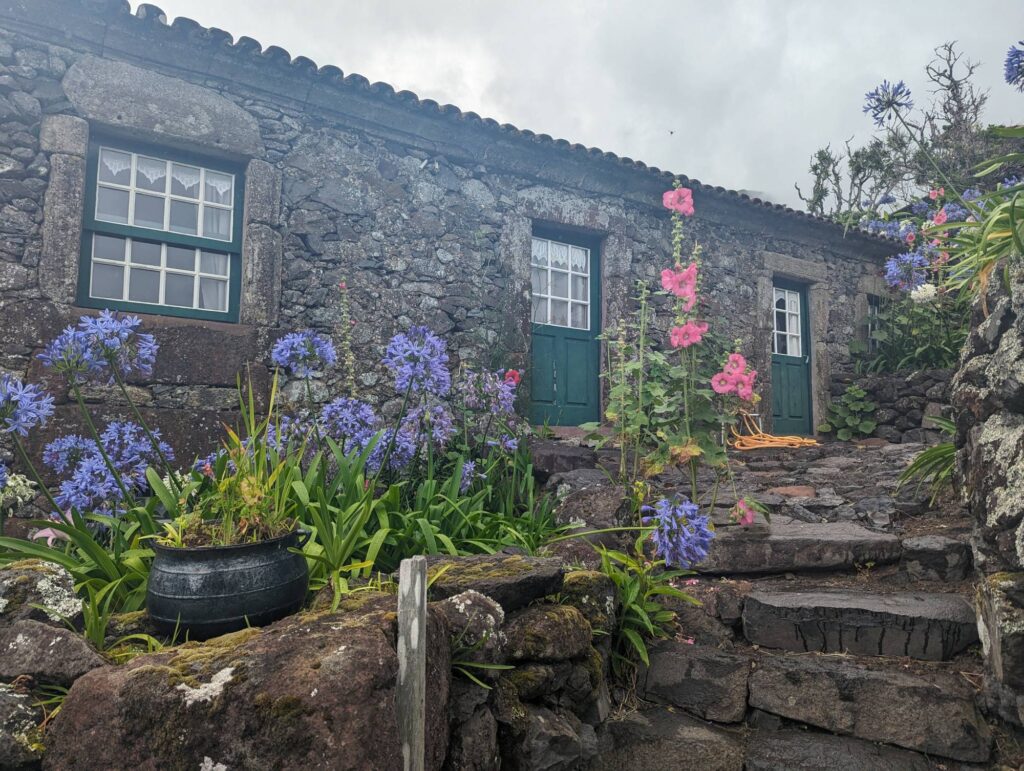
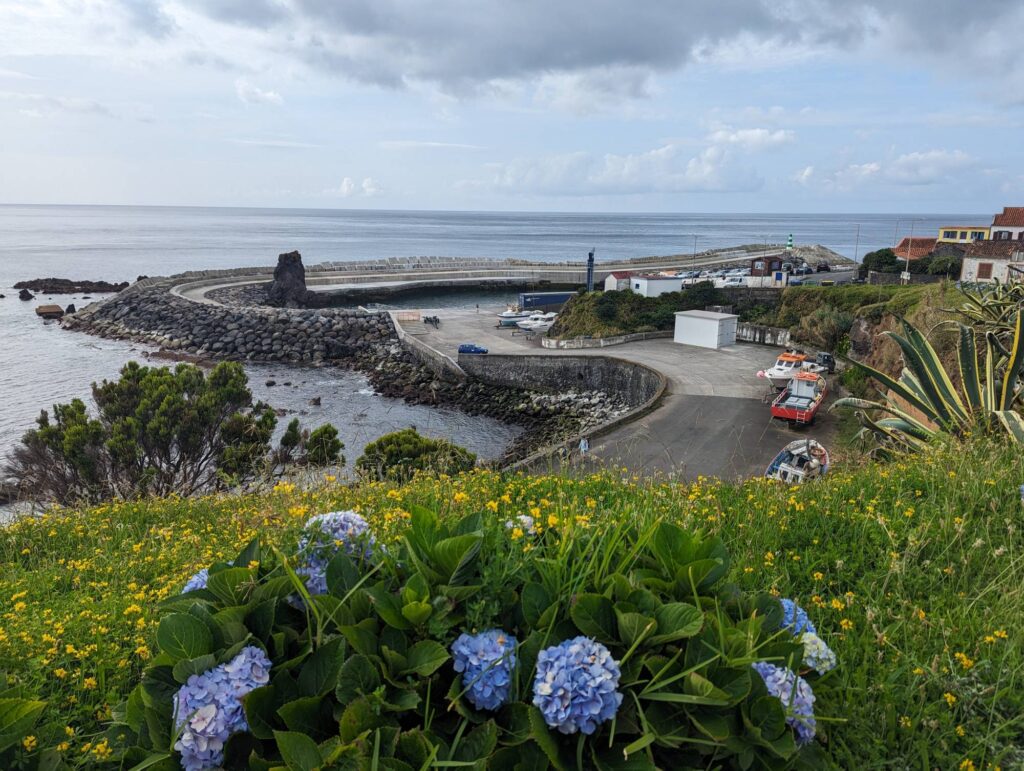
Probably the most beautiful island: waterfalls falling off cliffs, crater lakes ringed with hydrangeas. It also sits right in the path of North Atlantic storms. It rains most winter days, flights and boats can be canceled for days, and when the cargo ship can’t dock, eggs, flour and fresh milk disappear from the shelves.
The gap between “the most beautiful place I’ve ever been” and “somewhere I can live” is wider here than anywhere else in Portugal. Visit in January before you decide.
Best for: self-sufficient people who’ve thought hard about isolation and still want it.

Corvo
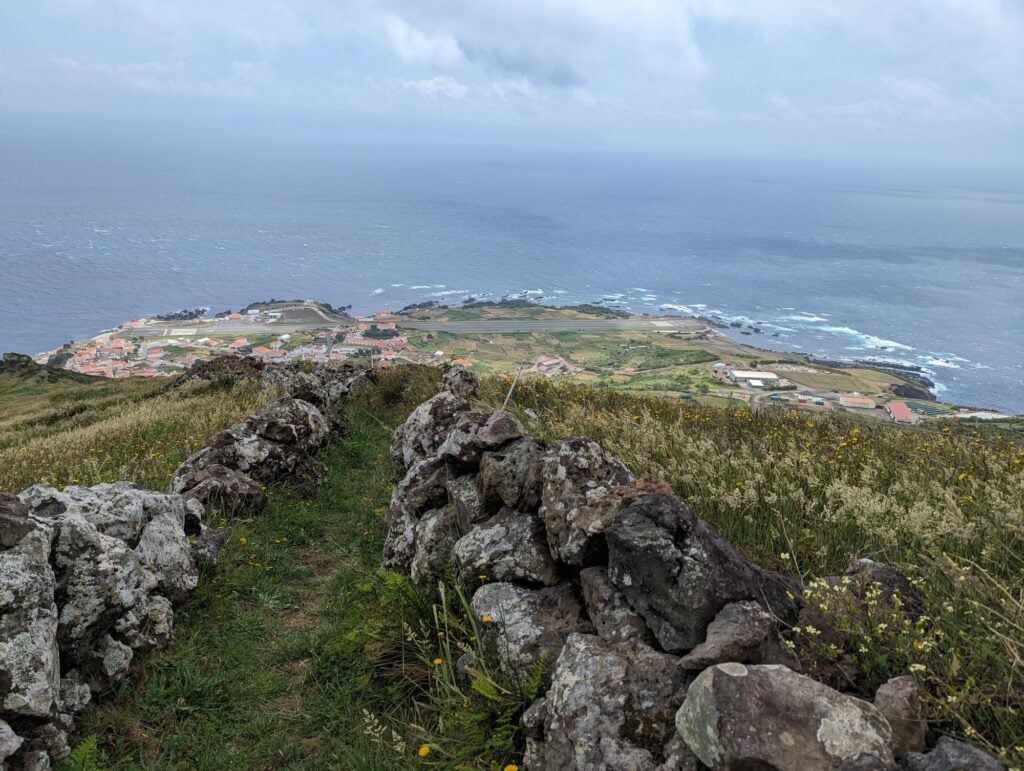
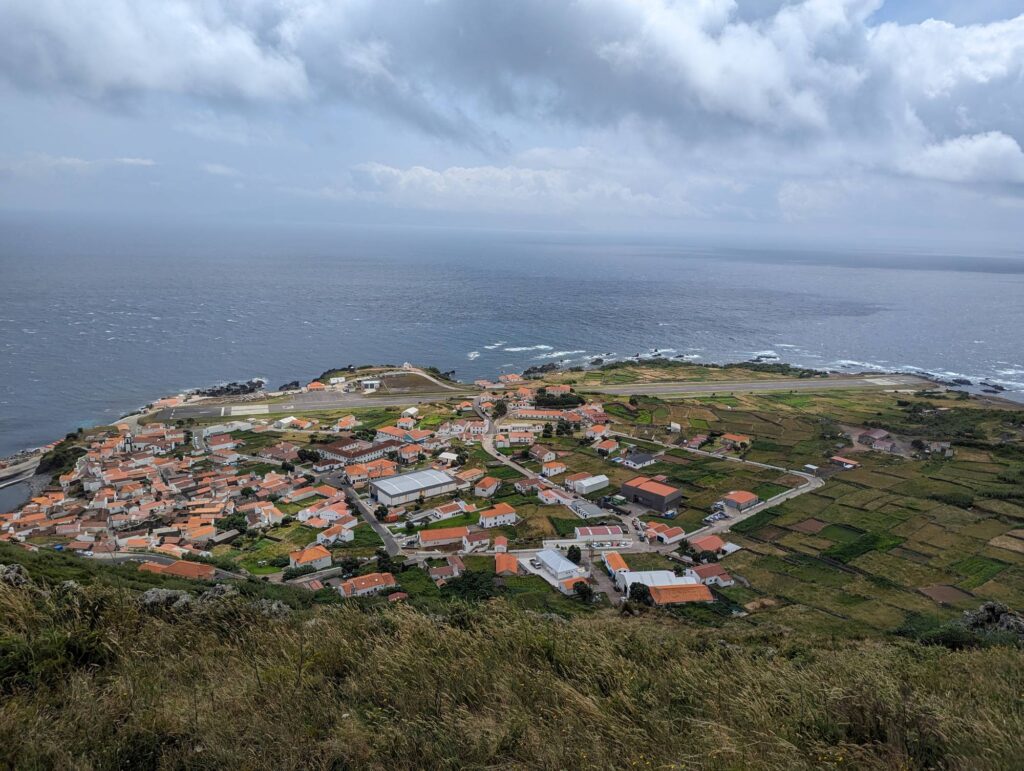
Population: ~400 · Main village: Vila do Corvo
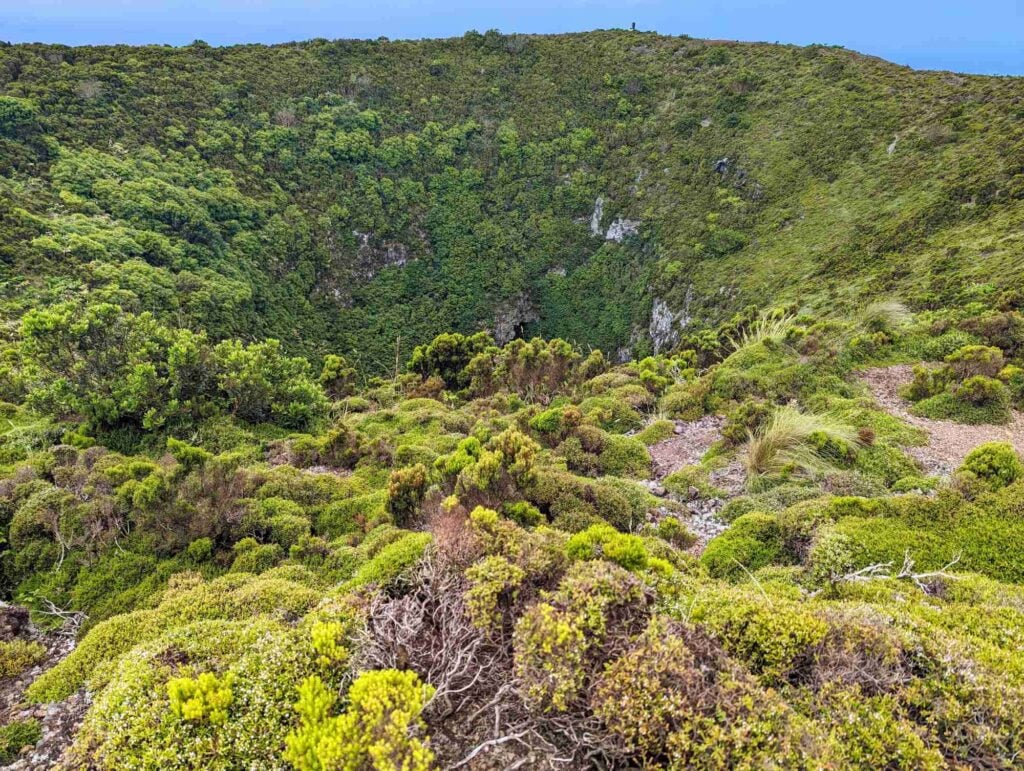
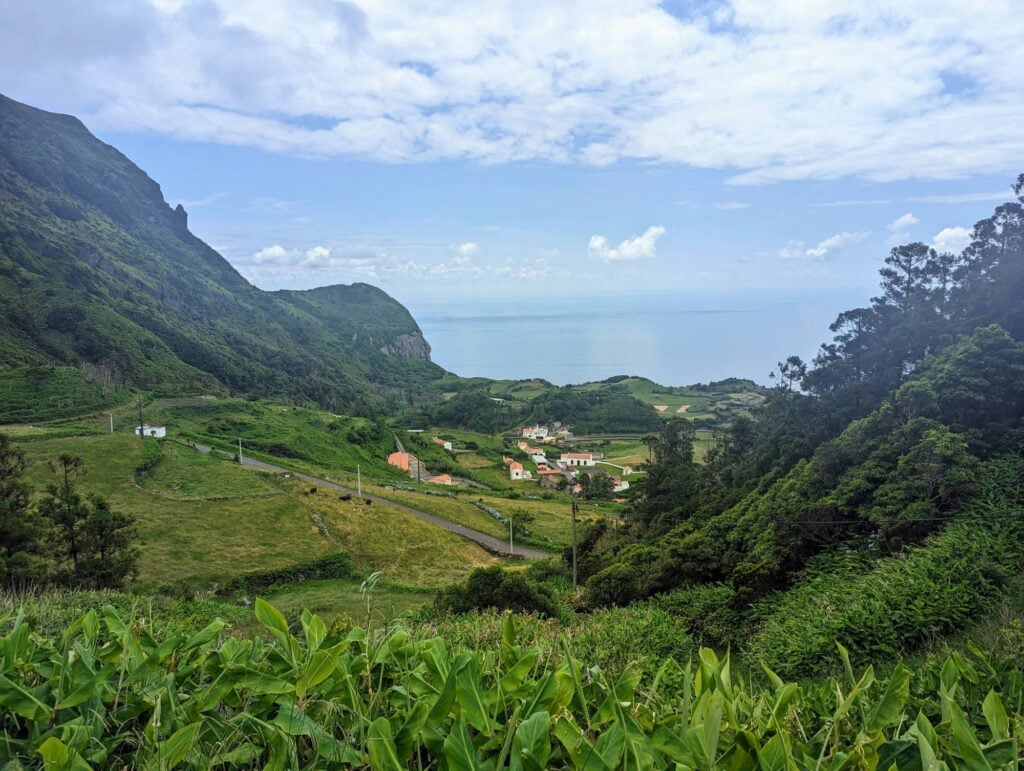
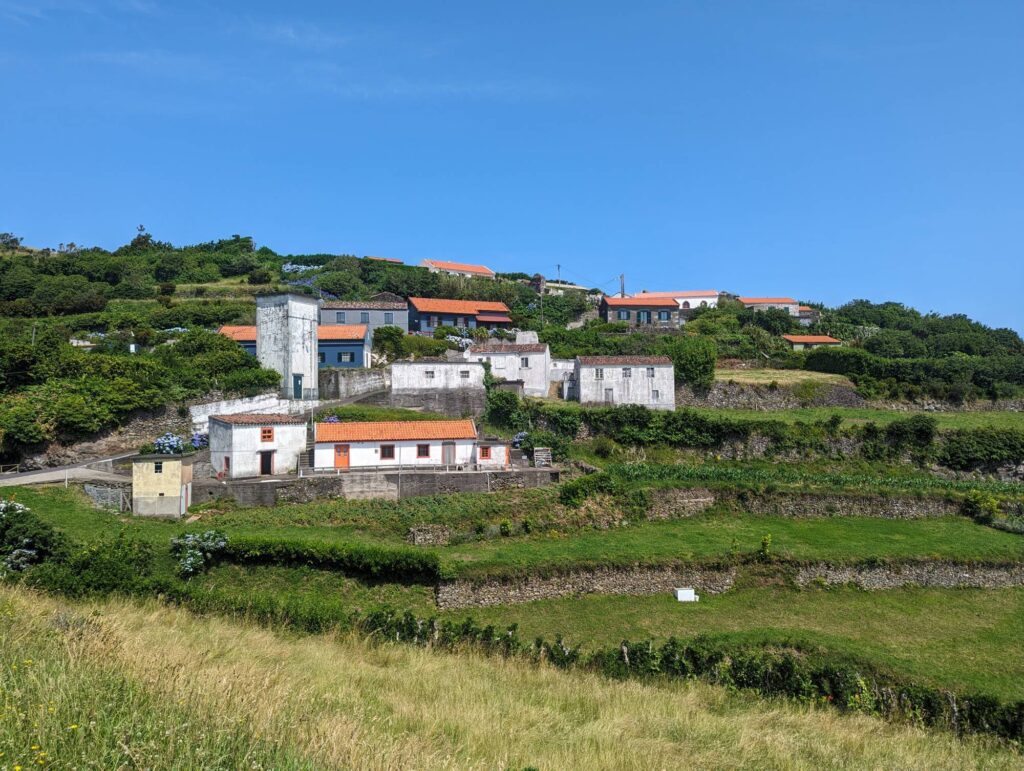
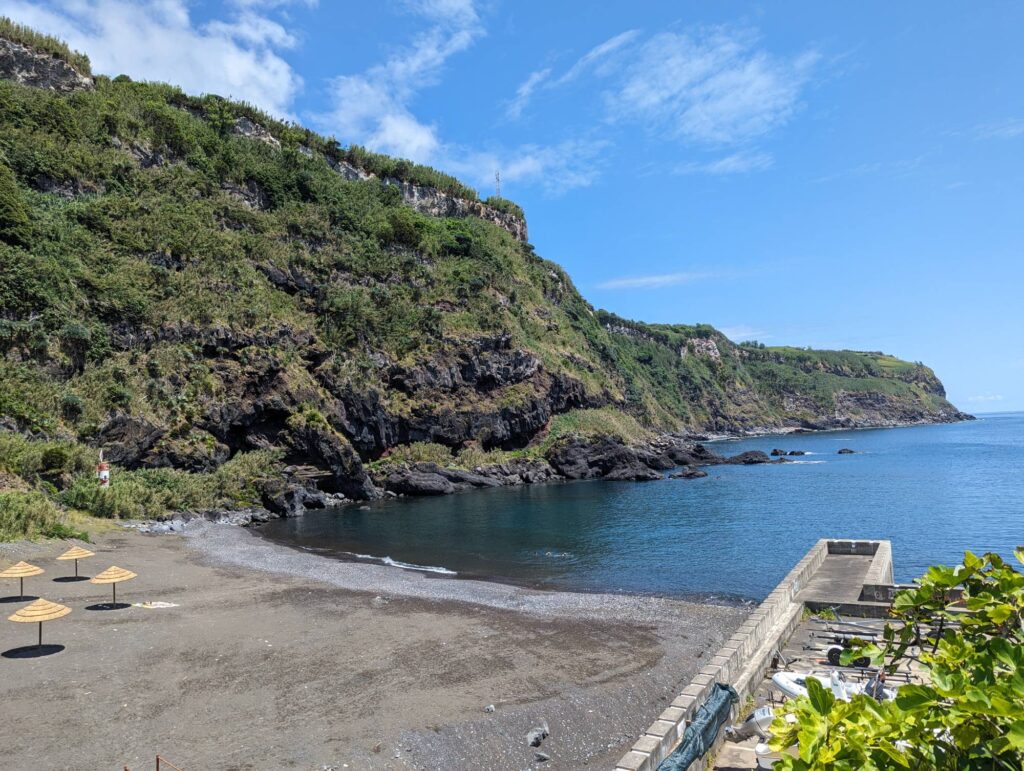
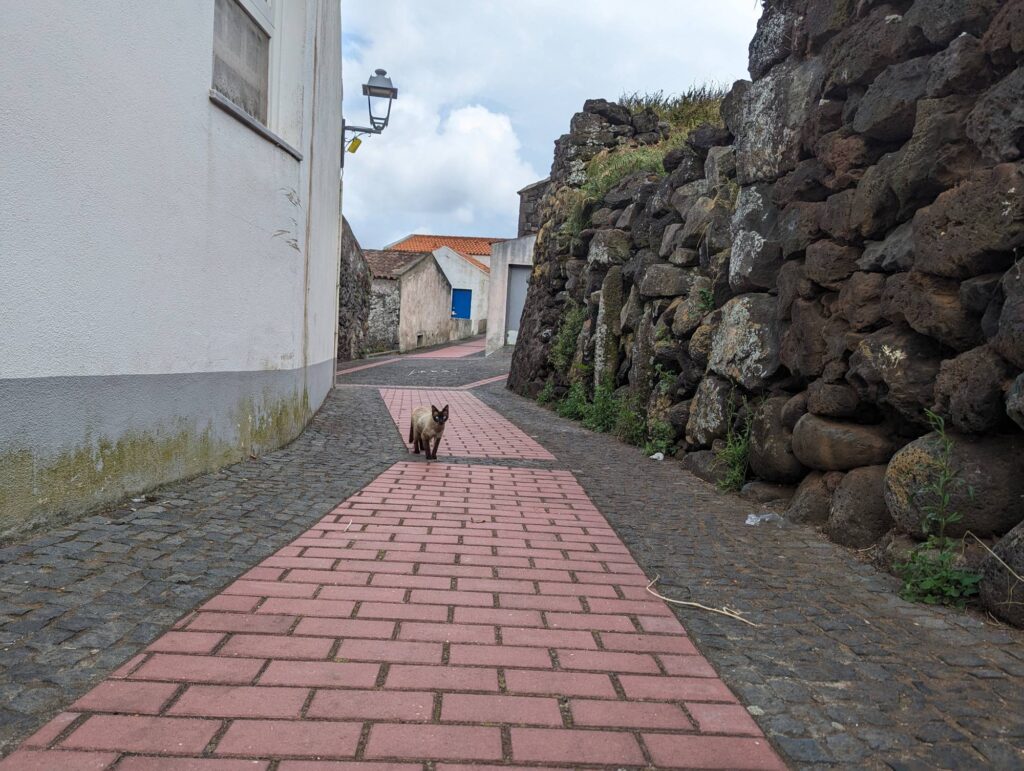
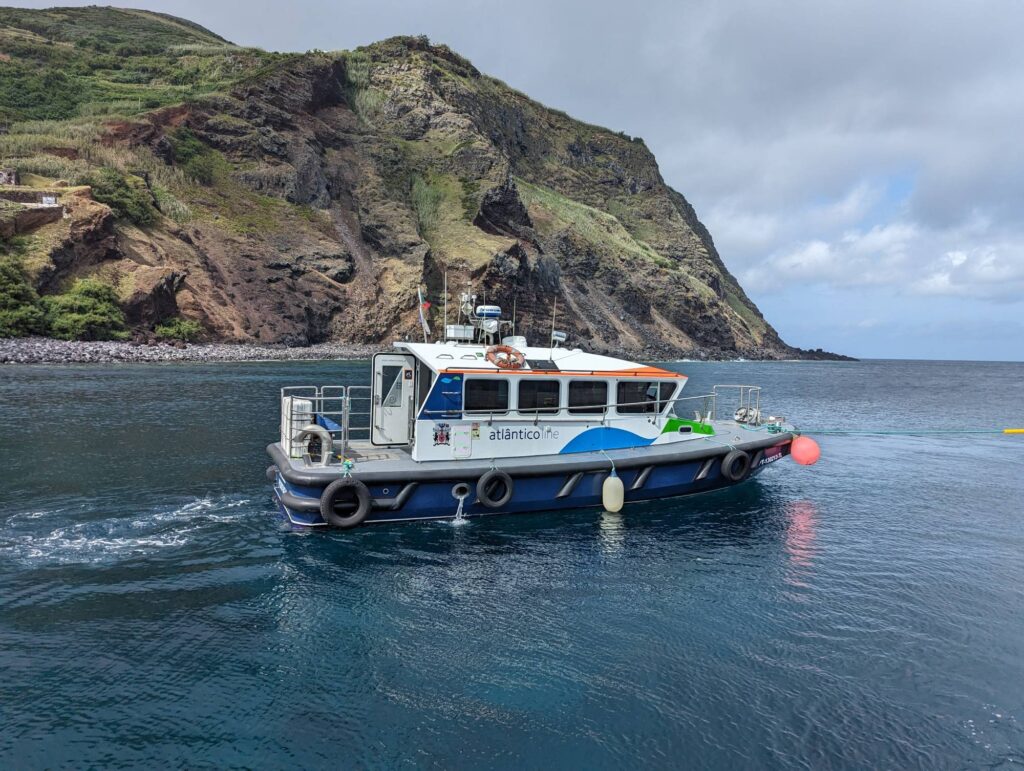
The most remote of the nine: one village, one road, and a crater you can walk down into. Supply chains are the most fragile in the archipelago, the health center handles the basics only, and storms can cut the island off. When I visited, a storm meant it wasn’t possible to get here from Flores to Corvo on the boat. That also meant that pharmacy supplies couldn’t come too. We had to wait until the next day to come visit.
Best for: people with a real connection to the place or a skill the community needs, and almost nobody else.
Cost of Living in the Azores
Short answer
Cheaper than Lisbon or the Algarve for most things, but not cheap. The Azores minimum wage is €966 a month in 2026, and a one-bedroom in Ponta Delgada can cost most of that. It feels affordable on a foreign income and hard on a local one.
✓ Cheap
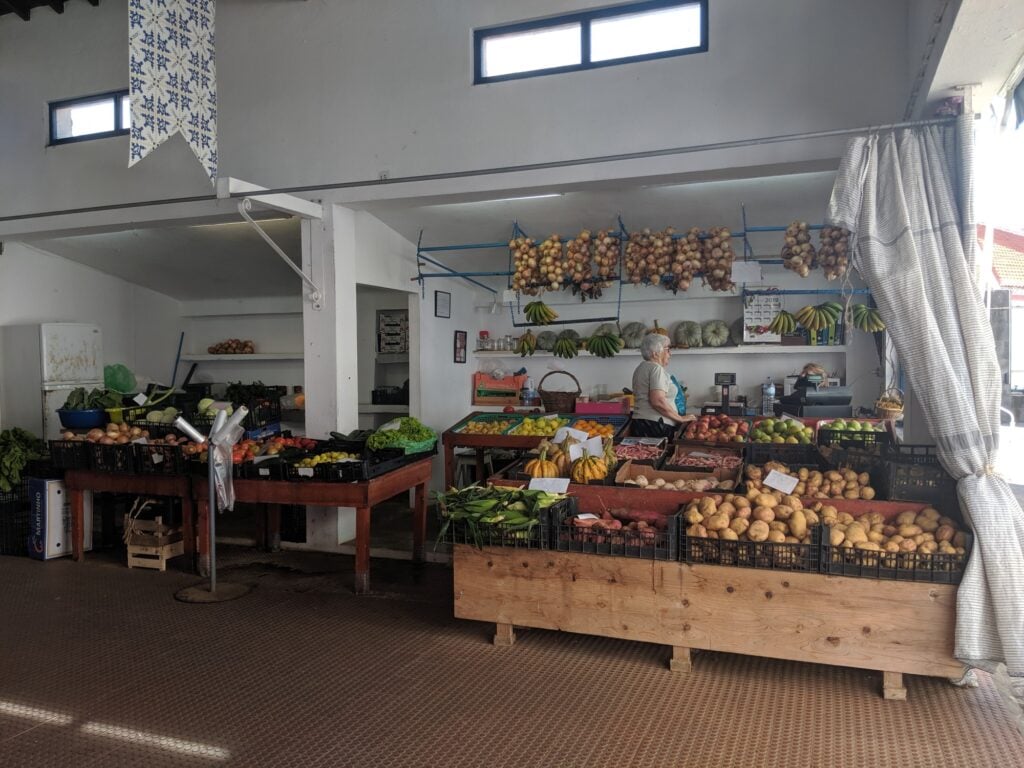
- Local food: dairy, beef, fish, fruit and vegetables.
- A prato do dia (lunch special) at a local café, still usually under €12.
- Services, and VAT at 16% instead of 23%.
✗ Not cheap
- Housing, which has risen faster here than almost anywhere in Portugal.
- Anything imported, from electronics to specialty foods.
- Flights, which you’ll take more of than you expect.
Sample Monthly Budgets on São Miguel
| Monthly | Single remote worker | Retired couple | Family of four |
|---|---|---|---|
| Rent | €650–900 (1 bedroom) | €850–1,200 (2 bedrooms) | €1,100–1,500 (3 bedrooms) |
| Electricity, water, internet | €120–250 | €150–280 | €200–320 |
| Groceries | €250–400 | €500–750 | €800–1,100 |
| Car running costs | €150–250 | €150–250 | €200–300 |
| Eating out | €100–200 | €150–300 | €200–350 |
| Travel fund (flights home) | €100 | €200 | €300 |
| Private school (optional) | — | — | €0–900 |
| Total, before health insurance | €1,370–2,100 | €2,000–2,980 | €2,800–4,770 |
These are planning ranges, not averages. Smaller islands can be cheaper for rent and more expensive for almost everything else due to the cost of importing everything.
🧾
Tax: lower rates, same system
The Azores uses the Portuguese tax system with lower regional rates: VAT is 16% rather than 23%, and income tax rates are lower than the mainland’s 48% top band. Lower rates don’t change the big questions, like when you become tax resident and how your pension is taxed. See Portuguese taxes.
Azores Food and Drink
What you’ll actually eat
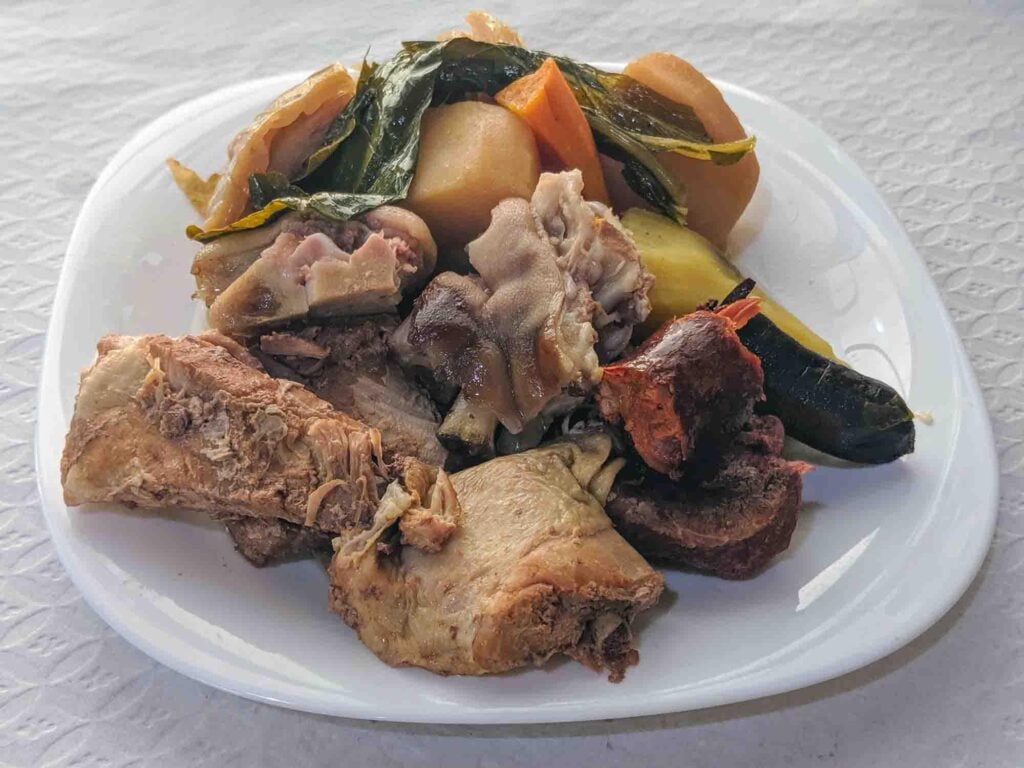
The everyday food is dairy, beef and fish, and it’s very good. The famous dishes are more fun to try once than to live on.
Once you live here, most of what you eat is simple: local milk, butter and cheese, grilled fish and beef, bread and vegetables from the market. Even in restaurants, the dishes in Azorean cookbooks can be hard to find, especially on the smaller islands, where most menus are grilled meat, grilled fish, and the same dishes you’d find on the mainland.
Local produce is where the cost of living is kind to you: it’s cheap and fresh. Imported brands and specialty ingredients are the opposite. See the cost of living above.

The Things I’d Eat Every Week
🧀
Cheese
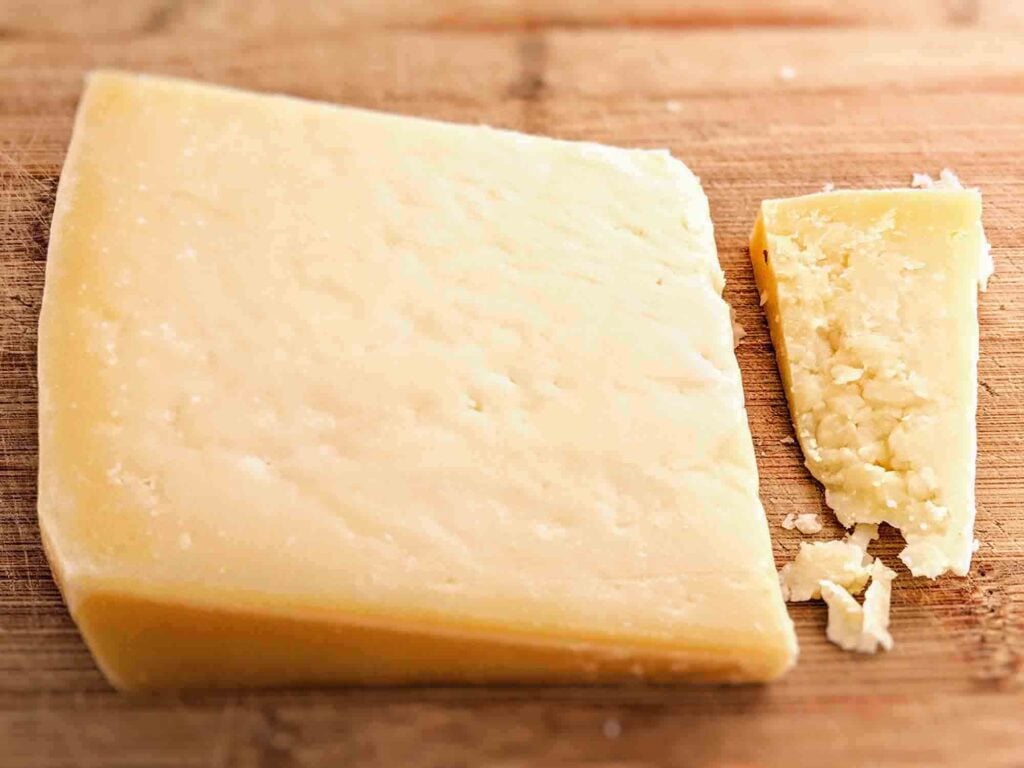
São Jorge is the famous one: aged and tangy. I prefer a British cheddar, but when I can’t get one, São Jorge is pretty good and pretty similar. Order a sandwich anywhere and you’ll probably get it. Terceira makes good cheese too. I really like the fresh cheese (queijo fresco): like the ice cream, it shows off the milk. It’s often served with pimenta da terra, a salty red pepper paste.
🍷
Wine
I loved Pico wine: vines grown on black lava stone inside small stone-walled plots, a UNESCO-listed landscape. It’s expensive, though, so it isn’t an everyday bottle the way vinho verde is. It’s a treat. Graciosa and Biscoitos on Terceira make wine the same way. Look out for Pico’s fortified licoroso and the light vinho de cheiro drunk at festivals.
🍦
Quinta dos Açores ice cream
Sold all over the islands and one of my favorite things here. There are local flavors like Dona Amélia cake and Graciosa queijada, but the best is plain vanilla, because it tastes of Azorean milk.
🐟
Fish and seafood
Chicharros (small horse mackerel), often fried and served with onions and tomatoes, octopus stew (polvo guisado), which every island makes slightly differently, and limpets (lapas) with garlic and butter.
🥘
Alcatra
Terceira’s big dish: meat or fish slow-cooked in a clay pot until the sauce is rich, served with sweet bread to soak it up. The one I had was octopus alcatra, and it was great. Many restaurants only make it for two or more.
🥖
Bolo lêvedo
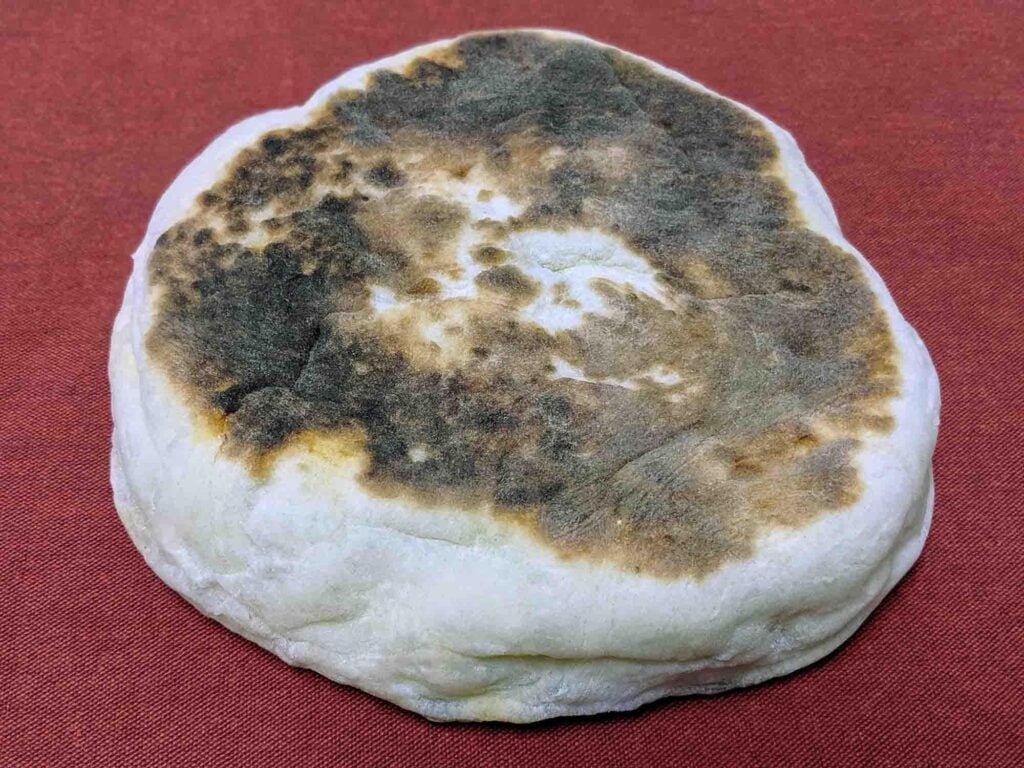
A slightly sweet, muffin-like bread from Furnas on São Miguel, now found on every island and in Azorean bakeries in New England.
🍰
Bolo Dona Amélia: a rival to the pastel de nata, and hard to find anywhere else
Terceira’s spiced cake, made with cinnamon, raisins and molasses, was made for Queen Amélia’s visit in 1901. It’s one of my favorite cakes anywhere in Portugal, and it’s very hard to find outside the Azores. I usually buy it at O Forno, on Rua de São João in Angra do Heroísmo, which also does Terceira’s other regional cakes. While you’re at it, try the queijadas (small cheese tarts) from Graciosa and from Vila Franca do Campo on São Miguel. São Jorge’s espécies, a spiced pastry, are fine, but I wasn’t a huge fan.
Worth Trying Once
Grown on the Islands

Pineapple
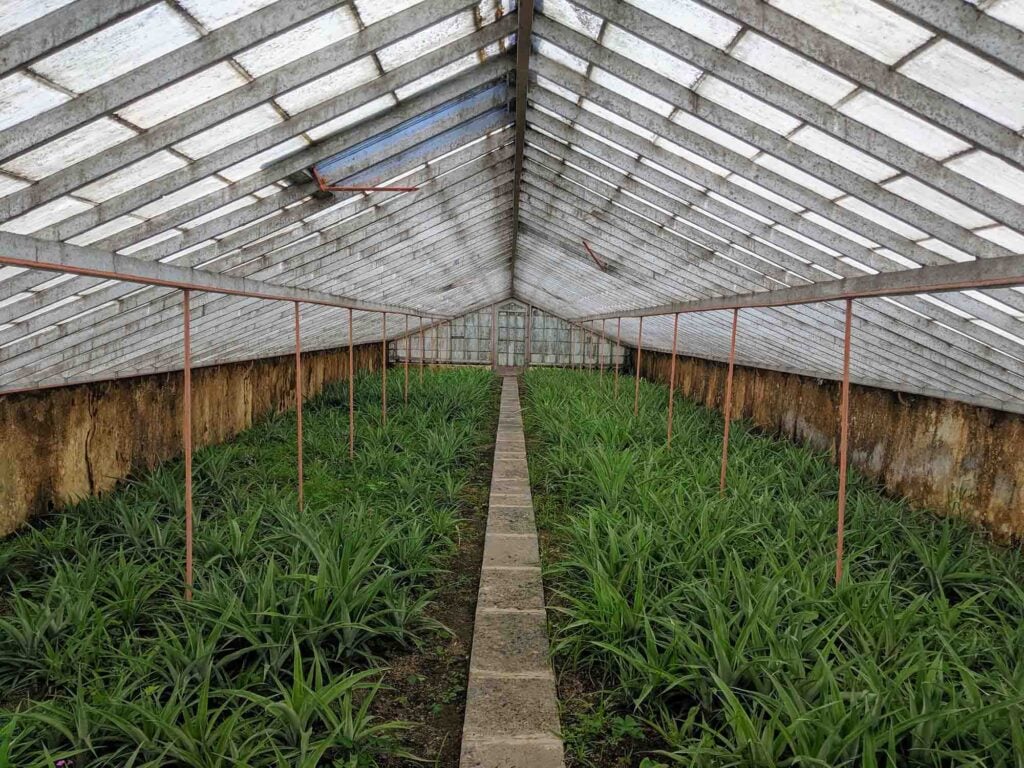
Grown in greenhouses on São Miguel, small, sweet and nothing like the imported kind. They’re best in summer, though Portuguese families traditionally buy one for Christmas.
Tea
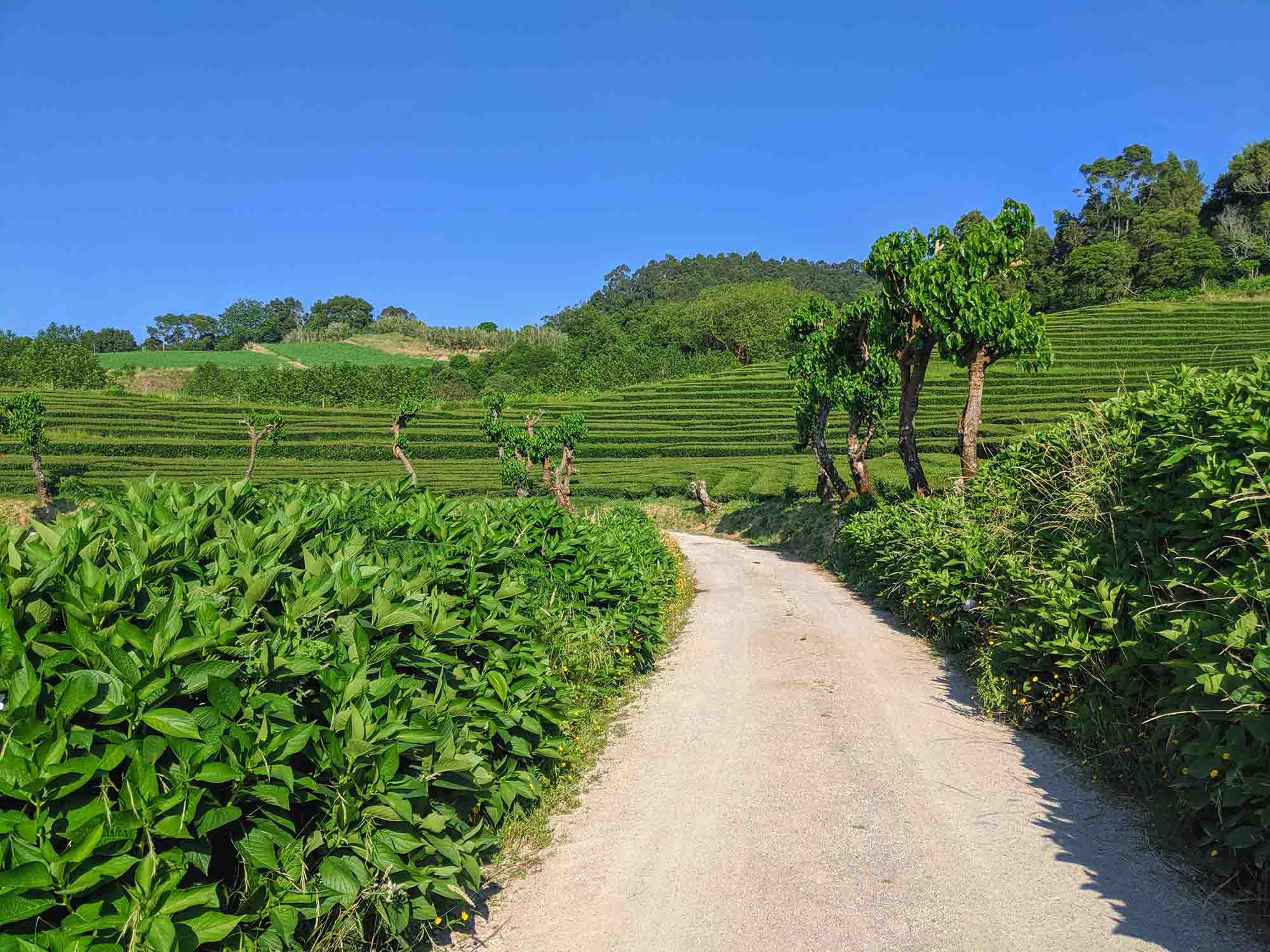
São Miguel has two tea plantations, Gorreana and Porto Formoso, among the very few in Europe. Gorreana is bigger and busier, and you can sample the tea for free at both.
Coffee
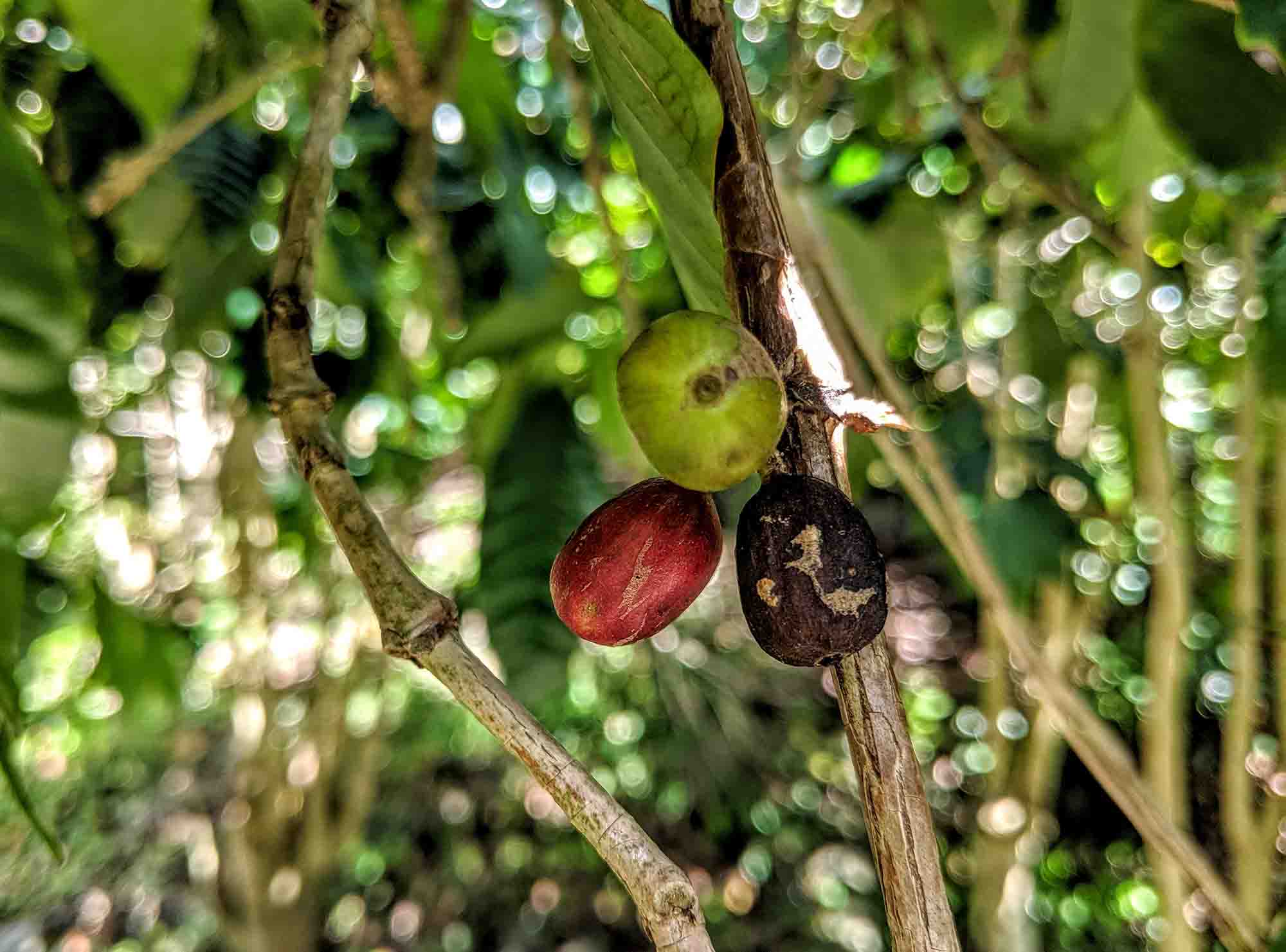
Yes, coffee grows here too, at Café Nunes in Fajã dos Vimes on São Jorge. But it’s a garden rather than a plantation, so your daily coffee will still come from Brazil, Colombia or Costa Rica.
And for something to wash it all down, try a pineapple or passion fruit Kima, the local soda.



Weather, Damp and Mold
The climate in one line
Ponta Delgada’s January days reach about 62°F (17°C) and nights about 52°F (11°C); August highs are around 77°F (25°C). The temperatures are easy. The rain, wind, gray and humidity, which rarely drops below 75%, are what people struggle with.
“Four seasons in a day” is a description, not a joke. Locals don’t so much check the forecast as check the webcams (SpotAzores has them all over the islands) to see which side of the island is dry right now. The Azores gets more sun than Seattle or Britain, but it’s nowhere near the Mediterranean.
🌤️
Santa Maria
The driest and sunniest island.
⛅
São Miguel and Terceira
In the middle, with big differences between coast and hills. Ponta Delgada’s weather isn’t Furnas’s.
🌧️
Flores and Corvo
The most rain, the most wind and the most storms.
Damp and Mold: The Thing That Surprises People Most
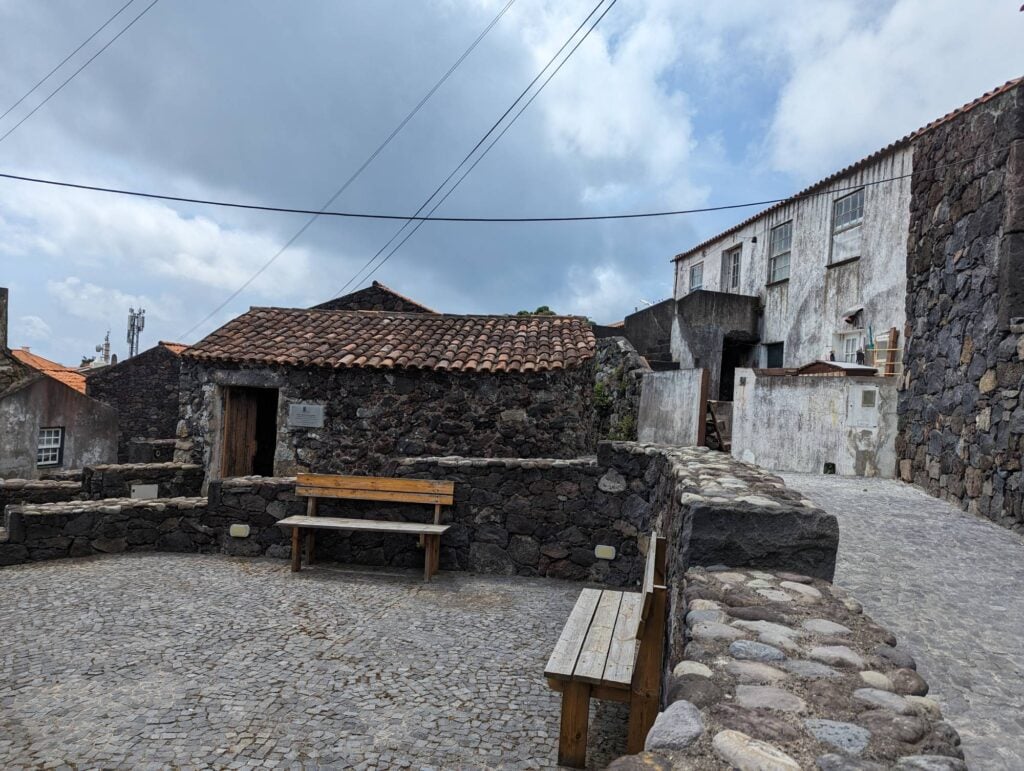
Traditional houses are basalt, with thick walls and no insulation, moisture barrier or central heating. A stone house holds the cold the way a cathedral does, so inside can feel colder than the 55°F outside. The result is mold on walls, behind wardrobes, on shoes, books, clothes and mattresses. Salt air rusts metal near the coast, cars included.
⚠️
Asthma or a mold allergy?
Treat this as a possible dealbreaker, and only consider modern or properly renovated homes.
What to do about it
Renting and Buying a Home in the Azores
Short answer
Renting is harder than buying, because it’s hard to find anything to rent. On São Miguel, asking rents were €12.2 a square meter in August 2026, up 12.6% in a year: roughly €730 to €1,100 a month for 60 to 90 m². Idealista doesn’t publish a figure for any other island, because there aren’t enough listings.
Renting
More in my guide to renting in Portugal.
What Your Money Buys
| Where | Asking price per m² (Aug. 2026) | A 70–120 m² home |
|---|---|---|
| Ponta Delgada | €2,534 | €177,000–304,000 |
| São Miguel | €2,388 | €167,000–287,000 |
| Terceira | €1,791 | €125,000–215,000 |
| Pico | €1,778 | €124,000–213,000 |
| Santa Maria | €1,736 | €122,000–208,000 |
| Faial | €1,674 | €117,000–201,000 |
| São Jorge | €1,510 | €106,000–181,000 |
That’s arithmetic from Idealista’s asking prices, not a valuation. Across the region, asking prices were up about 12% in the year to August 2026, and around 20% on Terceira and Pico. Sea views, land and, above all, damp can move a real price a long way from the average.
Renovating an old stone house
Cheap by North American standards and beautiful. Builders are scarce, the good ones are booked months ahead, and materials are shipped in. Double the budget and the timeline to be safe, and plan to be on the island to manage it. Have a lawyer check the land registry and building license: some rural houses have tangled ownership, occasionally among heirs in New England and Canada it can be hard to track down.
Selling later
A house on Flores isn’t just a cheaper version of one on São Miguel. When you sell, the pool of possible buyers is tiny. Buy on a small island only if you’re sure, or can afford for it to take a long time to sell.
🌋
Earthquakes and volcanoes
The Azores sits where three tectonic plates meet, and small tremors are part of life. In 2022 an earthquake swarm on São Jorge led to evacuations. Terceira’s Santa Bárbara volcano was put on a higher alert level after 2022, lowered again in July 2026. The risk of something catastrophic is low; check a building’s age and construction, get proper insurance, and follow CIVISA.
Buying property in Portugal
The process, the taxes, and a calculator for the buying costs.
Healthcare: Three Hospitals, Nine Islands
For many people, this section decides the island.
Short answer
The Azores has its own regional health service (the SRS), which works much like the mainland’s SNS: register at your health center, get a número de utente, and pay little or nothing for most care. But there are only three public hospitals, in Ponta Delgada, Angra do Heroísmo and Horta, and one private one, on São Miguel.
São Miguel, Terceira, Faial
- A public hospital on the island.
- São Miguel also has the only private hospital, Hospital CUF Açores in Lagoa, which opened as the Hospital Internacional dos Açores and was bought by CUF in 2023.
- Family doctors are in short supply, and non-urgent specialist waits can be long.
The other six islands
- Health centers for everyday care, but not serious emergencies or specialist treatment.
- Serious cases are flown to a hospital island, usually by an Air Force helicopter or plane, weather permitting.
- Some complex treatment, such as some cancer care, means going to Lisbon.
⚠️
São Miguel’s main hospital is still recovering from a fire
Hospital do Divino Espírito Santo in Ponta Delgada was badly damaged by fire in May 2024. More than two years later, its emergency department and main operating rooms are still out of action in the main building, with a modular hospital next door covering. The regional medical association called the idea of fully reopening the emergency department soon out of touch with reality. Expect longer waits for planned treatment than before the fire.
What I’d Do
Schools and Family Life
Short answer
There are no international schools in the Azores. Children go to Portuguese schools, taught in Portuguese. The good news is that the best public high schools on São Miguel, Terceira and São Jorge score in the same range as Madeira’s best.
How the Schools Compare
The best-scoring high school on each island (plus the next best on São Miguel and Terceira), from Público’s 2024 school rankings. Exams are marked out of 20.
| Island | School | Average exam score | National exam ranking |
|---|---|---|---|
| São Jorge | Escola Básica e Secundária de Velas | 12.69 | 90th |
| São Miguel | Escola Secundária Antero de Quental, Ponta Delgada | 12.21 | 142nd |
| Terceira | Escola Básica e Secundária Tomás de Borba, Angra | 12.01 | 179th |
| São Miguel | Colégio do Castanheiro, Ponta Delgada (private) | 11.94 | 191st |
| São Miguel | Escola Secundária Domingos Rebelo, Ponta Delgada | 11.90 | 200th |
| Terceira | Escola Secundária Jerónimo Emiliano Andrade, Angra | 11.73 | 226th |
| Pico | Escola Básica e Secundária de Lajes do Pico | 11.57 | 261st |
| Faial | Escola Secundária Manuel de Arriaga, Horta | 11.13 | 333rd |
| Graciosa | Escola Básica e Secundária da Graciosa | 10.95 | — |
| Santa Maria | Escola Básica e Secundária de Santa Maria | 9.60 | 526th |
| Flores | Escola Básica e Secundária das Flores | 9.23 | 541st |
| Corvo | Escola Básica Integrada Mouzinho da Silveira | 7.67 | — |
| Madeira, for comparison | Escola Secundária Francisco Franco, Funchal | 12.75 | 85th |
🏫
The strongest choice
Ponta Delgada and Angra both have several solid high schools to choose between, plus Colégio do Castanheiro, the private school foreign families mention most.
🌟
The surprise
Velas on São Jorge has the best exam results in the Azores, and is one of two schools in a new bilingual pilot. It’s a small school, so results can swing from year to year.
⚠️
The weak spots
Flores, Santa Maria, Povoação on São Miguel (8.45) and Corvo score well below the rest. On a small island you get the one school there is.
By Age
The US base schools at Lajes are for military families only. More in schools in Portugal.
Working From the Azores
📶
Internet
Generally good in the towns on the main islands, and fiber is common. But check the address, not the island: ask the landlord to run a speed test, check cell signal from two carriers, and budget for a cellular data backup. On Flores, Corvo and in rural valleys, storms can take out power.
🕐
Time zone
One hour behind London and Lisbon all year, and four hours ahead of New York, so a US East Coast workday starts at 1 p.m. The gap slips by an hour for a week or two in spring and fall, when the US and Europe change clocks on different dates.
💼
Local jobs
Scarce, low-paid, and almost all need Portuguese. The economy runs on the public sector, tourism, dairy, fishing and construction. Skilled trades are the exception. Otherwise, bring your income with you.
Getting Around and Getting Home
Short answer
Most people will want a car. Between islands you mostly fly. To get home, you’ll almost always start at Ponta Delgada.
| What to expect | |
|---|---|
| On the island | Buses on São Miguel and Terceira are built around school runs, not errands. Central Ponta Delgada is the only place I’d try without a car, and not for long. See buying a car and exchanging your license. |
| Between islands by air | SATA Air Açores serves all nine. Tax residents pay the Tarifa Açores: €61 round trip or €35 one way. Summer flights fill up; winter cloud and crosswinds cancel them. |
| Between islands by sea | Atlânticoline ferries link Faial, Pico and São Jorge year-round, and Horta to Madalena is short and frequent enough to commute. There’s a boat between Flores and Corvo. Other routes are seasonal, and there’s no ferry to the mainland. |
| To the mainland | Under the new mobility subsidy, residents pay at most €119 for a round trip, and the state covers the rest. The old fare caps were scrapped in March 2026. |
| To North America | Azores Airlines flies from Ponta Delgada to Boston, New York and Toronto. Family in Massachusetts is a five-hour direct flight away. These routes constantly change, but New York, Boston, and Toronto tend to have the most connections here. |
| To the UK | Thin. Expect to go through Lisbon or Porto. There are often flights between London and Ponta Delgada, but they’re usually not year-round. |
⏳
Ryanair left in March 2026
It ended all its Azores routes, blaming airport fees, and the cheap Lisbon and European fares went with it. Build slack into every connection, and never book a flight home or a specialist appointment on the same day as a weather-dependent inter-island hop.
Why People Leave the Azores
The reasons are remarkably consistent, and most of them are visible before you move.
Visas, and What’s Different for Americans, Brits and Canadians
There’s no Azores visa. You apply for the same visas as anywhere else in Portugal. The D7 and the Digital Nomad Visa are the most common routes, but not the only ones.
🏖️
D7 visa
For retirees and anyone with passive income. At least €920 (about $1,037) a month.
🏛️
Golden Visa
Investment-based, through a qualifying fund. Buying property no longer qualifies.
🇪🇺
EU, EEA and Swiss citizens
No visa: move freely and register after three months, with non-EU family on easier terms.
📋
Other routes
A Portuguese job offer, study, or joining family already here.
A Portuguese parent, grandparent or spouse?
Many families in New England, California and Ontario have Azorean roots, and children and grandchildren of Portuguese citizens can often apply for citizenship, as can spouses of Portuguese citizens. If you can get citizenship, I think it’s worth going for.
The catch is time: you could wait three or four years for it, while a D7 could have you living here within six to twelve months. So many people do both: move on a visa, and let the citizenship application run in the background.
Everyone else
Residence permits lead to permanent residency after five years, and citizenship now takes ten.
By Nationality
🇺🇸
From the US
Medicare generally doesn’t cover care abroad, so plan on public care plus private insurance, and think about Part B. You still file US taxes every year. The good news is direct flights to Boston and New York.
🇬🇧
From the UK
Since Brexit, you need a visa. A UK State Pension may bring an S1 form and access to public healthcare. Flights are the challenging part, but you can usually connect through Lisbon or Porto.
🇨🇦
From Canada
Provincial health coverage usually lapses once you’ve been away long enough, so check your province’s rules. Toronto has direct flights, and Ontario’s Azorean community runs deep.
What I’d Do
A two-week trip in August tells you whether you like the scenery. It doesn’t tell you whether you can live there.
Shortlist two islands
Use the table above. For most people that’s Terceira and São Miguel.
Visit in winter
In summer too if you can, but winter is the one that matters. Stay at least a month, in a normal rental, doing normal errands.
Rent before you buy
A year-round lease, through a full winter, before you look at property.
If the Azores doesn’t fit
Madeira gives you island life with more sun and services. On the mainland, look at the Algarve, central Portugal, northern Portugal or the Alentejo.
If you’re not ready yet
Most people reading this are a few years away from moving, and that’s fine. My book, “Moving to Portugal Made Simple,” will help you figure out if Portugal is right for you.
Common questions
Living in the Azores: FAQ
Lower than Lisbon or the Algarve for most things, but not cheap. On São Miguel, plan on roughly €1,400 to €2,100 a month for one person and €2,000 to €3,000 for a couple, before health insurance. House prices and rents have risen quickly, imported goods cost more, and flights add up.
The pros are nature, safety, the slow pace, community and food, plus direct flights to North America. The cons are damp houses, gray winters, only three public hospitals, isolation, limited choice, rising housing costs and scarce rentals.
Terceira for most newcomers: a hospital, an airport and far fewer tourists than São Miguel. São Miguel if you want the most services, including the only private hospital. Santa Maria if sunshine matters most.
In tourist areas of São Miguel and among younger people, yes. For doctors, builders, schools and government offices, and on the smaller islands, you’ll need Portuguese.
No. You fly, usually to Lisbon, which takes a little over two hours from Ponta Delgada.
 Thinking about Moving to Portugal?