

São Miguel is the largest and most connected island in the Azores — and the most practical place to live across the entire archipelago.
With a population of around 138,0002. Rain is frequent, especially in winter, and the island’s topography means conditions can vary noticeably from one part of the island to another. Humidity is arguably the bigger daily consideration — something that affects home comfort and requires active management.
Jobs
The São Miguel job market is the strongest in the Azores, but that needs to be kept in perspective: it is still a small island economy, and the range of professional opportunities is narrow by mainland standards.
The main employment sectors are tourism and hospitality, public administration, healthcare and education, agriculture and dairy farming, construction and trades, and retail and services. Tourism has grown significantly over the past decade and now drives a meaningful portion of the economy, though many of those jobs are seasonal and concentrated in hospitality.
Construction is currently active, with demand for skilled trades, project management, and renovation work — a reflection of both the housing market and the general development of the island’s infrastructure.
Public sector jobs — in schools, health, regional government, and municipal services — are a significant source of stable employment, but they typically require Portuguese language proficiency and relevant credentials.
English-language roles exist in tourism, education (English teaching), and some tech or remote-friendly positions, but they are limited. Most people who move to São Miguel and work locally either bring professional qualifications in healthcare, education, or skilled trades, or work remotely for organisations outside the island.
For those on local wages, the economics can be tight. Minimum wage in Portugal covers basic living costs on São Miguel, but not comfortably, particularly given rising rents. The island is most financially viable for remote workers, retirees, or people with specialist qualifications that command higher local salaries.
Getting Around
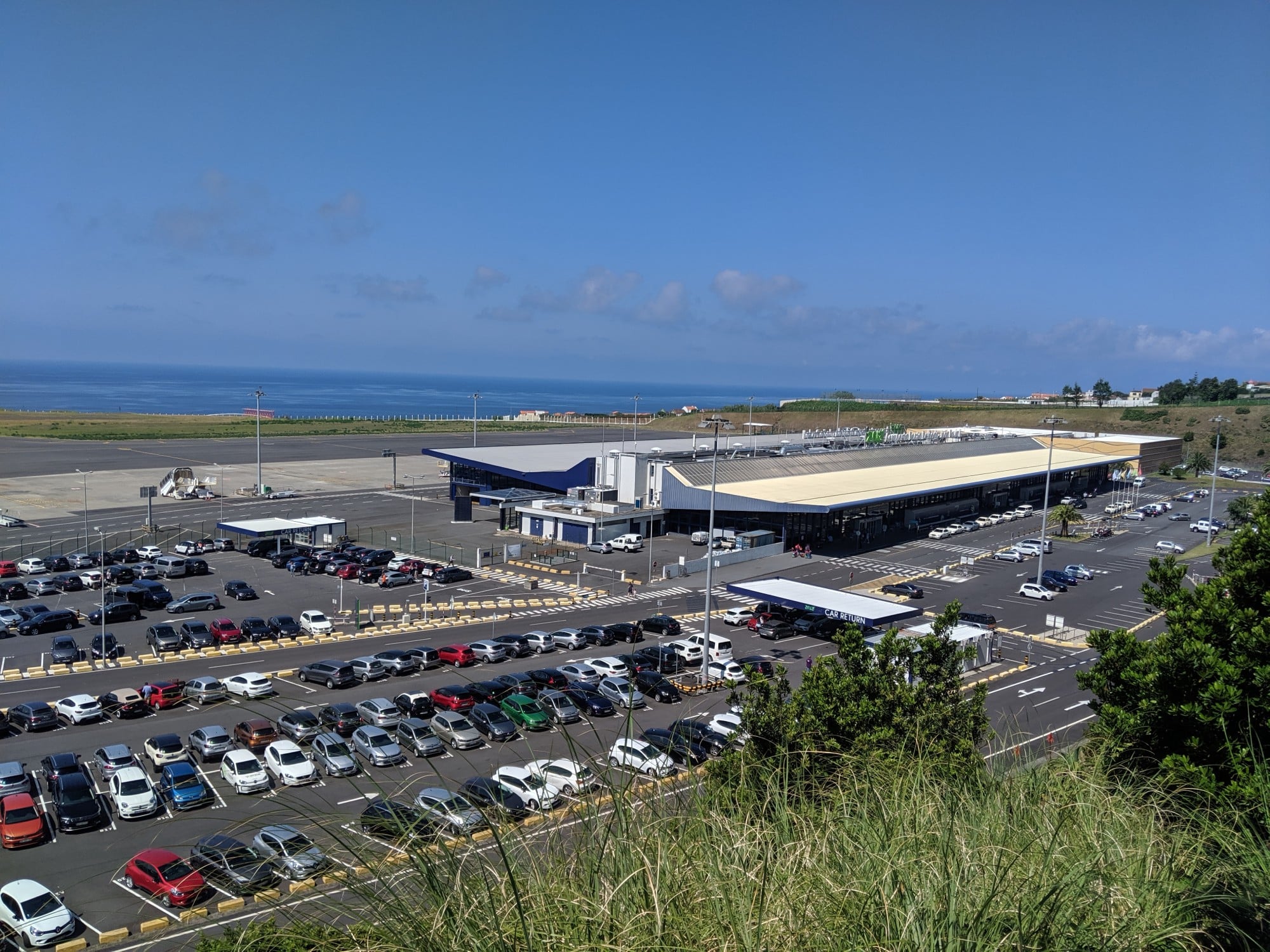
Getting around São Miguel is easy with a car, and most residents structure their daily lives around driving. The island is about 65 km long and takes roughly an hour to drive from one end to the other.
- By car: The main roads are well-maintained and relatively fast. Driving from Ponta Delgada to Furnas takes about 45 minutes; to Ribeira Grande, about 25–30 minutes; to the western end of the island at Sete Cidades, about 35–40 minutes. A car is not just convenient — for most people living outside central Ponta Delgada, it is essential.
- Public transport: Buses exist between the main towns, but they are widely described as limited, infrequent, and not designed for people outside specific commuter corridors. Even by the accounts of local residents, public transport is one of the island’s genuine weak points, and even lower-income families tend to prioritise getting a vehicle.
- Flights: João Paulo II Airport (PDL) is about 3 km from the centre of Ponta Delgada. It offers several daily flights to Lisbon and Porto, as well as direct year-round international connections to Boston, New York, Toronto, Frankfurt, and other European cities. Seasonal routes expand significantly in summer. For residents, this makes São Miguel significantly more accessible to the mainland and to the rest of the world than any other Azorean island.
- Inter-island travel: Since approximately 2022, the long-distance inter-island ferry routes from São Miguel have not operated regularly. Travel to other islands in the archipelago — Terceira, Faial, Pico, Flores — is now almost entirely by air via SATA/Azores Airlines. Flights are typically 30–90 minutes depending on the destination, but they can be expensive and are subject to weather-related delays and cancellations.
- Taxis and Bolt: Both are available in and around Ponta Delgada, but are harder to find on other parts of the island.
Pros and Cons of Living Here
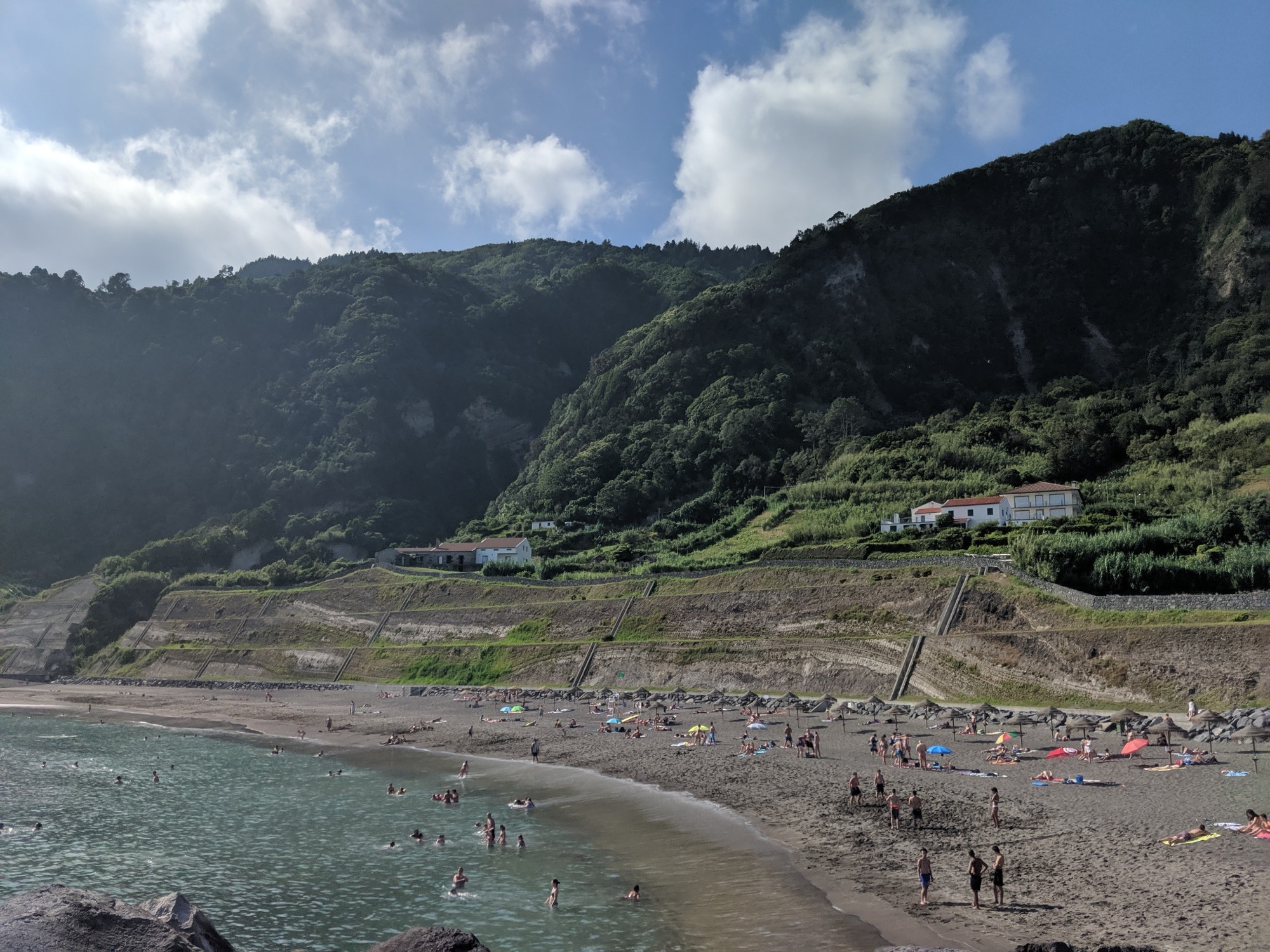
São Miguel is the most livable island in the Azores by most practical measures — but it is still an island, and it comes with the trade-offs that implies.
Pros
- Best infrastructure in the Azores – São Miguel has the strongest day-to-day services, the best hospital, the most developed airport, and the widest range of schools and shops available anywhere in the archipelago.
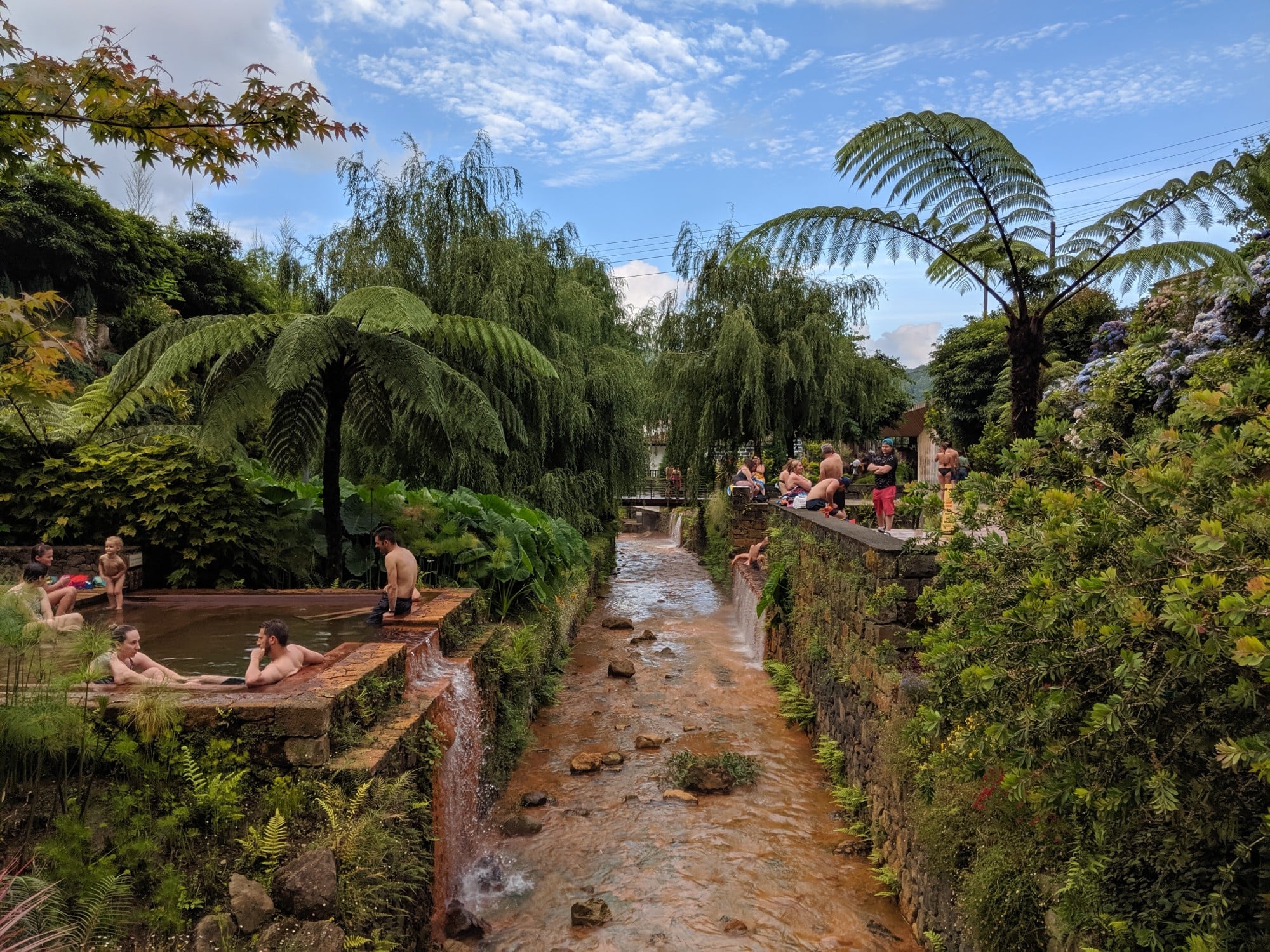
- Remarkable natural environment – Volcanic lakes, thermal springs, dramatic coastlines, lush green hills, and endemic flora make the island genuinely extraordinary in a way that photographs still underrepresent. Sete Cidades, Furnas, Lagoa do Fogo, and the coastal trails are world-class.
- Mild, manageable climate – The temperature range is narrow and never extreme. For anyone coming from northern Europe or Canada, the winters in particular are strikingly easy.
- Strong local food culture – Beef from Azorean cattle is genuinely among the best in Europe. Seafood, local cheeses, fresh dairy, tropical fruits — pineapples and bananas grown on the island itself — and locally grown tea from Gorreana (the only tea plantation in Europe) give the island a food identity that is hard to match.10Gorreana, in Ribeira Grande, is the oldest tea plantation in Europe still in operation, producing green and black teas since 1883. https://www.gorreana.pt[/efn_note]
- Good connectivity – For an island in the middle of the Atlantic, São Miguel is surprisingly well connected internationally. Direct flights to North America and multiple European cities make it far more accessible than most people expect.
- Safe and community-oriented – Crime rates are low, people are generally friendly and tolerant, and the close-knit nature of island society — which can be a trade-off in some respects — also means real neighbourliness and community support.
Cons
- Limited job market – Outside public services, hospitality, trades, and a few other sectors, professional employment is narrow. Career mobility is limited, and well-paid private sector jobs are not plentiful.
- Rising costs and housing pressure – The rental market around Ponta Delgada has tightened considerably. The island is no longer the low-cost destination it was even five years ago.
- Seasonal social life – Outside summer, and particularly from October through April, the island can feel quiet. Much of the younger population leaves to study on the mainland, and the music and nightlife scene is thin outside peak season.
- No ferry to other islands – The loss of regular inter-island ferry connections makes it more expensive and logistically complicated to visit the rest of the archipelago.
- Humidity and home maintenance – Persistent humidity means home maintenance is a real consideration — ventilation, dehumidification, and damp management matter more here than in drier climates.
- Healthcare limitations for specialist care – While the island’s hospital is the best in the Azores, it still cannot match a major mainland hospital for complex specialist care. Some conditions will require travel to Portugal or further afield.
Compared with Other Islands
- Versus Terceira: São Miguel has more jobs, more services, more private-sector options, and a more international airport. Terceira feels quieter and more historic, with Angra do Heroísmo offering real charm that Ponta Delgada does not quite replicate. Some people find Terceira more manageable and less pressured. For pure practicality, São Miguel has the edge; for atmosphere and a slower pace with fewer tourists, Terceira often appeals more.
- Versus Madeira: Madeira is meaningfully larger, more developed, and more cosmopolitan than São Miguel. Funchal has a broader range of private healthcare, international schools, and professional opportunities. Madeira also has a stronger year-round tourism economy and is significantly closer to mainland Europe. São Miguel offers a more remote, wilder, and arguably more authentic Azorean experience — but Madeira wins on infrastructure, connectivity, and the sheer range of options available day to day.
- Versus Flores: Flores is one of the most visually stunning islands in the Azores, with landscapes — waterfalls, crater lakes, lush valleys — that rival anything on São Miguel. For someone who prioritises scenery above all, Flores can feel equally rewarding. The difference is infrastructure: Flores is small (around 3,600 people), has limited services, no real hospital, no year-round ferry access to other islands, and a job market that is almost non-existent. It is a place for a very specific lifestyle — remote, quiet, self-sufficient — rather than a practical place to relocate for most families or working people. São Miguel offers comparable natural beauty alongside the infrastructure that makes daily life function.
- Versus smaller islands (São Jorge, Graciosa, Pico): São Miguel is substantially more practical than any of these for everyday living. The smaller islands have character, beauty, and tight communities, but they lack hospitals, have limited schooling choices, and depend heavily on mainland systems for anything beyond basic services.
Similar Locations
If you’re thinking about São Miguel, it helps to compare it with a few reference points.
- Within the Azores – the natural comparison is Terceira: similar in development level but smaller and more historic. Flores shares São Miguel’s volcanic beauty and green intensity but with a fraction of the infrastructure.
- Within the Portuguese islands – Moving away from the Azores, there’s Madeira, which is more urbanised and connected but shares the Atlantic island character.
Final Thoughts
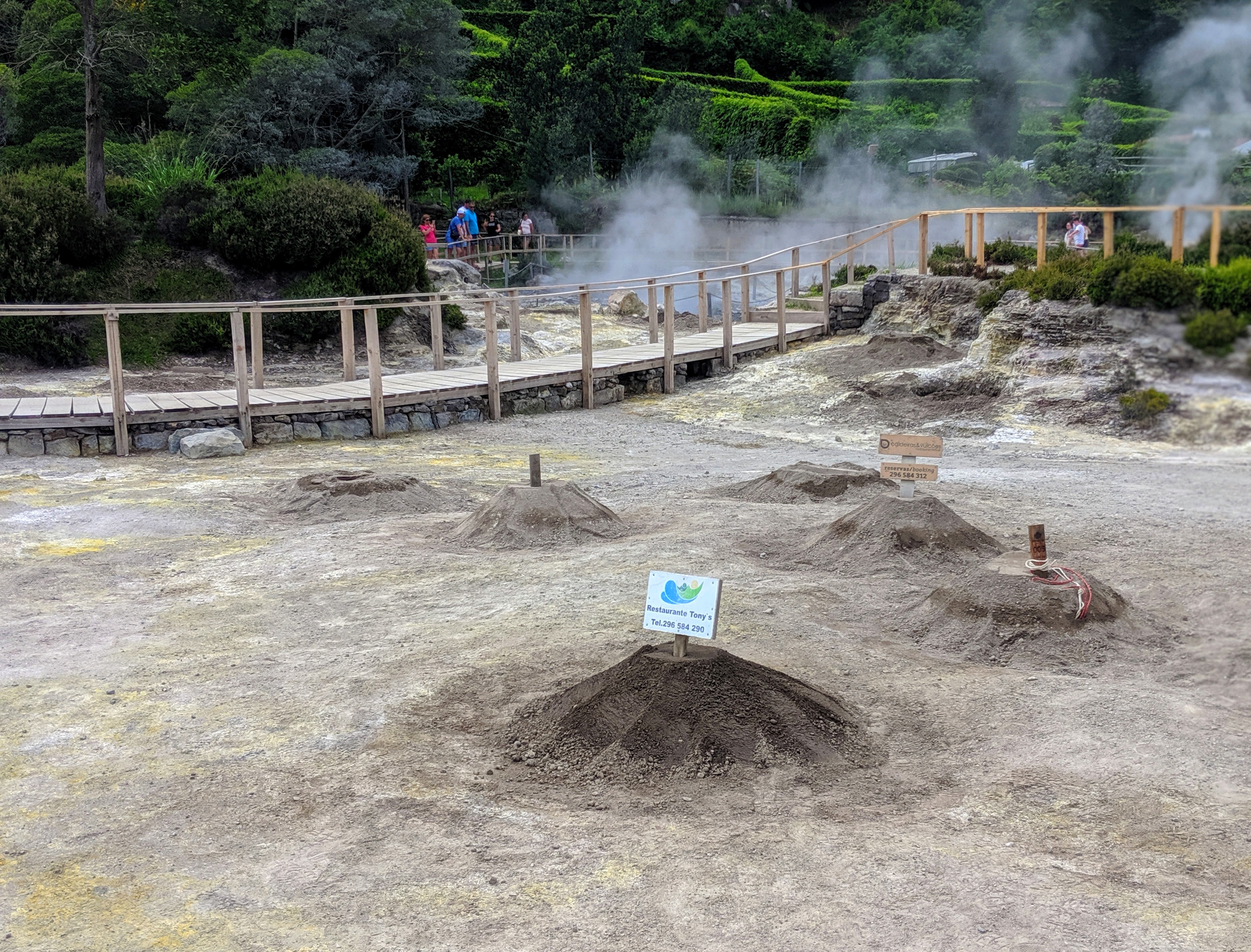
São Miguel is the best all-round place to live in the Azores.
It has enough infrastructure to make daily life genuinely functional — hospitals, schools, an international airport, a real city — without losing the natural beauty, slower pace, and community feel that make island life appealing in the first place.
The trade-offs are real. Housing is no longer as cheap as it once was. The job market is limited. Winters are quiet, and the social scene outside of summer is thin. Specialist healthcare and many consumer goods require either travel or patience. Humidity demands attention.
But for the right person — a nature-loving remote worker, a retiree, a family prioritising safety and outdoor life, or anyone who genuinely values nature over convenience — São Miguel offers something that is genuinely difficult to find elsewhere in Europe: a mild climate, extraordinary landscapes, a functional city, strong community values, and an Atlantic pace of life that does not require you to give up everything practical to enjoy it.
That balance is what makes São Miguel worth serious consideration — and, for many people who make the move, worth staying.
Footnotes & Sources
- https://simple.wikipedia.org/wiki/S%C3%A3o_Miguel_Island[/efn_note], a genuine small city in Ponta Delgada, the region’s main international airport, and the strongest healthcare and education infrastructure in the archipelago, it offers a quality of life that the smaller islands simply cannot match. At the same time, it is still an Atlantic island — rural, community-driven, and shaped by weather, seasons, and the rhythms of island life.
Overall, São Miguel suits people who want island life with real infrastructure behind it. You get nature, community, and a different pace — without the sense of improvisation that comes with living on a smaller island.
Love Portugalist? ❤️
Want to see more of us and less of all the other junk online?
Let Google know by adding us as a preferred source.
Quick Take: Is São Miguel Right for You?
- Climate: São Miguel has a mild oceanic climate with average temperatures ranging from around 14°C (57°F) in winter to 22–24°C (72–75°F) in summer. The island is often green and lush year-round — which tells you something about the rainfall.1The island’s nickname, Ilha Verde (Green Island), is a direct reflection of its climate. Persistent rainfall and humidity keep the landscape intensely green throughout the year, and the island’s volcanic soils are especially fertile as a result. https://en.wikipedia.org/wiki/S%C3%A3o_Miguel_Island
- https://www.idealista.pt/en/press-room/property-price-reports/sale/regiao-autonoma-dos-acores/[/efn_note] — and the rental market around Ponta Delgada can be tight and expensive relative to local wages. The Azores benefit from reduced VAT rates (18% versus 23% on the mainland)3https://taxsummaries.pwc.com/portugal/corporate/other-taxes, which helps with everyday purchases, but imported goods carry a premium due to island logistics. The honest picture is that São Miguel is good value if you earn a mainland or remote income; it is harder if you are living on local wages. However, this is the case for a lot of Portugal, particularly locations like Lisbon, the Algarve, and Porto.
- Connectivity: João Paulo II Airport (PDL) in Ponta Delgada is the main international gateway to the Azores, with year-round direct connections to Lisbon, Porto, Boston, New York, Toronto, and several European cities. By Azorean standards, it is extremely well connected. Ferry connections to other islands are no longer available year-round from São Miguel; since around 2022, the long-distance inter-island ferry routes have not operated regularly, making flights the default for island-to-island travel.
- Ideal for: Remote workers who want nature over anything else, retirees, and families looking for safety, nature, and community — particularly those who can bring their income with them or who have qualifications suited to local healthcare, education, or trades. Less ideal for those who need a deep job market, regular specialist healthcare, or a high level of urban stimulation.
What’s It Like to Live Here Year-Round?
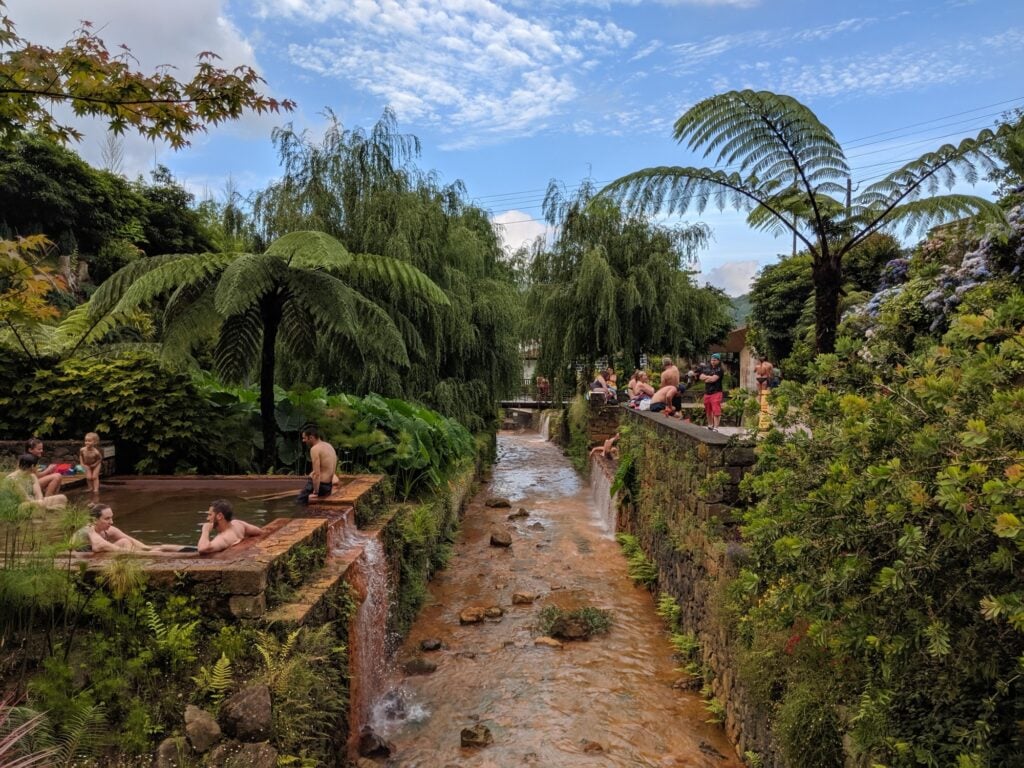
The rhythm of life on São Miguel changes more than most people expect before they arrive.
* Summer is lively. Ponta Delgada feels active, restaurants are busy, tourists are around, and there is a general sense of momentum. Festivals punctuate the calendar — the most significant being the Festas do Senhor Santo Cristo dos Milagres in May, the largest popular festival in the Azores, which draws tens of thousands of people to the streets of Ponta Delgada.4The Festa do Senhor Santo Cristo is held on the fifth Sunday after Easter and is the most important religious and popular festival in the Azores. The procession through Ponta Delgada is one of the largest in all of Portugal. https://en.wikipedia.org/wiki/S%C3%A3o_Miguel_Island[/efn_note] The island’s outdoor life — whale watching, hiking, thermal pools, beaches — is at its most accessible in summer.
Winter is a different experience. It is not extreme — temperatures rarely drop below 12–13°C — but it is wetter, windier, and quieter. Life moves more indoors. Locals tend to be at home with family, at sports clubs, or in the cafés. Young people who might otherwise add energy to the social scene are often studying on the mainland, which means the island can feel noticeably smaller and less dynamic from October to May. People who move here from places with harsh winters tend to find the climate very manageable. For those expecting year-round buzz, the contrast between seasons can come as a surprise.
Home setup matters more than most newcomers anticipate. Humidity is the main issue — not dramatic, but persistent. Apartments without good airflow can develop mould if not actively managed. Residents who invest in splits (which combine heating, cooling, and dehumidification) and standalone dehumidifiers tend to be significantly more comfortable.
Internet is fast and reliable — better, by some accounts, than what people have experienced in parts of Canada or the UK.
Building or renovating is possible but requires patience. Finding good contractors, navigating permitting, and waiting for materials can all take longer than you might expect. It is all achievable — just not quickly.
Best Towns and Areas to Live
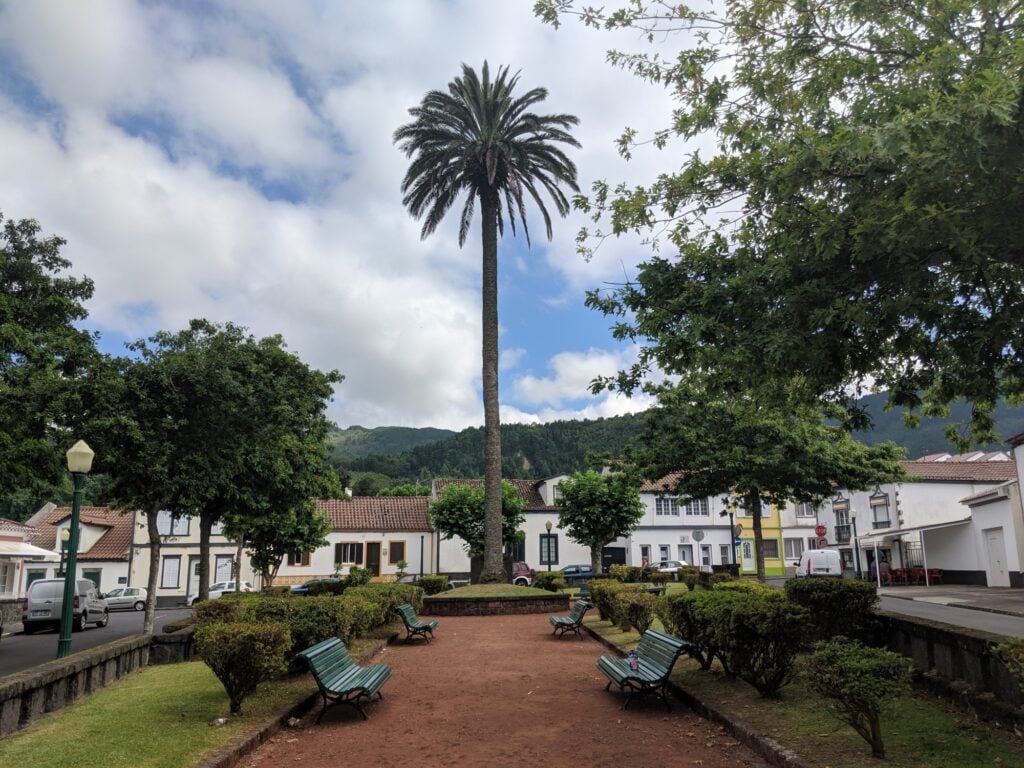
Most people moving to São Miguel make a choice between Ponta Delgada, the wider municipality around it, or one of the other five municipal centres on the island.
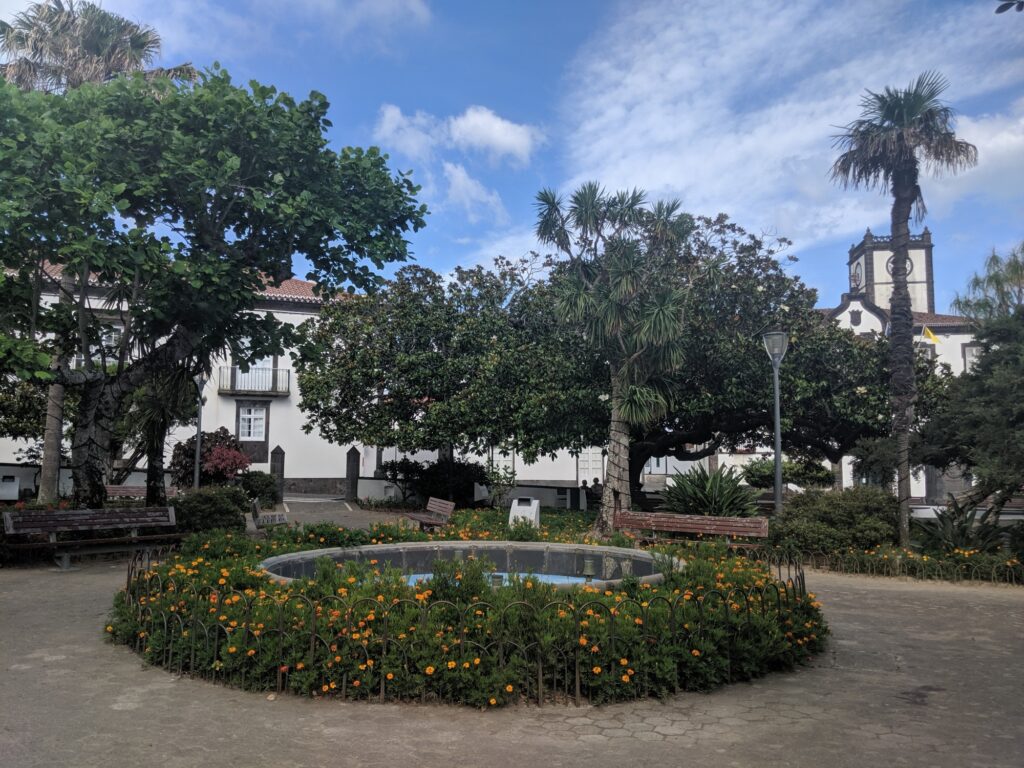
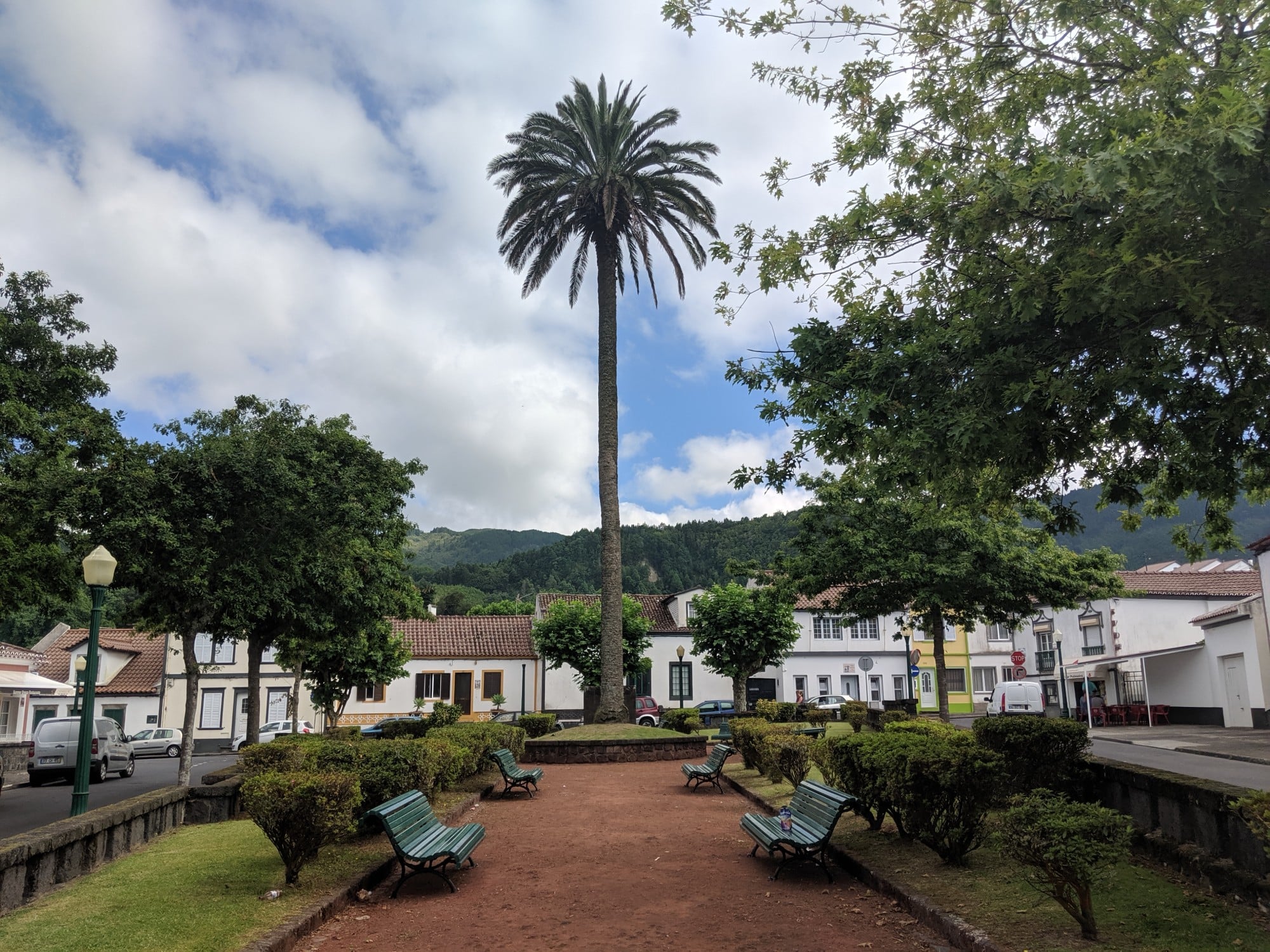
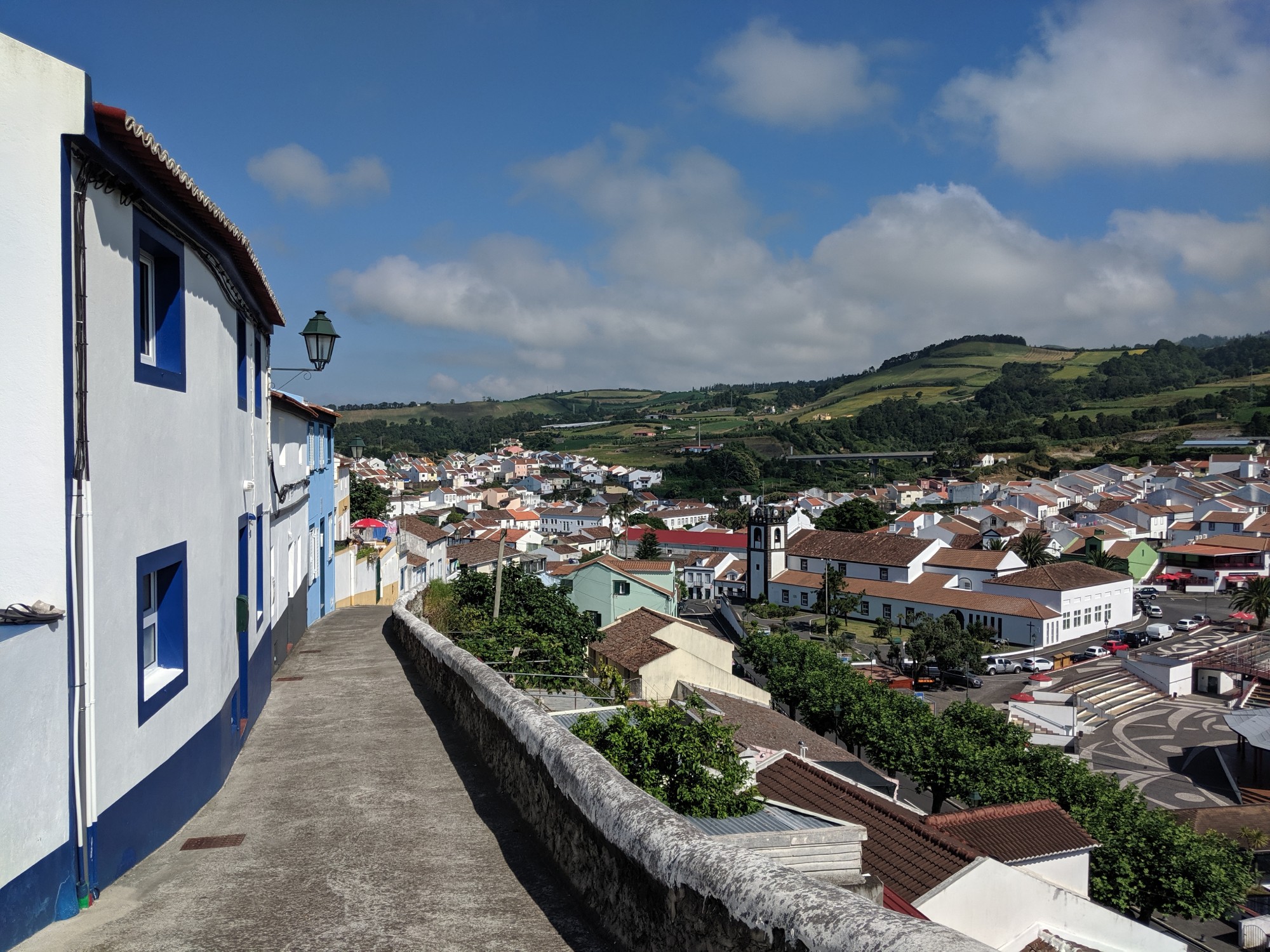
Ponta Delgada is where the majority of newcomers end up, and for good reason. It has the hospital, the airport (about 3 km from the center), the main supermarkets, restaurants, services, and the most active social life on the island. The historic centre is attractive, walkable, and built around basalt stone — the characteristic black-and-white architecture of the Azores. The trade-offs are the same as in any city: more noise, less space, parking challenges, and higher rents. The municipality of Ponta Delgada is large and extends well beyond the urban core into rural parishes, which means you can live within the concelho and still have space and greenery without being far from services.
Ribeira Grande, on the north coast, is the island’s second town and a practical alternative for people who want more space and a quieter atmosphere. It has its own supermarkets, services, and a decent town centre, and sits about 25–30 minutes from Ponta Delgada by car. Some families prefer it for the pace, the slightly lower rents, and the more local feel.
Lagoa, on the south coast east of Ponta Delgada, is closer to the city and has a more suburban feel. It is popular with families and people who want to be near Ponta Delgada without living in it. The private hospital (Clínica de Lagoa) is located here, which is an added practical consideration for some residents.
Vila Franca do Campo has history — it was the island’s first capital before a devastating earthquake in 1522 — and a pleasant seafront. It is quieter than Ponta Delgada and appeals to people who want a slower pace with reasonable access to the capital.
Furnas and the eastern parishes are beautiful and genuinely different — thermal springs, the volcanic landscape, hot springs caldeiras — but they are remote, and daily life there depends heavily on a car and a tolerance for distance from most services.
Renting & Buying Property
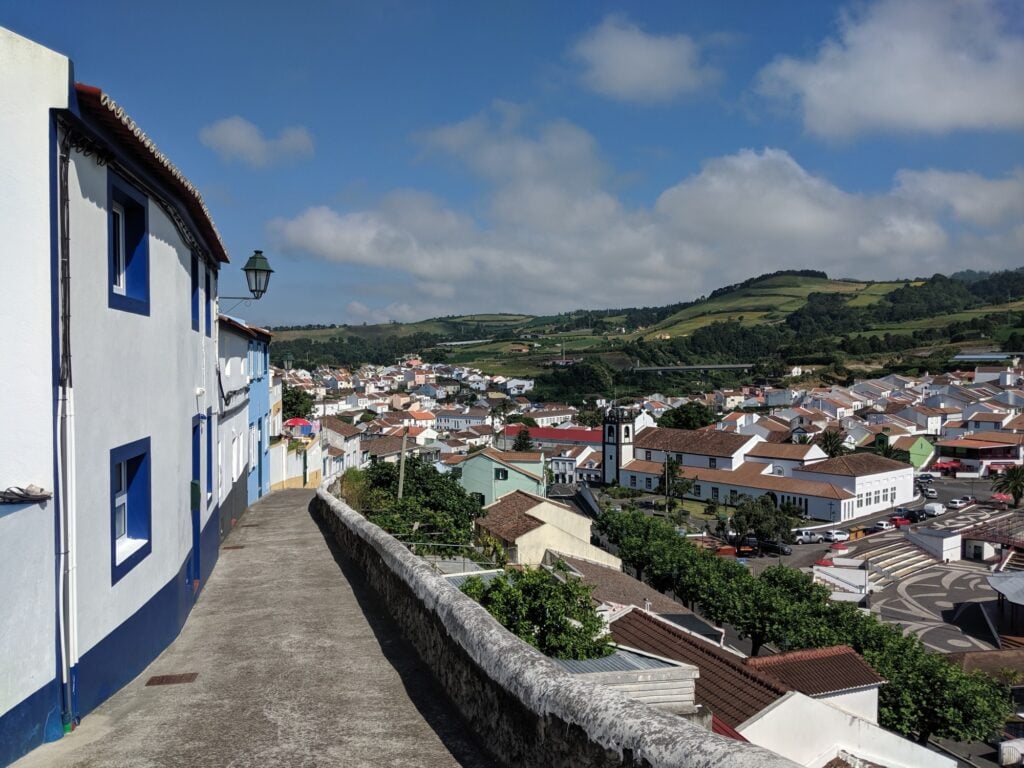
The São Miguel property market is more active than most other Azorean islands, but it has become noticeably tighter and more expensive in recent years — particularly around Ponta Delgada.
Buying: Average sale prices across the Azores region sit around €1,790 per square metre, significantly below Lisbon (€3,644/m²) or the Algarve (€3,334/m²).5https://www.idealista.pt/en/press-room/property-price-reports/sale/regiao-autonoma-dos-acores/[/efn_note] That said, prices have risen sharply in recent years — reportedly around 20% in the past year in some segments — and the gap with the mainland continues to close. Properties in good condition in central Ponta Delgada are no longer bargain-priced. Renovation projects and rural properties offer better value but come with the usual caveats around contractor availability, permitting, and logistics. Many well-located properties are sold off-market through local contacts rather than through property portals.
Renting: Renting around Ponta Delgada is where the market feels most pressured. Supply in the long-term rental market is limited, some listings are for short-term or tourist lets, and what is available does not always appear on the main national platforms like Idealista. Rents in central Ponta Delgada have risen meaningfully and can feel high relative to local wages — though they remain reasonable for someone on a European or North American remote income. Outside Ponta Delgada, in Ribeira Grande, Lagoa, or elsewhere, options tend to be more available and more affordable. Finding through local networks, estate agents on the ground, and word of mouth remains important.
Cost of Living
São Miguel sits in a genuinely middle position. It is significantly cheaper than Lisbon or Porto, but it is not the budget destination it once was, and costs are not uniformly low.
The Azores benefit from reduced VAT rates — 18% versus 23% on mainland Portugal — which provides direct savings on many goods and services. Groceries are roughly comparable to the mainland, with local products (dairy, meat, vegetables, fish) often very good and affordable, while imported goods carry a premium due to transport costs. Eating out in local restaurants and tascas remains affordable by Western European standards.
Housing is the most significant variable, and increasingly the biggest budget pressure — especially if renting in or near Ponta Delgada. Beyond housing, fuel, vehicle maintenance, and the occasional import of goods you cannot find locally are the main added costs compared with city life on the mainland.
The honest picture from people living there is that São Miguel offers a good quality of life for the cost — but that it is most comfortable for those on remote incomes or pensions denominated in stronger currencies. On local wages, particularly minimum wage, the margin is tight.
Healthcare
São Miguel has the strongest healthcare infrastructure in the Azores, and it functions as the regional medical reference point for the entire archipelago.
- The main public hospital is the Hospital do Divino Espírito Santo (HDES) in Ponta Delgada, Avenida D. Manuel I. It is the largest hospital in the Azores — a 399-bed facility with a broad range of inpatient and outpatient services — and covers the populations of both São Miguel and Santa Maria, while also serving as the specialist referral centre for the wider archipelago.
- For private care, the CUF Açores Hospital (the private hospital in Lagoa) opened relatively recently and provides an alternative to the public system for non-urgent consultations and procedures. Health centres (centros de saúde) operate in each of the island’s six municipalities — Ponta Delgada, Lagoa, Ribeira Grande, Vila Franca do Campo, Nordeste, and Povoação — providing GP-level and primary care across the island.
The overall picture is solid for routine care and emergencies, but specialist provision remains limited compared with mainland cities. Some conditions may still require travel to Lisbon or Porto. Private health insurance is worth considering for those who want faster access to consultations and wish to regularly use the CUF hospital.
Schools
Schools on São Miguel follow the Portuguese national curriculum and are organised into basic (primary and lower secondary) and secondary levels, with a mix of public and private options. There are no full international schools on the island, but several schools offer strong English-language tuition as part of the standard curriculum.
The island’s six municipalities each have their own schools. The overview below focuses on the main secondary schools (which appear in national rankings) and the principal primary/integrated schools.
Secondary Schools
- Escola Secundária Antero de Quental — Largo Mártires da Pátria, Ponta Delgada. This is the oldest secondary school in the Azores, founded in 1852, and consistently the top-performing secondary school on the island. It is housed partly in the 19th-century Palácio da Fonte Bela, a listed building in central Ponta Delgada.6 In the 2024 Público national rankings, it placed 69th nationally and 142nd by exam average (12.21), making it the top-ranked school on São Miguel. https://www.publico.pt/ranking-escolas/lugar-sua-escola
- Escola Secundária Domingos Rebelo — Avenida Antero de Quental, São José, Ponta Delgada. The largest secondary school in the Ponta Delgada municipality by student numbers, with around 2,009 students in 2024/25. Ranked 144th nationally in 2024 with an exam average of 11.90. https://www.publico.pt/ranking-escolas/lugar-sua-escola
Private School
- Colégio do Castanheiro — Rua de São Gonçalo 113, Ponta Delgada. The main private school on the island, covering pre-school through secondary level. Its motto is “Humanism, Excellence, Innovation and Wellbeing.” Ranked 526th nationally in 2025 with an exam average of 11.94 — strong for a private school at this ranking position, suggesting it performs well academically despite a high rate of internal assessment relative to exam results.7https://www.colegiodocastanheiro.net[/efn_note]
- Colégio São Francisco Xavier — Rua Agostinho Pacheco, São José, Ponta Delgada. A Catholic private school offering primary and secondary education.
Higher Education
The Universidade dos Açores has its main campus in Ponta Delgada, offering undergraduate and postgraduate programmes across business, economics, natural sciences, nursing, and other fields. It is known internationally for its research in marine biology, volcanology, and climate change.8https://en.wikipedia.org/wiki/University_of_the_Azores
 Thinking about Moving to Portugal?