

Corvo is the Azores’ smallest and most remote island. Its single town, Vila do Corvo, covers much of the 17 km² island and (as of 2011) had only about 430 residents1. The landscape is dominated by the Caldeirão – a large volcanic crater filled with green lakes – and steep coastal cliffs.
Life on Corvo is extremely quiet and rural. There are virtually no crowds or tourists (except a few bird-watchers and eco-tourists in summer), and most people here live a self-sufficient island lifestyle. It’s a place of dramatic natural beauty, but also of real isolation: getting here means flying or taking a ferry via Flores, and services are minimal.
Corvo would suit someone looking for adventure and solitude – for example a retiree or remote worker who craves nature and a very slow pace of life. To say it is not the place for anyone who wants convenience, nightlife, or a diverse job market would be an understatement — this is a very isolated part of the world.
Quick Take: Is Corvo Right for You?
- Best for: Anyone wanting to get away from the world.
- Not ideal for: Families with school-age kids (very limited schooling), people who need constant social interaction or entertainment, those who can’t do without frequent travel (flights often cancel in bad weather), or anyone needing big-city or even small town amenities.
What’s It Like to Live Year-Round?
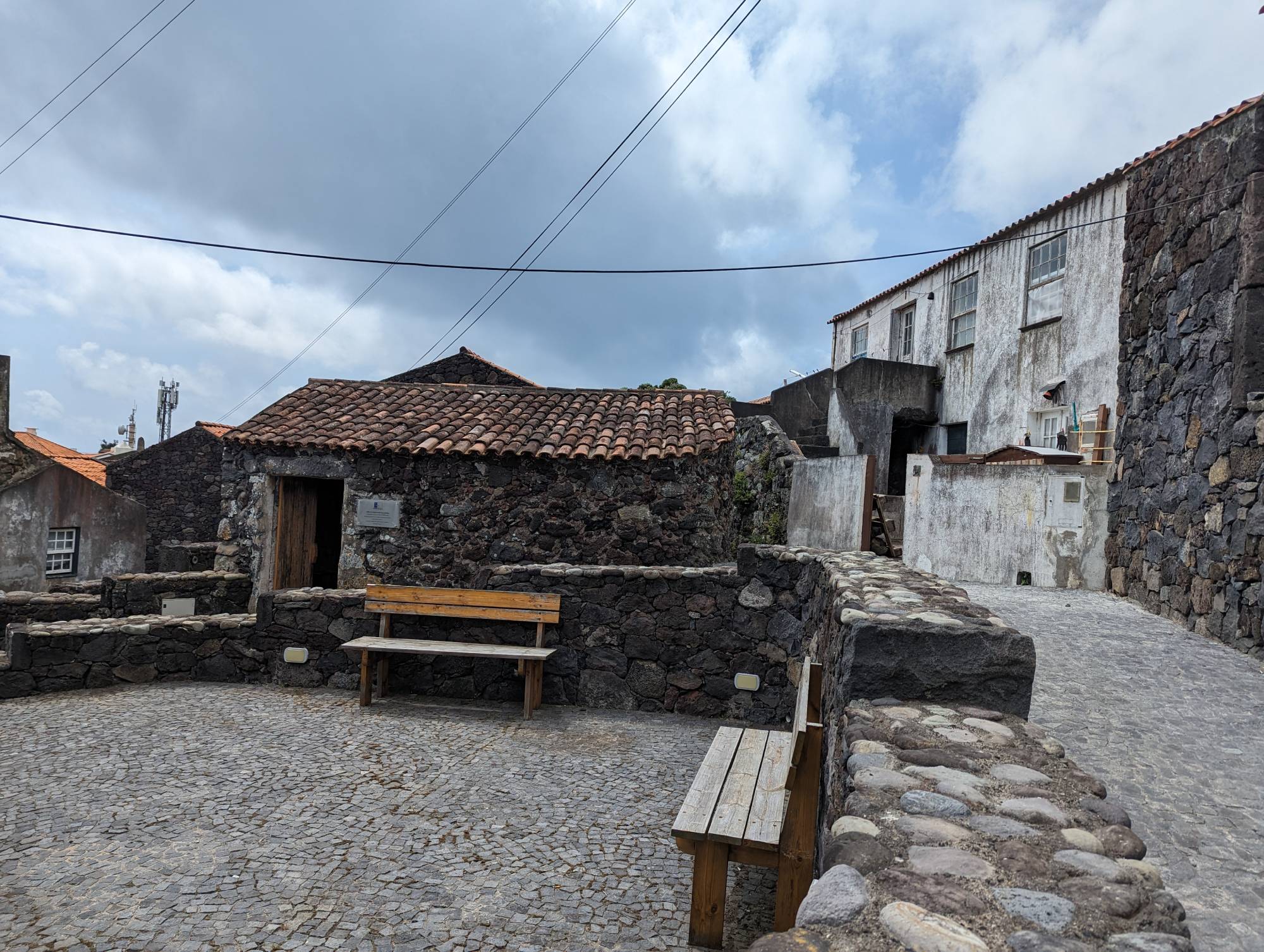
Year-round life on Corvo is very quiet and simple, with pronounced seasonality.
I Want to Move to Portugal
Start your journey today and get a free copy of Moving to Portugal Made Simple!
Winters are mild (rarely below ~10°C) but very wet and windy. Storms are common, and flights off-island may be cancelled for days at a time. In those cases even supply ships may not dock, so locals store up groceries and essentials.
From late fall through spring, the island population shrinks (many second-home owners stay away), local shops and cafés may close or reduce hours, and social life is mostly the village community and family.
During summer, the mood changes: returning emigrants and visitors trickle in, the festival calendar (especially mid-August) picks up, and the small campground at Praia da Areia sees some eco-tourists. Still, even in August Corvo is never crowded – expect only a few dozen visitors at a time.
In short, if you value peace and don’t mind significant downtime in winter, Corvo year-round is rewarding; if you expect constant activity or easy travel, it can feel very remote.
Best Towns & Areas to Live
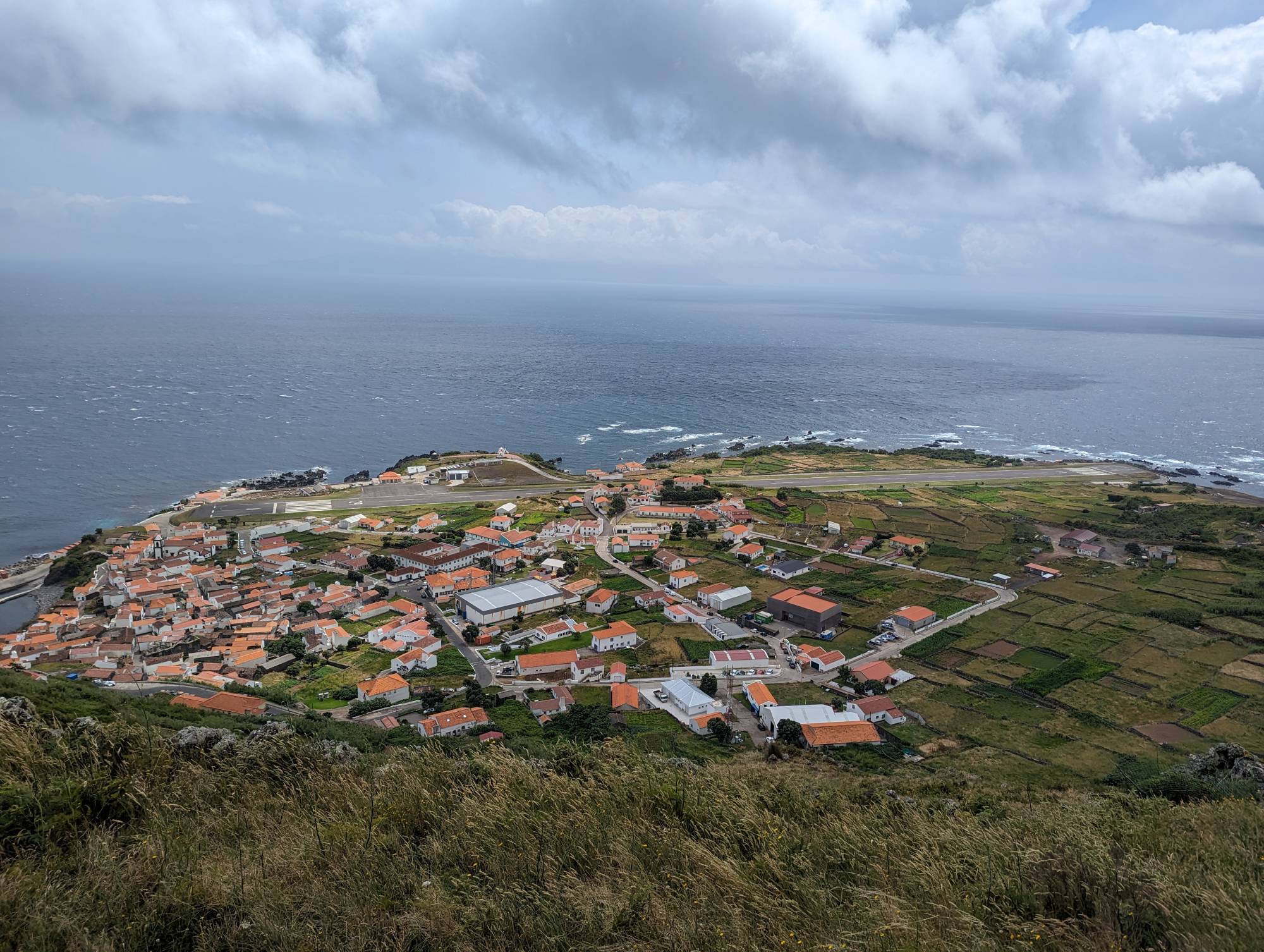
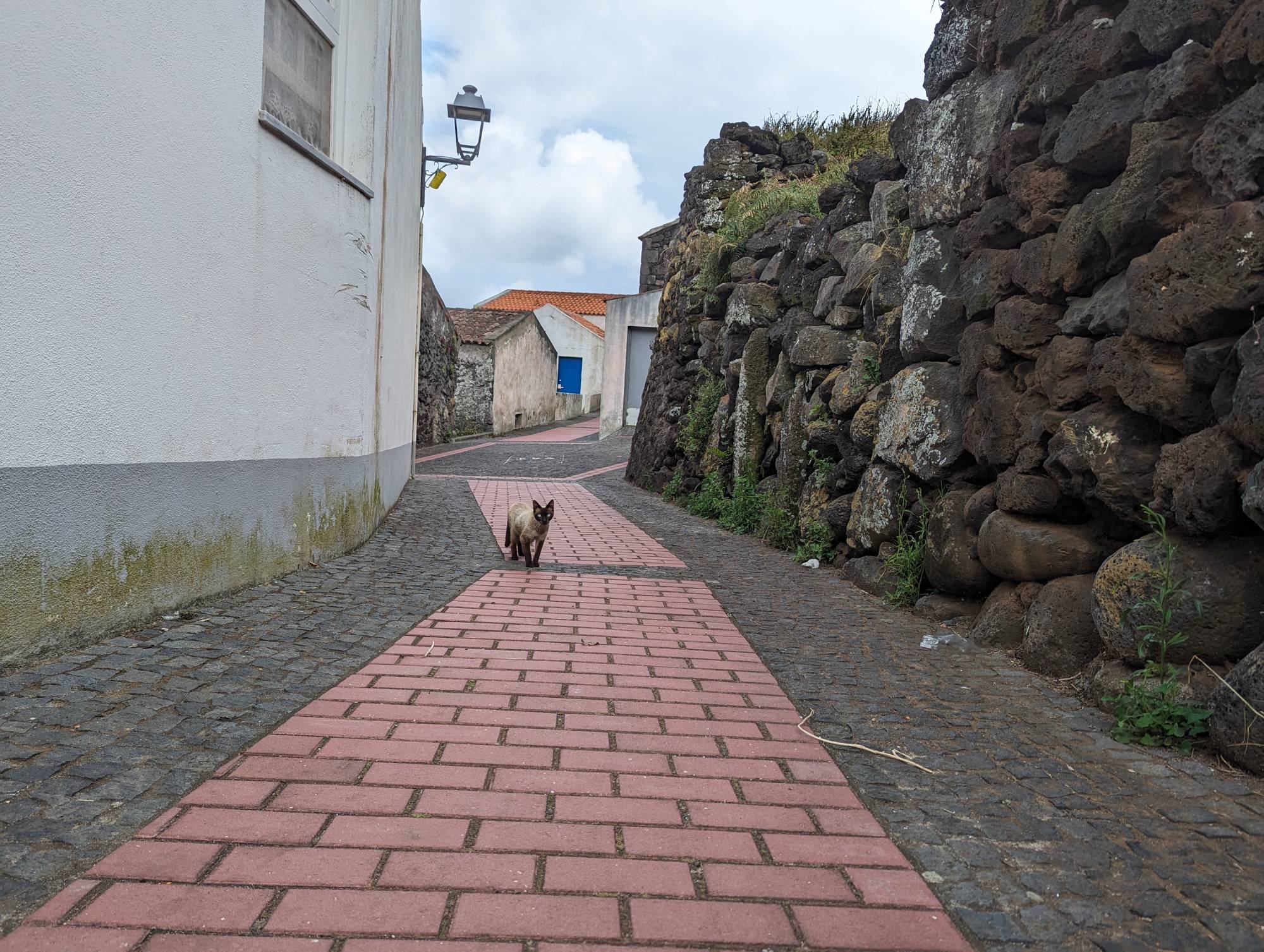
There are no “towns” on Corvo beyond Vila do Corvo, which is the island’s only settlement. This tiny village is clustered near the south coast around the harbour and airstrip.
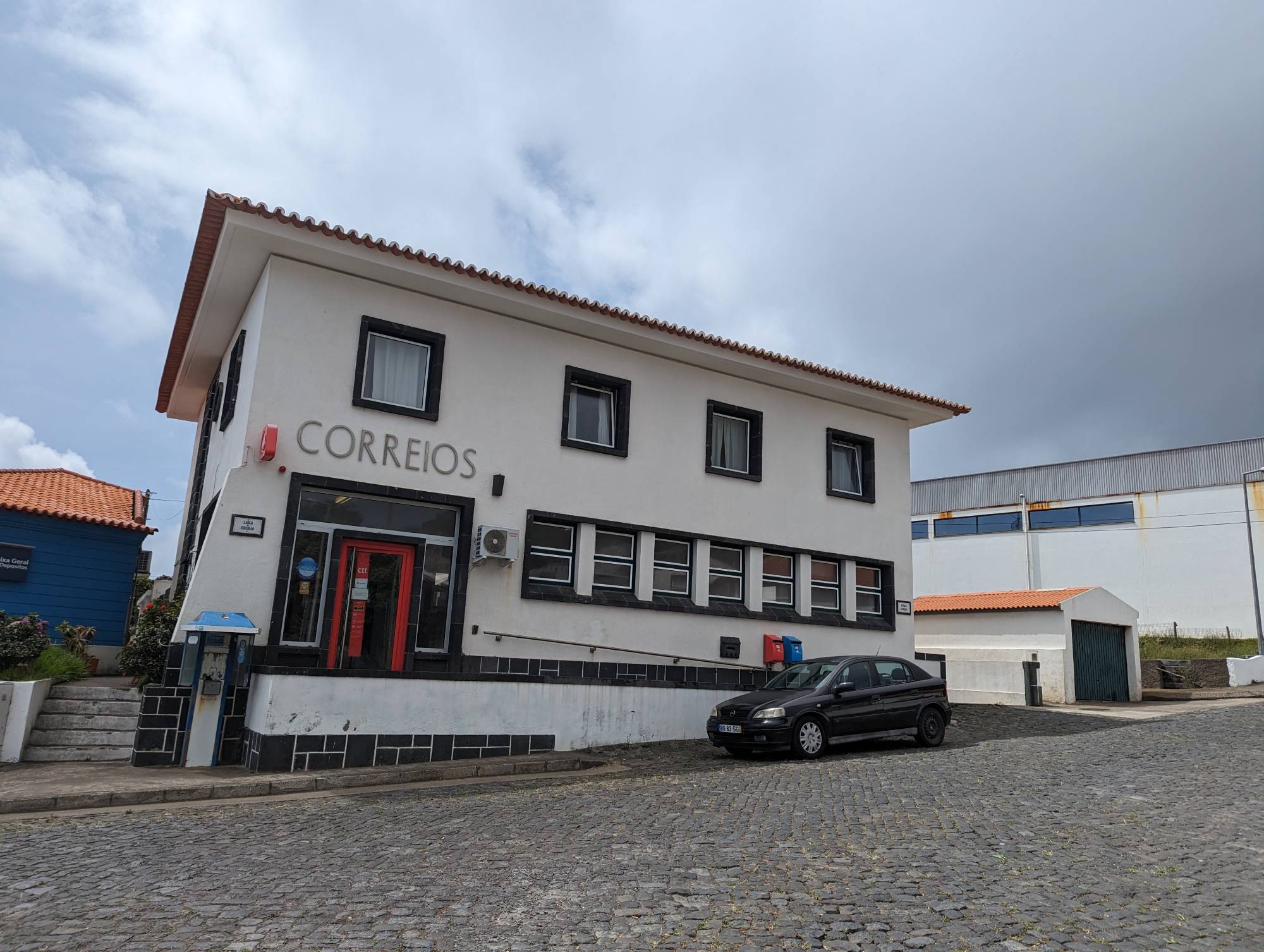
Houses (mainly 2‑storey tiled-roof homes) line narrow streets and alleys, and most amenities are within a few minutes’ walk. The village has a handful of businesses: one small grocery/mercado, a cafe or two, the post office, the elementary school, and even a modest gas station.
These few shops cater to local needs – everything from bread and milk to basic toiletries. Beyond the village you’ll find only farms, pastures and wild trails. In practice, everyone lives in Vila do Corvo; there are no outlying neighborhoods or civil parishes.
Cost of Living
Overall, daily expenses on Corvo are moderate but lean toward the high side for the Azores.
Housing is very cheap (see below), but goods cost more than on the mainland. In general, basic groceries and imported items (oil, meat, packaged foods) are expensive because they must be shipped in. For example, fresh produce depends on infrequent boat deliveries or what’s grown in local gardens, so variety can be limited.
On the other hand, utilities (electricity, water) are reasonably priced, and there are no big-city taxes or parking fees. The main restaurant, O Caldeirão, isn’t particularly affordable2, but prices may be geared more towards tourists.
Public transit doesn’t exist (no buses), but local shops and a modest menu of restaurants means you won’t need a car for daily life.
In practice, a single person or couple might live modestly on €1,000–1,500 per month (including groceries, utilities, fuel, modest rent). Compared to Lisbon or the Algarve, Corvo lets you live on much less – but compared to other Azorean islands it’s fairly normal or slightly higher-priced.
Renting & Buying Property
Housing on Corvo is extremely limited. Virtually everyone either owns their stone house or rents informally; there are almost no formal rentals on the market. Foreigners looking to rent long-term will find it very difficult; most homes for rent are word-of-mouth or filled by returning expats in summer. Short-term tourist rentals do exist (e.g. Airbnb), but long leases are rare.
As for buying, prices are affordable but options are limited. Like much of the Azores and rural Portugal, many of the properties are in need of serious renovations.
It may be worth working with a realtor to find properties that aren’t listed on sites like Idealista or Imovirtual. Off-market sales are common in rural Portugal and an Azores-based real estate agent may be able to find other listings that are not online.
Healthcare
Surprisingly, Corvo has a modern health center despite its size. The local clinic (Unidade de Saúde) now includes an emergency room and a full suite of medical equipment thanks to a recent €0.5M upgrade3. You’ll find X‑ray, ultrasound (with probes for various tests), physiotherapy gear and dental facilities all on-island. Even telemedicine is in place under a “Digital Hospital” project.
Staff numbers have roughly doubled since 2019, and the regional president praised Corvo’s clinic as “one of the best the Regional Health Service has to offer”.
That said, this is still only a health center – there are no specialists or surgical wards. Minor emergencies and common illnesses are handled locally, but serious cases (e.g. surgery, cardiology) require an airlift to Flores or a flight to Ponta Delgada.
There is no pharmacy on Corvo; prescriptions are filled by the doctor or at an infrequent pharmacy delivery.
In summary: local healthcare is better than you’d expect, but you should have good travel insurance or readiness to evacuate for major care.
Schools & Family Life
For families, options are minimal. Corvo has one public primary school, which (as of 2022) was being upgraded with a new cafeteria and therapy room. The government’s recent focus on the island included investing in education, but basically any child can attend school up through about age 10–12 on Corvo.
There is no high school (students must board elsewhere or travel to Flores/São Miguel for secondary education). No international or private schools exist here. The school’s recent expansion (July 2022–April 2023) shows intent to improve facilities, but still expect only small mixed-grade classes.
Family life is very community-oriented: there are playgrounds and simple sports facilities (soccer field, basketball hoop). The island’s small population (and low birth rate) means classmates will be very few.
For higher education, the nearest options are 1–2 hour flights to universities in Ponta Delgada or Lisbon.
In short, Corvo is most feasible for families with young children who don’t mind a very rustic schooling situation – but not for teenagers who will eventually have to relocate for school.
Expat Life
There is essentially no expat community on Corvo.
The island population is overwhelmingly Portuguese (mostly Azoreans) with deep local roots, and only a handful of foreigners ever live here (aside from occasional aid workers or tourists).
You won’t find expat meetups or English-speaking services. Anyone moving here should expect to integrate into the small local community – learning Portuguese is highly recommended.
Generally, Azoreans are very welcoming, but in practice almost everyone on Corvo speaks only Portuguese. A few long-time foreigners have run local guesthouses or B&Bs, but these are the exception.
In short, if you need a ready-made international community, Corvo won’t have it – instead you’ll be part of a tiny community where everyone knows each other.
Getting Around
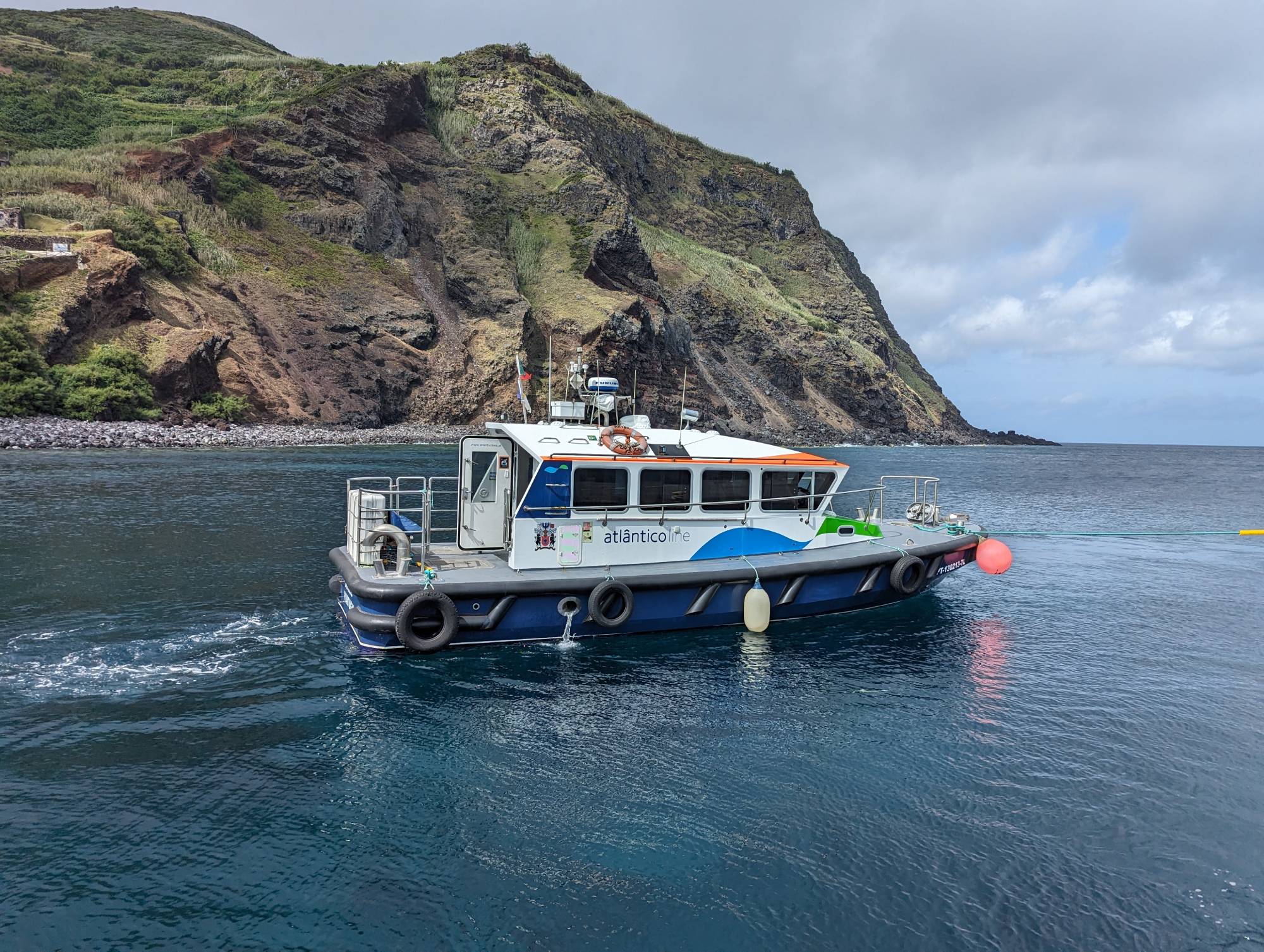
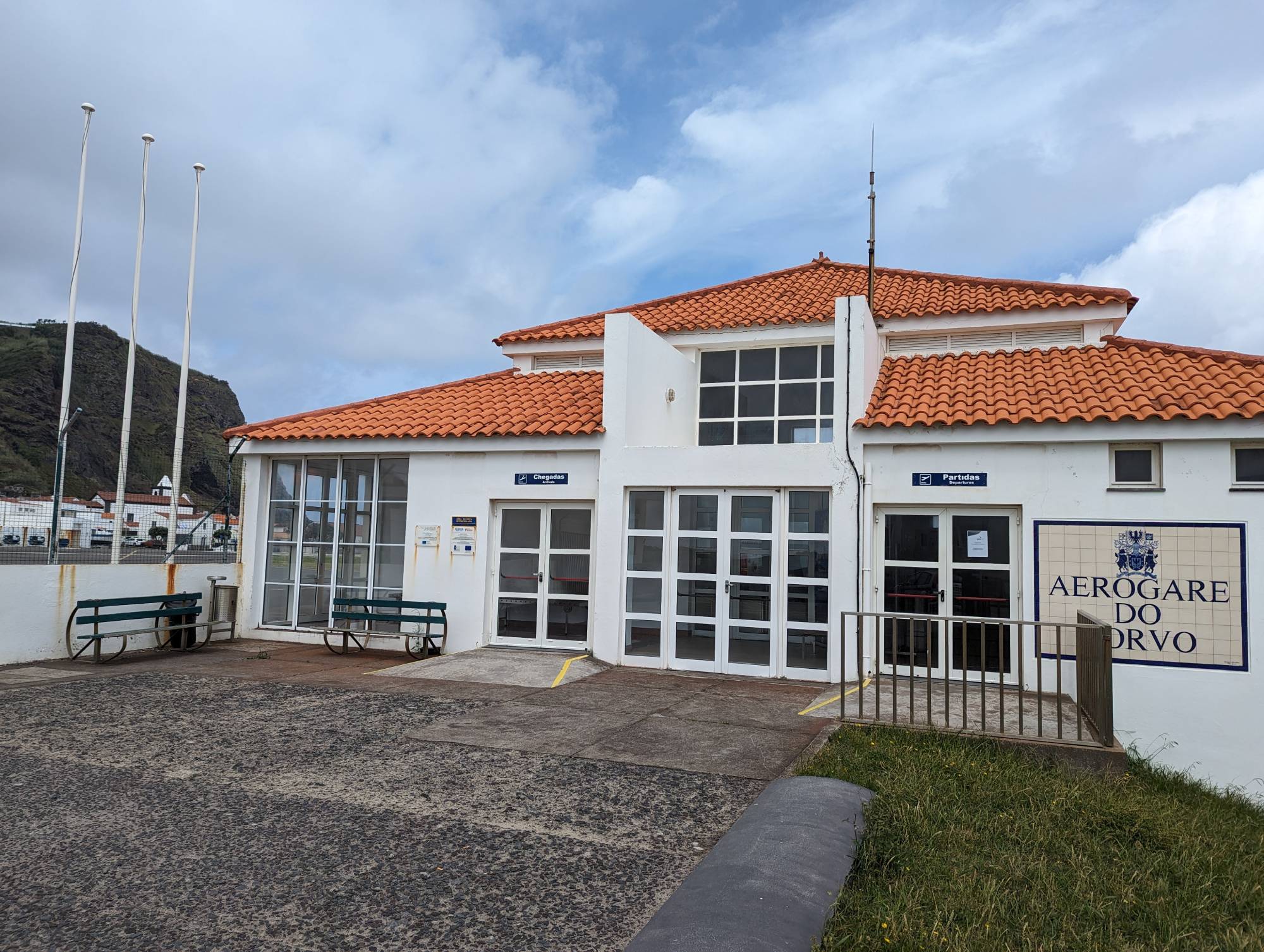
Corvo has very limited transport options.
- Air: SATA Air Açores flies in small prop planes. There are regular flights from Ponta Delgada on São Miguel (about 1h35m) and from Flores (20m). There are also some flights from Horta (Faial). All schedules are seasonal and weather-dependent, so book ahead and be prepared for delays.
- Sea: In summer (May–Oct) the Atlanticoline ferry connects Corvo and Flores (40 min).
- Local: There are no public buses or taxis; some small vans give rides to hiking trailheads (e.g. to the Caldeirão crater). The island is tiny, so walking and biking are the main ways to get around. Roads are paved but narrow; you’ll often see people walking or riding bicycles. However, a car is not strictly necessary unless you want it for personal convenience.
- Travel Tips: There’s only one airport (Corvo Aerodrome) and two tiny docks. Flights often get canceled in bad weather, so sometimes the only way off the island is the (summer-only) ferry. For any mainland travel, you typically need to connect through another Azorean island (typically São Miguel).
Climate & Weather
Corvo has a mild maritime climate. Thanks to the Gulf Stream, temperatures are steady year-round: average highs are around 22°C in summer and 14°C in winter.
However it is very humid (around 80% RH all year) and wet: even the coastal plain sees ~1,100 mm of rain per year, mostly in fall/winter. Fog, wind, and drizzle are common – even sunny days can end in a shower.
Summers are cool and comfortable (often breezy); winters are mild but damp. Sunshine is limited, especially in winter. Essentially, be prepared for a lot of rain and fog (particularly if hiking the crater or the higher hills). Warm clothing, rain gear and waterproof shoes are a must.
The benefit is that Corvo is always green and never very cold, but the constant moisture means houses can feel chilly and moldy without good insulation.
Pros and Cons of Living on Corvo
Pros:
- Scenic beauty and serenity – Corvo is like living inside a nature preserve.
- The coastline, flora, and especially the Caldeirão lagoon are spectacular.
- You’ll have complete immersion in Azorean culture with virtually no tourists around.
- The genuine, community-focused lifestyle here is peaceful and family-friendly. Property is very cheap, so a modest budget goes far compared to mainland Portugal.
- The island even received significant government investment in recent years (new health unit, school improvements, ferry/flight service) reflecting a commitment to quality of life.
Cons:
- Extreme isolation and limited services.
- Shopping is minimal (basic groceries only) and prices can be high.
- Travel is difficult – bad weather can strand you.
- Broadband Internet is available, but speed may lag behind cities.
- There is almost no nightlife or cultural variety beyond local festivals.
- The climate’s incessant dampness can be a downer for sun-lovers.
- Young people often feel they must leave for education or careers.
In short, life here can be charmingly simple or maddeningly limited, depending on your outlook.
If You Like Corvo, You Might Also Consider…
If Corvo appeals to you, consider the other western Azores islands: particularly Flores. Flores is larger and has about 3,800 people – it offers rugged nature like Corvo but with more amenities (two towns, better shops, and a hospital). It still feels remote but has a bigger community and regular ferry service.
Other Azorean islands to compare would be Graciosa or São Jorge – they are quieter and hillier than touristy São Miguel but have more infrastructure.
Mainland alternatives that capture some of Corvo’s laidback lifestyle might be the Portuguese interior (e.g. a tiny Alentejo village) or even very rural areas of Madeira.
However, few places match Corvo’s extreme isolation and tiny scale; it truly stands alone in Portugal.
Final Verdict: Who Should Move to Corvo?
Corvo is not for most people – it’s for a very special type of person. Ideal candidates are those who prioritize solitude and nature above all else. If you’re a retiree or remote worker who can handle a slow pace, don’t need much in the way of shops or entertainment, and enjoy hiking and birding, you could love Corvo’s beauty and community.
You should speak (or be willing to learn) Portuguese. You should also be adaptable: deal with uncertain travel schedules and the island’s quirks. People who dreamed of a “desert island” lifestyle but still want telephone, internet, and occasional groceries will find Corvo about as close as it gets within Europe.
Conversely, families with active teenagers, commuters, or anyone needing easy access to hospitals, schools and shopping would be wise to look elsewhere in the Azores.
In summary, move to Corvo if you relish peaceful, off-grid island living and truly value unspoiled nature and community at the expense of convenience. It offers a unique slice of Portugal, but only for those prepared to embrace its isolation.
Footnotes & Sources
- Wikipedia
- A 2026 Facebook post showing the restaurants menus shows a main course costs between around €14 and €18. There is a vegetarian option on the menu.
- https://portal.azores.gov.pt/en/web/comunicacao/news-detail?id=15346471