
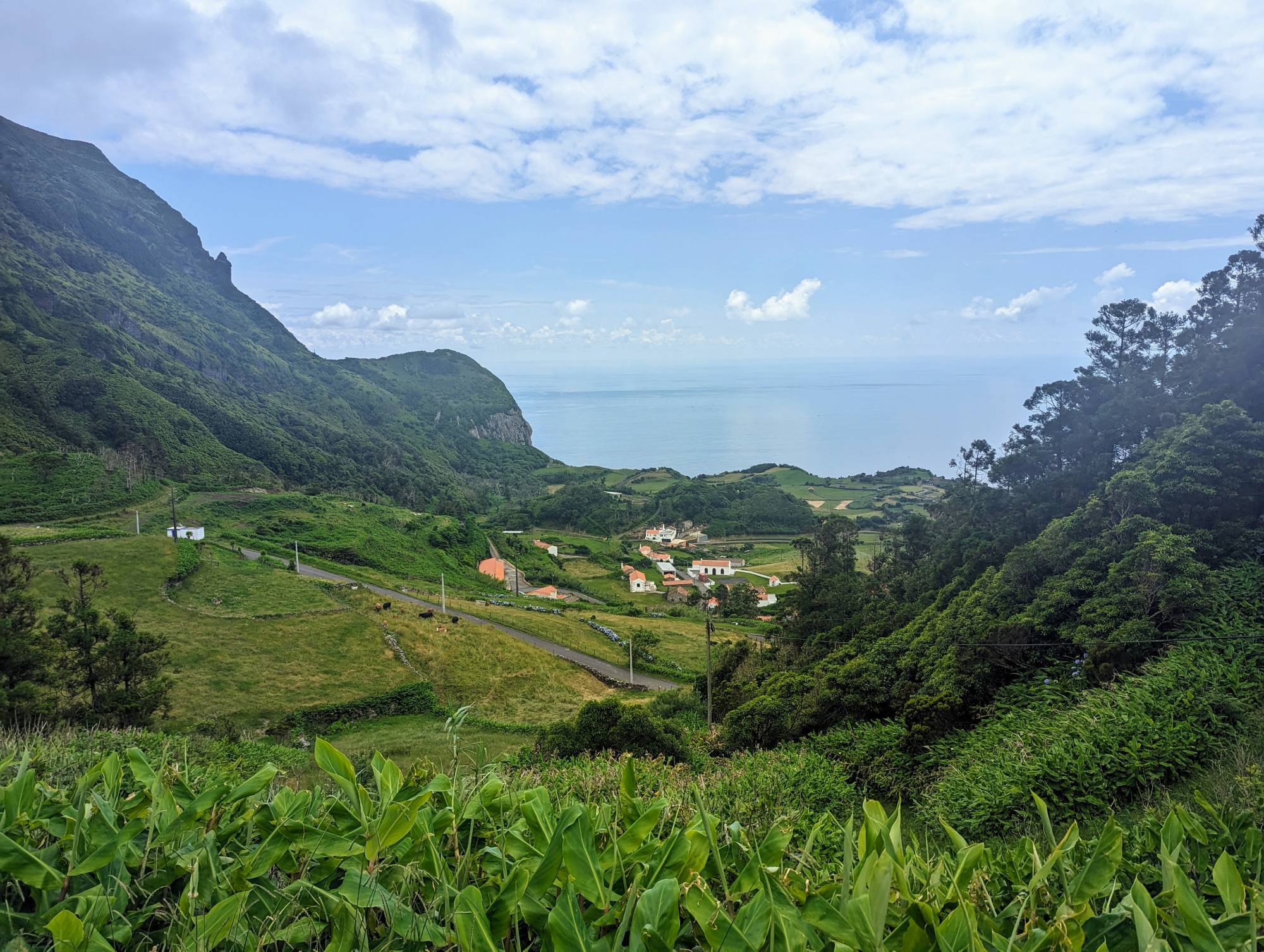

Flores is the westernmost island of the Azores and one of Europe’s remotest outposts. At about 143 km² and roughly 3,400 residents1, it’s far quieter and less developed than the other Azores islands.
Flores is famed for its dramatic green landscapes – dense forests, hydrangea-lined roads, and dozens of waterfalls.
Life here moves at nature’s pace. Expect simple villages, friendly farming communities, and a reliance on fishing and agriculture. It’s not a tourist strip: shops, restaurants, and services are very limited.
In short, Flores suits outdoor lovers and families craving peace and authenticity, but not those who need big-city amenities or guaranteed sunshine.

Quick Take: Is Flores Right for You?
- Remote, Nature-Driven: Very sparsely populated (≈3.4K people). Far from large towns – the sense of wilderness is strong.
- High Rainfall: Wet climate year-round (often ~80% rainy days). Bring good rain gear and patience for fog.
- Quiet Life: Few shops or bars. Not ideal if you need nightlife or diverse food scenes.
- Affordability: Housing and living costs tend to be lower than mainland Portugal, but specific goods and car rentals can be expensive.
- Community: Tight-knit local villages with some expats. Newcomers become well-known.
- Services: Limited – e.g. one small health center in Santa Cruz (no hospital), spotty mobile internet in some rural locations, basic schools.
- Ideal for: Nature lovers, hikers, retirees, or families seeking a tranquil lifestyle. Not ideal for those requiring constant connectivity or urban conveniences.
What’s It Like to Live Here Year-Round?
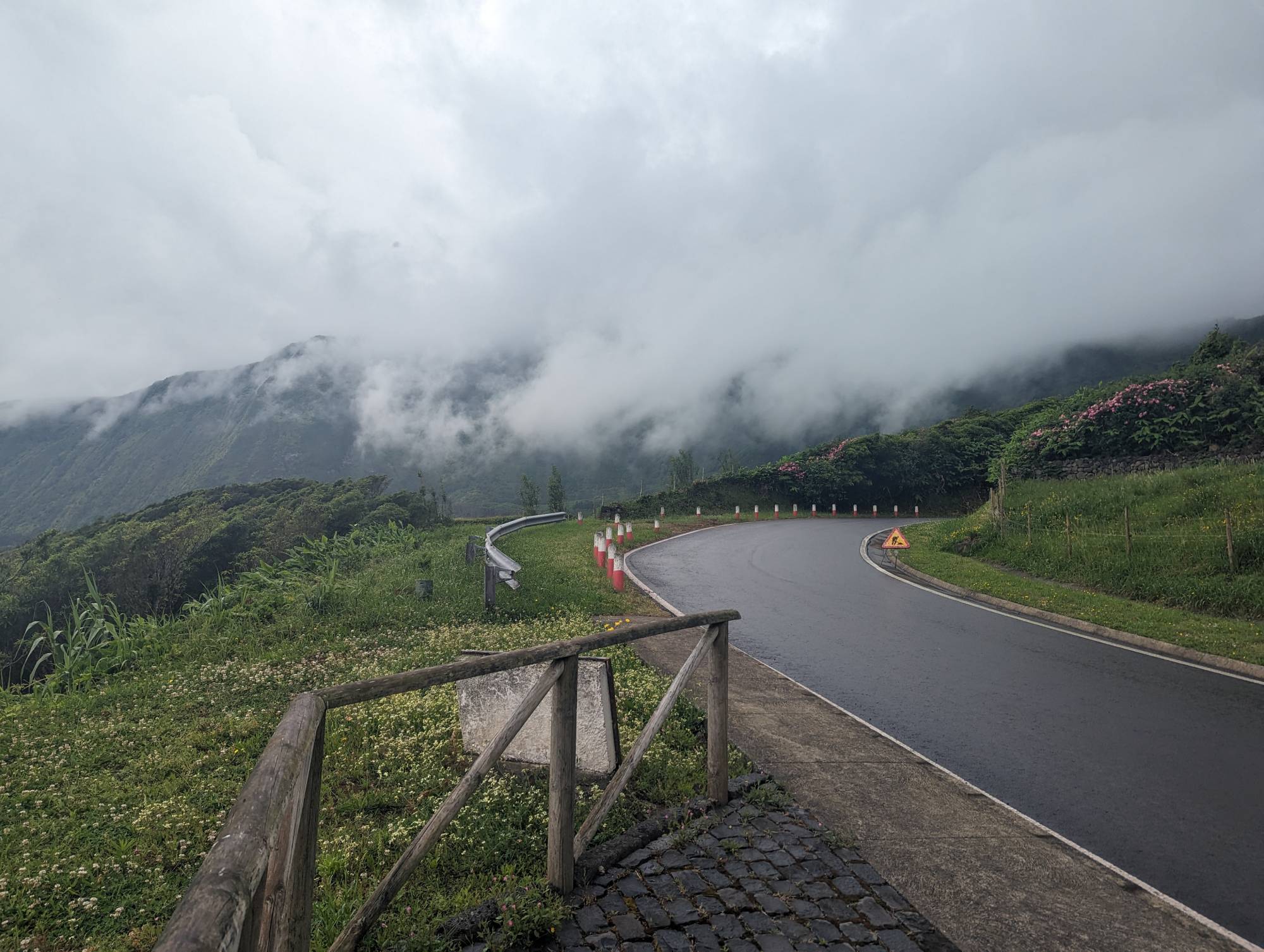
Living on Flores means adapting to its Atlantic climate and island rhythms. Summers are mild (often 19–22°C) and winter temperatures hover around 13–16°C.
In many months there are only 3–4 hours of sunshine per day. As a result, daily life tends to stay indoors when weather is poor, and some planned activities (ferries, flights, mountain hikes) can be delayed by wind and low clouds.
Social life revolves around the local calendar. Many towns host festa events (religious festivals) in summer and autumn, which draw the whole island for music, parades, and community meals.
Otherwise, life is quite rural: farming and fishing are common livelihoods. Neighbors know one another, and the pace is slow. Shops generally close by early afternoon, and Sundays are especially quiet.
Residents rely heavily on local produce (dairy, vegetables, fish) because imported items often sell out or arrive infrequently. When supplies run low, even basics like fresh fruit and eggs can disappear until the next supply boat, so many households grow gardens or raise livestock. The largest supermarket, Centro Comercial Floratlântico, is in Santa Cruz.
Dining out is possible in a few modest restaurants, but it can get expensive (as many cater to tourists) and selections are limited.
Overall, expect simple, self-sufficient living. Health care beyond basic clinic services requires a flight to São Miguel or Terceira. Education is local but compact (see below). And while people are friendly, English is not widely spoken in day-to-day life – learning Portuguese is highly recommended for integration.
Best Towns and Areas to Live
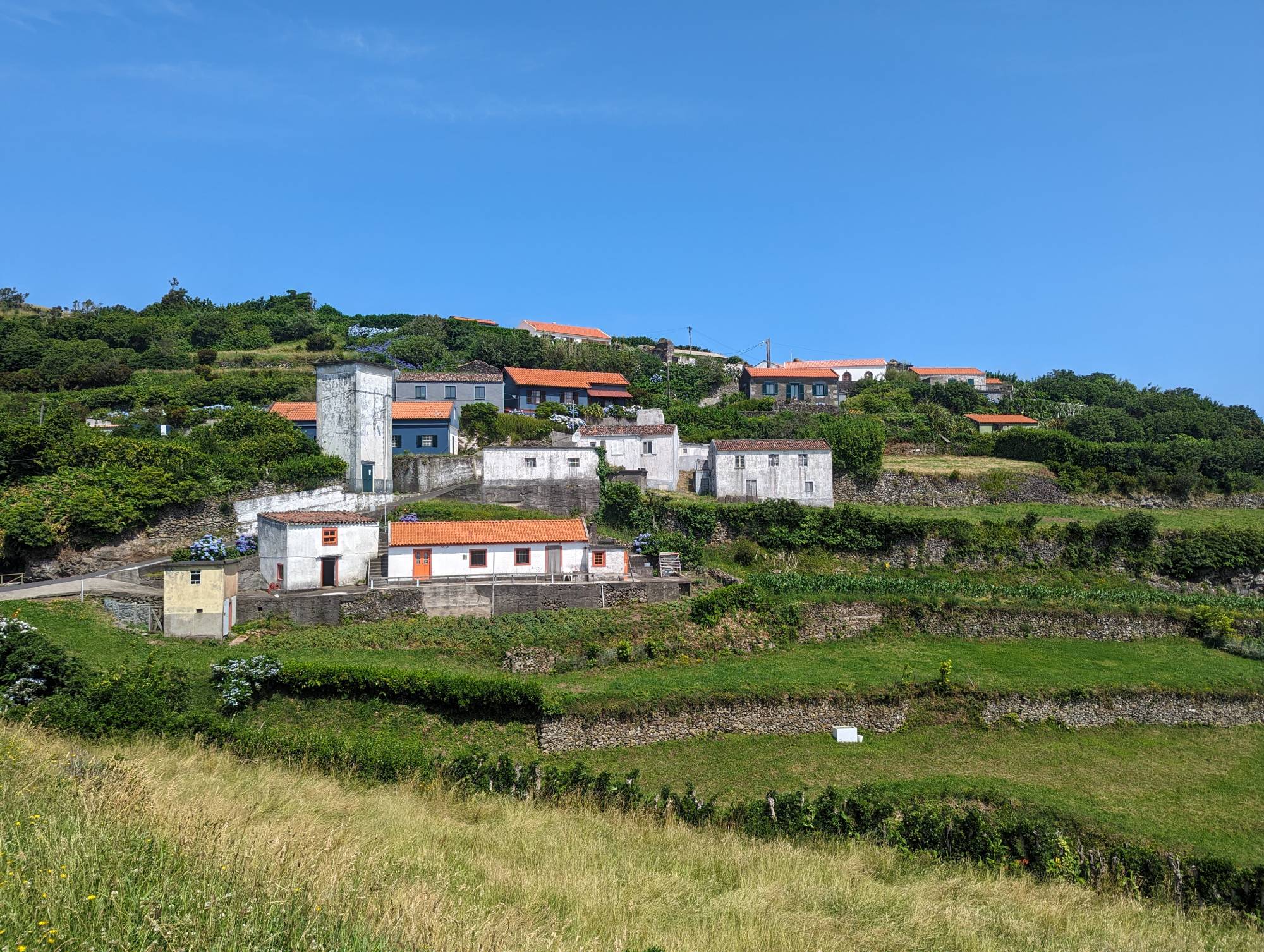
Flores has only two municipalities, each with one main town:
- Santa Cruz das Flores: The largest town (~1,550 people). It has the airport, main port, school campus, supermarket, post office, and pharmacies. Santa Cruz is essentially the island’s “capital.” Housing here tends to be clustered around the harbor and main roads. It’s a good base if you value proximity to services (health center, bank, etc.).
- Lajes das Flores: The southern municipality (≈1,408 people) with its main town, Lajes das Flores, and nearby villages (Fajãzinha, Fajã Grande, Cuada, Ribeira do Ferreiro). Lajes town is smaller but charming, with sea views and a couple of bars/restaurants. It’s closer to many of the famous waterfalls and natural pools. Fajã Grande (≈50 residents) on the far west is notable for its beautiful bay and sunset views, but it’s quite remote.
- Smaller villages: Ponta Delgada (in Santa Cruz), Fajãzinha, Cedros, etc. – typically a handful of homes and a church. Quiet and scenic, but far from shops.
Because the island is small, all are reachable by car in under an hour. Newcomers often pick Santa Cruz for convenience or Lajes/Fajã Grande for scenery. Rentals and sales are scarce island-wide; expect to compromise on size or condition.
Renting & Buying Property
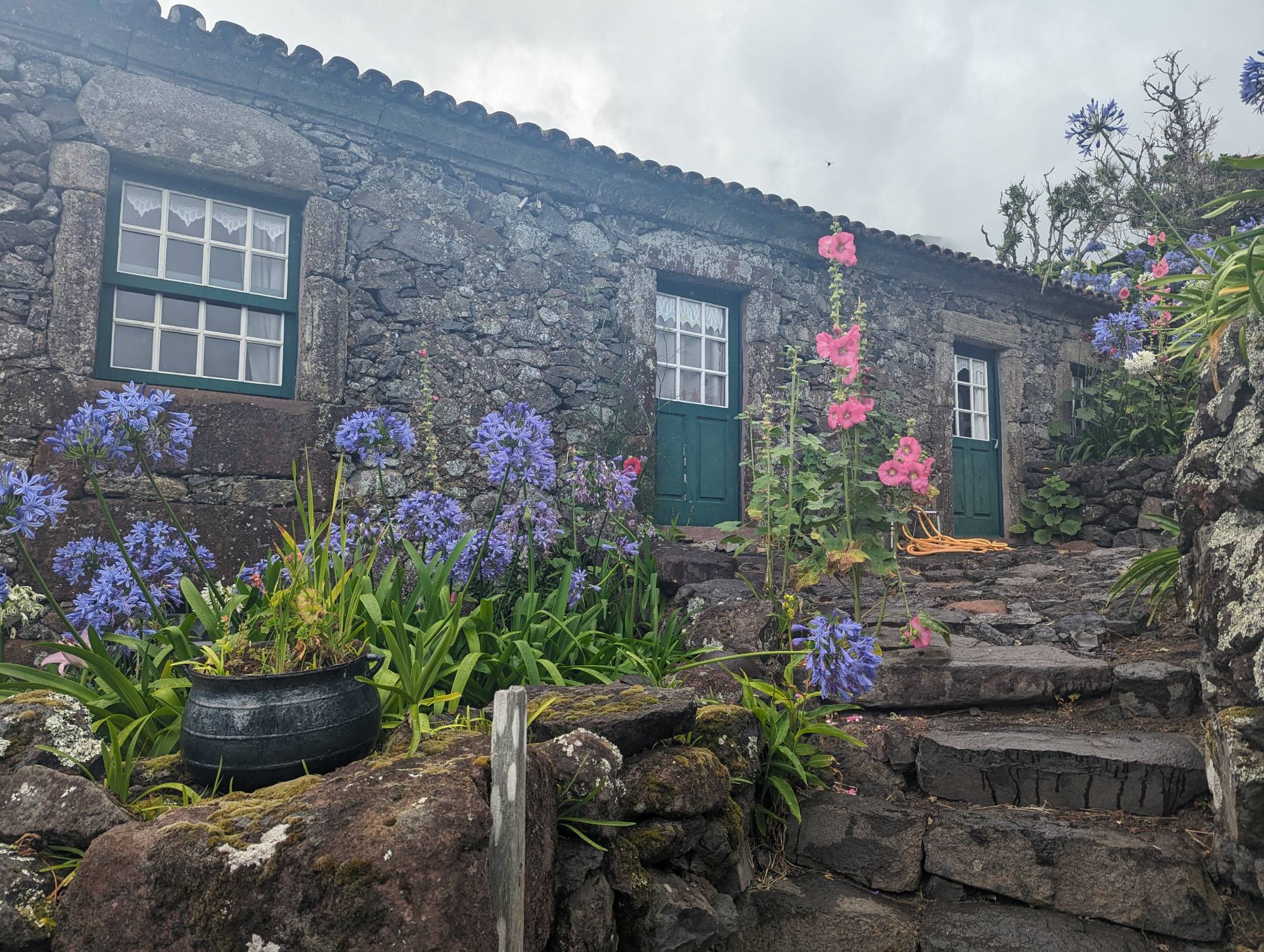
Flores’ real estate market is tiny and very rural. Many properties are old stone farmhouses or renovated cottages.
- Buying: Listings we found range widely. There are a lot of fixer-uppers and even pure plots, and many need serious work. Newer properties are rare. Prices are higher than many locations on mainland Portugal, most likely due to a lack of supply.
- Renting: At the time of writing, there were only three listings on Idealista. However, there may be more listings on other classifieds websites or on Facebook. All three options were only available during the winter months as they are rented out as short-term lets during the summer months.
It is likely that there are more off-market listings, as many properties do not get listed on sites like Idealista and Imovirtual. Speak with a local real estate agent to get the full picture.
Cost of Living
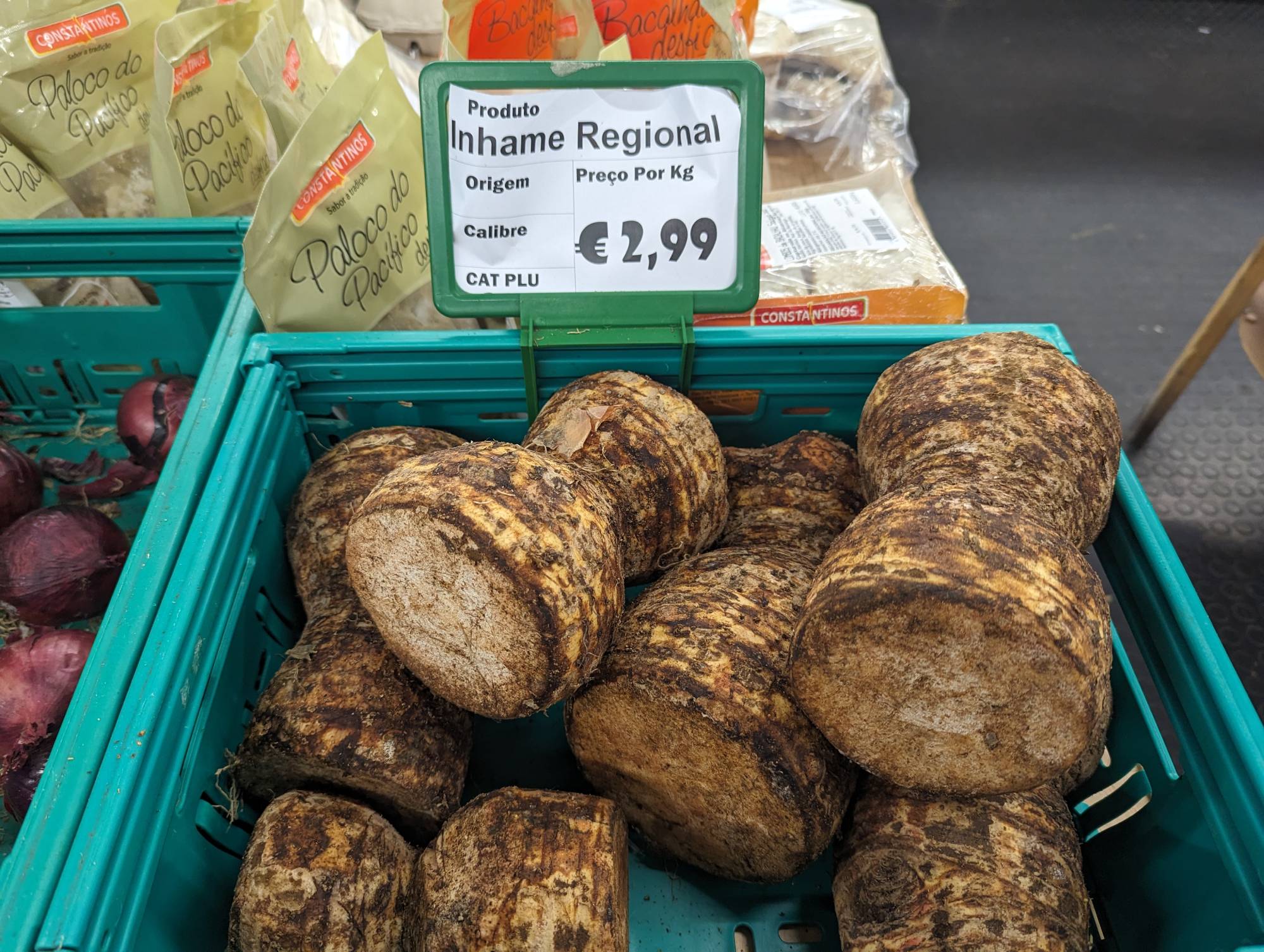
Flores is more affordable than mainland Portugal’s big cities, but may work out more expensive than small towns on mainland Portugal.
This is due to a lack of housing stock, and the fact that most groceries need to be imported.
Online shopping is common on the Azores islands due to a lack of local product availability, but be aware that many companies do not ship to the Azores.
Healthcare
Like most islands in the Azores, Flores has no hospital. There is only one small health center (Centro de Saúde) in Santa Cruz das Flores (the main town) with basic services and one or two pharmacies. Doctors and emergency care are limited.
Many residents use telemedicine or travel for routine care to São Miguel or Faial. In serious cases (major injury or heart attack), patients must be evacuated by helicopter off the island, which can take hours to coordinate.
For long-term residents, it’s wise to have private health insurance that covers travel for emergencies or routine checkups on bigger islands. Pharmacies do compound medicines and basic supplies. There are local clinics for childhood vaccinations and general practice.
Schools and Family Life
There is one public school system serving the whole island: Escola Básica e Secundária das Flores. This state school spans kindergarten through secondary (12th grade) across multiple sites in Santa Cruz, Lajes and Ponta Delgada. In practice, children attend their local elementary campus, and older students are bussed to Santa Cruz for secondary classes. Student numbers are small (a few hundred total), so class sizes are small.
However, Flores faces serious teacher shortages: reports2 indicate about 25% of teaching positions were unfilled in 2024, meaning many classes may lack a teacher at the start of the year. The authorities say this is a chronic issue for peripheral islands.
There are no private or international schools on Flores. Most children of expats attend the public system (Portuguese curriculum). Families who need international schooling may need to consider options on the mainland.
Family life tends to revolve around community. Church events, local festivals, and sports (soccer, youth groups) are common activities. The island’s landscape offers plenty for active kids: swimming, hiking, and nature outings.
Expat Life
Flores has very few expats – maybe a few dozen or a couple of hundred in total. The community is mostly Portuguese, with a sprinkling of Europeans (often Germans, Dutch, or British) who came for eco-projects or remote work. There is no formal “expat club” on Flores, though Azores-wide Facebook groups (e.g. Expats in the Azores) and occasional meetups can connect you with others.
Meeting locals happens naturally in village cafés, volunteer crews, or through agricultural cooperatives. Many expats get involved in farm stays or environmental projects – the island has several permaculture farms and B&Bs run by foreigners.
Be prepared to be the novelty at first – Flores people are curious but very welcoming once you speak a bit of Portuguese. The trade-off is a high level of immersion: you won’t find large English-speaking communities.
Getting Around
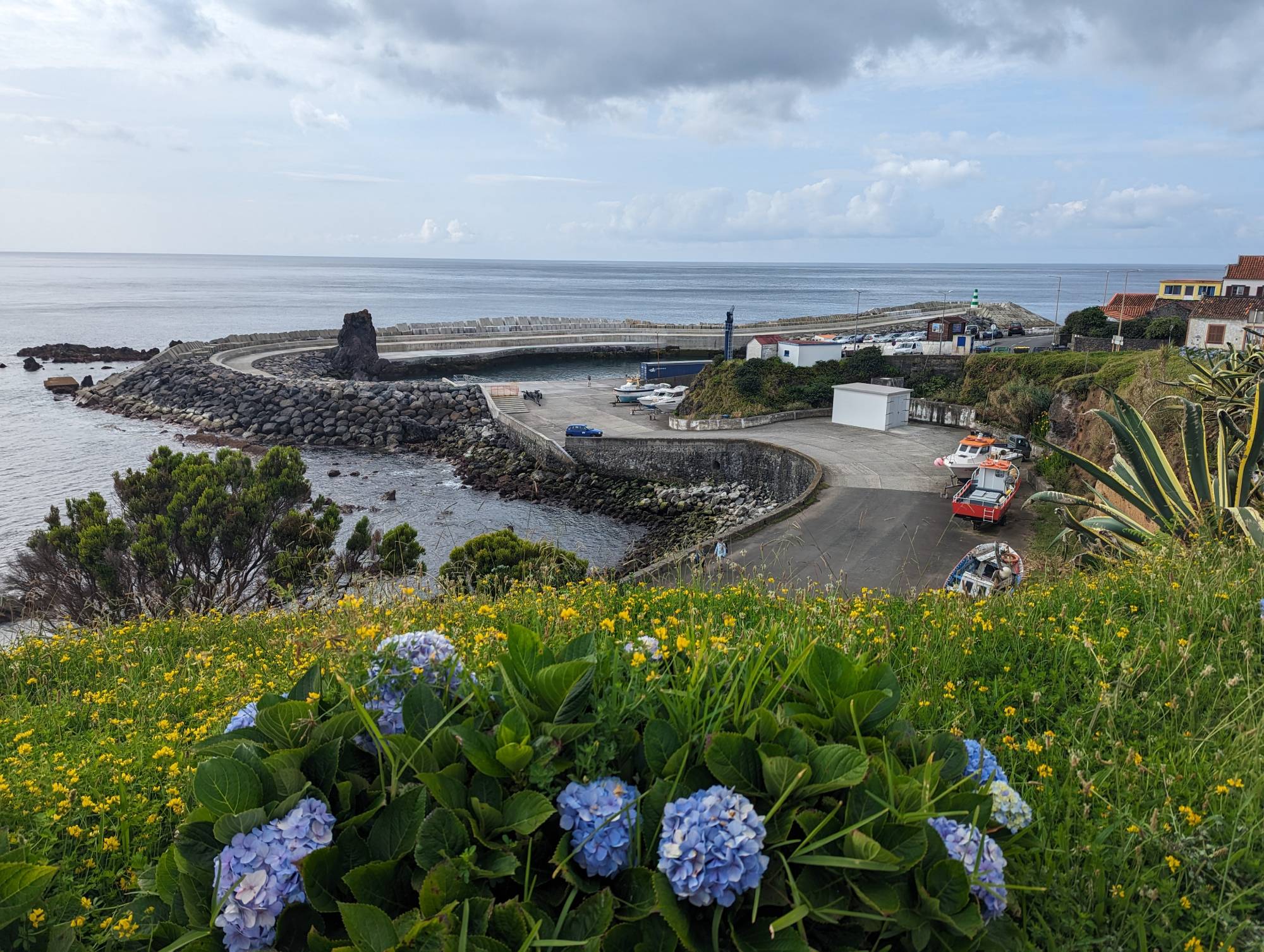
The car is king as there are no major public transit options.
Santa Cruz has a small bus service (see timetable) to nearby villages, but these are infrequent. Most people rely on owning or renting a car. Rental cars are scarce and expensive (e.g. €800+ for a week), so plan ahead. Taxis exist but are few.
- Roads: Good on the main routes (especially recently renovated), but many secondary roads are narrow and winding. 4×4 or small cars handle better on steep back roads.
- Flights: Flores Airport (FLW) in Santa Cruz connects to Ponta Delgada (São Miguel) daily via Azores Airlines. During summer, there may be flights via Horta (Faial) or direct to Lisbon. Flight cancellations are common in winter due to fog and storms.
- Ferry: Atlânticoline ferries link Flores with some neighboring islands, but mainly just Corvo.
- Flying Out: Flights usually route through Ponta Delgada or Lisbon. Weather delays happen, so always allow extra time for connections.
Walking or biking is possible within villages and to nearby sights, but the terrain is rugged and distances between towns are significant.
Climate and Weather
Flores has a humid, oceanic climate. Summers are mild (usually in the low 20s°C) and winters rarely drop below 10°C. However, rain is abundant: annual rainfall is over 1,000 mm, making Flores the Azores’ rainiest island. 3 Some years see 80% of days with rain. Fog is also frequent, especially at higher elevations.
Summers bring the most sun, but even July can have grey, drizzly spells.
For example, typical December weather is ~14°C high with ~140mm rain and only ~3–4 hours of sun. In contrast, August can see mid-20°C days and modest rain. The wet winters keep everything lush but also mean some outings (like to crater lakes or waterfalls) may be hampered by low visibility. Spring and fall are transitional, with showers and many green days.
In short: Expect wet weather year-round, and cherish sunny windows for enjoying the island’s scenery.
Pros & Cons of Living Here
Pros:
- Nature in Overload: Miles of hiking trails, waterfalls (like Poço da Ribeira do Ferreiro), calderas, and coastline. A beautiful, unspoiled setting.
- Tranquility: Safe, crime is virtually nonexistent, community is close. Great for families or those seeking simplicity.
- Self-Sufficiency Potential: Many properties have land for gardening and livestock; local produce is good quality.
- Cost: Generally cheaper real estate and living costs than Lisbon or Europe’s main cities.
- Culture: Rich Azorean traditions, quiet festivals, and very authentic island life (e.g. homemade cheese, farm-to-table cooking).
- European Remote Living: Part of EU with free movement (for EU citizens), Eurozone, good basic infrastructure (electricity, internet, cell service at villages).
Cons:
- Isolation: Flights/ferries are weather-dependent and expensive. You must often plan trips around unpredictable schedules.
- Limited Services: No hospital (health center only), few shops or restaurants, spotty internet/cell coverage. Emergency medical evacuation can take hours.
- Economy: Few job opportunities outside public sector or tourism, and many young locals emigrate for work. English is uncommon in daily life.
- Climate: Lots of rain and wind, especially winter; constant dampness can be dreary.
- Cost Surprises: Some living costs are high due to remoteness.
If You Like Flores, You Should Also Consider…
- Corvo (Azores): The Azores’ tiniest, even more isolated neighbor (pop ~450). Similar wild charm and simplicity, but even fewer services.
- Graciosa (Azores): A quiet, green Azorean island with volcanic landscapes and mild year-round climate.
- Madeira (Portugal): Particularly the lush, less-traveled north coast of Madeira has similar steep mountains and Atlantic scenery (though Madeira is busier overall).
Each of these places offers a taste of island life with limited crowds, though Flores is unique for its Azorean culture and climate.
Final Verdict: Who Should Move to Flores?
Ideal movers are those who prioritize nature and community over convenience: e.g., digital nomads comfortable in rural settings, retirees seeking tranquility, or adventurous families who relish outdoor life and tight-knit neighborhoods. You should be prepared to go “off-grid” at times (literally and figuratively) and enjoy simplicity.
If you need consistent cultural events, shopping, healthcare, or job opportunities, Flores may feel limiting. But if your heart is set on waterfalls, starry skies, fresh island air and a slower Portuguese lifestyle, Flores can be an unparalleled haven.
In summary: Move to Flores if you love serenity, have a self-sufficient mindset (or good planning), and relish living on the edge of Europe. Otherwise, this remote paradise is a more of a once-in-a-while visit than a place for everyone to call home.
Footnotes & Sources
- Figures taken from Wikipedia
- https://novidadesnewsletter.news/2024/09/01/flores-island-is-at-the-risk-of-not-having-teachers/
- According to this blog post it rains 80% of the time.