

For many people, retirement isn’t just about leaving work behind. It’s about choosing how — and where — you want to live the next chapter of your life.
Portugal has become one of the most popular retirement destinations in Europe for Americans, Canadians, and Britons alike. A mild climate, excellent food, walkable towns, strong safety ratings, and a slower pace of life all make it deeply appealing. In many cases, daily living costs remain lower than in North America or the UK, while healthcare is high-quality and affordable. English is widely spoken in major cities and coastal regions, and international communities are well established, which makes settling in far easier than many people expect.
At the same time, retiring in Portugal in 2026 isn’t quite as simple as it was a few years ago. Popular areas have seen rising property prices. Portugal’s famous tax incentives for retirees have changed. Visa applications have become more structured and paperwork-heavy. And, as anyone who has dealt with Portuguese bureaucracy will tell you, patience is part of the process.
None of this means Portugal isn’t an excellent retirement choice. It simply means that success today depends on planning rather than wishful thinking.
I Want to Move to Portugal
Start your journey today and get a free copy of Moving to Portugal Made Simple!
This guide walks through the questions retirees actually ask — from visas and income requirements, to healthcare access, taxes, cost of living, and where to live. By the end, you’ll have a clear, realistic picture of what retiring in Portugal looks like today, and how to approach the move with confidence instead of guesswork.
Is Portugal the Right Retirement Destination for You?
Before looking at visas, income thresholds, or real estate, the most important question is simple:
Will you actually enjoy living in Portugal full-time?

Many retirees first experience Portugal on a vacation. Oceanfront cafés, fresh seafood, sunny afternoons, and charming old towns make a strong first impression.
But visiting and living somewhere are very different experiences. Understanding what daily life feels like as a resident is the key to making a successful long-term move.
What everyday life looks like

Life in Portugal runs at a slower rhythm than most Americans and Canadians are used to. Stores may open later. Service is unhurried. Long lunches are normal. Paperwork takes time. People prioritize conversation over efficiency.
For many retirees, this relaxed pace is the entire point. For others, especially those accustomed to fast customer service and tightly scheduled days, it requires an adjustment period.
Day-to-day life is usually centered around local neighborhoods. Most towns offer grocery stores, pharmacies, cafés, small restaurants, and weekly markets. Larger cities add museums, concerts, major hospitals, and international airports. Coastal regions offer beaches, golf, and waterfront promenades. Inland areas provide hiking, vineyards, and quieter village living.
Safety and peace of mind

Portugal consistently ranks among the safest countries in the world. Violent crime rates are low, and most retirees report feeling comfortable walking alone, even at night in city centers. For many North American retirees, this sense of everyday safety becomes one of the most valued aspects of life in Portugal.
Language and community

You do not need to speak fluent Portuguese to live comfortably in popular retirement areas. English is widely spoken in Lisbon, Porto, the Algarve, and Madeira.
That said, learning basic Portuguese makes daily life significantly easier — from medical appointments to dealing with government offices — and helps build stronger relationships with locals.
Most popular regions have active international communities, social clubs, volunteer groups, and language exchanges. Building a social circle is usually very achievable. Deeper integration into Portuguese life simply takes time and curiosity.
Climate, food, and lifestyle

Portugal’s climate is one of its biggest draws. The south enjoys long dry summers and mild winters. The north is greener, cooler, and wetter in winter. Coastal areas benefit from ocean breezes, while inland towns experience hotter summers and colder nights.
Food is central to Portuguese culture. Fresh produce, seafood, regional wines, and affordable restaurant meals make everyday dining both healthy and enjoyable.
A realistic mindset

Portugal is not a permanent vacation.
There will be bureaucracy. Repairs take time. Deliveries get delayed. You may miss family back home. Winters inside older buildings can feel colder than expected. These are normal realities of life here.
For retirees who value safety, climate, affordability, good healthcare, and a calmer pace of life, Portugal remains one of Europe’s strongest retirement destinations. The key is approaching the move with realistic expectations — and the willingness to adapt rather than compare everything to home.
How Can Retirees Get Residency in Portugal?

For Americans, Canadians, and Britons who want to live in Portugal long-term, the first practical question is: how do you get legal residency?
There are a few routes, but for most retirees, the D7 “Passive Income” Visa is the most relevant. The Golden Visa is another option if you have significant assets and want more flexibility. Finally, if you or a family member has citizenship from an EU, EEA, or Swiss country, the process is even simpler.
The D7 Visa (Passive Income or Retirement Visa)

The D7 Visa is often called Portugal’s “retirement visa” or “Passive Income Visa.” It’s designed for people who have stable passive income from outside Portugal — which makes it particularly suited to retirees, investors, and anyone living on pensions, Social Security, investment returns, or rental income.
Who it’s for
- Retirees (U.S., Canadian, British, and other non-EU citizens)
- People with passive income (not work-based salary)
- Those planning to live in Portugal most of the year
Anyone with regular passive income can apply — you don’t need to be a specific age. However, the largest group of applicants are retirees.
2026 Income Requirements
As of 2026, the baseline passive income requirement for the D7 is:
- Main applicant: at least €920/month (roughly the Portuguese minimum wage)
- Spouse/partner: +50% of the main amount
- Each dependent child: +30% per child
Monthly passive income |
Savings Requirement |
|
|---|---|---|
Single Person |
€920 per month |
€11,040 |
Couple |
€1,380 per month |
€16,560 |
Couple + Child |
€1,656 per month |
€19,872 |
These numbers are minimum thresholds — you’ll improve your chances of approval by exceeding them and showing consistent income over time.
What Counts as “Passive Income”?
Portugal accepts a wide variety of income sources, including:
- U.S. Social Security
- Canadian CPP/OAS or other retirement pensions
- UK State Pension and private pensions
- 401(k) or IRA distributions if drawn regularly
- Rental income from properties (in Portugal or abroad)
- Dividends and interest from investments
- Royalties or other recurring passive income
You must show that this income comes from sources outside Portugal, that it’s regular, and that the totals meet the minimum requirement. Bank statements, pension award letters, rental contracts, and investment statements are common proof.
How the Process Works
- Apply from your home country through the Portuguese consulate or via VFS Global.
- Once approved, you get a 120-day visa to enter Portugal.
- After arrival, you apply for a residence permit in Portugal (handled by AIMA).
- The initial permit usually lasts 2 years, then can be renewed for another 3 years.
- After a total of 5 years of legal residence, you are eligible to apply for permanent residency and eventually Portuguese citizenship (if you meet language and other criteria).
Residency Requirements
To maintain your D7 permit, you need to actually spend most of your time in Portugal — generally at least 16 months during the first 2 years and with limits on how long you can be outside Portugal.
The Golden Visa

The Golden Visa is a separate program that grants residency based on investment or donation rather than income. Unlike the old version — which allowed property purchases — the rules have shifted. Today, qualifying paths may include investing in research, cultural projects, job creation, or capital transfer, rather than just real estate.
Golden Visa Investment Options
Real estate purchases no longer qualify. Today, the main approved routes include:
- €500,000 investment into qualifying Portuguese investment funds
(venture capital or private equity funds regulated by the Portuguese financial authority) - €250,000 donation to cultural heritage or arts projects
(reduced to €200,000 in low-density areas) - €500,000 investment into scientific research projects
- €500,000 investment into a Portuguese business
that creates or maintains 5 jobs - Creation of at least 10 full-time jobs in Portugal
(or fewer in designated low-density regions)
Most retirees who use the Golden Visa choose investment funds or cultural/scientific donations, as these are the simplest to execute.
Time-in-Portugal Requirements
Unlike the D7, the Golden Visa requires very little physical presence:
- Just 14 days every two years in Portugal
- No requirement to live full-time in the country
This is what makes it appealing for retirees who want Portugal as a base, but not necessarily their only home. However, you can spend more than the minimum if you wish: you can spend as much as 365 days if you decide you want to live here full-time.
Pros and Cons
Pros
- Much more flexibility on time in Portugal: you do not have to spend as much time physically in the country each year, which is useful if you want to spend long periods with family in the U.S., Canada, or the UK.
- It’s focused on investment, not residency on income, which is great if you aren’t drawing retirement income yet.
Cons
- Requires significant capital (generally hundreds of thousands of euros in qualifying investments).
- Legal and government fees are higher than other visas, like the D7.
The Golden Visa can be attractive for retirees who want maximum flexibility in travel and spending time abroad (especially with grandchildren), but it usually makes sense only for those with significant savings or investment assets.
What If You (or Your Spouse) Have EU/EEA/Swiss Citizenship?

If you hold an EU, EEA, or Swiss passport, retiring in Portugal is much simpler. You do not need a visa.
Instead, you register your residence locally and receive a document called the CRUE (Certificado de Registo de Cidadão da União Europeia).
If you’re an EU/EEA/Swiss citizen and retiring alone
- You move to Portugal
- Visit your local Câmara Municipal (town hall)
- Register your address
- Receive your CRUE certificate, valid for 5 years
That’s it. No visa process, no consulate appointments, no D7 income thresholds.
If your spouse or long-term partner does NOT have an EU passport
Once the EU family member has their CRUE, the non-EU spouse or partner can apply for residency in Portugal under family reunification rules, specifically Article 15 of Portuguese immigration law.
In practical terms:
- The EU citizen registers and gets their CRUE
- The non-EU spouse/partner applies for a residence card as a family member of an EU citizen
Who this matters for
This is particularly relevant for:
- Mixed-nationality couples (for example, one Irish or EU passport holder and one American or British spouse)
- Canadians or Americans with an EU passport by descent
- Those with Portuguese nationality returning to Portugal
If this applies to you, it’s usually the easiest residency pathway available.
How Much Does It Cost to Retire in Portugal?

After visas, this is the question almost every retiree asks next:
“Can I actually afford to live there?”
Portugal is still more affordable than much of North America and Northern Europe — but it is no longer the ultra-cheap secret it once was. Costs have risen in popular cities and coastal areas. The good news is that with smart location choices and realistic budgeting, many retirees still find Portugal offers an excellent quality of life for the money.
Let’s look at real 2026 numbers.
Typical Monthly Living Costs
Below are ballpark monthly budgets for retirees living comfortably — not extravagantly, but without penny-pinching.
Single retiree
- Smaller town / inland region: €1,300 – €1,700
- Mid-sized city or coastal town: €1,600 – €2,000
- Lisbon, Cascais, Porto prime areas: €2,000 – €2,400
Retired couple
- Smaller town / inland region: €1,800 – €2,200
- Mid-sized city or coastal town: €2,200 – €2,800
- Lisbon, Cascais, Porto prime areas: €3,000+
These ranges typically include:
- Rent
- Groceries
- Utilities
- Basic transportation
- Dining out occasionally
- Mobile/internet
- Private health insurance
They do not include luxury travel, frequent international flights, or high-end real estate.
Rent: The Biggest Variable
Rent is the single largest factor in your budget.
One-bedroom apartment (long-term rental):
- Lisbon / Cascais: €1,200 – €1,800+
- Porto city center: €900 – €1,400
- Algarve coastal towns: €900 – €1,300
- Silver Coast towns: €700 – €1,000
- Northern inland towns (Braga, Viana do Castelo, etc.): €600 – €900
- Interior rural towns: €500 – €700
Everyday Expenses
Groceries:
€250–€400 per person per month, depending on lifestyle. Local produce and seafood are inexpensive; imported products cost more.
Utilities (electricity, water, gas):
€120–€200 per month. Older homes with poor insulation can push winter electricity bills higher.
Internet & mobile:
€40–€60 per month.
Dining out:
A casual lunch menu (“prato do dia”) often costs €10–€15, including drink and coffee. A nice dinner for two in most towns runs €40–€60.
Transportation:
Public transit in cities is inexpensive. Many retirees outside cities budget €100–€250/month for fuel and car expenses.
Healthcare Costs
If you use private health insurance:
- Ages 60–65: €80–€150/month
- Ages 65+: €120–€200/month
Public healthcare becomes accessible after residency registration, with very low co-pays. Many retirees carry private insurance for faster access to specialists.
However, as a resident you also will have access to the Portuguese national health service (SNS). This is a tax-funded service so, aside from some small payments, it’s essentially free.
While many expats have private insurance and also use the SNS service, picking and choosing as needed, some choose to rely entirely on the public system.
One-Time Setup Costs
When first moving, most retirees spend:
- Visa and residence permit fees
- Legal or visa assistance (optional but common)
- Flights and temporary accommodation
- Deposits on rental housing
- Furniture and household setup
A realistic total range is €3,000 – €8,000, depending on how much help you use and how quickly you secure long-term housing.
How Portugal Compares
Most American and Canadian retirees find:
- Day-to-day living costs lower than back home
- Healthcare dramatically cheaper (and essentially free is using the SNS, or universal healthcare system)
- Dining out far more affordable
- Housing cheaper than major North American cities, but no longer “bargain level” in Lisbon or the Algarve
British retirees often find:
- Everyday costs lower than the UK
- Energy bills sometimes similar in winter
- Rent cheaper than southern England, but rising fast in prime areas
Where Should You Live in Portugal as a Retiree?

Once you know you can afford Portugal, the next question becomes more personal:
Where in Portugal will feel like home?
Portugal is a small country, but lifestyle differences between regions are significant. Climate, cost of living, access to healthcare, transportation, language barriers, and community size all vary by location. There is no single “best” place to retire — only the place that best matches your priorities.
Below is a realistic overview of the main retirement regions.
The Algarve: Sun, Sea, and Large Expat Communities
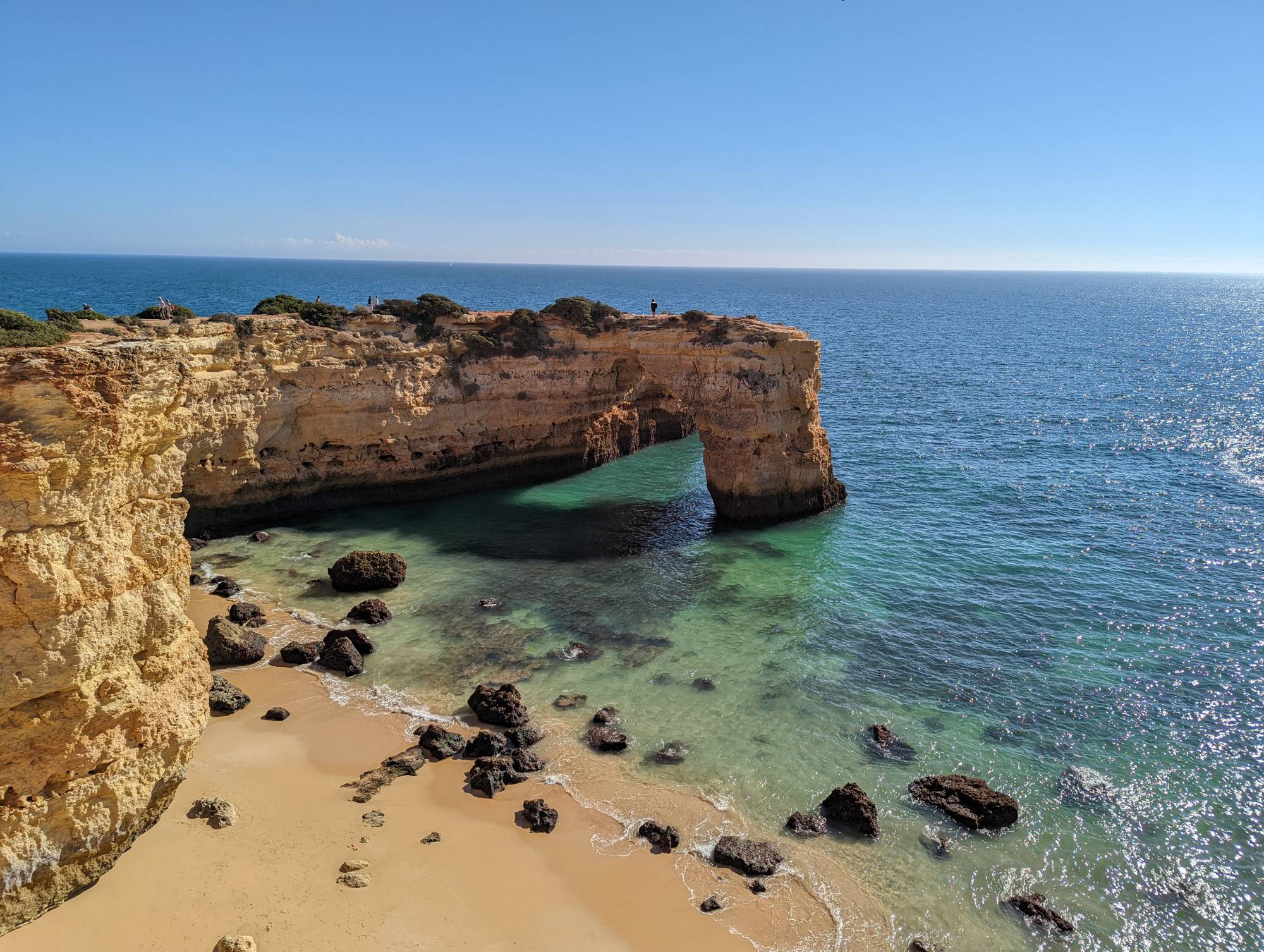
The Algarve, in southern Portugal, is the most established retirement region for foreigners.
Why retirees choose it:
- Warm, dry climate year-round
- Beach towns and ocean views
- Large English-speaking communities
- Excellent private healthcare
- Direct flights to North America and the UK via Faro
Things to be aware of:
- Higher rent and property prices than most of Portugal
- Very busy in summer
- Some towns feel seasonal rather than “lived-in”
Typical vibe: Golf courses, beach walks, international restaurants, social clubs, easy integration.
Lisbon & Cascais: Big-City Energy and Top-Tier Services

Lisbon and nearby Cascais offer urban living, culture, and world-class services.
Why retirees choose it:
- Major international airport
- Best hospital and specialist access
- Museums, theaters, concerts
- Walkable neighborhoods
- Strong English usage
Things to be aware of:
- Highest housing costs in Portugal
- Traffic and crowds
- Less “quiet retirement” feel
Typical vibe: Cosmopolitan European capital with a relaxed edge.
The Silver Coast: Coastal Living at Lower Cost

Stretching north of Lisbon, the Silver Coast has become increasingly popular with retirees who want ocean living without Algarve prices.
Why retirees choose it:
- Dramatic coastline and beaches
- Lower rent and property costs
- Authentic Portuguese towns
- Easy access to Lisbon
Things to be aware of:
- Windier and cooler than the Algarve
- Smaller expat communities in some towns
- A car is often helpful
Typical vibe: Real Portuguese coastal life with growing international pockets.
Porto and Northern Portugal: Culture, Green Landscapes, and Value

Northern Portugal, including Porto, Braga, and surrounding towns, appeals to retirees who prefer tradition, scenery, and lower prices.
Why retirees choose it:
- Rich history and architecture
- Lush landscapes and hiking
- Excellent food and wine regions
- Lower housing costs than Lisbon or the Algarve
Things to be aware of:
- Cooler, rainier winters
- Fewer English speakers outside Porto
- Slower pace of life
Typical vibe: Authentic, cultural, scenic, and quietly charming.
Madeira: Island Living with Year-Round Spring Weather

Madeira, an island off the coast of Africa, offers dramatic scenery and a mild climate year-round.
Why retirees choose it:
- Subtropical weather
- Ocean views everywhere
- Excellent healthcare for an island
- Strong expat community
Things to be aware of:
- Flights required for mainland travel
- Higher import costs
- Steep terrain in many areas
Typical vibe: Scenic island life with modern infrastructure.
Inland Portugal: Maximum Value and Quiet Living

Interior regions offer the lowest cost of living in Portugal.
Why retirees choose it:
- Very affordable housing
- Quiet village life
- Deep immersion in Portuguese culture
Things to be aware of:
- Limited English spoken
- Fewer healthcare facilities nearby
- A car is essential
Typical vibe: Rural, peaceful, deeply traditional.
How to Choose
Retirees who are happiest in Portugal usually:
- Visit multiple regions before deciding
- Stay for several weeks, not just short trips
- Test winter as well as summer
- Consider healthcare access and airports
- Think about daily lifestyle, not just scenery
There is no universally “best” place to retire in Portugal. There is only the place that fits your lifestyle, budget, and expectations.
How Healthcare Works for Retirees in Portugal

Healthcare is one of the biggest concerns for anyone retiring abroad. The good news is that Portugal’s healthcare system is excellent, affordable, and accessible to foreign retirees once you’re legally resident.
The key is understanding how the public and private systems work together.
Public Healthcare (SNS): Once You Have Residency
After you receive your Portuguese residence permit, you can register with the SNS (Serviço Nacional de Saúde) — Portugal’s public healthcare system.
Once registered:
- Doctor visits are free or very low-cost
- Most hospital care is free
- Prescriptions are heavily subsidized
- Emergency care is available to all residents
In practice, many retirees describe public healthcare in Portugal as similar to or better than the UK’s NHS, but with shorter waits in many regions and newer facilities in major cities.
You’ll usually be assigned a local family doctor (general practitioner), who coordinates routine care and referrals.
There are small co-payments for some services and tests, but they are typically modest — often just a few euros.
Private Healthcare: Faster Access and More Choice
Many retirees also take out private health insurance, at least in the early years.
Private care offers:
- Faster appointments
- Easier access to specialists
- Shorter waiting times for non-urgent procedures
- A wider choice of hospitals and clinics
- Easier access to English-speaking doctors
This is especially helpful while you’re still learning Portuguese, or if you’re used to choosing your own specialists.
Private health insurance for retirees typically costs:
- €80–€150/month in your early 60s
- €120–€200/month after age 65
Exact prices depend on age, coverage level, and pre-existing conditions.
Some retirees use private insurance for routine care and the public system for major hospital treatment. Others rely primarily on the public system once settled.
Prescriptions and Pharmacies
Pharmacies are widespread and easy to access. Many medications that are expensive in North America are far cheaper in Portugal, especially once subsidized through the public system. Prescriptions for life-threatening illnesses are generally free.
Pharmacists are highly trained and often serve as an accessible first stop for minor health issues.
What Taxes Will Retirees Pay in Portugal?

After visas and healthcare, this is usually the next big question:
“How much tax will I actually pay if I retire in Portugal?”
The answer is: most retirees will become Portuguese tax residents — and yes, that usually means paying tax in Portugal. But the full picture is more balanced than many headlines suggest.
Becoming a Tax Resident
In general, you become a Portuguese tax resident if:
- You spend 183 days or more per year in Portugal
or - You have a permanent home in Portugal that is considered your main residence
Most retirees moving on the D7 visa will meet one of these conditions. That means Portugal gains the right to tax your worldwide income — pensions, investments, rental income, and other retirement income.
Golden Visa: Possible Non-Tax Residency
The Golden Visa is different.
Because it does not require you to live in Portugal full-time, some Golden Visa holders:
- Spend fewer than 183 days per year in Portugal
- Do not establish Portugal as their main home
In that case, they may not become Portuguese tax residents. This is one reason the Golden Visa appeals to retirees who want maximum flexibility — for example, those who want to spend long periods back home with children or grandchildren.
However, this depends on your individual circumstances and should always be confirmed with a tax professional.
How Retirement Income Is Taxed
Portugal taxes most income on progressive rates, which rise as income increases. The old NHR regime that offered special tax treatment for many retirees is no longer open to new applicants.
Important points for retirees:
- Foreign pensions are generally taxable in Portugal
- Investment income and rental income may also be taxable
- Double taxation treaties usually prevent you from being taxed twice on the same income
- US citizens will likely still have to file a tax return in the US
- But the type of income matters
For example:
- U.S. Social Security, which is often lightly taxed or untaxed in the U.S., can be taxable in Portugal
- UK State Pension is typically taxable in Portugal once you are resident
- Canadian CPP/OAS may also fall under Portuguese taxation rules
- 401(k), IRA, and private pension withdrawals are usually treated as taxable pension income
This surprises many retirees. Income that feels “tax-advantaged” at home does not always receive the same treatment abroad.
For retirees on higher incomes, Portuguese tax rates can feel disheartening at first glance.
The Balancing Factors
This is where context matters.
Many retirees find that:
- Healthcare costs drop dramatically
- Daily living costs are lower
- Dining out is inexpensive
- No private health insurance is required long-term
- Safety and quality of life improve
So while taxes may be higher than expected in some cases, overall monthly outgoings often remain comparable — or lower — than back home.
A Clear Recommendation
Tax planning is the one area where generic advice is not enough.
Tax treaties, pension types, investment structures, and family situations vary enormously. Small changes in how you draw income can sometimes produce large differences in tax outcomes.
Always speak to a qualified international tax professional before moving.
It’s one of the best investments you can make in a smooth retirement plan.
Should You Rent or Buy Property in Portugal?
Once visas, costs, healthcare, and taxes are clear, the next big decision is:
“Should I buy a home in Portugal — or rent first?”
For most retirees, the answer is simple:
Rent first. Buy later — if it still feels right.
Why Most Retirees Rent First
Even if you arrive convinced you want to buy, renting first gives you:
- Time to learn how different regions feel in real life
- Experience of Portuguese winters (houses can be surprisingly cold)
- A chance to test healthcare access and transport
- Clarity on whether you prefer city, coast, or inland living
- The ability to change your mind without financial friction
Many retirees discover that the town they loved on vacation doesn’t feel quite the same for everyday life. Renting keeps your options open.
Why Some Retirees Eventually Buy
After a year or two, many retirees decide they want:
- Long-term housing stability
- Protection from rising rents
- Freedom to renovate or personalize
- A permanent base for family visits
At that point, buying a property can make sense — once you understand the local market, neighborhoods, and building standards.
The Bottom Line
Most successful retirements in Portugal follow the same pattern:
Rent → learn → settle → buy if it still fits.
It reduces risk, prevents expensive mistakes, and gives you time to find a home that truly suits your long-term lifestyle.
Final Thoughts
Retiring abroad is one of the biggest lifestyle decisions you will ever make. It’s not just a change of address — it’s a change of rhythm, culture, and daily life.
Portugal continues to stand out because it offers a rare combination: safety, affordability, good healthcare, excellent food, welcoming communities, and a climate that makes everyday life feel easier.
At the same time, visas require planning. Taxes require professional guidance. Housing requires local knowledge. Bureaucracy requires patience. And lifestyle fit requires honest self-reflection.
But for retirees who take the time to plan, ask the right questions, and approach the move with realistic expectations, the reward is significant: a high quality of life, lower daily stress, and the freedom to shape retirement on your own terms.
If that’s what you’re looking for, the next step is simple: research carefully, seek good advice, visit in different seasons, and build your plan before you commit.
Do that — and retiring in Portugal becomes not just a dream, but a well-executed next chapter.
 Thinking about Moving to Portugal?
Comments are closed.