
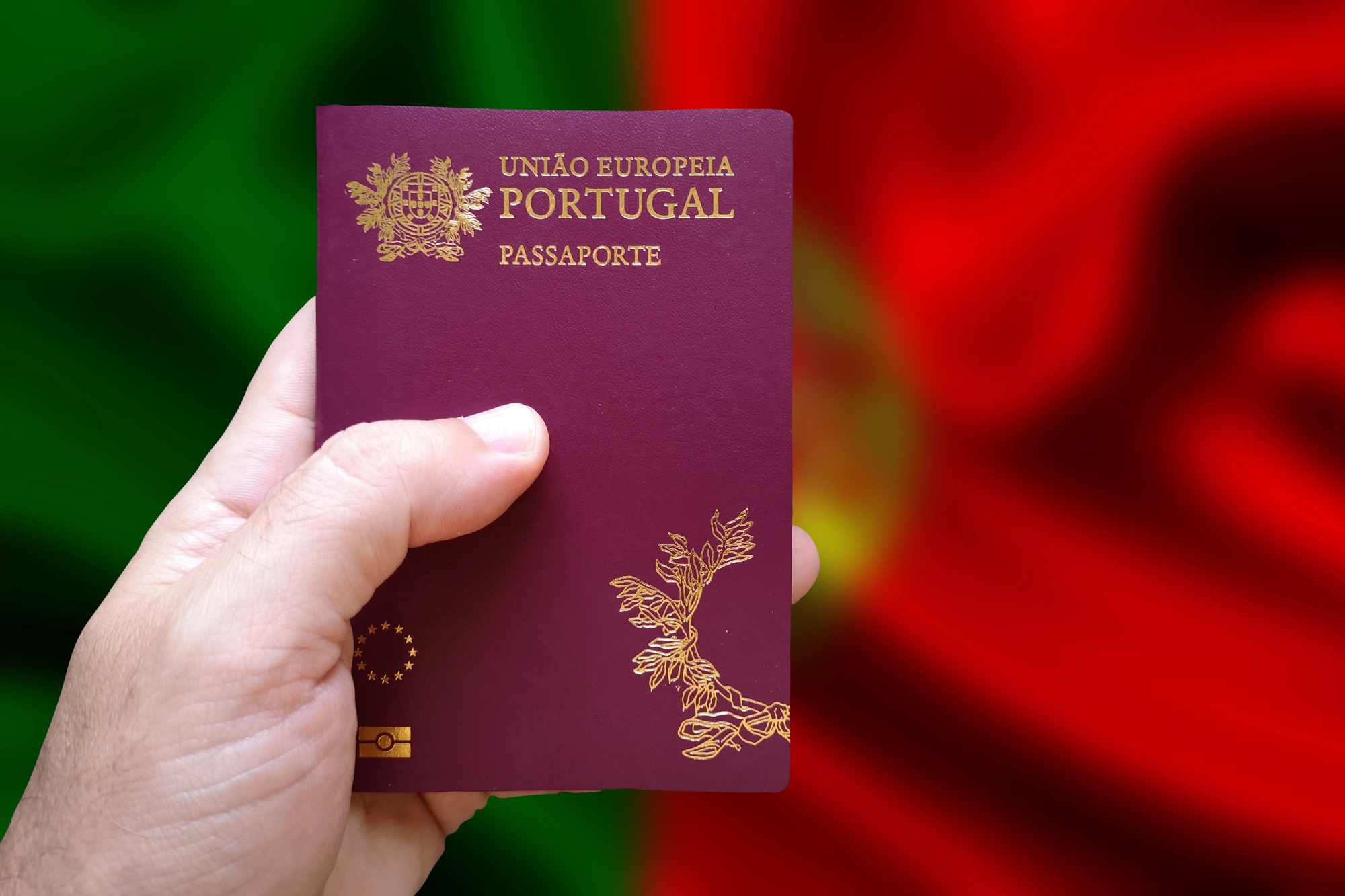

Whether you have Portuguese roots, fell in love with the country, or you’re simply looking for a Plan B passport, Portugal remains one of the most accessible paths to EU citizenship — but it’s not always straightforward, and recent changes matter.
This guide explains every route, what the requirements actually are, how long it takes, and whether it’s worth it for your situation.
We’ve helped tens of thousands of people understand their Portuguese citizenship options since 2016, and this is the guide we wish everyone read first.
Quiz: Check Your Eligibility for Portuguese Citizenship
Why Do People Want Portuguese Citizenship?
Because it’s more than a Portuguese passport. It’s an EU citizenship.
You Get:
- Live, work, retire, or start a business anywhere in the EU / EEA / Switzerland
- Visa-free access to ~190 countries
- A stable backup option in an increasingly unpredictable world
- No mandatory military service
- No tax obligations if you don’t live in Portugal
If you are from the US or UK, this is primarily a mobility / rights upgrade.
If you are from Brazil, South Africa, India, UAE, China, Pakistan, etc., this is life-changing.
Even if you’re an EU/EEA or Swiss citizen living in Portugal, having Portuguese citizenship brings a sense of welcome sense of permanency and security.
What You Should Know
This part matters:
- Processing delays are real (2–3+ years is normal for most naturalisation cases).
- If you file without a lawyer, your application may receive no status updates and can fall into a long-term queue with no way to follow up.
If it sounds bureaucratic — it is. But it’s manageable, with preparation.
The Routes to Portuguese Citizenship (Which One Applies to You?)
Here are the main pathways, then we’ll go into each:
Route |
Residency Required? |
Language Test Required? |
|---|---|---|
Naturalisation (Living in Portugal) |
Yes – 10 years as of 2025 (7 for EU/CPLP) |
✅ Yes (A2) |
Golden Visa |
Yes – 10 years as of 2025 (but only ~7 days/year) |
✅ Yes (A2) |
Descent (Parent or Grandparent) |
No |
Parent: ❌ No Grandparent: ✅ Yes (A2) |
Marriage or Civil Partnership |
No |
Often ✅ A2 |
Birth in Portugal |
No |
❌ No |
Former Colonies / CPLP Ties |
Sometimes |
Usually ✅ A2 |
Golden Visa |
No (only ~7 days/year) |
✅ A2 |
As of 2025, the Sephardic Jewish citizenship route is now closed. However, it is still possible for those with Sephardic Jewish heritage to move to Portugal and obtain citizenship through naturalization.
Citizenship Through Naturalisation (Living in Portugal)
This is the most straightforward path to Portuguese citizenship—live in Portugal legally for a set period, learn basic Portuguese, and apply.
How long do you need to live there?
As of 2026, most applicants will need to live in Portugal for 10 years before applying. However, if you’re from a CPLP country (Portuguese-speaking nations like Brazil, Angola, or Mozambique) or an EU country (France, Spain, etc.,), you will only need to live in Portugal for 7 years.
The 10-year countdown to citizenship through naturalization starts from when you receive your residency permit. If you apply in January, move in March, have you interview in June and receive your card in July, the date printed on your card will likely be in June or July. Effectively, this could mean you’ll need to live in Portugal for around 10.5 years rather than just 10.
Which visa gets you there?
All Portuguese visas allow you to move to Portugal and obtain citizenship through naturalization. Thankfully, Portugal has a wide range of different residency visas with some of the most attainable requirements in the whole of the EU.
The following are three of the most popular options.
Visa |
Best For |
Stay Requirement |
Income Requirements |
|---|---|---|---|
Retirees, landlords, other passive income receivers |
Must live in Portugal most of the year |
€920 per month |
|
Investors |
Only ~7 days/year |
€500k investment or €250k donation |
|
Remote workers, Freelancers |
Must live in Portugal most of the year |
€3,680 per month |
Note: It is possible to add a spouse/partner, dependent children, and dependent parents to an application. This does not necessarily double the amounts. See each page for up-to-date calculations for 2026.
For most people, the most straightforward paths are the D7 visa (popular with retirees and rental property owners) and the Digital Nomad Visa (popular with freelancers and remote workers). There are also other visas, like the D2 (popular with entrepreneurs) and the D1 and D3 work visas, which are less popular but growing in popularity.
Of course, this assumes you want to live in Portugal and are happy to live there for 10+ years. This almost certainly involves tax residency in Portugal and given the physical stay requirements, making your life in Portugal.
Another popular route is the Golden Visa. This visa only requires you to spend an average of seven days per year in Portugal, which is ideal for those who don’t want to uproot their lives (at least yet) or want to avoid tax residency in Portugal. However, it does involve either investing €500k or donating €250k.
Do you need to speak Portuguese?
Yes. You’ll need to pass an A2-level Portuguese exam or complete an approved A2 course. A2 is considered basic conversational ability—you won’t need to be fluent, but you should be able to handle everyday situations. Most people sit an A2 exam, but it is possible to also take a 150-hour approved language course.
It is possible to apply for permanent residency after 5 years, which offers a lot of the stability most people hope to get from citizenship. Non-EU/EEA/Swiss citizens will need to pass an A2 exam or higher to get this.
Are there any other requirements?
Increasingly, it’s becoming more and more popular to show “ties” to Portugal or signs you’ve integrated here.
How long does the whole process take?
Here’s the reality check: you need 10 years of residence (7 for EU/CPLP) plus 2–3 years for citizenship processing. It can also take anywhere from around 4 to 12 months to get your residence permit after moving to Portugal. For someone from the US or UK, your realistic total timeline is 12-14 years.
Is this route right for you?
This path works best for people who genuinely want to live in Portugal and are ready to commit long-term. If your main goal is an EU passport, you may want to consider other options. Unfortunately, if you obtain citizenship through naturalization you cannot automatically pass it down to your children—they would need to find a way of obtaining it themselves (most likely by living in Portugal as well).
Citizenship Through Parents or Grandparents (Descent)

If you can trace your family tree back to Portugal, you might have one of the easiest paths to citizenship available. Portuguese nationality law follows jus sanguinis—the principle of blood right—which means Portuguese heritage can be passed down through generations.
The golden ticket: Portuguese parents
Having a Portuguese parent is about as straightforward as citizenship gets. You don’t need to live in Portugal, learn Portuguese, or prove any connection to the country beyond your birth certificate. Just gather the necessary documents—birth certificates, marriage certificates, and proof of your parent’s Portuguese nationality—and you’re on your way.
What you don’t need:
- Residency in Portugal
- Portuguese language skills
- Proof of ties to the Portuguese community
- To have been born in Portugal
If you were born abroad to at least one Portuguese parent or adopted by at least one Portuguese parent, you would also be eligible for Portuguese citizenship.
The still-excellent option: Portuguese grandparents
A Portuguese grandparent still opens the door to citizenship, but you’ll need to do a bit more work to walk through it.
Additional requirements with grandparents:
- A2 Portuguese proficiency – You’ll likely need to sit an exam to prove basic conversational ability
- Ties to the Portuguese community – Think Portuguese language courses, membership in Portuguese cultural organizations, regular visits to Portugal, or participation in Portuguese events in your home country
What about great-grandparents?
Unfortunately, Portuguese citizenship law draws the line at grandparents. If your Portuguese connection goes back to a great-grandparent, you can’t apply directly.
The workaround: Have your parent or grandparent apply for citizenship first (assuming they’re alive and willing). Once they obtain Portuguese nationality, you can then apply through them. Alternatively, consider moving to Portugal and obtaining citizenship through naturalization.
How long does it take?
Processing times typically run 2–3 years. While that might seem long, it’s still often faster than the naturalization route, especially if you don’t plan to live in Portugal full-time.
Already planning to move to Portugal?
Here’s a practical tip: If your goal is to actually live in Portugal, consider applying for a residency visa (like the D7 or Digital Nomad visa) while your citizenship application processes. You’ll get to Portugal much sooner—citizenship applications take years, but residency visas are typically approved within months.
Is this route right for you?
This path is ideal for people with documented Portuguese ancestry who want citizenship but don’t necessarily want to relocate to Portugal. It’s particularly attractive if you have a Portuguese parent since the requirements are minimal.
It’s less suitable if your family records are incomplete or difficult to obtain, or if you can’t prove the paper trail connecting you to your Portuguese relative.
Citizenship Through Marriage or Long-Term Partnership

Found love with a Portuguese citizen? Your relationship could be your pathway to Portuguese citizenship—and you don’t even need to live in Portugal to qualify.
The basics
After 3 years of marriage or a legally recognized union (união de facto) with a Portuguese citizen, you become eligible to apply for citizenship. The key advantage here: unlike naturalization, there’s no residency requirement. You can apply while living anywhere in the world.
What counts as a qualifying relationship?
- Marriage – Your marriage must be registered in the Portuguese civil registry system
- Civil union (união de facto) – You’ll need to prove you’ve been living together at the same address for 3 years with documentation like shared utility bills, lease agreements, or joint bank statements
Important note: If your relationship ends, so does your eligibility. Divorce terminates your path to citizenship through marriage.
The language question
This is where things get a bit inconsistent. Some Portuguese consulates require proof of A2 Portuguese proficiency, while others ask for evidence of connection to Portugal. Some ask for neither. It’s worth checking with your local consulate or working with a lawyer to understand the specific requirements for your application.
Proving your connection to Portugal
Whether or not a language test is required, you’ll need to demonstrate genuine ties to the country. Acceptable proof includes:
- Property ownership in Portugal
- Portuguese bank accounts
- Joint financial accounts with your Portuguese partner
- Membership in Portuguese cultural clubs or organizations
- Regular visits to Portugal together
- Participation in Portuguese community events
The more evidence you can provide, the stronger your application.
A word of caution
Portuguese authorities take marriage fraud seriously. If you’re entering into a relationship primarily for citizenship purposes, your application will likely be rejected. The government is looking for genuine, established relationships with real connections to Portugal.
Is this route right for you?
This path works beautifully for people in genuine long-term relationships with Portuguese citizens who want EU citizenship without relocating. It’s particularly attractive because you can maintain your life wherever you currently live.
If your main goal is to move to Portugal with your wife or partner, you don’t need to wait until you have citizenship. You can move as the spouse or long-term partner or a Portuguese citizen (a process known as Article 15).
Citizenship by Birth in Portugal

Let’s be clear: if you’re reading this section, you obviously can’t retroactively choose where you were born. But if you’re expecting a child or planning for future children, understanding Portugal’s citizenship-by-birth rules might influence your decisions.
The basic rule
Being born on Portuguese soil doesn’t automatically make you Portuguese. What matters is your parents’ status at the time of your birth.
Under the 2025 law changes, if you were born in Portugal and at least one parent had lived in Portugal for a minimum of 1 year before your birth (either legal or factual residence), you can claim Portuguese citizenship at any age. The same applies if at least one of your parents is Portuguese.
What you don’t need
- Language tests
- Proof of ties to Portugal
- Years of waiting
This is citizenship by origin, which means full rights from birth—including the ability to pass citizenship on to your own children.
Planning to have a child in Portugal?
If you’re considering relocating to Portugal specifically to secure citizenship for a future child, at least one parent will need legal residency for a year before the birth. This brings you back to the naturalization visa options: D7, Digital Nomad (D8), D2, or Golden Visa.
If you’re an EU, EEA, or Swiss citizen, you don’t need any special visa—you already have the right to live in Portugal. Simply register your residence, and your one-year clock starts immediately.
Even if you’re not an EU citizen yourself, but you’re the spouse or long-term partner of an EU/EEA/Swiss citizen, you can move to Portugal as their dependent under Article 15 regulations. This gives you legal residence without needing to qualify for a visa on your own merits.
Is this route right for you?
This pathway is relevant if you’re already living in Portugal legally and planning to start or grow your family here. It’s not a practical route for obtaining citizenship as an adult unless you were actually born in Portugal and qualify under the rules.
Former Portuguese Colonies & CPLP Countries

If you have ties to one of Portugal’s former colonies or are a citizen of a Portuguese-speaking country (CPLP member), there are specific pathways available—though they’re not always as advantageous as you might expect.
Direct citizenship: The age factor
If you were born in a former Portuguese territory before its independence, you may be eligible for direct Portuguese citizenship. The catch? Most independence dates were decades ago:
- Angola – 1975
- Mozambique – 1975
- Cape Verde – 1975
- Guinea-Bissau – 1973
- São Tomé and Príncipe – 1975
- East Timor – 2002
- Macau – 1999 (returned to China)
- Portuguese India (Goa) – 1961
Unless you’re at least in your 50s or 60s (or older for most territories), you won’t qualify for this direct route. If your parent was born before independence, you might be able to apply through them first, then claim citizenship by descent.
The CPLP citizenship path: A surprising quirk
Citizens of CPLP countries (Community of Portuguese Language Countries) can apply for citizenship through naturalization, but here’s the twist: they will only need 7 years of residency rather than the standard 10 for everyone else.
This includes citizens of:
- Brazil
- Angola
- Mozambique
- Cape Verde
- Guinea-Bissau
- São Tomé and Príncipe
- East Timor
- Equatorial Guinea
Getting to Portugal: You still need a visa
Having colonial heritage or CPLP citizenship doesn’t exempt you from visa requirements. You’ll still need to qualify for a residency visa such as:
- D7 (passive income/retirement)
- Digital Nomad Visa (D8)
- D2 (entrepreneur)
- D1 or D3 (work visa)
- Golden Visa (investment)
Once you have legal residency, your citizenship clock starts ticking.
A better deal for Brazilians? Consider Spain
Here’s something Brazilians should know: Spain offers citizenship after just 2 years of legal residency for citizens of Ibero-American countries, including Brazil. That’s significantly faster than Portugal’s 7-year requirement.
However, there’s a major caveat: Spain doesn’t recognize dual citizenship for most nationalities. If you pursue Spanish citizenship, you’d likely have to renounce your Brazilian nationality (at least, in theory). Portugal, on the other hand, fully supports dual citizenship—you can keep your Brazilian passport alongside your Portuguese one.
Is this route right for you?
This pathway makes sense if you were actually born in a Portuguese territory before independence and maybe if you have parents who were. For CPLP citizens looking at the 7-year naturalization route, it’s worth comparing timelines with other options. Portuguese-speakers do have an advantage with the language requirement, but the longer residency period might make you reconsider—especially if you’re Brazilian and Spain’s 2-year option appeals to you (dual citizenship restrictions aside).
For most people with colonial heritage who don’t qualify for direct citizenship, the standard naturalization route (7 years) might actually be your best bet.
Your Portuguese Citizenship Journey Starts Here
We’ve covered a lot of ground—from the 10-year naturalization marathon to the streamlined path through Portuguese parents, from marriage-based citizenship to the complexities of colonial connections. If your head is spinning a bit, that’s completely normal.
Here’s what matters most:
Portuguese citizenship is achievable, but it requires patience, preparation, and realistic expectations. There’s no “quick and easy” route for most people—even the fastest paths take 2–3 years for processing alone. But for those who commit to the journey, the reward is substantial: EU citizenship, visa-free global mobility, and the security of a second passport.
Which route is right for you?
- Have Portuguese parents? Stop overthinking it and start gathering documents. This is your simplest path.
- Portuguese grandparents? Expect to prove language skills and community ties, but it’s still more accessible than starting from scratch.
- Married to a Portuguese citizen? Three years together opens the door—no residency required.
- Ready to actually live in Portugal? Naturalization is straightforward if you’re committed to making Portugal home for at least a decade (or 7 years for EU/CPLP citizens).
- Want flexibility with minimal time in Portugal? The Golden Visa offers a path, but it requires significant financial investment.
- From a former Portuguese colony? Check if you were born before independence—otherwise, you’re likely looking at the standard naturalization route.
The bureaucracy is real, but it’s navigable
Yes, Portuguese citizenship applications involve paperwork. Yes, processing times are long. Yes, the system can feel opaque if you’re going it alone. But thousands of people successfully navigate this process every year—and most of them started exactly where you are now, reading guides like this and wondering if it’s actually possible.
Ready to turn your Portuguese citizenship dream into reality?
At Portugalist, we’ve been helping people understand their Portuguese citizenship options since 2016. We know which documents you’ll need, which pitfalls to avoid, and how to build the strongest possible application for your specific situation.
Whether you’re tracing family trees back to Lisbon, planning your move to Porto, or exploring your options from halfway around the world, we’re here to help you find your path to that burgundy passport.
Get in touch today and let’s start mapping out your route to Portuguese citizenship. Your Portuguese adventure is closer than you think.
Comments are closed.