

Table of Contents
Moving country as an adult is a big decision. Moving country with children — or while planning a family — is something else entirely.
Suddenly you’re not just thinking about visas and rent. You’re thinking about schools, doctors, playgrounds, safety, language barriers, teenage boredom, whether your toddler will nap in a new time zone, and whether you’re accidentally ruining your child’s future by choosing the wrong country.
If that sounds familiar, you’re in the right place.
Portugal has become one of the most popular relocation destinations for families from the UK, US, Canada, South Africa, and beyond. It offers a rare combination of safety, sunshine, affordability, and a genuinely family-friendly culture. But it’s not a plug-and-play move. School systems work differently. Housing has quirks. Visas get harder with dependents. And the experience of moving with a baby is very different from moving with a teenager.
Get Our Book For Free
Psst!
For a very limited time, we're giving away free copies of our best-selling book for free.
That right...the one with 400+ reviews on Amazon.
Grab it here.
This guide is designed to walk you through the reality of moving to Portugal as a family — not just the glossy brochure version. We’ll cover who this guide is for, why so many families choose Portugal, and the main visa pathways that make a family move possible. From there, we’ll dive deeper into schools, healthcare, housing, costs, and integration.
Think of this as your big-picture map before you start drilling into the details.
Why Families Choose Portugal

Families don’t move to Portugal purely for tax incentives or residency timelines. Most are looking for something more fundamental: a better daily life for their children and a healthier rhythm for family living.
Here are the main reasons Portugal consistently rises to the top of family relocation shortlists:
Safety and low crime
Portugal regularly ranks among the safest countries in the world. Violent crime is low, neighbourhoods are walkable, and it’s common to see children playing outside, walking to school, or using public transport independently at younger ages than in many other countries. For many parents, this peace of mind is priceless.
Climate and outdoor lifestyle
Sunshine, beaches, surfing, parks, forests, and hiking trails aren’t occasional treats — they’re part of everyday life. Year-round outdoor play is realistic, not seasonal. Many families find their children naturally become more active, less screen-focused, and more connected to the outdoors.
A genuinely family-oriented culture
Portugal is a society where children are visible and welcome. Kids in cafés in the evening, grandparents heavily involved in childcare, and public spaces designed with families in mind are normal sights. For families with younger children especially, the social environment feels supportive rather than stressful.
Lower cost of living (with important caveats)
Part of Portugal (like Lisbon and Cascais) are no longer cheap, but Portugal remains significantly more affordable than much of the US, Canada, and high-cost regions of the UK such as London and the South East. Housing, childcare, food, and day-to-day expenses are generally lower, making family budgets stretch further.
Accessible healthcare
Portugal offers both a public health system and a strong private healthcare sector. For families arriving from countries with expensive medical systems — particularly the US — the idea that a broken arm or emergency surgery won’t result in a life-changing bill is a major relief.
Work-life balance
Portuguese culture places more emphasis on family time, shared meals, and slower daily rhythms. Working hours are generally shorter, evenings are family-focused, and weekends are protected. Many parents feel their children grow up with less academic pressure, less frantic scheduling, and more space simply to be kids.
Long-term educational advantages
University fees in Portugal are far lower than in the US or UK. And if your children later obtain Portuguese citizenship, they gain access to EU-wide universities at local tuition rates — opening doors that would otherwise be financially out of reach.
A realistic lifestyle upgrade
For many families, Portugal isn’t about luxury living — it’s about trading stress for stability, congestion for space, and burnout for balance. That lifestyle shift is often the biggest motivation of all.
But there are trade-offs
Schooling options may be more limited if you want a specific system such as British A-levels or an American high-school curriculum. Extracurricular activities may look different from what you’re used to. And Portuguese bureaucracy will test your patience. These are manageable — but important — realities, and we’ll cover them honestly throughout this guide.
Get Our Book For Free
Psst!
For a very limited time, we're giving away free copies of our best-selling book for free.
That right...the one with 400+ reviews on Amazon.
Grab it here.
Visa and Residency Options for Families
Visas are often the biggest practical hurdle for family moves.
Portugal generally allows you to include spouses, long-term partners, and dependent children in your application — but income and savings requirements scale with each additional family member.
In some cases, couples submit two separate applications to meet requirements more comfortably. This is where working with a good immigration lawyer becomes particularly valuable.
Here’s a simplified overview of the main family-friendly visa pathways.
D7 Visa (Passive Income Families)

The D7 is one of the most family-friendly visas if you qualify. It’s designed for people with stable passive income — such as pensions, social security, rental income, dividends, or royalties.
The key advantage for families is that income requirements do not rise as sharply as with some other visas when adding dependents. That makes it particularly attractive for families who can demonstrate steady non-employment income.
You’ll also need to show savings as a buffer. Younger families sometimes use rental income from property back home to qualify, rather than retirement income.
Get Our Book For Free
Psst!
For a very limited time, we're giving away free copies of our best-selling book for free.
That right...the one with 400+ reviews on Amazon.
Grab it here.
The basic income requirements are:
- Single person:
– Monthly passive income: €920
– Savings: €11,040 (12× monthly) - Couple:
– Monthly passive income: €1,380 (€920 + 50%)
– Savings: € (12× monthly) - Each dependent child:
– +30% income: €276
– +12× that amount in savings
Monthly passive income |
Savings Requirement |
|
|---|---|---|
Single Person |
€920 per month |
€11,040 |
Couple |
€1,380 per month |
€16,560 |
Couple + Child |
€1,656 per month |
€19,872 |
Digital Nomad Visa (Remote-Working Parents)

For working-age families, the Digital Nomad Visa is often the main route. It’s designed for remote employees and freelancers earning income from outside Portugal.
The challenge for families is that income requirements increase significantly when you add a spouse or children. Some couples solve this by submitting two separate Digital Nomad applications, each covering part of the family.
Savings are also required as a backup. For higher-earning remote workers, it’s an excellent option — but budgeting carefully is essential.
An individual needs to show show at least €3,680 per month (gross), usually averaged over the last three months.
The visa follows the same route as the D7, where you need an additional 50% for a spouse or long-term partner and an additional 30% (of the main amount) for each dependent child.
Applicant |
Monthly Income |
Savings Requirement |
|---|---|---|
👨 Individual |
€3,680 per month |
€11,040 |
👨 👩 Couple |
€3,680 per month |
€16,560 |
🧒 Each dependent child |
€1,104 per month |
€13,248 |
Golden Visa (Flexible Residency)

The Golden Visa is the flexibility option. Rather than relying on income, it requires an investment or donation typically €500,000 in an approved investment fund or €250,000 as a cultural donation.
The key benefit for families is freedom.
- You can obtain Portuguese residency while continuing to live elsewhere and visiting Portugal for an average of seven days per year.
- One partner can keep working abroad while the rest of the family lives in Portugal.
- Or you can secure residency first and relocate later when the timing feels right.
D2 Visa (Business Owners)

The D2 is designed for entrepreneurs and business owners. It can work well for families planning to run a business in Portugal or transfer an existing company.
There’s no official income requirement. But in reality, AIMA expects your business to generate the equivalent of the Portuguese minimum wage (as a minimum):
- €920 per month
- or €11,040 per year
Savings are still expected as a safety net.
If you’re bringing family, the required income increases:
- Add 50% for a spouse or partner: €460
- Add 30% for each dependent child: €276
Example Figures
Monthly passive income |
Savings Requirement |
|
|---|---|---|
Single Person |
€920 per month |
€11,040 |
Couple |
€1,380 per month |
€16,560 |
Couple + Child |
€1,656 per month |
€19,872 |
Of course, the Portuguese minimum wage is the absolute minimum you need to live in Portugal and, in reality, would not provide a comfortable life in a lot of Portugal. For this reason, D2 applications receive additional scrutiny and if you’re planning on moving with a family, you should aim higher than the absolute minimum requirements.
However, while this visa is more challenging than others, living in Portugal does offer families an opportunity to build that business they’ve been dreaming of — all while enjoying the other benefits that come with living in Portugal.
EU Citizens (CRUE Route)

If one or more family members already hold EU, EEA, or Swiss citizenship, the process becomes much simpler.
EU citizens register locally for residency through the CRUE system at the town hall. Family members can then apply under family reunification rules (often called Article 15) if they do not hold EU/EEA/Swiss citizenship as well.
In practice, this route can involve delays, and some families choose a visa application instead to secure an earlier immigration appointment.
Read more about visas for moving to Portugal
Schools in Portugal: Your Biggest “Where to Live” Decision

For most families, schooling is the single biggest factor that determines where in Portugal they can realistically live.
Before you fall in love with a village on the Silver Coast or a townhouse in the Alentejo, it’s worth understanding how school options work — because your choice of public, private, or international school will directly shape your location, budget, and your child’s experience.
In Portugal, families generally choose between:
- Public (state) schools
- Private Portuguese schools
- International schools
Each comes with distinct benefits — and limitations.
Public Schools: Free and Available Everywhere
Public schools exist in every town and city in Portugal. They are free to attend, follow the national curriculum, and are where most Portuguese children study.
Why families choose public schools:
- No tuition fees
- Available nationwide, including smaller towns and rural areas
- Full immersion in Portuguese language and culture
- Easier long-term integration for children
- No “expat bubble”
Things to be aware of:
- Teaching is in Portuguese
- Quality varies by region and even by neighbourhood
- Larger class sizes in some areas
- Occasional teacher strikes
- Less flexibility in teaching style
For younger children, public schools are often an excellent option — kids tend to absorb the language quickly and integrate naturally. For teenagers, the transition can be more challenging if they arrive without Portuguese.
Because school catchment areas matter, public schooling often determines your exact neighbourhood, not just your city. When choosing housing, it’s important to check which school zone you fall into and to research local school rankings.
Private Portuguese Schools: A Middle Ground
Private Portuguese schools follow the same national curriculum as public schools, but typically offer:
- Smaller class sizes
- Better facilities
- More extracurricular activities
- More individualised teaching
- Higher placement in school rankings
Fees typically range from €300 to €1,000+ per month, depending on location and reputation.
These schools remain Portuguese-language environments, so children still integrate locally — but with a smoother academic experience and often stronger resources.
Location impact:
Private schools are common in cities and larger towns, but much less available in rural areas. If you want this option, it will narrow your housing search.
International Schools: Familiar Curriculum, Limited Locations
International schools are the most popular choice for families who want:
- Teaching in English (or another foreign language)
- A familiar curriculum
- Easier transitions if they may move again
- Specific exam systems
Common curricula include:
- British GCSE and A-Levels
- American High School programs
- International Baccalaureate (IB)
This is often the preferred route if:
- Your children are older and don’t yet speak Portuguese
- You want continuity with your home education system
- Your child may apply to universities abroad
The trade-offs:
- Fees typically range from €10,000 to €20,000+ per year
- Mostly located in Lisbon, Cascais, the Algarve, with smaller clusters in Porto and Madeira
- Very limited availability outside these regions
- Higher likelihood of social “expat bubble”
Location impact:
If you choose international schooling, your choice of where to live becomes highly constrained. Many families end up choosing housing based on school commute first — and lifestyle second.
Teenagers: Thinking Ahead Matters
For families with teenagers, schooling decisions often come down to future university plans.
- If your child may study in Portugal or the EU long-term, the Portuguese system can work well.
- If they plan to apply to UK, US, or Canadian universities, an international curriculum may make applications smoother.
- If they’re undecided, some families start with public or private Portuguese schools and later switch to international options for final exam years.
These are big decisions — and they’re worth discussing openly with your teenager before committing to a move.
Homeschooling in Portugal
Homeschooling is legal in Portugal — but it is not a casual or off-grid option. It operates within the state education system and is more regulated than in countries like the US or UK.
Under Portuguese law (ensino doméstico), children of compulsory school age must either attend a registered school or be formally approved for homeschooling through the state system. Homeschooling is therefore a request to the education authorities, not an automatic right, and approval can be refused or later revoked if requirements aren’t met.
Parents who homeschool must usually:
- Hold a university degree (often needing recognition if obtained abroad)
- Live in the same household as the child
- Register the child at a Portuguese school, which acts as the administrative “home school”
- Submit a learning plan aligned with the national curriculum
- Present the child for periodic assessments and end-of-cycle exams
Teaching methods at home can be flexible, but academic progress is monitored, and if a school determines progress is insufficient, it can require the child to return to classroom education.
Some expat families combine homeschooling with online or foreign curriculum providers. However, this does not replace Portuguese registration requirements if the family is resident in Portugal.
In practice, homeschooling works best for:
- Families committed to following the Portuguese curriculum
- Parents able to navigate paperwork in Portuguese
- Children who adapt well to structured self-learning
It is legal — but administratively involved — and should be researched carefully before choosing this route.
Where to Live in Portugal as a Family
Once you understand how schooling works in Portugal, your choice of school will largely determine where you can live.
That means families don’t usually start by choosing a region. They start by choosing a school — and then work backwards to housing.
With that in mind, here are some of the most popular family-friendly areas. These are examples, not an exhaustive list. Families live successfully all over Portugal — but these regions tend to offer the best combination of schooling options, lifestyle, and infrastructure.
Algarve
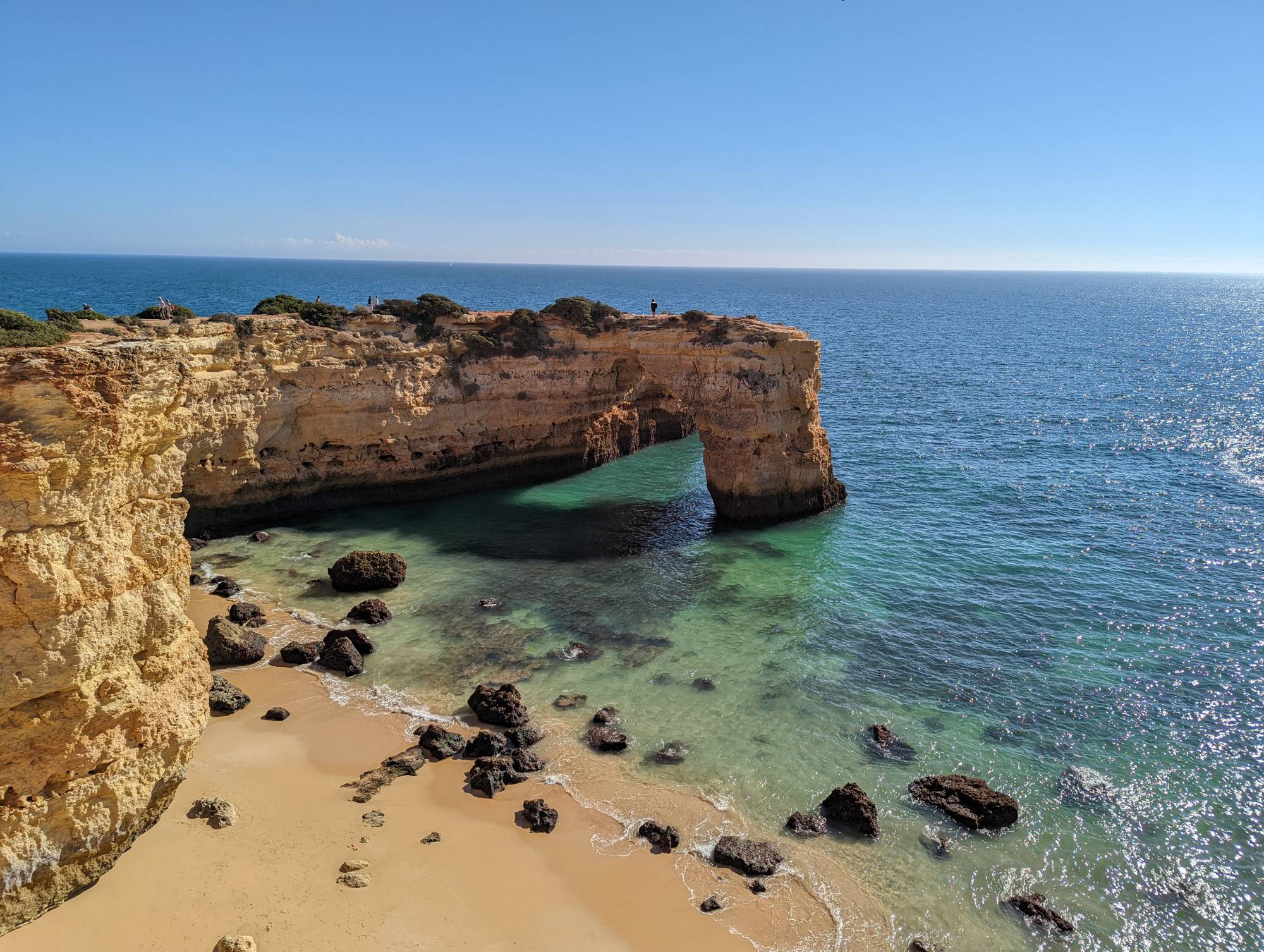
The Algarve is one of the most established regions for relocating families, particularly those choosing international schooling.
Several well-known international schools operate here, offering British and IB curricula. This makes the Algarve a practical choice for families with older children or those wanting an English-language education. Private Portuguese schools are also available in larger towns.
Lifestyle-wise, the Algarve offers:
- Warm climate and beach-focused living
- Outdoor sports and activities year-round
- Strong expat community
- Safe, relaxed environment
Cost of living is moderate to high in popular coastal towns, especially near international schools. Rural inland areas are cheaper — but have fewer schooling options. However, it’s easy enough to get around the Algarve by car.
Lisbon

Lisbon offers the widest range of schooling options in Portugal.
You’ll find:
- Multiple international schools
- Top-ranked private Portuguese schools
- Strong public school networks
- Specialist language and SEN support
This flexibility makes Lisbon attractive for families who want maximum choice — particularly those unsure which schooling route they’ll take.
Lifestyle highlights include:
- Big-city amenities
- Cultural activities for children
- Good healthcare access
- International community
- Public transport and walkability
The trade-off is cost. Lisbon has the highest cost of living in Portugal, especially for housing near good school zones.
Cascais

Cascais is often described as Portugal’s family-relocation sweet spot.
It offers:
- Several highly regarded international schools
- Excellent private Portuguese schools
- Beach-and-suburb lifestyle
- Safe residential neighbourhoods
- Easy access to Lisbon
Many relocating families choose Cascais because it combines international schooling, outdoor living, and a calmer environment than central Lisbon.
Cost of living is high, particularly near the coast and top schools — but many families feel the lifestyle justifies the price.
Porto

Porto is increasingly popular with families seeking:
- Lower costs than Lisbon
- Good private and international schools
- Strong local culture
- Less tourist saturation
- Walkable neighbourhoods
International school options exist, though fewer than in Lisbon or the Algarve. Public and private Portuguese schools are widely available.
Lifestyle is more urban-traditional than beach-oriented, with parks, riverfront areas, and strong community feel.
Cost of living is moderate, with better housing value than Lisbon or Cascais. However, it’s not as cheap as other areas, including nearby Braga.
Braga

Braga has quietly become one of the best-value family relocation cities in Portugal.
It offers:
- Strong public school performance
- Several reputable private Portuguese schools
- A growing number of bilingual and international-style programs
- A safe, mid-sized city environment
While Braga has fewer full international schools than Lisbon or the Algarve, it works very well for families who are comfortable with Portuguese or who want their children to integrate into the local system. Younger children in particular adapt quickly here.
Lifestyle-wise, Braga provides:
- A traditional Portuguese community feel
- Parks, sports facilities, and family-oriented neighbourhoods
- Easy access to nature and weekend trips
- Lower congestion than Lisbon or Porto
Cost of living is low to moderate, with excellent housing value compared to coastal cities. For families seeking affordability without sacrificing good schooling and infrastructure, Braga is often an underrated option.
Central Portugal

Central Portugal — including areas like the Silver Coast, Coimbra region, and inland towns — attracts families seeking:
- More space for the budget
- Lower cost of living
- Quiet, community-based living
- Good public schools in many towns
International schools are rarer, and private Portuguese schools are mostly found in larger towns. That makes this region best suited to families comfortable with public or private Portuguese schooling and full cultural integration.
Lifestyle is slower-paced, with easy access to nature, beaches, and historic towns.
Cost of living is low to moderate, especially for housing, and particularly if you move inland from the coast. Some families choose to live inland here close to the Spanish border or in the neighboring northern or Alentejo regions in order to take advantage of cheap rural property prices and live off-grid.
Healthcare for Families in Portugal

Healthcare is one of the quiet but powerful reasons many families choose Portugal. Once you become a legal resident, you gain access to the Portuguese public health system — and for families arriving from countries with expensive medical care, the difference can feel dramatic.
Many Americans describe their first realisation as this: you’re no longer afraid to call an ambulance.
Like many European countries, Portugal operates a mixed healthcare system, and most expat families use a combination of public and private services.
The Public Health System (SNS)
Once you hold Portuguese residency, you can register with the Serviço Nacional de Saúde (SNS), the national health service.
This gives your family access to:
- Family doctors
- Paediatric care
- Vaccination programs
- Maternity services
- Emergency care
- Hospital treatment
Costs are minimal. Many services are free, and others involve small co-payments rather than large bills. For serious illness, surgery, or emergency care, the SNS provides comprehensive coverage.
For families arriving from the US, the contrast is stark: broken bones, appendicitis, or childbirth do not come with five-figure invoices.
Waiting times can exist for non-urgent specialist appointments, but emergency care is treated promptly.
Private Healthcare
Alongside the public system, Portugal has a strong private healthcare network.
Many expat families choose to:
- Use public healthcare for major treatment
- Use private hospitals and clinics for routine appointments
- Carry private health insurance to reduce waiting times
Private insurance is generally affordable by international standards, with family plans often costing a fraction of equivalent policies in the US or UK. Some families simply pay private appointments out-of-pocket, as consultation fees are typically reasonable.
Private hospitals are modern, English-friendly, and widely available in larger towns and cities. However, they aren’t available throughout the country which may determine where you decide to live.
Maternity and Children’s Healthcare
Portugal has well-established maternity care, vaccination schedules, and paediatric services. Prenatal care, childbirth, and postnatal follow-ups are covered through the public system, with private options available for those who prefer them.
Children are routinely assigned a family doctor once registered, and vaccination programs follow EU-standard schedules.
Dentistry
Dentistry is another pleasant surprise for relocating families.
While not fully covered by the public system, private dental care in Portugal is far more affordable than in many home countries. Routine check-ups, fillings, braces, and even complex treatments often cost significantly less than in the US, Canada, or the UK.
Many families simply budget for dental care out-of-pocket.
Language and Integration

For many families, the biggest emotional question about moving to Portugal is simple:
“Will my children cope with the language?”
The reassuring answer is: in most cases, children adapt far faster than their parents expect.
How Fast Children Learn Portuguese
Younger children, in particular, tend to absorb Portuguese quickly once placed in a local school environment. It’s common for children under 10 to become conversational within months and fluent within a year or two.
This is one reason many expat families choose public or private Portuguese schools for younger children rather than international schools. Total immersion at an early age often leads to stronger long-term integration — academically, socially, and culturally.
Teenagers can still adapt well, but the transition may take longer, especially when academic subjects become language-heavy. This is where private or international schools sometimes provide a gentler bridge.
Language Support in Schools
Portuguese schools recognise that not all students arrive speaking the language. Many offer support through Português Língua Não Materna (PLNM) programs — additional Portuguese language classes designed for non-native speakers.
However, the level of support varies from school to school. Some schools have well-established programs and experienced staff. Others offer minimal assistance and expect children to adapt independently.
This is why visiting schools and asking specifically about PLNM support is important when choosing where to live.
Parents Learning Portuguese
While children often pick up the language quickly, parents usually need a more structured approach.
Fortunately, there are excellent European Portuguese courses available online, along with local language schools and private tutors. Many expat parents aim for conversational Portuguese rather than perfection — enough to speak with teachers, doctors, neighbours, and other parents. For permanent residency or citizenship, you’ll need to show an A2 level (which is just upper-beginner).
Learning alongside your children can also be a powerful bonding experience.
Making Friends and Building Community
Children are natural social connectors. School gates, birthday parties, and sports clubs quickly introduce you to other parents — and this often becomes the fastest route to building a local network.
Many expat families find that having children forces integration in the best possible way. You attend school meetings, speak with teachers, navigate homework, join parent groups — and suddenly you’re participating in everyday Portuguese life rather than observing it from the outside.
Realistic Expectations: What Families Should Know Before Moving
Portugal offers a wonderful family lifestyle — but it’s not a fantasy version of relocation. Families who thrive here tend to arrive with clear-eyed expectations, not just Instagram visions.
Here are some of the realities worth understanding before you commit.
Housing Quality Can Surprise You
Portugal has beautiful architecture — but much of the housing stock is older. Traditional homes often:
- Lack central heating
- Have limited insulation
- Feel cold and damp in winter
- Have smaller room sizes than North American or British homes
Newer-build properties exist, but they are significantly more expensive and concentrated in certain regions. Many families face a trade-off between character and location versus modern comfort and cost. Viewing homes in winter, not just summer, is strongly recommended.
Expat Bubble vs Real Integration
Places like the Algarve, Cascais, and parts of Lisbon offer ready-made expat communities, English-speaking services, and international schools. This makes settling in easier — particularly at the beginning.
But it can also mean your children grow up largely surrounded by other expat families, with less exposure to Portuguese culture and language.
Living in more local areas encourages deeper integration — but can involve more language challenges and fewer international-style services.
Neither path is “right” or “wrong”. The key question is:
Where do you want your children to feel at home in 10 years?
International Schools Add Up Quickly
International schools offer familiarity and smooth academic transitions — but the costs are substantial. Fees of €10,000–€20,000+ per year per child are common, and this quickly adds up.
Many families start with international schools during transition years, then later move children into Portuguese private or public schools once language skills improve. Building this possibility into long-term budgeting is wise.
Extracurricular Activities Work Differently
In many countries, schools organise extensive after-school clubs, sports teams, and arts programs. In Portugal — particularly in public schools — extracurricular activities are more limited.
Many parents arrange sports, music, and hobby classes privately outside school hours. Some children may need to change or pause hobbies they previously had. Researching local activity options before choosing an area can prevent disappointment later.
Remote Work and Local Jobs
Most relocating families continue to rely on remote or foreign income. Portuguese wages are significantly lower than in North America or the UK, and local job opportunities can be limited — particularly outside Lisbon and Porto.
Remote work can also feel isolating without strong community ties. Many parents find they stay in the same job longer than expected, as switching roles while maintaining visa requirements and remote status can be complex.
Distance From Friends and Family
Children can find it hard to maintain close friendships with people back home. Time zones, distance, and school schedules make visits infrequent. While new friendships form quickly, it’s worth recognising that moving countries changes social worlds — for parents and children alike.
Bureaucracy Is a Shared Challenge
Portuguese bureaucracy is slow, paper-heavy, and sometimes unpredictable. Residency renewals, school registrations, and health system sign-ups can involve delays. Families occasionally feel “stuck” waiting for documents to process.
Patience isn’t optional — it’s part of the relocation skillset.
The Reality of “Living Half Here, Half There”
Many families imagine splitting time between Portugal and their home country. In reality, most residency visas require spending around 8 months per year in Portugal (the Golden Visa is the main exception).
Renewal delays can also temporarily restrict travel. Add in flight costs, school calendars, and daily logistics — and most families find that half-and-half living becomes impractical after the first few years.
Final Thoughts: Is Portugal Right for Your Family?
Moving to Portugal as a family is not just a change of address. It’s a change of rhythm, priorities, and perspective.
On the positive side, Portugal offers something increasingly rare: a safe environment where children can walk to school, play outside, and grow up with space to breathe. It offers a slower pace of life, a culture that welcomes children into everyday spaces, affordable healthcare, and a cost of living that still compares favourably to many parts of the US, Canada, and the UK. For many families, that combination alone is life-changing.
But there are trade-offs. Housing can be older. Bureaucracy can test patience. Schooling requires planning. International education is expensive. Local wages are low. Language takes effort. And distance from home is real.
The families who thrive here are not the ones who expect Portugal to be perfect. They are the ones who look at the full picture and decide that safety, lifestyle, and family time matter more than convenience, speed, and familiarity.
If what you value most is giving your children a calmer upbringing, more outdoor life, less pressure, and a strong sense of community — Portugal is worth serious consideration.
The next step is simple: start planning before you pack a single box.
Research schools. Visit regions. Speak to other parents. Understand visa routes. And come spend time here as a family before committing.