


Table of Contents
You’ve done your research, watched the videos, read the blog posts. Sunshine, beaches, cheap wine, €10 lunches. That sounds perfect.
A little too perfect maybe?
Don’t get me wrong—there’s a lot to love about Portugal. And I truly think it’s a great place to live. But the Portugal that’s advertised online—by lawyers, realtors, and YouTubers who’ve only been in the country for about five minutes—is very different from the reality.
I think that’s why you sometimes see those Portugal SUCKS posts on Facebook, Reddit, and everywhere else. It isn’t necessarily that Portugal has any more downsides than any other countries, it’s that it’s marketed as perfect—and nowhere is.
Get Our Book For Free
Psst!
For a very limited time, we're giving away free copies of our best-selling book for free.
That right...the one with 400+ reviews on Amazon.
Grab it here.
I’ve been running Portugalist since 2016, long enough to know both sides. The things that make Portugal brilliant, and the things that’ll drive you absolutely mad if you’re not prepared for them. I’ve also spoken to dozens of other expats who’ve made the move—some who love it, some who’ve left, and plenty who are somewhere in the middle.
This isn’t about talking you out of moving to Portugal. It’s about making sure you know what you’re actually signing up for. Because if you come here with realistic expectations, you’re far more likely to be one of the people who stays and thrives, rather than one of the ones who leaves after a year feeling disappointed and out of pocket.
The Pros: Where Portugal Shines
Attainable Visas (Getting In Is Actually Possible)

Portugal stands out for making residency genuinely accessible compared to other European countries. If you’ve looked at visa requirements elsewhere, you’ll know how refreshing this is.
Put simply: you can actually move to this EU country. And if you’re looking to escape the political turbulence of the US or dreary weather of the UK, this is definitely welcome news.
Main visa options:
The following are some of the main visa options.
Visa Type |
Minimum Requirements |
Best For |
|---|---|---|
D7 (Passive Income) |
€920/month |
Retirees, landlords, those with stable passive income |
€3,680/month (4x minimum wage) |
Freelancers, remote employees |
|
D2 (Entrepreneur) |
No minimum investment specified |
Business owners, self-employed |
€500,000+ investment or €250k donation |
High net worth individuals |
Of course, these aren’t the only visa options. There are several others. And those who hold an EU/EEA or Swiss passport can move here without a visa, and they can also bring dependents (such as a spouse or long-term partner and dependent children) with them.
The D7 is particularly notable because €920 per month is achievable for many people—whether that’s from pension income, rental properties, or other passive income sources. Spain and Italy have similar visas, but the requirements are much harder.
Path to Citizenship (Your Route to an EU Passport)
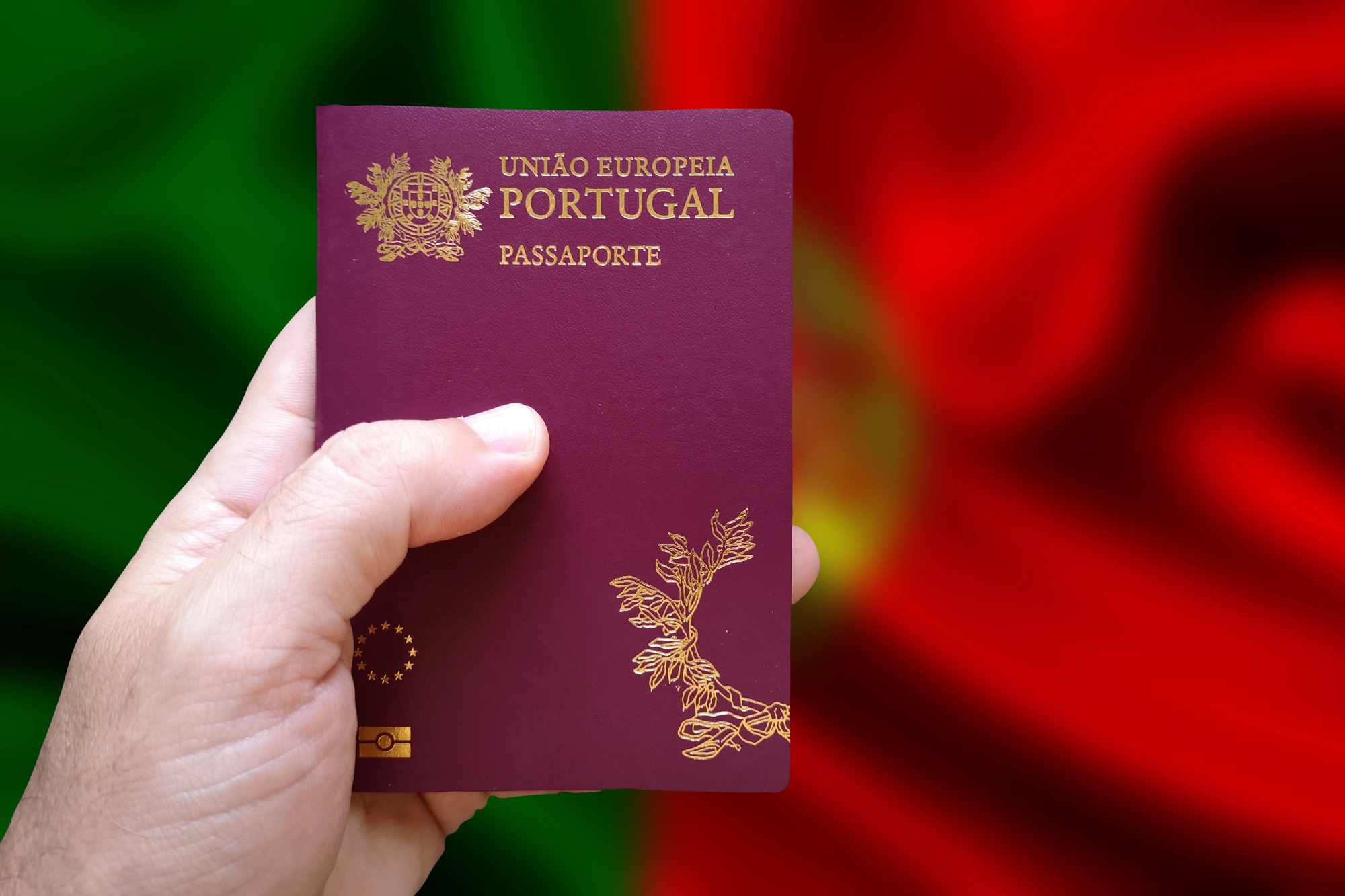
This one sits in an awkward middle ground between pro and con, since the timeframe has increased, but it’s still more accessible than many alternatives. Why? Put simply: because even though it takes 10 years to obtain citizenship, it’s easier to move here than most other EU countries.
The requirements:
- 10 years of legal residency (increased from 5 years in 2025)
- A2 level Portuguese (basic conversational)
- Clean criminal record
- Proof of ties to Portugal
Why it’s still competitive:
Country |
Residency Required |
Language Level |
Dual Citizenship? |
|---|---|---|---|
Portugal |
10 years |
A2 |
✓ Yes |
Spain |
10 years |
A2 |
✗ No (with exceptions) |
Italy |
10 years |
B1 |
✓ Yes |
Germany |
5 years (previously 8) |
B1 |
✓ Yes |
France |
5 years |
B2 |
✓ Yes |
The key advantage: Portugal doesn’t make you renounce other citizenships, and A2 Portuguese is considerably easier than the B1 or even B2 required in other EU countries. While the timeframe is double that of Germany and France, it’s considerably easier to move to Portugal than either of those countries.
English is Widely Spoken (You Won’t Be Lost From Day One)

Portugal ranks 6th globally on the 2024 EF English Proficiency Index—ahead of France, Spain, Italy, and Germany.
Get Our Book For Free
Psst!
For a very limited time, we're giving away free copies of our best-selling book for free.
That right...the one with 400+ reviews on Amazon.
Grab it here.
Where you’ll find English speakers:
- Lisbon, Porto, and the Algarve: Most people under 40 speak functional English
- Tourist areas: Hotels, restaurants, major attractions all have English speakers
- Government services: Hit and miss—some staff speak English, many don’t
- Rural areas: Far less common, though younger people often speak some
What this means practically: You can handle medical appointments, banking, and emergencies in English while you’re learning Portuguese. That’s a genuine relief when you first arrive. But don’t let this become a crutch—if you want to integrate properly (more on that challenge later), you’ll need to learn Portuguese to at least a conversational level.
I managed my first six months speaking mostly English. It worked, but I was definitely living in an expat bubble. Once I could hold basic conversations in Portuguese, the experience changed completely.
Personally, I think you need much higher than the A2 level recommended for citizenship to actually make Portuguese friends and integrate here—I would suggest a B2 or above—but that’s a whole other story.
Large Expat Community (You’re Not Doing This Alone)

Roughly 15% of Portugal’s population are foreigners and English speakers will be pleased to know that English is the Lingua Franca of expats here in Portugal.
Where expats cluster:
While you’ll find people from all walks of life everywhere, here are a few common trends.
Get Our Book For Free
Psst!
For a very limited time, we're giving away free copies of our best-selling book for free.
That right...the one with 400+ reviews on Amazon.
Grab it here.
- Lisbon: Digital nomads, young professionals, startup workers
- Algarve: Retirees, families (British, German, Dutch)
- Porto: Smaller but growing community, younger demographic
- Silver Coast: Retirees on a budget
- Alentejo: Lifestyle movers, escapees from bigger cities
Why this matters:
- Instant social network when you arrive
- People who’ve already solved the problems you’re about to face
- English-speaking support (doctors, accountants, lawyers who work with expats)
The downside? It’s easy to never leave the expat bubble. I know people who’ve been here five years and still can’t order coffee in Portuguese because they only socialise with other English speakers. The community is a brilliant safety net when you arrive, but it can also prevent proper integration if you’re not careful.
Cost of Living (Where Your Money Goes Further)

This depends entirely on where you’re coming from and what lifestyle you’re after.
Monthly costs (single person, comfortable lifestyle):
Expense |
Lisbon |
Porto |
Algarve |
Small Town |
|---|---|---|---|---|
1-bed flat (rent) |
€900-1,400 |
€700-1,000 |
€800-1,200 |
€400-700 |
Utilities |
€80-120 |
€70-100 |
€70-100 |
€60-90 |
Groceries |
€250-350 |
€220-300 |
€220-300 |
€200-280 |
Transport |
€40 (pass) |
€35 (pass) |
€150 (car) |
€100 (car) |
Dining out |
€150-300 |
€120-250 |
€120-250 |
€80-150 |
Total |
€1,420-2,210 |
€1,145-1,885 |
€1,360-2,000 |
€840-1,420 |
What’s genuinely cheap:
- Restaurant meals: €10-15 for a three-course lunch with wine
- Coffee: €0.60-€1 for an espresso
- Fresh produce: Markets sell fantastic fruit and veg for far less than supermarkets
- Public transport: Lisbon metro pass is €40/month
- Wine: Decent bottles from €3-8
What’s expensive:
- Petrol: Around €1.80-2.00 per litre (€6.80-7.60 per gallon)
- Electricity: One of the highest rates in Europe (€0.20-0.30 per kWh)
- Cars: More expensive than the UK or US, both new and used
- Electronics and appliances: Often 20-30% more than Amazon UK or US
- International brand foods: Expect to pay a premium
The verdict: If you’re coming from California or London, you’ll notice significant savings. If you’re coming from rural Spain, Eastern Europe, and even Germany and the UK, you might find it more expensive than expected. The real value is in the lifestyle you get for the price—beach access, year-round sunshine, and meals out that don’t break the bank.
What Portugalist Readers Say:
As an American living in Portugal, I can tell you that the Cost of Living is much better/cheaper here than in the USA. And the Quality of Life far better. And the people friendlier, the culture superior, etc. I couldn’t get out of the US fast enough and am much happier (and healthier) in Portugal.
Dan
Quality of Life (The Lifestyle Factor)

This is subjective, but it’s why most people move here. The numbers only tell part of the story.
What you’re actually getting:
- Beach access: 1,794 km of coastline with some of Europe’s best beaches
- Surfing: World-class breaks at Nazaré, Ericeira, Sagres
- 300+ days of sunshine (in the Algarve—less further north)
- Café culture: Taking an hour for lunch is normal, not rushed
- Walkable cities: Lisbon and Porto are compact and pedestrian-friendly
- Outdoor lifestyle: Hiking in Gerês, watersports, coastal walks
What this looks like day-to-day: If you live in Lisbon, you can get on the train at Cais do Sodré and be at the beach in 20 minutes. In the Algarve, there are more than 150 beaches to choose from—plus 300 days of sunshine to enjoy them. Yes, you’ll probably struggle to get your Amazon orders delivered or get an AIMA appointment, but you’ll be able to relax on a terrace with a €3 glass of wine while you wait.
Weather (Sunshine and Mild Winters)
Let’s be specific because “Portugal has great weather” oversimplifies things dramatically. When most people talk about Portugal, they’re often referring to the Algarve or Lisbon. But there’s a lot more to Portugal than just the two of these places.
Average temperatures and sunshine hours:
Location |
Jan Temp |
July Temp |
Annual Sunshine Hours |
|---|---|---|---|
Algarve |
12-16°C |
22-29°C |
3,000+ |
Lisbon |
8-15°C |
17-28°C |
2,800 |
Porto |
5-14°C |
15-25°C |
2,100 |
Interior (Bragança) |
0-9°C |
14-29°C |
2,400 |
What this means practically:
- Algarve: Near-Mediterranean climate, genuinely warm most of the year
- Lisbon: Mild winters, warm summers, very pleasant spring and autumn
- Porto: Cooler and wetter, especially in winter (though still mild by UK standards)
- Mountains/Interior: Can get cold in winter (occasionally snow), hot in summer
The rain reality: Portugal gets most of its rain between November and March. Northern Portugal experiences frequent, heavy downpours from November through February, with average winter daytime temperatures ranging from about 10°C to 15°C (50°F to 59°F). Rainfall levels are high, with cities like Braga and Porto receiving between 45 to 57 inches of annual precipitation, much of which falls in winter.
The Algarve and even Lisbon avoids much of this. However, wherever you are, properties can be cold inside due to the lack of insulation and heating, so you’ll be layering up indoors even when it’s sunny outside.
Family-Friendly Focus (Safe, Welcoming, Community-Oriented)

Portugal ranks as the 7th safest country globally according to the 2025 Global Peace Index.
Why families choose Portugal:
- Child-friendly culture: Children are welcomed everywhere—restaurants, cafés, public spaces
- Low crime rates: 0.7 homicides per 100,000 people (UK: 1.2, US: 6.3)
- Respect for elderly: Multi-generational living is common, elderly relatives are valued
- Community focus: Villages and neighbourhoods maintain strong social bonds
- Outdoor lifestyle: Parks, beaches, playgrounds are clean and well-maintained
Education options:
- State schools: Free, taught in Portuguese
- International schools: €6,000-20,000 per year (British, American, French curricula available)
- Portuguese children learn English from primary school
Portugal feels safe in a way that’s increasingly rare. I routinely see elderly people walking alone at night, children playing in squares without hovering parents, and women jogging after dark. That sense of security is a massive quality-of-life factor, particularly if you’re raising kids.
Kindness of People (The Human Factor)

This one’s harder to quantify, but it comes up constantly in expat conversations.
Portuguese people are generally warm, polite, and helpful to strangers—even if they’re not going to become your best friend (more on that challenge later). Random acts of kindness are common: people offering umbrellas in rain, helping with directions, carrying bags up stairs.
There’s a gentleness to daily interactions that’s quite different from the efficiency-focused cultures of Northern Europe or the hustle of major US cities. Shop assistants chat, people say good morning to strangers, and there’s genuine concern for others’ wellbeing.
The caveat: This kindness doesn’t always translate into deep friendships. Portuguese social circles are tight and family-focused, which makes integration challenging. But on a day-to-day level, you’ll generally be treated with warmth and respect.
What Portugalist readers say:
Sometimes the kindness i receive from total strangers brings me close to tears. once i was leaving a metro station in the pouring rain trying to use a newspaper for cover when someone appeared beside me and offered me an umbrella and insisted i take it. another time i was trying to hail a cab with bags of shopping when an older gent told me they wouldn’t stop there and then proceeded to lift my bags and take me to a place where i could catch a cab and patted me on the back when i thanked him profusely…these are the best people i have encountered in Europe – unassuming, polite, warm and helpful to strangers and often showing such tenderness as you are unlikely to find elsewhere. There are many things to like in portugal but the best thing about portugal is the portuguese.
Gloria
I have lived in Central Portugal for a while and I have been shown nothing but kindness, eggs, vegetables and even a lovely casserole left on my doorstep.
Christine
I’m a Canadian native, but born to a Portuguese mother and a Japanese father. I have many stories from my visits to Portugal, but I’ll keep it to this: the unwavering, friendly “Good morning”s from strangers and passersby. That warmth and humanity that so many places on this great, wide earth are deprived of. It’s one of the many things that makes Portugal special.
AA
Healthcare (Affordable and Accessible)

This one’s mainly for the Americans and those from the rest of the world—Portugal has a public healthcare system. It isn’t perfect and like the rest of the EU, there are backlogs to see specialists. However, it does have this amazing safety net that’s funded by the tax system (meaning, unlike in the US, you won’t go bankrupt just by having to visit the Emergency Room).
How it works:
- Public healthcare: Free or low-cost after registering (requires SNS number and tax residency)
- GP appointments: €5-10 copay
- Emergency visits: €20 copay
- Specialist visits: Can involve 6-12 month waits
- Prescriptions: Subsidised (typically 30-70% off)
Reality check: Most expats use a hybrid approach—public system for emergencies and prescriptions, private insurance for everything else. Private insurance here costs less than what it does in both the UK and US.
The quality of care is generally very good and Doctors typically speak English in private clinics and major hospitals.
Beaches & Natural Beauty

Portugal’s coastline is genuinely spectacular. The Algarve alone has over 150 beaches—golden sand coves tucked between dramatic cliffs, endless stretches of pristine coastline, and hidden beaches you can have almost to yourself even in summer. And here’s the best part: you don’t pay to access them. No Italian-style beach clubs charging €30 for a sunbed. No private sections. Just open, public beaches that anyone can use.
Beyond the beaches, Portugal packs in remarkable natural diversity for such a small country. Medieval castles perch on hilltops throughout the interior—Óbidos, Marvão, Monsaraz. You can hike Serra da Estrela (Portugal’s highest mountain range) and be back in Lisbon the same evening. The Douro Valley’s terraced vineyards look like they’ve been lifted from a painting. Peneda-Gerês National Park offers proper wilderness hiking with waterfalls and ancient stone villages.
Then there are the islands. The Azores are genuinely magical—volcanic craters filled with blue lakes, hot springs, dramatic coastal cliffs, whale watching. It feels like you’ve discovered somewhere secret. Madeira has levada walks (irrigation channel trails) cutting through laurel forests and along cliff edges, botanical gardens bursting with subtropical plants, and year-round spring weather.
Now, the trade-off everyone mentions: yes, the water is cold. It’s the Atlantic, not the Mediterranean. In the Algarve, summer water temperatures hit 18-21°C (64-70°F). In the north, it’s colder—15-18°C (59-64°F). You’re not going to float around for hours like you would in the Mediterranean’s 25°C bath-warm water. Most people swim for 20-30 minutes, then get out. Surfers wear wetsuits year-round.
Yes, it would be nice if the water was warmer, but this wouldn’t stop me from moving to Portugal.
The Cons: What You Need to Be Prepared For
Bureaucracy (Prepare for Patience-Testing Delays)

Portuguese bureaucracy has achieved legendary status among expats, and it’s not exaggerated. Getting anything official done involves mountains of paperwork, conflicting requirements, understaffed offices, and glacial processing times.
What makes it frustrating:
- Different offices give different answers about required documents
- Appointments can take 6-12 months to secure (or simply aren’t available)
- Staff are overworked and often unhelpful
- Systems frequently crash or go offline
- No one answers phones or emails
Many people underestimate Portuguese bureaucracy, saying things like “I’ve experienced the DMV,” “I’m good at paperwork,” or “I work as a lawyer in my own country.” But Portuguese bureaucracy is a whole other beast.
We’ve constantly come across people phoning AIMA thousands of times just to get an appointment (no, that’s not an exaggeration) and in most cases the phone was not answered. Many people get stuck in Portugal while they either wait for their first permit or a renewal, making it impossible to leave the country—even for emergencies.
What Portugalist Readers Say:
In all the countries I’ve lived in, I never needed a lawyer to sort my usually regular stuff like taxes, properties, banks. In Portugal, even if I can’t really afford it, I had to hire them. – KC
Being rich helps definitely to soften the high level of personal and state dysfunctions, your lawyer “knows” people at the city hall etc. Paying some “extra fee” here and there doesn’t really matter, its the price for a second villa in a sunny place. And they don’t have to rely on the Portuguese services, infrastructure or government. Being physically in Portugal is actually quite nice, it is just not so nice to be reliant on anything there. – Martin
It’s one thing saying paperwork but sef deserves its own category for a downside. We have been waiting for an appointment for more than 8 months and all the time get told there are no appointments available. This means that our id is now out of date. It’s sort of accepted in Portugal as people know about the delays but it means we are nervous to fly anywhere or leave Portugal unless it’s by land. A similar thing with the driving licence. It can take more than a year for your driving licence to be exchanged. They give you a piece of paper while you’re waiting but this means you are without a driving licence for a long time. It’s not suitable for visiting another country. If the only problem was obtaining pieces of paper it would be fine. The problem is the delay in getting appointments or documents returned. – Rowena
I said I knew this wasn’t SF or NYC. Nonetheless, there is a difference between a slow way of life and some crucial things being less efficient than a 3rd world country. For example, the IMT (for foreigners: driver license government office) is basically completely broken at this point. Their driver license exchange process can take up to 2 years. Nobody answers the phone or emails. Tens of thousands of people like me are stuck either with a temporary license that only works in Portugal (so you can’t rent cars anywhere else if you travel), or with an expired foreign license (my case now). It’s pretty much the same for the SEF (immigration office). – Taurus1
Sudden Law Changes
Portugal can (and does) change the rules with minimal warning. Sometimes there’s a short transition period; sometimes there isn’t. Either way, you can’t assume today’s path will look the same in a year.
Examples that went… okay:
- Golden Visa real estate removal: announced with a few months’ notice. Many buyers rushed to complete; stressful, but doable.
- NHR wind-down: there was a transitional regime, albeit confusing and unevenly communicated.
An example that didn’t:
- Citizenship by naturalisation shifting from 5 to 10 years: signalled suddenly in June 2025, debated over summer with vague talk of “grandfathering,” but when the final vote happened in October 2025 there was no grandfathering language and no clear guidance for people already in-country (even those at 4 years and 364 days). The takeaway wasn’t just poor communication; it felt like a disregard for people mid-journey, including many who had invested half a million euros or more through the Golden Visa scheme.
Integration (Making Portuguese Friends Is Genuinely Hard)

This is the most commonly cited downside by long-term expats. While Portuguese people are very friendly, integrating is a whole other ball game. And it can take a while to realize this. Even people who’ve lived here for a decade often count their close Portuguese friends on one hand.
Why integration is challenging:
- Family-first culture: Portuguese social life revolves around family and childhood friends
- Tight social circles: Most Portuguese maintain the same friend group from school through adulthood
- Language barrier: True integration often requires fluent Portuguese—English won’t cut it
The pattern I’ve observed: Portuguese people are friendly, polite, and helpful in daily interactions. They’ll chat at the café, help with directions, make small talk at work. But moving from acquaintance to actual friendship requires sustained effort over years, not months.
You need:
- Fluent Portuguese (not just functional—actually fluent)
- Regular, structured contact (work colleagues, weekly classes, sports teams)
- An understanding that you might never become part of their core group
Where integration is easier:
- University settings (if you’re a student)
- Workplaces with team cultures
- Sports clubs and regular activities
- Smaller towns (paradoxically—harder to stay invisible)
- If you’re raising children (school creates natural connections)
The upside: Once you do make Portuguese friends, they’re loyal for life. Multiple expats have told me their Portuguese friends showed up in emergencies, offered spare rooms during crises, and maintained friendships over decades. It just takes a long time to get there.
This isn’t unique to Portugal. Spain, Italy, Scandinavia, and much of Europe report similar integration challenges. Mediterranean and family-oriented cultures tend to have tighter social circles. If you struggled to make friends in Spain or Greece, you’ll likely struggle here too.
Dating (Yes, This Is Part of Integration Too)

If you’re single, there’s an extra layer to the integration challenge that people don’t always talk about: dating.
There’s a joke that goes around online that dating in Portugal is the Champions League. It’s usually aimed at men… but honestly, plenty of women find it difficult too — just in different ways.
For men, it can be hard to date Portuguese women unless you’re already in their wider circle. Portugal has less of a “dating culture” in the Anglo sense — more social life through family, friends, and existing networks. Apps like Tinder and Bumble exist, but there’s still more stigma around using them than you’d expect (it feels like the UK or US about 10 years ago).
And even if you do get the date, things can move slowly and cautiously. That’s not necessarily bad — but it can surprise people who are used to a more direct, fast-paced dating scene. It’s slightly easier in cities like Lisbon and Porto and much harder in smaller towns, where everyone already knows everyone (and you’re not part of that web yet).
A pattern you’ll notice: foreign men often end up dating Brazilian women, because there’s generally more openness to dating outside the immediate circle.
For women, you often see the reverse: Portuguese men and foreign women is a common pairing, and on the surface dating can feel easier — more approaches, more interest, more chances to meet someone.
But long-term dating can be harder than you expect. Some female expats say they find plenty of dates, but fewer relationships that actually go somewhere.
Then there’s dating among foreigners, which can work — but in Lisbon especially, it can be fickle. The expat/digital nomad scene is transient. People arrive full of energy, date for a bit, then leave six months later. And sometimes you end up dating someone simply because you’re both foreigners in Portugal… and after a while you realize you don’t actually have much else in common.
None of this is a reason not to move. But it’s worth knowing that if your plan is “I’ll arrive, make a new friend group, meet someone, and settle down,” that’s a harder path in Portugal than the Instagram version suggests — and it usually takes longer than people expect.
Property Issues (Cold Flats and Noise Problems)

Portuguese properties look beautiful in photos. Living in them during winter tells a different story. Some simply require you to put on a sweater while others demand a jacket, gloves, and three or four pairs of socks.
Two identical properties next door to each other could be different due to the ability of one to catch the sun during the day. Some properties also have central heating or another heating system while others have better energy ratings. Finding the right lottery is part knowing what to look for and part lottery.
However, just because you’ve purchased a cold house, that doesn’t mean you’re going to be cold forever. You can improve the insulation or install something like gas central heating or an effective pellet heater. All of that costs money, obviously, but it’s almost definitely worth it.
The cold and the noise, both due at least partly to poor insulation, are the main issues with Portuguese properties but at least one commenter has found an issue with the pipes in older houses as well.
What this means practically:
- Some people wear jumpers, jackets, sometimes gloves indoors
- Electric heaters are expensive to run (electricity costs €0.20-0.30 per kWh)
- Damp and black mould are common problems
- Your first winter electricity bill will shock you
What’s it like in summer? Properties are designed to keep out the heat as much as possible, however, as most don’t have AC the tiles and other traditional features can only do so much. There are ways of keeping cool, but many people eventually end up getting AC installed.
2. Noise
Thin walls and poor soundproofing mean:
- Hearing neighbours’ conversations or TV programs
- Someone moving a chair in the apartment above sounds like they’re moving a wardrobe
- Street noise travels directly into your flat (particularly if you have single glazing)
- Dogs barking (from apartments or neighbouring properties)
- Late-night noise from bars and restaurants (if you live in a city)
This is common across Southern Europe. Spain, Italy, and Greece have similar issues with older buildings designed for summer climates. Northern Europe insulates properly because they have to. Portugal doesn’t because, honestly, most of the year you don’t need it.
Chega (Growing Right-Wing Politics)

Portugal’s political landscape has shifted. Chega (meaning “Enough”), a right-wing populist party, has grown from strength to strength. More importantly, they’ve changes the daily narrative to one where people will openly blame foreigners for problems such as the cost of living or speak about areas “no longer being Portuguese.”
What Chega represents:
- Anti-immigration rhetoric (mainly targeting non-Europeans and Siganos)
- Euroscepticism
- Nationalist policies
- Opposition to progressive social policies
This trend mirrors what’s happening across Europe. Portugal isn’t unique, but it is shifting from its historically moderate position.
Now, even before Chega came along, there was a surprising amount of casual racism, particularly towards those from Brazil and former African colonies.
Here’s What Portugalist Readers Say:
As white American it doesn’t appear racists here as I don’t see confederate flags and other glaring examples but I know from Brazilians there is racism here. I have also heard comments from Portuguese about Brazilians that could be taken as racist. – Brian
But as one commenter points out, it’s quite a complex issue.
The best thing about portugal is its people. yes, they’ll scam you if you have to deal with them professionally and aren’t careful; yes, they won’t turn up on time; yes, i almost always experience racism especially when dealing with older people or in establishments that cater to rich people and the way they treat Africans can be jaw dropping. but they are always relentlessly humane. i know that i can always find the humanity in them; they are the most unassuming people i have ever met…
…Right in the centre of Lisbon is a square that has been colonized by Africans – i can’t imagine any other country in Europe allowing that (portugal has been cosmopolitan for hundreds of years). I have lived and travelled in many parts of Europe but nowhere have i seen Africans more completely at home than in Lisbon i have seen African women with their babies strapped to their backs and once an African woman carrying a load on her head and walking along. – Gloria
Casual racism is a problem everywhere, unfortunately, including many European countries. While Portugal fairs much better than many other Western countries, including the US, this doesn’t excuse the fact that it still occurs.
The Language (Harder Than You Think)

Portuguese sits in an awkward middle ground: not impossible like Arabic or Mandarin, but definitely trickier than Spanish or Italian.
Why European Portuguese is challenging:
Difficulty |
Explanation |
|---|---|
Pronunciation |
Vowels get swallowed, making it hard to distinguish words |
Speed |
Native speakers talk fast with lots of mumbling |
Regional variations |
Algarve, Lisbon, and Porto sound quite different |
Verb conjugations |
Complex tenses and irregular verbs everywhere |
Nasal sounds |
Doesn’t exist in English, requires practice |
The pronunciation problem: Written Portuguese looks similar to Spanish. Spoken Portuguese sounds completely different. “Estoril” is written as it looks, but pronounced something like “shtreel.” The “s” sounds like “sh,” vowels disappear, consonants blend together. It takes ages to train your ear.
Reality check: You can survive day-to-day with English plus basic Portuguese. But you cannot properly integrate without reaching at least B1-B2. That’s 2-3 years of consistent study. Most expats give up around A2 because they can get by with English, then wonder why they can’t make Portuguese friends.
Taxes (Not as low as You’d Hope)

Portuguese taxes sit in the European middle ground—not Scandinavia-high, but definitely not low either. Here’s the frustrating bit: most people in Portugal feel they’re getting the worst of both worlds. They pay near-Scandinavian tax rates but see far less in return. The healthcare system has long waits. Infrastructure projects lag. Public services feel underfunded. You’re paying a lot, but the value for money just isn’t there.
The NHR situation (and why it probably doesn’t help you):
Portugal’s generous Non-Habitual Resident (NHR) regime ended in 2024. It’s been replaced with something called NHR 2.0 (officially IFICI – Incentivo Fiscal à Investigação Científica e Inovação), but don’t get excited.
NHR 2.0 requirements:
- Must work in specific “high-value” sectors (scientific research, innovation, specific tech roles)
- Need to be a first-time Portuguese tax resident
- Must live in Portugal 183+ days per year
- Offers 20% flat tax rate for 10 years (instead of progressive rates)
The reality: Most people moving to Portugal won’t qualify. Remote workers, retirees, general professionals, most entrepreneurs—you’re paying standard rates. The new scheme targets a narrow band of researchers and highly specialized workers Portugal wants to attract.
Regional exceptions:
The Azores and Madeira offer reduced tax rates to encourage people to move there. If you’re genuinely open to island life, this could save you thousands annually. But it requires committing to a much smaller, more remote location.
The Social Security problem:
This catches a lot of American retirees off guard. In the US, if your only income is Social Security and it’s below certain thresholds, you pay zero federal tax on it. Many retirees pay nothing.
Move to Portugal? Your Social Security becomes taxable income under the standard progressive rates. If you’re receiving $30,000/year, you’ll suddenly owe Portuguese tax on it. That’s a nasty shock if you weren’t expecting it.
The trade-off calculation:
Yes, you’ll almost certainly pay more tax in Portugal than wherever you’re coming from. But you need to factor in the other side of the equation:
What you’re saving (especially for Americans):
- Healthcare costs
- Lower property prices (outside Lisbon/Algarve)
- Cheaper groceries and dining out
- Lower lifestyle costs overall
What you’re gaining:
- EU residency (and eventual citizenship)
- Access to European public healthcare safety net
- Quality of life benefits
- Geographic location for travel
For most people, the tax increase is offset by other savings and the lifestyle upgrade. But you need to do the maths for your specific situation. If you’re a high earner or retiree on a fixed income, the tax hit can be substantial.
Overtourism (Crowds Everywhere)

In the past few years, tourism has boomed in Portugal. Lisbon, in particular, has become one of the hottest destinations to visit and it has attracted millions of tourists from all over the world. Porto, and the Algarve, likewise, have seen a huge increase in tourism as well.
Unfortunately, places like Lisbon and Porto are much too small to handle the sheer volume of tourists that are visiting. The streets are narrow, and the cities themselves are quite compact and small. Historical attractions like the Torre de Belém in Lisbon or the Clérigos Tower in Porto are often full to the brim and very uncomfortable to visit.
Tourism has also led to other problems in the local housing market and has put a strain on public transport and other services. Unfortunately, it doesn’t look like over tourism is going to decrease anytime soon, particularly as the Portuguese economy is so focused on tourism – and doesn’t look like it’s going to dramatically shift to anything else anytime soon.
This isn’t completely unique to Portugal. Lots of other cities like Barcelona and Amsterdam are struggling with overtourism.
What Portugalist Readers Say:
Insane amount of tourists who are here because Anthony Bourdain raved about it or whatever. Even the smaller cities outside of Lisboa feature the ubiquitous “instagram tourist spots” so you will be sure to see all the brain dead people stumbling off of huge buses, waiting their turn to take a selfie in front of some giant letters or a fountain. – Mike
Con: Deliveries & Customs

Many people who move to Portugal come from countries where online shopping is extremely developed, to the point where they can get their orders on the same day. That’s not the case in Portugal, especially as most online shopping is done with companies outside of Portugal. In fact, a huge percentage is likely with Amazon Spain.
The challenge of getting things delivered, whether an online shopping order or a letter from overseas, is a constant complaint amount expats. It is something you get used to, though, and, like many of the other things in this list, is a small price to pay for what you get in return.
While we’re on the subject of shopping, it’s worth mentioning Portuguese customs. Just about every country has a customs system which charges import fees on products purchased abroad. That’s annoying but reasonable. In Portugal, however, the fees charged for anything imported from outside the EU are so high that it’s not unusual for import charges to equal the value of the product purchased (and sometimes they’re even more). Even gifts that are clearly handmade by family members are stopped, valued at much more than they could ever be worth, and slapped with big import charges.
Even if you agree to pay these charges or they have been prepaid, it can take days, weeks, and even months to get your deliveries released from Portuguese customs. Basically, try to avoid shipping anything from outside the EU (excluding your belongings if you have a certificado de bagagem as these will be treated differently).
What Portugalist Readers Say:
The Postal Service (CTT). It is ASTONISHINGLY inefficient and bureaucratic. Many times things simply do not get delivered. The employees are exceptionally unhelpful. – Gaius
It’s all okay except the fact that when we order something from a foreign country it takes like 1 to 3 weeks to arrive to Lisbon, but from Lisbon to the Azores we almost always wait for 1 month to 2 months!!! – Alberto
Smoking (Still More Common Than You’d Like)

Portugal is phasing out smoking, but it’s slower than much of Northern Europe or North America.
Secondhand smoke exposure: If you’re sensitive to smoke, this will bother you. You can’t fully escape it, especially in cities where everyone uses outdoor seating.
Cigarette litter: Beach cleanup volunteers report cigarette butts as the number one collected item. Streets have them everywhere. It’s a visual pollution issue as much as a health one.
Is it improving? Yes, gradually. Younger generations smoke less. Vaping is replacing cigarettes for some. But Portugal is a decade behind UK/Ireland in terms of smoking culture.
Not unique to Portugal—Spain, France, Greece, Italy all have similar or higher rates. But if you’re coming from countries where smoking is rare and stigmatized, it’ll be a noticeable adjustment.
What Portugalist Readers Say:
Second hand smoke is present everywhere here, public transportation, parks, outdoor cafes and restaurants, beaches, where you work and live and so on. – Carlos
Customer Service (The Customer Is Never Right)

In Portugal, it can sometimes feel like the customer is never right. Getting a problem resolved is often a battle of wills, and problems can take hours and hours of your time to get resolved. There is the complaints book (Livro de Reclamações) for when you can’t seem to get a resolution, but even that isn’t a threat to some companies (utility and communications companies particularly).
Then there’s AIMA (the immigration department previously known as SEF), Finanças (tax department), and other government departments, all of which aren’t particularly popular in Portugal.
Again, this is something that is improving but it’s something you will come across from time to time.
What Portugalist Readers Say:
When you do complain, there is more often than not a lengthy explanation about how it is not their fault but everyone else’s, how they are always the victim, or even insulting you. – Ava
In Portugal most services and companies will more or less spend some effort to attract your money, but after you pay you can forget about it. Once you pay, you are at their mercy and don’t expect high quality of service or goods. Forget about a refund unless it is a box store. They will respond to emails at their convenience and most emails won’t be responded if it creates inconvenience to them. – Gargantois Pantagrüell
The bigger downfall is the lousy quality of lawyers, accountants, and estate agents. Many are in each others pockets and at times, it feels like the wild west. – Jacob
Official complaints in “Livro das Reclamações” are useless. Service providers are always right and their operators rarely apologise. – Antonio
I think a lot of US people think “anything European” is romantic and the pace is slower, so you can relax more. However, once you get to the European continent, you immediately start comparing that culture to the US and then gripe because there is “no customer service, the bureaucracy, crazy drivers, etc”. – The Old Ranger
This isn’t unique to Portugal. Customer service isn’t always a big priority in Europe and government departments, particularly immigration, seem to be particularly unfriendly in most countries around the world.
Treatment of Animals (Improving, But Still Inconsistent)

Portugal’s relationship with animals, particularly dogs, remains a mixed picture that can be genuinely distressing for animal lovers.
What you might see:
Setting |
Common Issues |
Frequency |
|---|---|---|
Rural areas |
Dogs chained outside 24/7, inadequate shelter |
Not uncommon |
Suburban areas |
Dogs left on balconies all day, minimal interaction |
Moderate |
Cities |
Generally better standards, but still some neglect |
Less common |
Hunting communities |
Working dogs kept in poor conditions, abandonment after season |
Not uncommon |
The two extremes:
Portugal genuinely has both. You’ll see dogs living better than most humans—weekly grooming, premium food, daily beach walks, sleeping in their owners’ beds. But you’ll also see dogs chained in yards with minimal shelter, barking endlessly because they’re bored and lonely, or left on apartment balconies regardless of weather.
Why it happens:
- Older generation views dogs as property or workers, not family
- Hunting dogs are often seen as tools rather than pets
- Rural tradition of keeping guard dogs chained outside
- Weak enforcement of animal welfare laws
- Cultural shift happening slowly
Dog Poop (Watch Your Step)

Portugal has beautiful blue skies, stunning tiled buildings, and picturesque streets. Just don’t spend too much time looking up—you’ll step in something you’d rather not.
Why it persists:
- Weak enforcement (fines exist but rarely issued)
- Cultural attitude that it’s not a serious problem
- Some areas provide free poop bags, many don’t
- Street cleaning happens but not frequently enough
- Owners who do clean up are in the minority
Even Portuguese people complain about this constantly. It’s a frequent topic in local Facebook groups and municipal meetings. Some Portuguese owners are meticulous about cleaning up. Others simply don’t care. It’s a cultural divide that frustrates locals as much as expats.
Bottom line:
It’s a genuine con, but a minor one in the grand scheme. You adapt by watching where you walk. Is it annoying? Absolutely. Is it a reason not to move to Portugal? Probably not. But it’s worth knowing it’s part of daily life here.
The “Glass Half Empty” Mentality (Cultural Pessimism)

Portuguese culture carries a thread of melancholy that runs deeper than most Anglo-Saxon or Northern European cultures. It’s beautiful in fado music and poetry. It’s frustrating in daily life and business.
But there’s more to it than just pessimism. There’s a Portuguese concept called “bandalheira”—roughly translating to disorder, messiness, or a chaotic disorganization that pervades systems and institutions.
Put simply: people don’t look at the world with optimism. And often, looking at Portugal’s recent history or even problems with the country, they’re just being realistic. Still, there are countries with problems that are on an equal level to Portugal or even worse and people there are able to look at the world and the future with a little more hope and cheerfulness that the Portuguese are.
The Driving (Aggressive, Unpredictable, Sometimes Frightening)

Portuguese driving operates on a different logic system than what you’re probably used to. It’s not as lawless as Italy or Greece, but it’s definitely more aggressive than the UK, Germany, or most of the US. Portugal sits above the EU average and notably worse than neighbouring Spain, France, and Italy.
Common driving behaviors:
Issue |
Frequency |
How Bad Is It? |
|---|---|---|
Tailgating |
Constant |
Stressful, unsafe, universal |
Light-flashing to demand overtake |
Very common |
Intimidating, especially on motorways |
Ignoring indicators |
Common |
Unpredictable lane changes, dangerous |
Drink driving |
More common than UK/US |
Concerning, especially rural areas |
Speeding |
Universal |
Speed limits treated as suggestions |
Creative parking |
Constant |
Blocked pavements, diagonal parking across spaces |
Roundabout chaos |
Regular |
Incorrect lane usage, cutting people off |
Mobile phone use |
Common |
Texting while driving, despite being illegal |
The US comparison:
American drivers do different stupid things:
- Portugal: Drive too fast, tailgate, ignore signals, overtake dangerously
- US: Brake-check, road rage, merge last-minute
Portuguese drivers are impatient more than angry. Americans get genuinely aggressive. Portuguese just want to get where they’re going faster. Pick your poison.
So, is Portugal worth it?
For a lot of people, absolutely yes. If you’re trying to escape political chaos in the US, dreary weather in the UK, or just want a slower pace of life with actual sunshine and beaches you can afford to live near—Portugal delivers. The visas are accessible, English is widely spoken, and the quality of life genuinely lives up to the hype in many ways. You can sit on a terrace with a €3 glass of wine, walk to the beach in twenty minutes, and not worry about going bankrupt if you need to see a doctor.
But it’s not paradise. The bureaucracy will drive you mad. Making Portuguese friends takes years, not months. Your flat will be cold in winter. AIMA appointments are genuinely impossible to get. The pessimism can wear you down. Customer service will test your patience. And you’ll almost certainly pay more in taxes than you’re used to.
Here’s the thing though: everywhere has problems. California has wildfires, housing costs that require a tech salary, and political division. Spain has similar integration challenges and worse unemployment. France has strikes and complicated tax systems. Germany has expensive housing and requires fluent German for most jobs.
The question isn’t whether Portugal is perfect—it isn’t. The question is whether Portugal’s specific set of problems are ones you can live with in exchange for what you get.
I’ve been running Portugalist since 2016, and I’ve seen thousands of people make this move. Some thrive. Some leave within a year. The difference usually isn’t the country—it’s expectations. The people who arrive knowing both the good and the bad—those are the ones who stay and build lives here.
The people who arrive expecting US or even Northern European levels of efficiency, who never leave the expat bubble—those are the ones writing angry posts on Facebook about how Portugal sucks.
So do your research. Visit first if you can, ideally in winter when the reality is less Instagram-perfect. Run the numbers properly—factor in higher taxes, cold flat costs, the need for lawyers and accountants. Learn some Portuguese before you arrive. Join expat groups and ask honest questions. Talk to people who’ve actually lived here for years, not just YouTubers who arrived six weeks ago.
Is it perfect? No. Is anywhere? Also no.
The real question is: are these the problems you’d rather have?
Comments are closed.