


On paper, Portugal’s Digital Nomad Visa (often called the D8; sometimes the D9) sounds almost too simple: If you earn €3,680 per month, you can move to Portugal on your foreign income, get EU residency, maybe a passport.”
If you’re a remote worker or freelancer in the US, Canada, the UK, or elsewhere, that’s an intoxicating promise. You keep doing exactly what you’re doing now – same job, same clients, same laptop – you just do it from Lisbon, Porto, Madeira, or the Algarve instead.
And unlike a lot of “digital nomad” schemes around the world, this one doesn’t stop at a 12-month stay. In theory, if you stick with it, the Digital Nomad Visa can take you all the way to:
- Permanent residency
- And, eventually, Portuguese (and therefore EU) citizenship
However, there are some things to be aware of:
- The income requirements are high, especially for families.
- You’re expected to spend most of the year in Portugal.
- You’ll probably pay normal Portuguese tax rates, without a special tax regime (like NHR) to soften the blow.
- And you’ll be dealing with real Portuguese bureaucracy.
Like everything else in life, there are pros and cons to Portugal’s Digital Nomad Visa and in this article we examine exactly what they are, allowing you to determine whether this visa makes sense for you.
If you would are unsure whether another visa would be more suitable or you would like a quick chat about the Digital Nomad Visa, don’t hesitate to get in touch.
Digital Nomad Visa Calculator: Check Your Eligibilty
Why this matters now
A few years ago, the answer might have felt more straightforward: pay less tax under Portugal’s NHR regime, and apply for citizenship after five years.
The risk/reward equation was heavily tilted in Portugal’s favour.
Today, several things have shifted:
- Citizenship timelines and rules are changing. It’s no longer a simple “five years and you’re done”; you’re looking at 10 years before you can apply. (See the latest update here)
- The original NHR tax regime (NHR 1.0) is closed to new arrivals, and its replacement (often called “NHR 2.0”) is narrower and less relevant to your average remote worker or freelancer.
- Other countries have joined the game. Spain, Italy, Croatia and a long list of non-EU countries now offer their own digital nomad or remote work visas, each with its own mix of income thresholds, tax rules, and bureaucracy.
For remote employees and freelancers deciding where to build a life – or at least where to anchor the next decade – it’s no longer enough that Portugal “seems nice”. You have to ask:
- What exactly am I getting for the higher income requirements and the bureaucracy?
- Is the long-term payoff (residency, an EU passport, social rights) worth the trade-offs in tax and flexibility?
- And crucially: is this visa aligned with how I actually want to live and work for the next 10 years or so?
With that in mind, let’s look at what the Digital Nomad Visa gets you – and what it costs you in return.
The Pros of This Visa
Let’s take a look at the pros of Portugal’s Digital Nomad Visa.
EU Residence, PR and Citizenship
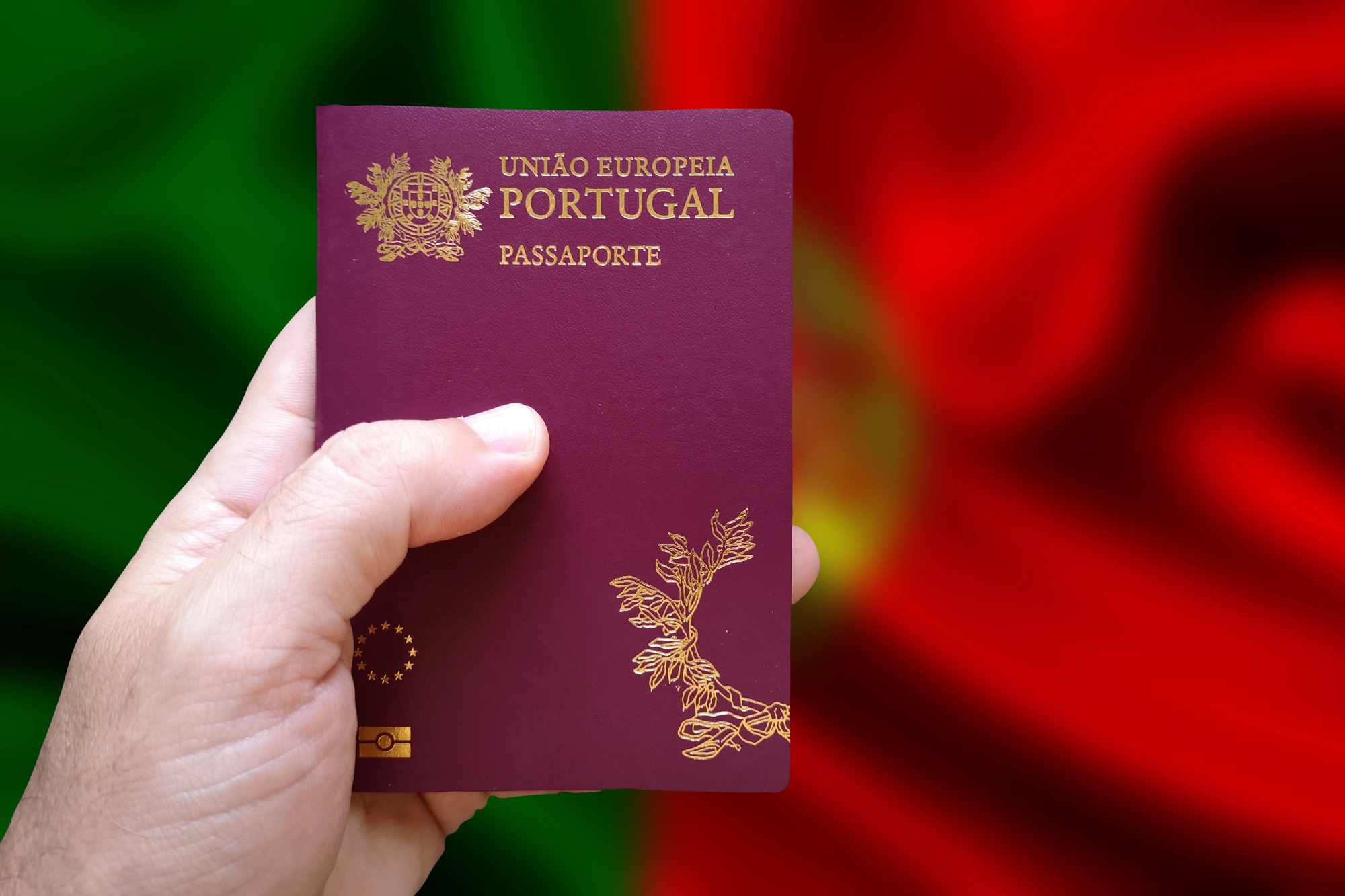
The single biggest selling point of Portugal’s Digital Nomad Visa is that it doesn’t just give you permission to hang out in Portugal for six months or a year. It offers residency in an EU country.
If things go smoothly and you keep renewing, the rough path looks like this:
- Initial residence card (usually 2 years)
- Renewal card (usually 3 years)
- Around year 5, you can apply for permanent residency (valid for 5 years)
- Around the 10-year mark, you may be able to apply for Portuguese citizenship
That’s a very different proposition from most classic “digital nomad” visas elsewhere in the world, which deliberately do not lead to long-term residence or citizenship. Those are designed for people who will leave when the clock runs out.
The endpoint – a Portuguese passport – is not just a nice travel document. It comes with:
- The right to live and work across the entire EU
- Strong political and legal protections
- Visa-free travel in numerous countries worldwide
And, unlike with Spain, dual citizenship is allowed.
For most people, this is the benchmark. Every downside – the high income requirement, the tax, the bureaucracy – ends up being weighed against that long-term prize.
Healthcare & Social Safety Net

Another big part of the EU package is healthcare and social rights.
Once you’re legally resident, you’re not just a tourist with travel insurance. You’re inside Portugal’s system:
- You can register for public healthcare (SNS) and be treated like any other resident.
- At the same time, you can take out private health insurance for speed, nicer facilities, or English-speaking doctors – typically at premiums that are lower than the US and often competitive with the UK.
- For serious illnesses or surgeries, many people end up in the public system anyway, where the cost is heavily subsidised.
For remote workers and freelancers used to:
- US-style private health insurance and deductibles, or
- The uncertainty of being on travel insurance in cheaper countries
…this can be a huge psychological shift. You’re not just saving money or gaining sunshine; you’re reducing risk. In the case of the US, reducing the risk may actually allow you to work remotely or freelance without feeling tied to a company for their healthcare plan.
For some people – especially those with children or chronic health issues – this healthcare and social safety net is worth more than any potential tax savings they might find in a low-tax “nomad haven”.
Lifestyle & Community

Of course, none of this would get much attention if Portugal wasn’t already a desirable place to live.
The lifestyle pitch is well-known by now:
- Mild winters and long summers (particularly in the Algarve and Lisbon)
- Walkable cities and towns, café culture, and a slower pace of life
- Access to surfing, hiking, and nature without having to go very far
- Lower cost of living than many major cities in North America and Northern Europe (even if Lisbon and some hotspots have become noticeably more expensive)
Crucially for remote workers, this is layered on top of a very visible and growing remote-work community:
- Lisbon is one of the world’s digital nomad hotspots, with numerous coworking spaces, meetups, masterminds, and other events.
- Ericeira, Lagos, and other coastal towns have sizeable surf-plus-laptop populations.
- Madeira has actively marketed itself as a remote-work island, with co-living and community initiatives.
It’s true that you can find versions of this in Spain, Italy, Greece and so on. Southern Europe in general has become “digital nomad-ish”. But Portugal has a head start in terms of English-speaking, remote-work-focused community and the community in places like Lisbon is often bigger.
If you’re a remote employee or freelancer arriving from abroad, you’re unlikely to feel like the only person working from a laptop in a café, especially in Lisbon, Lagos, Ericeira, or any of the other digital nomad hotspots.
Education & Upskilling

One under-discussed benefit of building a life in Portugal on the Digital Nomad Visa – especially if you’re thinking in 5- to 10-year horizons – is education.
For you, as an adult:
- Once you’re resident, you have access to local universities and polytechnics such as Nova, Porto, Coimbra, Minho, etc.
- Tuition fees for residents are often significantly lower than what you’d pay for equivalent programmes in the US or UK.
- That makes it much more realistic to consider a mid-career master’s degree, a career change, or formalising skills you’ve picked up as a freelancer.
For your children:
- They can attend Portuguese schools and later EU universities at local or EU rates, which are often a fraction of international tuition fees.
- If they become EU citizens, their educational choices and costs change dramatically compared to staying in a non-EU country.
For some families and mid-career professionals, the ability to swap: US/UK-style university costs and student debt for EU-style tuition fees and access is a significant part of the long-term calculation – even if it’s not the thing that first grabs attention on the visa brochure.
The Cons of this visa
The Earnings Requirement

For a single applicant, you’re expected to earn €3,680 per month net, from remote work or freelancing where the money comes from outside Portugal. That’s four times the Portuguese minimum wage.
For some remote workers, especially full-time employees of US, Canadian, or British companies, that’s perfectly achievable. For others – early-stage freelancers, people with more irregular income – it’s a high bar. Even for many people in the US, which has some of the highest wages in the world, this is a high bar.
Those coming from other parts of the world, whether that’s India, Argentina, or wherever, are also likely to struggle with the challenging income requirements.
There’s also the savings requirement which, while most reasonable, does catch some people out.
Applicant |
Monthly Income |
Savings Requirement |
|---|---|---|
👨 Individual |
€3,680 per month |
€11,040 |
For those that don’t meet this requirement, it is worth looking into Spain’s Digital Nomad Visa, which has lower requirements.
Bringing a Partner and Kids is challenging on one income

Where the Digital Nomad Visa starts to feel less friendly is when you’re not coming alone.
On paper, the logic is the same as the D7:
- Spouse or partner: 50% of the main applicant’s required income
- Each dependent child: 30% of the main applicant’s required income
On the D7, where the base requirement is linked to just 1× minimum wage, those percentages feel manageable. On the Digital Nomad Visa, where the starting point is 4× minimum wage, they scale very quickly.
In practice, what that means is:
- A couple needs to show one salary/freelance income that comfortably supports two adults, at a level well above what most Portuguese households earn.
- Add one or two children and you’re into income territory that many remote workers – even well-paid ones – simply don’t reach, especially if they’re freelancing rather than employed.
Applicant |
Monthly Income |
Savings Requirement |
|---|---|---|
👨 Individual |
€3,680 per month |
€11,040 |
👨 👩 Couple |
€3,680 per month |
€16,560 |
🧒 Each dependent child |
€1,104 per month |
€13,248 |
For a high-earning solo remote worker, the Digital Nomad Visa can feel like a golden ticket. For a couple with kids, it can feel more like a stress test of your combined earning power.
Thankfully, there are a few ways around this. For example: two earning parents may apply separately and split the children across two different visa applications. This adds more in visa and legal costs, but does make the process possible.
A good lawyer with experience and expertise with the Digital Nomad Visa should be able to come up with solutions. Failing that, a digital nomad or freelancer visa from another EU country may make more sense.
Physical Presence Rules feel restrictive

Another key “con” is the time requirement.
The Digital Nomad Visa is not designed for people who want to:
- Spend three months in Portugal
- Then three months in Asia
- Then three months in Latin America
- And cycle like that forever
To keep your residency and renew your card, you’re expected to spend most of the year in Portugal. There’s some flexibility in how the rules are written (maximum time you can be out of the country in a given period), but the spirit is very clear: Portugal should be your main home, not just another stop on a never-ending tour.
For remote workers who want to anchor a life in one place – and maybe take a few trips a year – that’s fine. For people who still hold a more traditional “digital nomad” dream – chasing summer, moving every few months, staying light and untethered – it’s a deal-breaker. The Digital Nomad Visa is not built for that lifestyle, especially when you factor in delays around renewals and other bureaucratic problems.
Stage / Permit Type |
Card Validity |
Max Time You Can Be Outside Portugal (Legal Rule) |
What That Means in Practice |
|---|---|---|---|
Initial temporary residence |
2 years |
You should not be absent for more than 6 consecutive months, or 8 months total during the 2-year validity period. |
You need to spend roughly 16–18 months physically in Portugal during the first 2 years. You can travel, but not disappear for a full year or keep “popping out” so much that you’re gone more than ~8 months total. |
Renewal temporary residence |
3 years |
Same legal rule: no more than 6 consecutive months, or 8 months total outside Portugal during the 3-year validity (unless you have officially accepted “justified” reasons for a longer absence). |
Because the rule is per card, not per year, you effectively need to be in Portugal for about 28–30 months out of 36 to stay clearly within the lines. It’s even less “nomadic” than the first period. |
Permanent residence (after ±5 years of legal stay) |
PR card normally valid 5 years (for non-EU/EEA/Swiss) |
As a permanent resident, you can be absent from Portugal for up to 24 consecutive months or 30 months total (non-consecutive) in any 3-year period. |
This is much more flexible. You can be away for long stretches (even up to 2 years in one go), or roughly half the time over rolling 3-year windows, without losing PR. You’re still a resident, but the system stops micro-policing your travel. |
After Portuguese citizenship – apply after 3,680 |
Unlimited (you’re a citizen, not a resident) |
There is no physical presence requirement to keep citizenship. You don’t lose your Portuguese passport just because you live abroad; loss is reserved for things like serious crimes or fraud, not for moving to another country. |
This is the real “freedom” stage: you can live anywhere in the world, move around the EU as an EU citizen, and time outside Portugal no longer threatens your status. You might still have residence rules in other countries, but that’s their law, not Portugal’s. |
Job Structures – The Hidden Cost for Remote Employees
One big complication for remote employees (rather than freelancers) is how your job actually works once you move.
On paper, there are ways to stay employed by a foreign company while living in Portugal. In practice, it raises awkward questions:
- How does a US or UK company handle payroll and income tax for someone who now lives in Portugal?
- Portugal expects social security contributions here – so do you still pay US Social Security or UK National Insurance as well?
- Who is actually your “employer” from a legal point of view?
Most companies don’t want that admin burden. So if they do agree to you moving, they tend to push you into one of two routes:
- Contractor – You invoice them instead of being on payroll.
- Cleaner for them, but you may lose out on things like sick pay, pension contributions, and other employee benefits.
- Employer of record (EOR) – You’re technically employed by a third party (like Deel or Remote.com) who handles local payroll and compliance.
- You might get a new contract, different benefits, and a slightly more fragile-feeling relationship.
Either way, you’re usually giving something up to make the move work.
For people who are already freelancing, this isn’t such a big shift – they’re used to invoicing clients abroad and taking care of their own taxes and social security. For salaried employees, it can be a real trade-off: you gain Portugal, but you may have to redesign your entire work setup to get there.
Taxes feel high when compared to other countries

If you move to Portugal on the Digital Nomad Visa, you should assume one thing very clearly: you will almost certainly need to pay tax in Portugal.
How bad or not bad that is depends hugely on your personal situation, and this is where it gets messy:
- A married couple may pay a different effective rate than a single person.
- Someone running a company may have a very different setup to someone working remotely or freelancing.
There are also different frameworks and regimes:
- The simplified regime for freelancers, which can work out well for some people and less well for others, depending on your activity code and margins.
- The newer IFICI regime (often nicknamed “NHR 2.0”), which some people may qualify for, but which is much harder to access than the original NHR ever was.
In other words, there is no one Portugal tax number that applies to all digital nomads.
One important reassurance: you almost certainly won’t be taxed twice.
Portugal has double taxation agreements with many countries. Typically, tax paid in one country is credited against tax due in the other, so you’re not paying full tax twice on the same income. And Portugal uses a progressive tax system, which means:
- Only the income above each threshold is taxed at the higher rate
- You don’t suddenly pay your entire income at 40-something percent just because you crossed a line by €1
It can still be painful, but it’s not the horror story people imagine when they just glance at the top marginal rate.
Compared to other EU countries, Portugal sits somewhere in the middle:
- It’s not the lowest-tax country in Europe.
- But it’s also not the worst, especially once you look at effective rates rather than headline brackets.
The awkward comparison is with places like Scandinavia:
- On paper, some Scandinavian countries have even higher tax.
- But many people feel they get more obvious, visible return on that tax: extremely polished public services, infrastructure that works, and a stronger sense that the system “delivers”.
If you’re coming from the US, Canada, or UK, it’s likely you will pay more tax in Portugal. How much depends on where you’re coming from, and your own personal tax situation.
However, you do get:
- Access to public healthcare, which many people end up relying on for serious issues or long-term care.
- A social security safety net.
- The ability to live in an EU country that can eventually lead to permanent residency and citizenship.
For some, that’s a frustrating compromise. For others, especially families and long-term planners, it’s exactly the kind of boring, grown-up stability they’re looking for – even if the tax bill stings a bit along the way.
There’s plenty of bureaucracy and hoops to jump through
If there’s one thing Portugal’s known for – at least among people who move there – it’s bureaucracy.

Getting In
This visa takes work. Before you even apply, you normally need a real address in Portugal – usually a proper rental contract, not just an Airbnb booking. And typically that has to be for 12 months too.
That means:
- You may have to sign a lease in a country you don’t fully know yet
- You risk ending up in a bad apartment or wrong neighbourhood just to get the paperwork done
Yes, most contracts can be broken after about a third of the term, but that still means hassle, cost, and yet more bureaucracy.
On top of that, getting appointments can be a grind: consulates are busy, AIMA is busy, and each consulate seems to have its own version of the rules and required documents. Just getting through the front door of the system can feel like a part-time job.
Staying In
Renewals are where a lot of people really feel the strain. It’s common to:
- Wait months for renewal appointments or new cards
- Get “stuck” in Portugal because you don’t want to travel with an expired card and a pending process
AIMA regularly promises improvements – and to be fair, there have been some – but the organisation is still seriously understaffed for the amount of work it has. There are lovely quiet stretches where your residency is all sorted and you can forget about it for a while, and then renewal season hits and everything becomes stressful again.
And that’s just the visa side. Layer on top:
- Swapping your driver’s licence
- Dealing with Finanças (the tax office)
- Registering at your local health centre, changing addresses, and all the other little admin tasks of life
…and it becomes very clear that while Portugal is a great place to live, it is not a frictionless place to deal with on paper.
Conclusion – This visa is A Trade-Off
In this piece, we’ve mostly focused on the upsides and downsides of the Digital Nomad Visa itself – the income thresholds, time-in-country rules, taxes, and bureaucracy.
There are plenty of other pros and cons to consider that are about Portugal in general, not this visa in particular.
- On the plus side: lots of people speak English, there are beautiful beaches, great food, and a big international community.
- On the downside: houses can be cold and damp in winter, Portuguese is harder than you might expect, and day-to-day life isn’t always as smooth as the tourism adverts suggest.
Then there are the remote work / freelancer questions that sit above everything else. If you’re coming from somewhere like the US, moving abroad can make you:
- Slightly less attractive to some employers
- Unable to take some jobs due to the working hours
- More complicated from a payroll and tax point of view
- More nervous about switching jobs once you’re embedded in a new residency and tax system
It’s also worth noting that most “digital nomads” gravitate to places like Lisbon, Ericeira, Lagos, or Madeira – all costlier parts of Portugal. You don’t have to live here, and it’s not the fault of the visa, but most want the community of other entrepreneurs and remote workers, and that comes with a price.
So at the end of the day, the Digital Nomad Visa is a trade-off:
- You get access to a big digital nomad / remote worker community
- You get to live in an EU country
- You get a realistic path to citizenship, with no dual-citizenship drama like you would have in Spain
- Your cost of living may drop significantly if you’re coming from New York, California, London, Toronto, etc.
In exchange:
- You may pay more in tax than in a low- or no-tax hub
- You’ll jump through non-trivial bureaucratic hoops
- You’ll have to commit to spending most of your time in one country
What you get in return is the ability to move to the EU, enjoy EU protections, and eventually hold an EU passport. For many remote workers and freelancers, when you zoom out to a 10- or 20-year timeline, that alone makes the trade worth considering.
 Thinking about Moving to Portugal?