


Portugal has long marketed itself as something of a paradise — warm weather, affordable living, and a laid-back lifestyle that feels a world away from the stress and polarization of American life. So, should you move to Portugal from the US?
Here’s the thing: Portugal isn’t perfect. It has its own problems — maddening bureaucracy, housing quality that would make most Americans wince, and a rising far-right political party. So, it’s fair to ask:
If you move to Portugal, are you really escaping your problems, or just trading them for different ones?
This article takes an honest look at the most common reasons Americans leave the US and whether Portugal actually delivers on those expectations.
To Simply Get Out of the US

Let’s be honest: most Americans moving to Portugal are running from the US rather than running to Portugal. Many would have chosen France or Italy if the visa process were easier. This isn’t a reflection on Portugal, but simply that most Americans are — or were, at least until recently — more familiar with France, Italy, Ireland, or even Spain than they are Portugal.
But moving to Portugal is a lot more achievable and once here, people often discover it has a lot to offer: beautiful beaches, stunning scenery, great weather, and a family-oriented culture that feels genuinely welcoming.
If your primary goal is to leave the United States and start fresh in Europe, Portugal remains one of the easiest countries to make that happen. The D7 visa is accessible to retirees with modest retirement income, the Digital Nomad visa works for remote workers, and there are a handful of other attainable residency visas as well.
Popular Visas:
- The D7: Ideal for retirees, landlords, or those with some form of income they don’t work for, this visa only requires you to earn €920 per month in passive income.
- The Digital Nomad Visa: Perfect for remote workers and freelancers who can bring in an income from outside of Portugal, this visa requires you to earn at least €3,680 per month in a salary or freelancer income.
- The Golden Visa: Aimed at those who want residency in Portugal, but only want to spend minimal time here, this visa requires you to either invest €500k or donate €250k. You only need to spend an average of 7 days per year in Portugal to maintain residency, so it’s ideal for those who want a “backup plan” just in case they want to get out of the US (or UK, Brazil, South Africa, wherever).
If your goal is simply to leave? Mission accomplished.
The verdict: Yes, this works.
To Escape Polarizing Politics

One of the biggest reasons Americans move to Portugal: to escape the polarizing politics.
It’s worth noting that Americans have moved to Portugal under both Trump and Biden administrations. People on both sides of the political spectrum have cited “bad politics” as their reason for leaving, though anecdotally, the number of people wanting to leave due to Trump is higher.
It’s important to note that Portugal does have a far-right political party — Chega — and they’ve been growing. They post inflammatory content and oppose immigration, same-sex marriage, and what they call “gender ideology.” But here’s the key difference: they’re not in office. They have influence, but they don’t control policy. There are no ICE-style raids happening here.
As an expat, you also naturally insulate yourself from a lot of the political noise. You won’t understand the debates happening among other people at the cafe. You won’t have 24-hour news channels blaring divisive content. For better or worse, thanks to your lack of ability to speak Portuguese, you’ll exist in a kind of bubble — and for many people escaping political exhaustion, that bubble is a relief.
I don’t necessarily advocate living in ignorance of your new home’s politics, but the daily intensity of American political discourse simply doesn’t exist here in the same way.
The verdict: Mostly yes, with caveats.
Because of Crime and Safety

This is one area where the statistics speak clearly. Portugal’s intentional homicide rate is approximately 0.72 per 100,000 people (2022), while the US rate is 6.51 per 100,000 (2022) — making the American rate roughly eight times higher.
Safety Metric |
Portugal vs USA |
School Shootings |
Portugal: 0 | USA: 39 (2024) |
Global Peace Index |
Portugal: 7th | USA: 132nd (2024) |
The daily experience reflects this. People walk home alone at night here. Parents let children play outside without constant supervision. Yes, Portugal has crime — murders, theft, and everything else — but the baseline level of danger is noticeably lower.
Safety isn’t just about crime, though. Portugal does have wildfires, occasional (but generally mild) earthquakes, and flooding.
In September 2024, Portugal experienced a devastating wildfire episode: more than 100,000–135,000 hectares burned across central and northern regions, killing at least nine people and injuring many more.
But it doesn’t have hurricanes, tornadoes, or the kind of extreme weather events that regularly devastate parts of Florida, California, or the Midwest. Of course, the US also has extreme wildfires, particularly in California.
For families worried about climate anxiety, this also matters.
The verdict: Significantly better in terms of violent crime; slightly better for extreme weather
For a Better Lifestyle

Just about every article promoting Portugal has a picture of a beach in the Algarve. But America has beautiful beaches too — California, Florida, Hawaii. However, living in somewhere like California or Hawaii can cost a fortune. In Portugal, even people on modest incomes can live near the coast, enjoy café culture, and experience a slower, more sociable pace of life.
The lifestyle here prioritizes family time, outdoor living, and accessible culture. Museums and cultural events are affordable. Universities are cheaper if you want to retrain or send your kids. And there’s a respect for the elderly that feels increasingly absent in American culture.
The trade-off? You won’t have the same consumer conveniences. Houses are smaller. Cars are more expensive, and smaller. Customer service won’t be what you’re used to.
For many, however, these are trade-offs worth making.
Of course, this assumes you’re bringing in an outside income. If you’re retired or earning money from a remote job, your salary can go far. However, if you’re relying on Portuguese wages, spending can be tight.
The verdict: Yes — especially for retirees and those bringing in income or savings from outside Portugal.
For Lower Cost of Living

The cost of living in Portugal has increased significantly, but it’s still cheaper than most expensive American cities. A one-bedroom apartment in Lisbon runs €1,200–€1,500 per month — expensive by Portuguese standards, but a bargain compared to San Francisco, New York, or Los Angeles.
You can find comparable rents in places like Wichita, Toledo, or even Memphis — but those don’t come with Lisbon’s walkability, cafe culture, or proximity to beaches. A beachside apartment in Lagos on the Algarve might cost €1,200-€2,000; finding the equivalent in California would be nearly impossible at that price.
The important caveat: American housing quality is generally higher. Properties are bigger, better insulated, and come with modern amenities like central heating and air conditioning. Portuguese apartments — especially older ones — can be cold, damp, and lacking basic features Americans take for granted. Of course, you can renovate and add these amenities, but that takes time and money.
On the plus side, you won’t deal with HOA fees or the astronomical property taxes common in many US states.
Again, this all depends on whether you’re bringing in an income or savings from outside Portugal. In 2025, the Portuguese minimum wage is €870, rising to €920 in 2026. Not only would it be near impossible to rent a property in somewhere like Lisbon, Cascais, Porto, or the Algarve and have money leftover for other expenses, it would be tough to rent a room in somewhere like Lisbon. M
The verdict: Generally yes, but it depends where you’re coming from.
For Lower Taxes

If lower taxes are your primary motivation, Portugal probably isn’t the right choice. In fact, you should probably exclude most of Europe.
Most Americans would be left with more money after tax if they stayed in the US.
- The NHR (Non-Habitual Residency) regime that once made Portugal attractive for tax planning is gone, and the replacement (IFICI) doesn’t apply to most retirees or digital nomads.
- US Social Security is also typically taxed in Portugal, even though it may not be taxed in the US.
- Portugal has a progressive income tax system with top marginal rates close to 48% (but you only pay those rates on the top slice of income).
However, there’s an important nuance: your post-tax money goes further here. Healthcare under the public system is covered, so you’re not budgeting separately for insurance premiums and copays (although many American expats also take out private health insurance). Daily expenses — groceries, eating out, entertainment — are generally lower. And the lifestyle benefits (safety, beaches, slower pace) don’t have a direct monetary equivalent but you’d typically have to live in a very nice (and expensive) part of the US to get them.
If your only goal is minimizing taxes, look at places like the UAE or Monaco. However, if you’re willing to pay higher taxes in return to get a better lifestyle at a lower price, consider Portugal.
The verdict: No. Taxes are generally higher in Portugal.
For Healthcare That Won’t Break The Bank

Portugal has a public or universal healthcare system (SNS) that covers everyone. It’s not perfect — there are waiting lists for non-urgent care, and the system is under strain — but it won’t bankrupt you.
Think of it like Medicare, but
A) covering more and
B) available to everyone, regardless of age
Private health insurance is affordable by American standards. A quote with Mgen for a 70-year-old might range from €73 to €622 per month depending on coverage level (accurate: December 2025). For younger people, basic coverage starts around €19 per month. Compare that to the thousands Americans pay for health insurance.
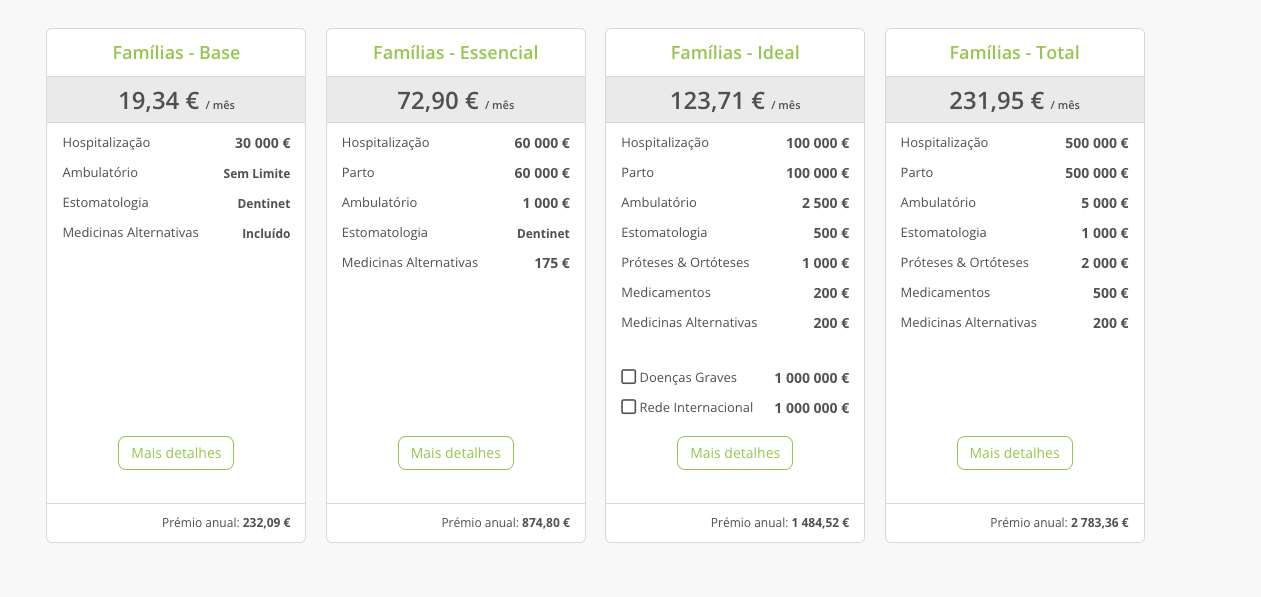
That isn’t to say the Portuguese system is perfect. In places like the Algarve, it can be hard to get permanent primary care physician. Some medications or treatments that are available in the US aren’t available in Portugal (although normally there are equivalent medications). There can be a lack of privacy, particularly in public hospitals.
The bigger benefit? Healthcare isn’t tied to employment. You can freelance, start a business, or retire early without the terror of losing coverage. And no matter what happens, you always have the universal healthcare system. No need to read the fine print to see if your policy covers you. You also don’t have to think twice about calling an ambulance.
That psychological freedom is worth more than any specific benefit.
The verdict: Yes — especially for peace of mind.
For a Change of Scenery

America is vast and diverse — you can move from New York to Texas to California and experience wildly different lifestyles. But you’re still in America. The cultural DNA remains the same.
Portugal offers something genuinely different. The architecture is different. The food is different. Cities are walkable. Public transportation exists (mostly). You have proximity to dozens of European countries — a €50 Ryanair flight can take you to Paris, Barcelona, or Berlin for a weekend.
For those seeking a real reset — not just a geographic change but a cultural one — Europe delivers this in a way that moving to another US state simply doesn’t. And while it is a change of scenery, it isn’t quite as dramatic as moving to somewhere in Latin America or Asia.
Portugal is one of the easiest entry points, with widespread English proficiency and and wide range of attinable residency visas, making it the ideal choice for Americans looking to shake things up a little.
The verdict: Absolutely.
For Legal Protections and Rights

Many Americans — particularly women, LGBTQ+ people, and minorities — are worried about their rights and legal protections in the US. Portugal offers stronger baseline protections in many areas. It was one of the first countries to legalize same-sex marriage. Abortion is legal. Anti-discrimination laws are robust.
But Portugal isn’t the progressive utopia it sometimes markets itself as. Chega opposes same-sex marriage, abortion, and transgender rights. The country has a history of conservative Catholic values, especially in rural areas. As of 2023, the Observatory of Discrimination Against LGBTI+ People had documented over 1,385 cases since 2013.
The key difference: Portugal hasn’t repealed any existing protections. The far-right has influence but not power. Discrimination tends to be more subtle — staring rather than overt hostility. It’s not perfect, but for many, it feels safer and more stable than the direction things are moving in the US.
The verdict: Generally better, but not a utopia.
Because “The System Is Broken”

Over 70% of Americans believe the economy is rigged to benefit the wealthy and powerful. But speak to any Portuguese person and they’ll say the same thing about their country — that politicians are corrupt, that only those with connections get ahead, and that ordinary people get crushed by taxes and bureaucracy. According to a 2015 study, 83% of Portuguese people believe that corruption and bribery were widespread in the country.
As an expat, you’ll encounter the brokeness through AIMA (the Portuguese borders and immigration agency), which has catastrophic backlogs. Appointments take months and even years. Paperwork goes missing. Deal with Finanças, the tax office, can a nightmare.
Due to all the red tape, the country can be very unfriendly to startups and new businesses – just look how many are registered in places like the US, UK, or Netherlands rather than Portugal.
Don’t be surprised if Portuguese people ask why you’re moving here and look at you like you’re slightly mad. To them, their system is broken and – despite the lack of safety and polarizing politics – the grass in the US looks much greener. Both countries may have a glass ceiling, but you can climb a lot higher in the US before you reach it.
The verdict: Portugal’s system is also broken — just differently.
To Escape Consumerism and Burnout Culture

If you’re sick of Amazon culture, 24/7 convenience, and the relentless pressure to be productive, Portugal will force you to slow down. August is basically a national holiday. Things take longer. Amazon deliveries take days, not hours – and even then, you might still not have your package.
Some people find this charming and “European.” Others find it maddening — even if they initially thought it was what they wanted. Limited choice, smaller fridges, random closures, and a repair-over-replace mentality can feel liberating or frustrating depending on your personality.
On burnout specifically: Portuguese people actually work long hours — some of the longest in Europe — for relatively low pay. Portuguese work an average of 37.5 hours per week or 40 if you only include the private sector, which is above the EU average. Around 10% work 49 hours or more per week.
It isn’t surprising then that around 61% of Portuguese people report feeling exhausted or at risk of burnout. Around 36% say they have experienced mental health problems.
As of 2024, Americans work 42.9 hours. However, the big difference between Americans and the Portuguese comes in time off: the Portuguese get around 22 days off plus public holidays, so they get a chance to recharge their batteries. Many Americans never get this.
So burnout exists here too.
But most Americans who move to Portugal will never work in a Portuguese office. If they work remotely, they’re at least somewhat disconnected from the American office. If they’re retired, they’re completely disconnected — and the money pressures can be less due to Portugal’s lower cost of living.
The verdict: Yes — though it comes with trade-offs.
Conclusion
So is Portugal better than the US? It depends entirely on what you’re looking for.
If you want safety, affordable healthcare, beautiful scenery, and a slower pace of life — yes, Portugal delivers. If you’re exhausted by American political polarization, consumer culture, and the relentless pressure to be productive, Portugal offers a genuine alternative.
But Portugal isn’t an escape from all problems. It has its own bureaucratic nightmares, rising costs, political tensions, and quality-of-life issues that will surprise you. The houses are cold. The wages are low. The opportunities are limited. And for all its charms, it’s a country with real challenges of its own.
The honest answer is that Portugal is better for some things and worse for others. The question isn’t whether it’s objectively better — it’s whether the things it’s better at are the things that matter most to you.
For many Americans, the answer is yes. But go in with realistic expectations, and you’re far more likely to build a life here that actually makes you happy.
 Thinking about Moving to Portugal?